
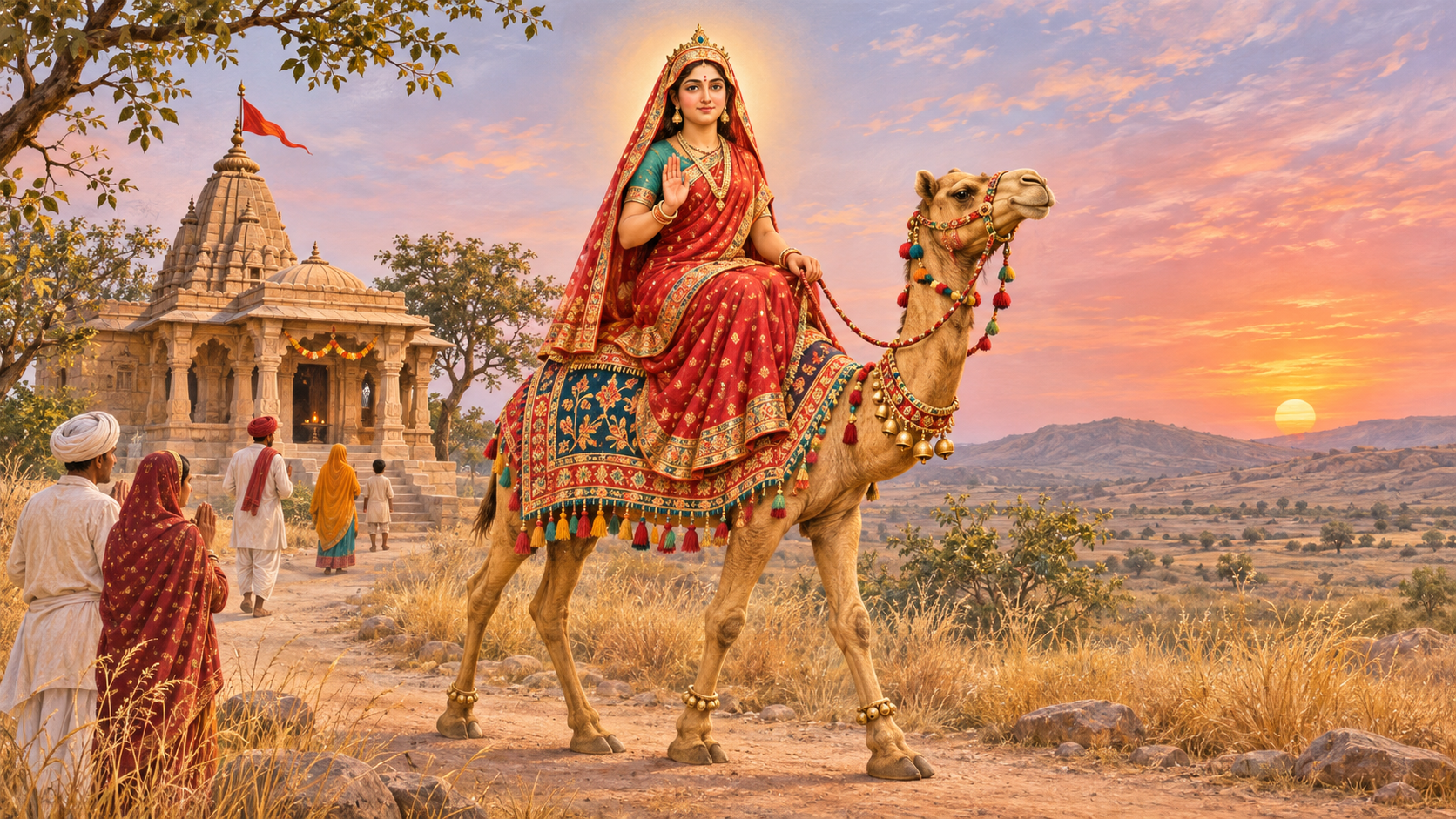
You may have encountered Momai Maa in a temple, a family tradition, or an image of a goddess riding a camel. The immediate questions are practical: Is she the same as Dashama? What does the camel signify? And how can you offer worship without inventing a custom that does not belong to her tradition?
Begin by holding two truths together. Momai Maa is understood as a form of the universal Divine Mother, yet her worship has a distinct regional life. Respectful devotion recognizes both. It neither reduces her to a generic image of Shakti nor treats a local name as disconnected from the wider Hindu understanding of Adi Shakti.
Know which form of the Mother you are approaching
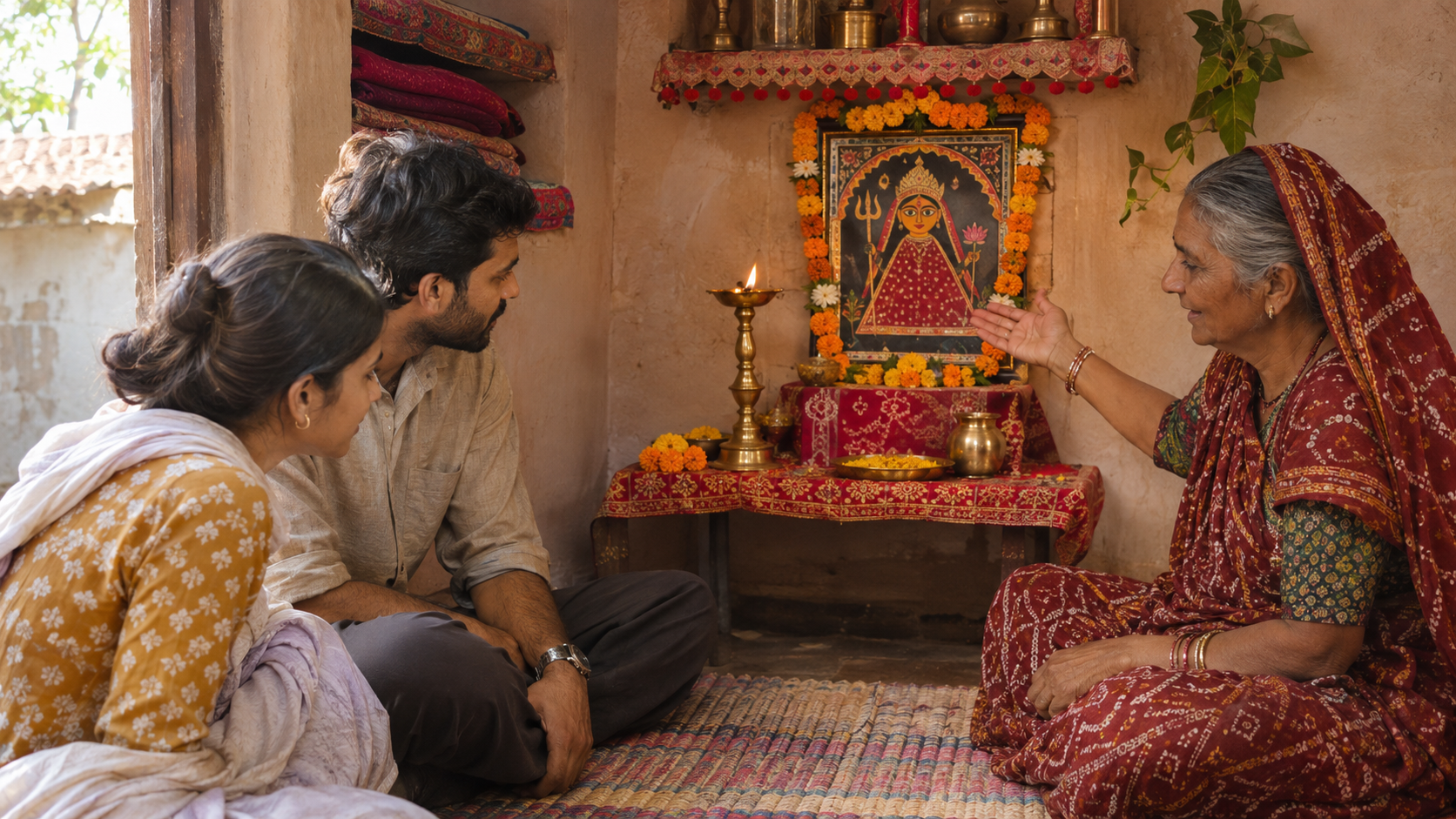
Momai Maa is revered as an incarnation of Adi Shakti, the primordial power associated with creation, preservation, and dissolution. That description gives you her broad theological place: she is not merely a historical personality or an isolated village figure, but a manifestation of the divine power from which the cosmos arises and by which it is sustained.
Her regional identity still matters. Her worship is deeply rooted in Kutch and Saurashtra in Gujarat and extends into the neighboring desert regions of Rajasthan. Those places are not incidental labels. They are the cultural setting in which communities have preserved her name, iconography, and forms of reverence.
In some traditions, Momai Maa is also known as Dashama. The words “in some traditions” are essential. They do not establish that every temple, household, or community uses the two names in exactly the same way. If a family calls the deity Momai Maa, retain that name until someone within the tradition explains otherwise. If a temple uses Dashama, ask whether that is its established local identification rather than assuming that every Dashama practice can automatically be transferred to Momai Maa worship.
Before following instructions found elsewhere, establish four details:
- The exact name used at the shrine or in the household.
- The village, town, or community with which that form is associated.
- Whether the practice belongs to a public temple, a family tradition, or a particular community.
- Who is recognized locally as a reliable person to explain the customary worship.
This small check prevents a common mistake: combining a familiar divine name, an unrelated ritual calendar, and an image found online, then presenting the mixture as an inherited Momai Maa tradition.
Read the camel as a sign of identity, not a complete explanation
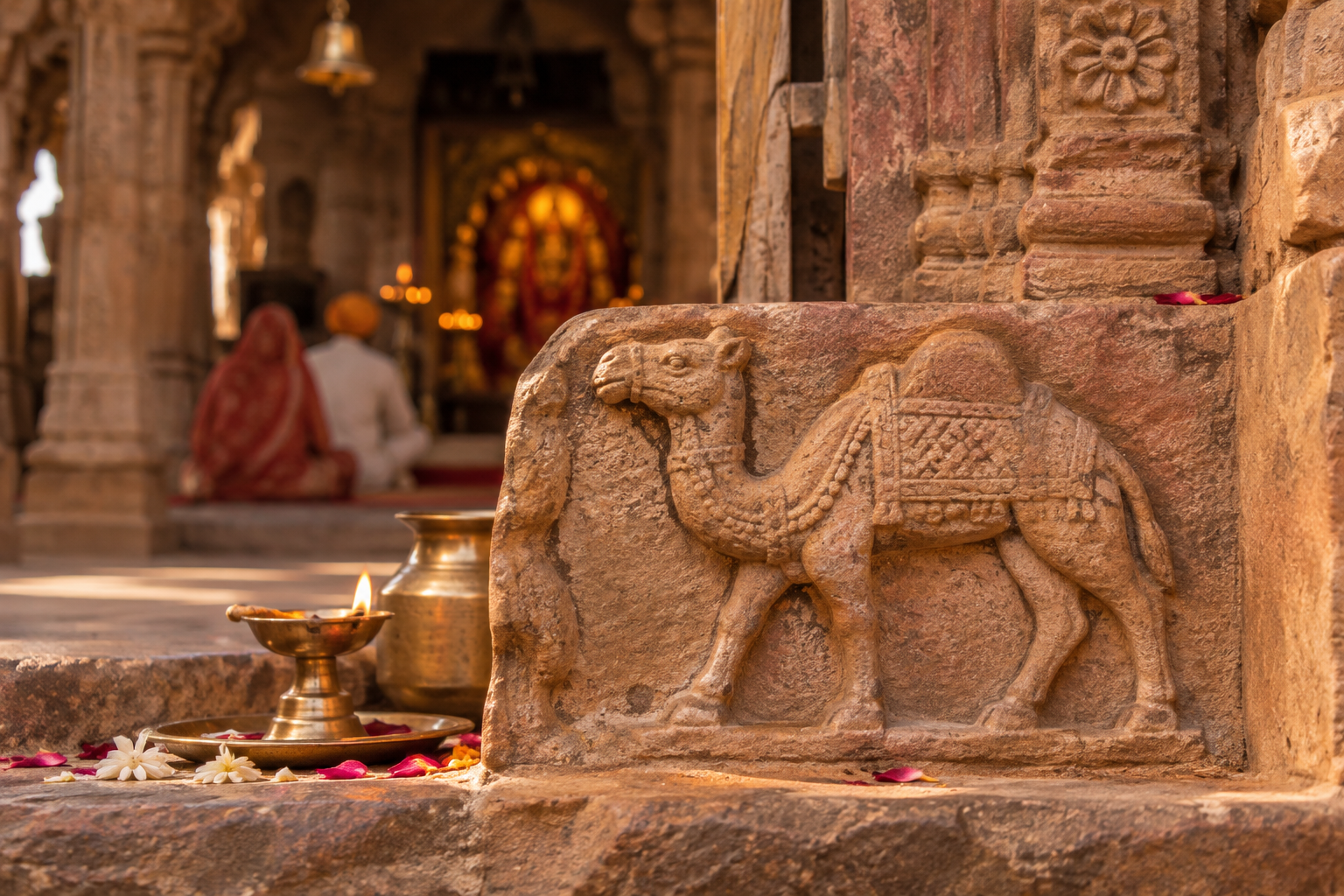
Momai Maa’s most recognizable iconographic feature is her camel mount. It distinguishes her visually and makes sense within the arid western Indian landscape where her worship is rooted. If you are trying to identify an unfamiliar image, the camel is therefore an important clue.
A clue is not the same as a complete doctrine. Hindu iconography often carries layers of meaning shaped by temple narratives, oral memory, community history, and theology. You should not confidently assign the camel a fixed meaning such as endurance, protection, travel, or mastery merely because one interpretation sounds plausible. Ask how devotees at that particular shrine understand it.
Use three levels when reading the image:
- Recognition: the camel helps you distinguish Momai Maa from other forms of the Goddess.
- Regional setting: it connects the visible form with the dry landscapes of Kutch, Saurashtra, and neighboring Rajasthan.
- Local interpretation: any more specific symbolic explanation should come from the living tradition attached to the shrine or community.
This approach lets the icon teach you without forcing it into a ready-made symbolic system. It also gives you a useful question for a temple visit: “How is Maa’s camel understood here?” The answer may reveal more about the local tradition than a generic description of the image.
How to worship respectfully when the local method is unfamiliar
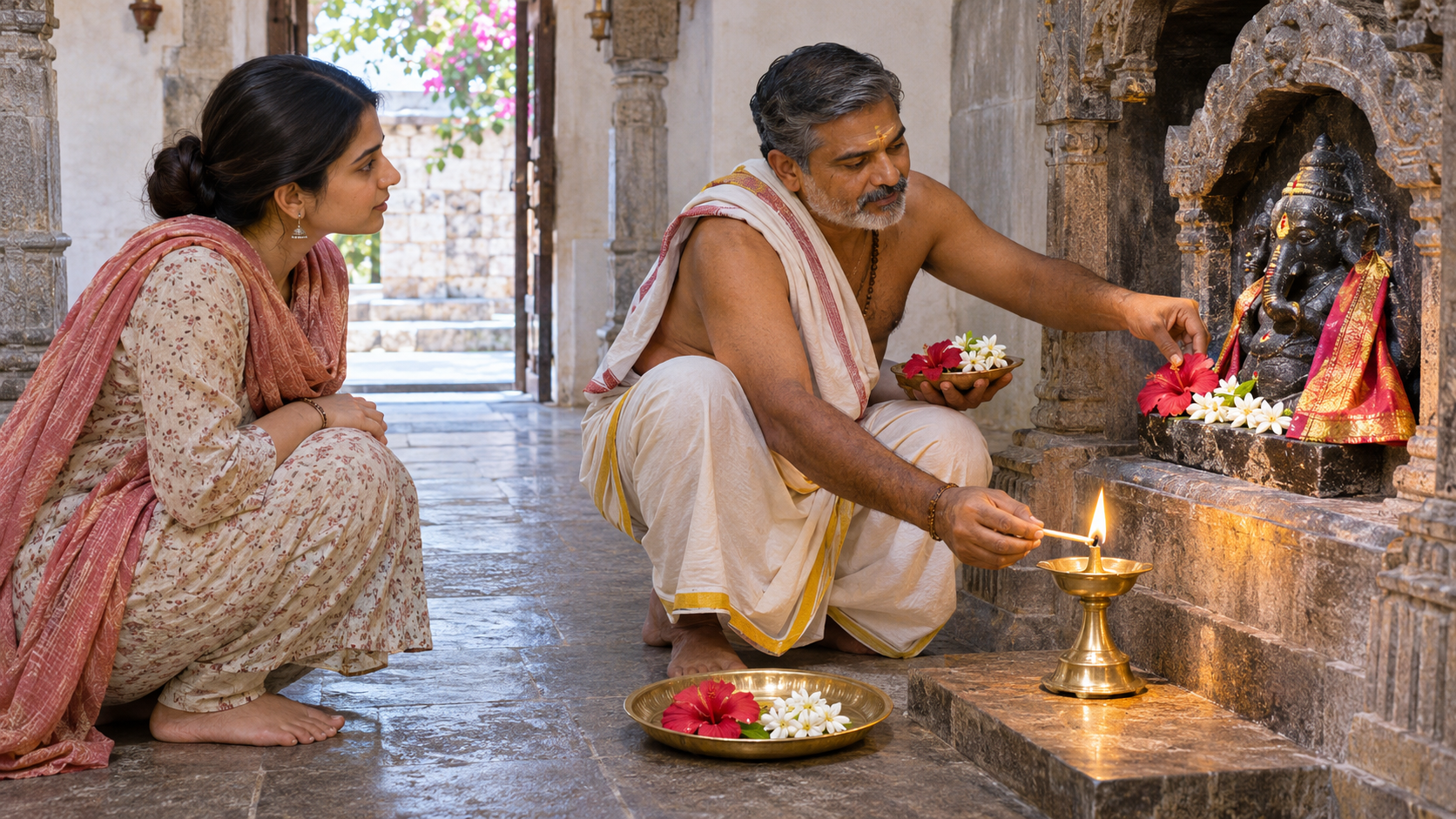
You do not need to pretend to know a specialized ritual. When guidance is limited, begin with reverence and keep the act simple. A quiet namaskar and prayer are more honest than reciting an unverified mantra or performing a ceremony assembled from unrelated traditions.
- Identify the setting. A household shrine, community shrine, and public temple may follow different customs. Do not assume that instructions from one setting govern the others.
- Use the local name. Say Momai Maa, Dashama, or the form of address used by the people who maintain the tradition. Do not correct local devotees on the basis of a generalized identification.
- Ask before presenting an offering. Find out what the shrine accepts and where an offering should be placed. The fact that an item is common in Hindu worship does not mean every temple receives it in the same manner.
- Observe before joining a ritual. Notice where devotees stand, when they bow, and whether a priest or caretaker directs participation. Ask before taking photographs, entering an inner area, or handling sacred objects.
- Verify words before reciting them. If someone gives you a mantra, song, aarti, or vrata procedure, confirm that it belongs to the Momai Maa tradition practiced there. Learn its meaning and pronunciation before presenting it as established worship.
- Understand a vow before making it. A vrata is a commitment, not decorative religious content. Clarify its duration, observances, conclusion, and local expectations before beginning one.
If you want to begin a modest home devotion but have no access to a local teacher, keep your claims as simple as your practice. Maintain a clean place for the image, offer namaskar, and address the Mother sincerely in words you understand. You may pray for clarity, strength, protection, or gratitude without claiming that your personal prayer is a traditional Momai Maa ritual procedure.
Once you receive reliable guidance, write down the exact name of the practice, who taught it, and the temple or community from which it came. This is especially important when a custom is transmitted within a family. Preserving that context is part of preserving the tradition itself.
Let Adi Shakti theology deepen, not erase, the local tradition
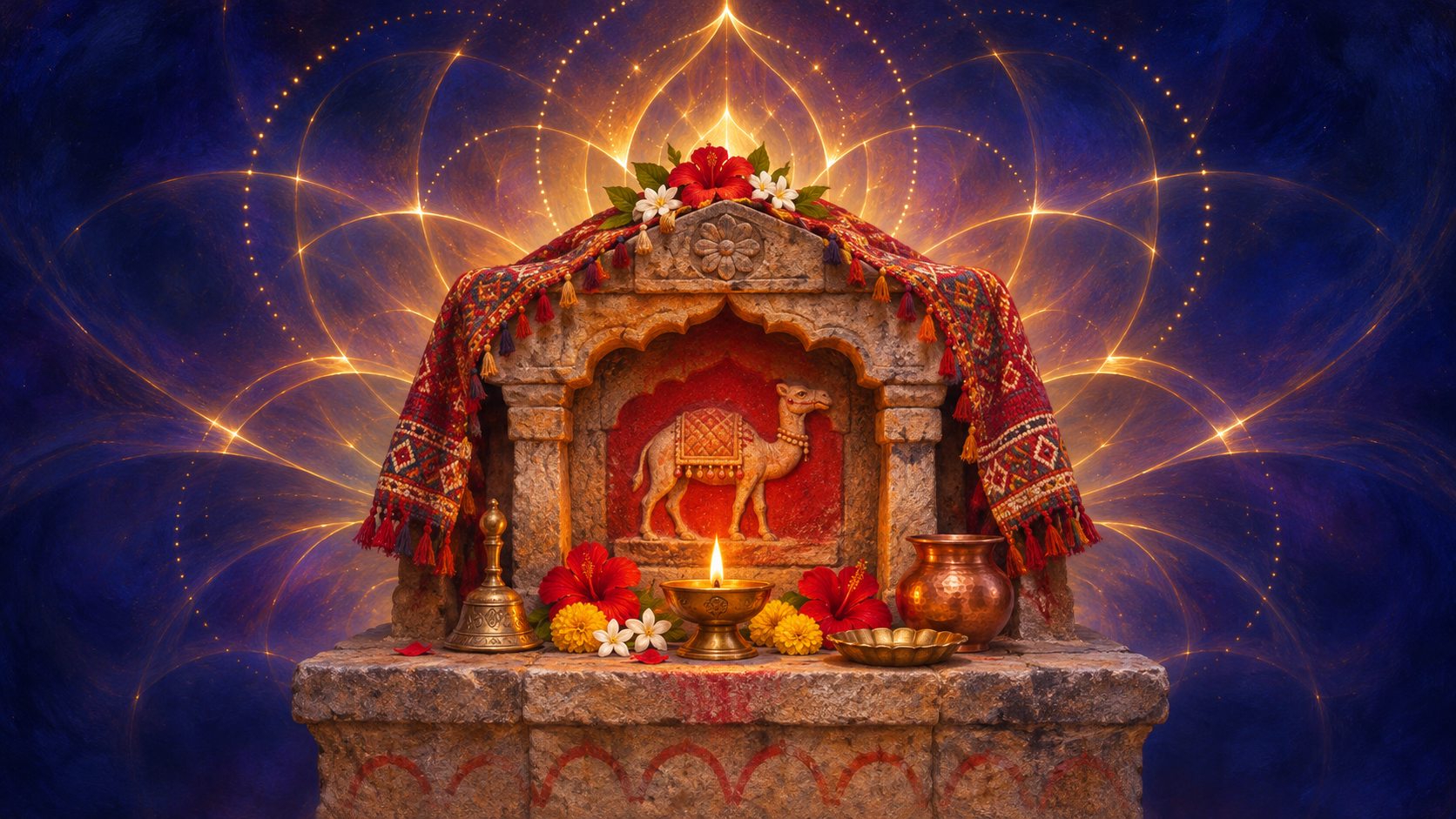
The identification of Momai Maa with Adi Shakti gives her worship a cosmic horizon. Creation, preservation, and dissolution are not three unrelated divine activities; they express the total power by which existence appears, continues, and changes. Worship of the Mother can therefore direct your attention beyond a single request toward dependence on divine power at every stage of life.
Yet universality does not make names, places, and inherited customs disposable. Hindu traditions regularly allow a deity to be both universally meaningful and locally particular. Momai Maa can be approached as Adi Shakti without being renamed into a more familiar form simply for convenience. The universal identity explains the depth of the deity; the regional tradition preserves the relationship through which devotees know her.
When learning from a devotee or temple caretaker, ask questions that keep both levels visible:
- Is the Goddess called Momai Maa, Dashama, or both in this tradition?
- How is she understood as a form of Adi Shakti here?
- Which customs are specific to this shrine, family, or community?
- Are there particular offerings, songs, vows, or observances that an outsider should learn before participating?
- Which parts of the tradition may be shared publicly, and which should be received through family or community guidance?
These questions do more than collect information. They show that you recognize living practitioners as custodians of their own tradition. They also help separate established practice from attractive but unsupported material circulating under a divine name.
Key takeaways for devotees and visitors
- Momai Maa is a regional form of Adi Shakti whose worship is especially rooted in Kutch and Saurashtra and reaches into the neighboring desert areas of Rajasthan.
- Dashama is an alternative identification in certain traditions, not a reason to assume that every custom associated with either name is universally interchangeable.
- The camel is Momai Maa’s distinctive mount and an important sign for recognizing her iconography.
- Specific meanings assigned to the camel should be checked against the understanding of the relevant temple or community.
- When no traditional procedure is available, choose simple reverence over an invented ritual and label personal devotion honestly.
- Preserving the name, place, teacher, and community attached to a practice helps preserve the practice itself.
Before your next temple visit or home observance, learn three things: the name used locally, the person who can explain the custom, and the origin of any ritual you intend to follow. That is a small discipline, but it turns curiosity into responsible devotion and helps Momai Maa’s western Indian tradition remain recognizable on its own terms.
References

Leave a Reply
You must be logged in to post a comment.