
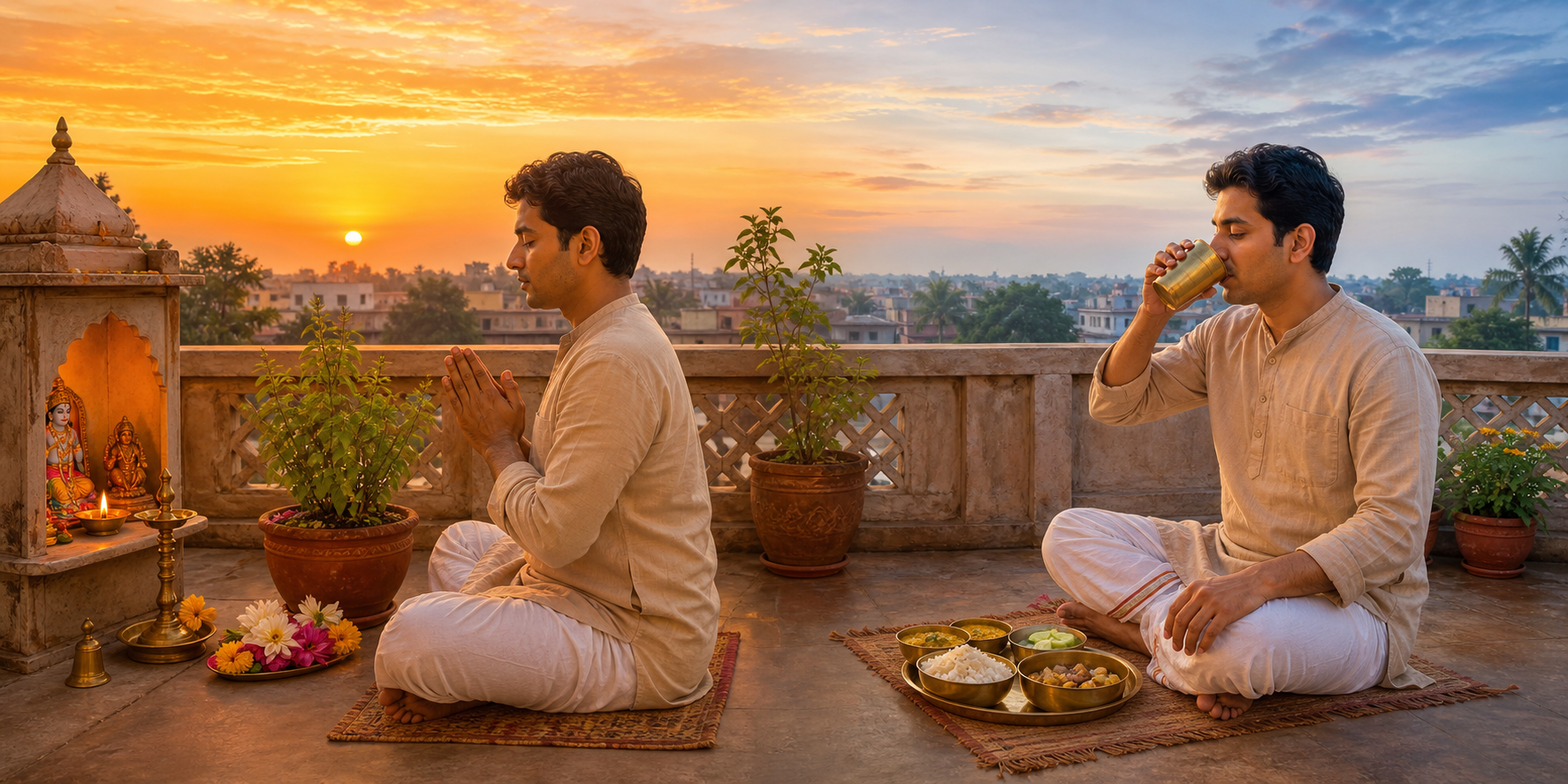
If you are looking at May 13 and May 14 and wondering which date belongs to the vrata, the practical answer for most locations in India is straightforward: keep the Ekadashi fast on Wednesday, May 13, and perform parana on the morning of Thursday, May 14, within the window given for your location.
The detail most likely to cause a mistake is the 8:53 a.m. IST tithi change on May 13. That is when Ekadashi gives way to Dwadashi; it is not an instruction to break the fast immediately. Organize your observance around two sunrises, not around that one clock time.
Key takeaways for May 13
- For most Indian locations, observe the vrata on Wednesday, May 13, because Krishna Paksha Ekadashi is present at sunrise.
- Ekadashi ends at 8:53 a.m. IST on May 13, after which Dwadashi prevails. Continue the vrata rather than treating 8:53 a.m. as the time for parana.
- Perform parana on Thursday, May 14, after local sunrise, after the excluded Hari Vasara portion, and within the locally prescribed parana window.
- If you are outside India or travelling, use a Panchang calculated for the place where you will observe and break the fast. Do not apply the Indian schedule unchanged.
- Choose a complete fast or anukalpa according to health, age, sampradaya and established household practice. The discipline of the vrata matters more than competing over severity.
A tithi is not the same thing as a civil date. It represents a 12-degree step in the changing angular separation between the Sun and Moon, and it can begin or end at any hour. That is why May 13 can be the proper Ekadashi observance even though Dwadashi occupies most of the civil day after 8:53 a.m. IST. The sunrise condition determines the vrata date; the number of remaining Ekadashi hours does not.
Set up the vrata before May 13 begins
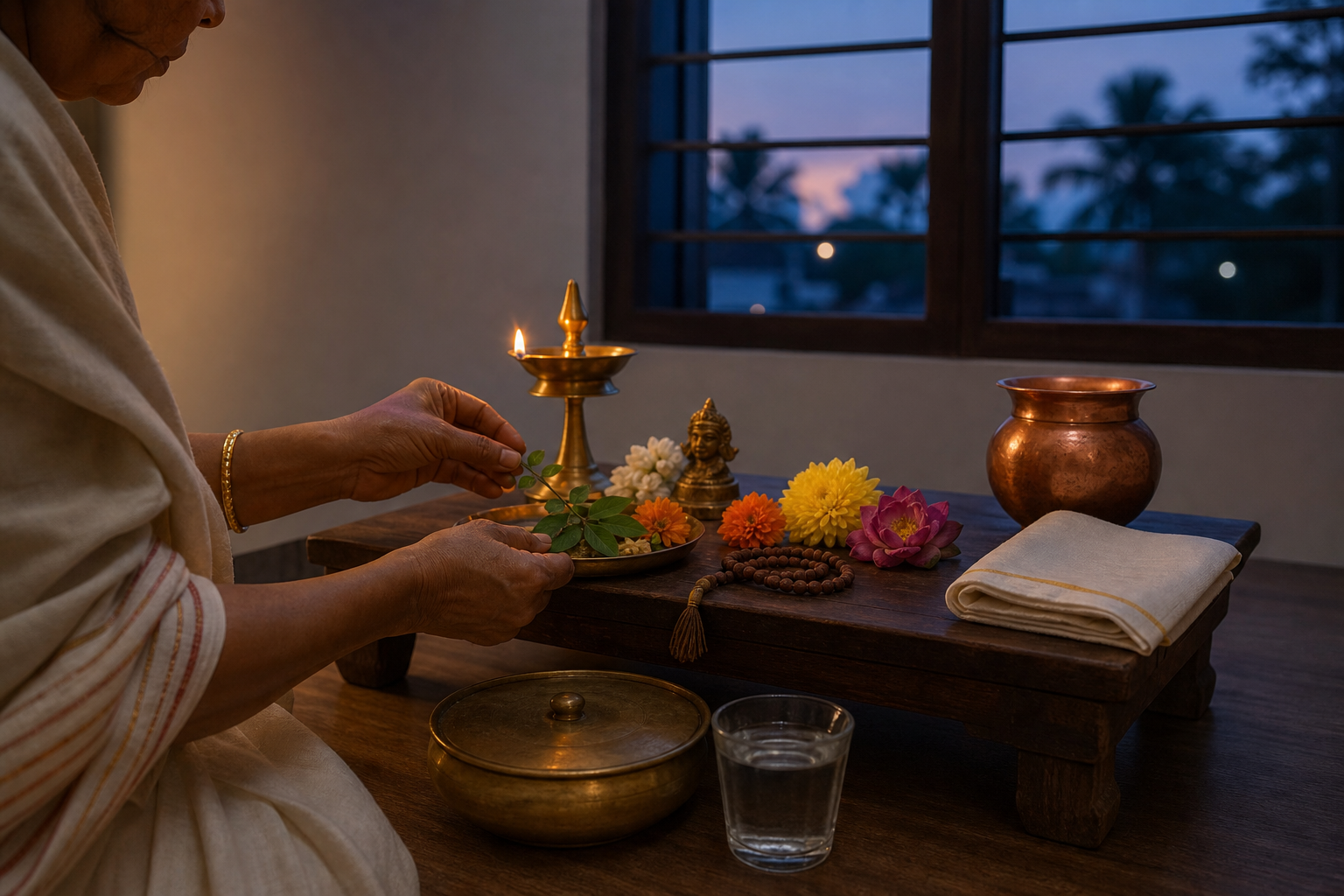
A calm Ekadashi usually starts with decisions made the previous evening. If you wait until the morning to settle the fasting rules, find a parana time and rearrange your work, food can occupy more attention than remembrance.
- On May 12, open a Panchang set to your current city. Save the local sunrise for May 13 and the complete parana window for May 14. If your sampradaya follows a particular Vaishnava, Smarta or regional calendar, use that calendar consistently for both dates.
- Decide the form of fasting before going to bed. Arrange any permitted phalahara ingredients and prepare the household so that you are not negotiating rules after the vrata has started.
- If practical, rise during Brahma Muhurta, approximately one hour and thirty-six minutes before local sunrise. Use that quiet period for japa, meditation or study. The calculation depends on your sunrise, so a generic time copied from another city is only an approximation.
- At or near sunrise, make a clear sankalpa. Plain language is sufficient when you do not follow a prescribed liturgical formula: identify Krishna Paksha Ekadashi, name your chosen form of restraint and dedicate it to your ishta-devata and a dharmic intention.
- Give the day a small, definite spiritual structure. Fix a period for japa, choose what you will study, limit avoidable digital consumption and identify one act of dana or seva you can actually complete.
- Prepare for May 14 before the evening ends. Having the parana meal and timing settled in advance makes it easier to close the vrata within the proper window.
If work, caregiving or another unavoidable duty makes an elaborate morning routine impossible, do not abandon the observance. Keep the sankalpa realistic and protect one uninterrupted period for remembrance. A modest discipline that you can maintain is more coherent than a demanding schedule that collapses into irritation and haste.
Choose a fasting form that supports the sankalpa
Ekadashi practice ranges from complete fasting to anukalpa, including fruit, milk or the phalahara permitted by a practitioner’s tradition. There is no reason to turn those different levels into a ranking of devotion. The suitable choice depends on health, age, prior practice and the rules of your household or sampradaya.
Follow an established family or sampradaya rule when you have one. Food lists vary across Vaishnava, Smarta and regional customs, so a universal list copied from a calendar graphic can create needless conflict. Decide what your observance permits, keep it simple and avoid spending the day searching for technical loopholes.
If a complete fast would compromise your health, anukalpa is a legitimate form of observance. If abstaining from food or fluids could interfere with a medical need or a prescribed medication schedule, do not change that care merely to make the vrata stricter. Use a modified observance and seek guidance from a qualified clinician when the safe choice is unclear.
The useful test is not whether another person would consider your fast severe. Ask whether the choice reduces distraction and supports steadiness, truthful speech, ahimsa and remembrance. If the method leaves you consumed by food, pride or anger, the outer rule has started working against the inner purpose.
Give the day a spiritual center beyond food
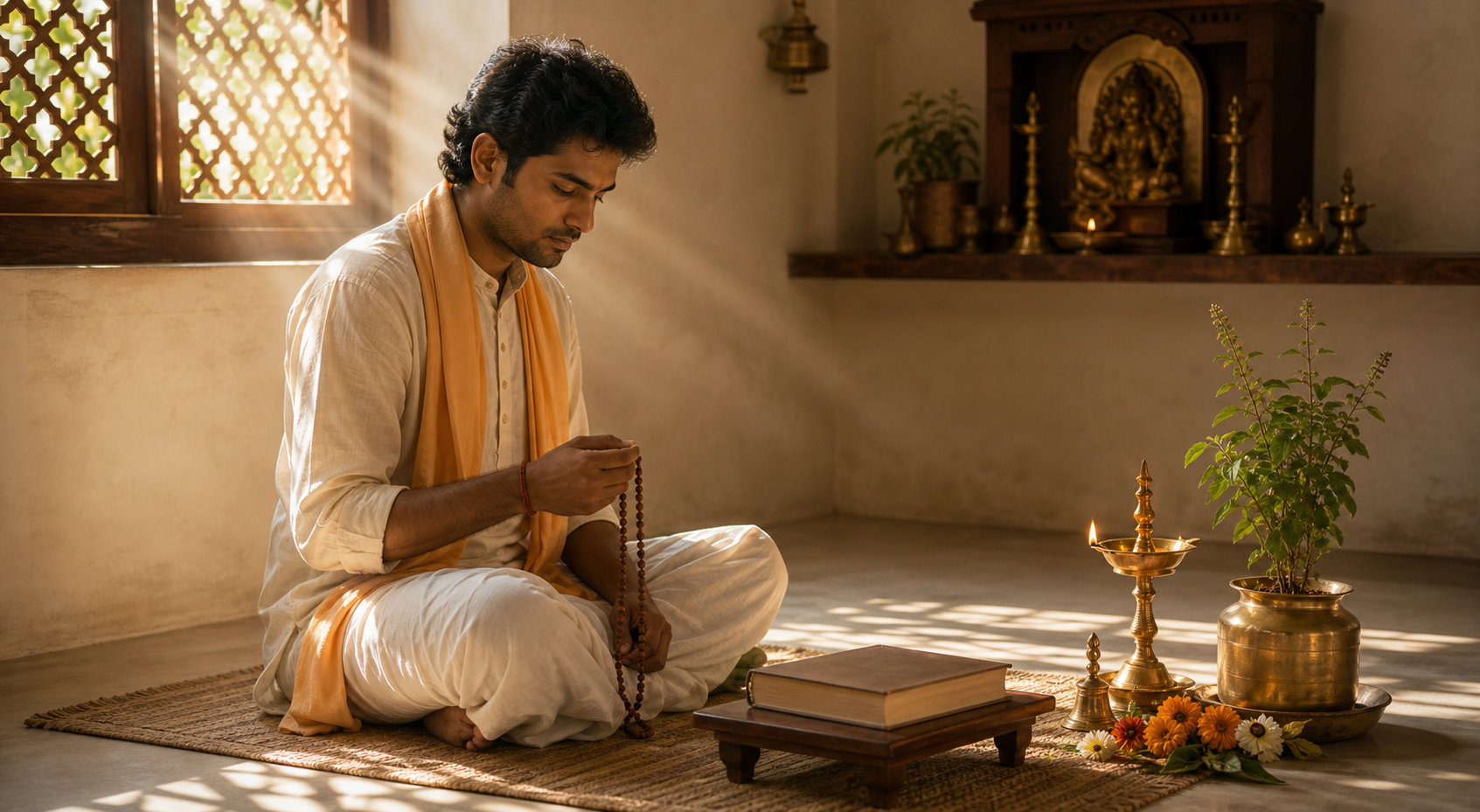
May 13 falls on Budhavara, Wednesday, traditionally associated with Budha and qualities such as discrimination, learning and communication. Put that association to practical use. Study something that clarifies dharma, and make restraint in speech part of the vrata rather than treating diet as the entire observance.
- For remembrance, continue the mantra given by your tradition. Where no prescribed practice applies, a simple repetition such as Om Namo Narayanaya or Om Namah Shivaya can provide a stable focus.
- For ahimsa, notice the moment a conversation becomes sharp. Pausing before an unnecessary reply is a more demanding form of restraint than merely changing a menu.
- For simplicity, reduce optional entertainment and habitual scrolling. The purpose is to recover attention for japa, contemplation and duty, not to make a display of digital austerity.
- For study, choose one bounded passage or teaching rather than collecting material all day. Finish it, sit quietly with it and identify one instruction that applies to your conduct.
- For seva or dana, select an act within your means and complete it without turning it into self-promotion.
This ethical center also makes the day intelligible across the wider dharmic family. Buddhist Uposatha, Jain Posadha and pratikraman, and Sikh commitments to simran and seva are not interchangeable with a Hindu Ekadashi vrata. Their kinship lies in disciplined remembrance, non-violence, self-restraint and service. Recognizing that kinship does not require erasing the distinct theology or practice of any tradition.
Complete parana correctly on May 14
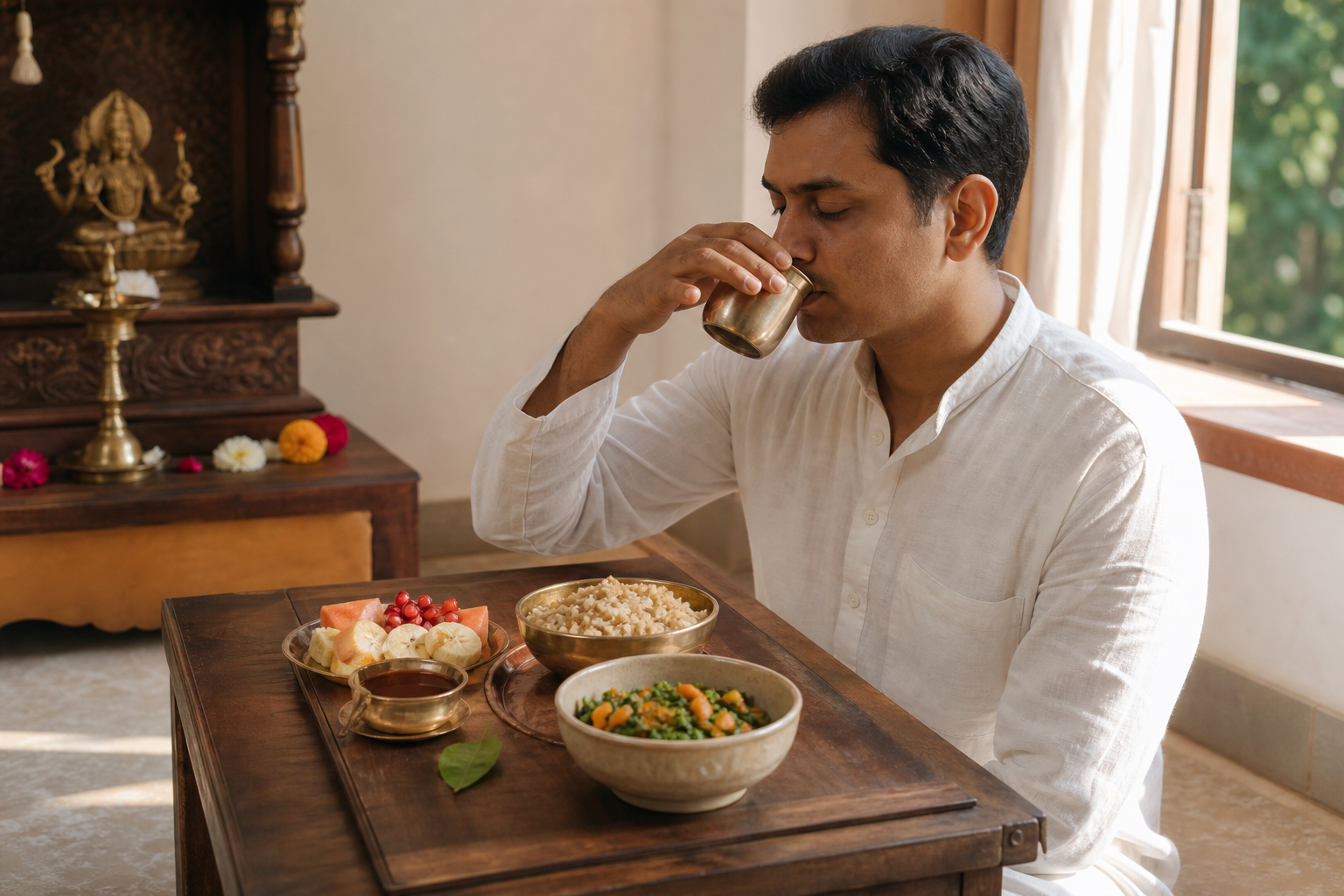
The most important calendrical distinction is simple: Dwadashi begins at 8:53 a.m. IST on May 13, but the customary parana is associated with Dwadashi after sunrise. Because Ekadashi was still present at the May 13 sunrise, the relevant Dwadashi sunrise occurs on May 14 in most Indian locations. That is why you continue the vrata through May 13 instead of eating as soon as the tithi changes.
- Check the May 14 entry in the same local Panchang you used to determine the observance date.
- Locate the stated parana interval rather than relying only on the sunrise time.
- Confirm that the initial Dwadashi portion called Hari Vasara has been excluded. Many traditions avoid parana during that interval.
- Have the food required by your family or sampradaya ready before the window begins.
- Break the vrata inside the accepted local window and follow any customary prayer or offering that accompanies parana in your tradition.
General auspicious periods such as Brahma Muhurta or Abhijit Muhurta do not replace the specific parana calculation. Likewise, Rahu Kaal is a consideration used for certain new undertakings; it is not a reason to disregard a properly determined Dwadashi parana window.
Location matters even when everyone is referring to May 13. Sunrise, longitude and the operative Panchang method can shift the applicable civil-date logic or shorten a window. If you are abroad, do not merely convert 8:53 a.m. IST into your time zone and assume the problem is solved. Use a Panchang calculated for your actual location. If you travel overnight, use the place where you will perform parana and check that calendar before beginning the vrata.
Before May 13 arrives, save your local May 14 parana window, settle the form of fasting and write a one-line sankalpa. Then let the calendar do its proper job: establish the boundaries of the vrata while you devote the day itself to remembrance, restraint and dharmic conduct.