
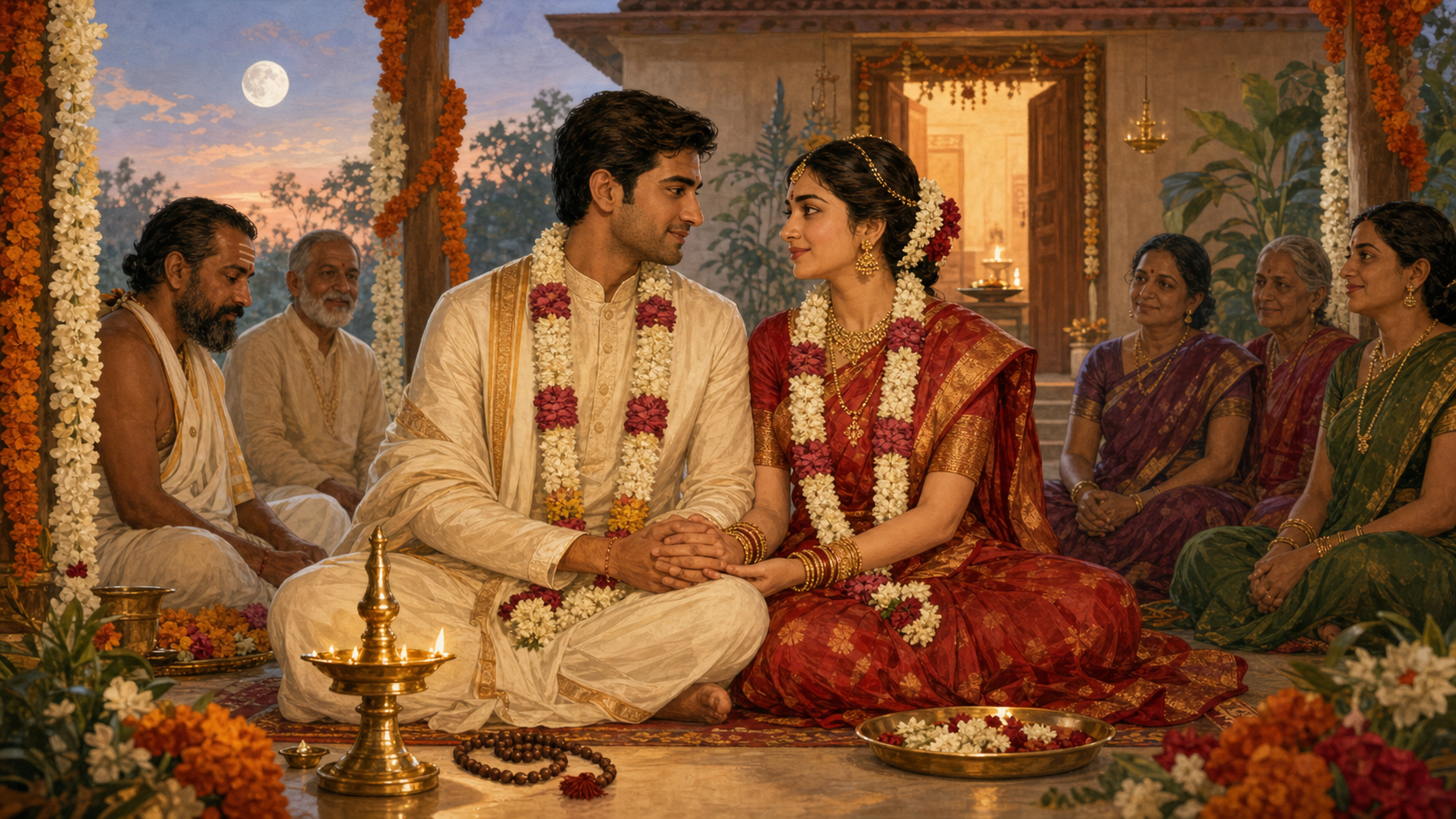
Your family may be asking three questions at once: Which date is auspicious for the wedding? What should you do if marriage is delayed? Which vrata should the couple observe after marriage? Treating these as one problem usually produces more anxiety, more ritual, and less clarity.
You need a sequence that respects dharma without asking astrology or ritual to do work that belongs to consent, compatibility, and honest effort. First establish whether the marriage itself is sound. Then choose its time. If there is a delay, combine spiritual discipline with practical action. After marriage, adopt only the household observance that both spouses can carry with sincerity.
Decide which marriage question you are actually solving
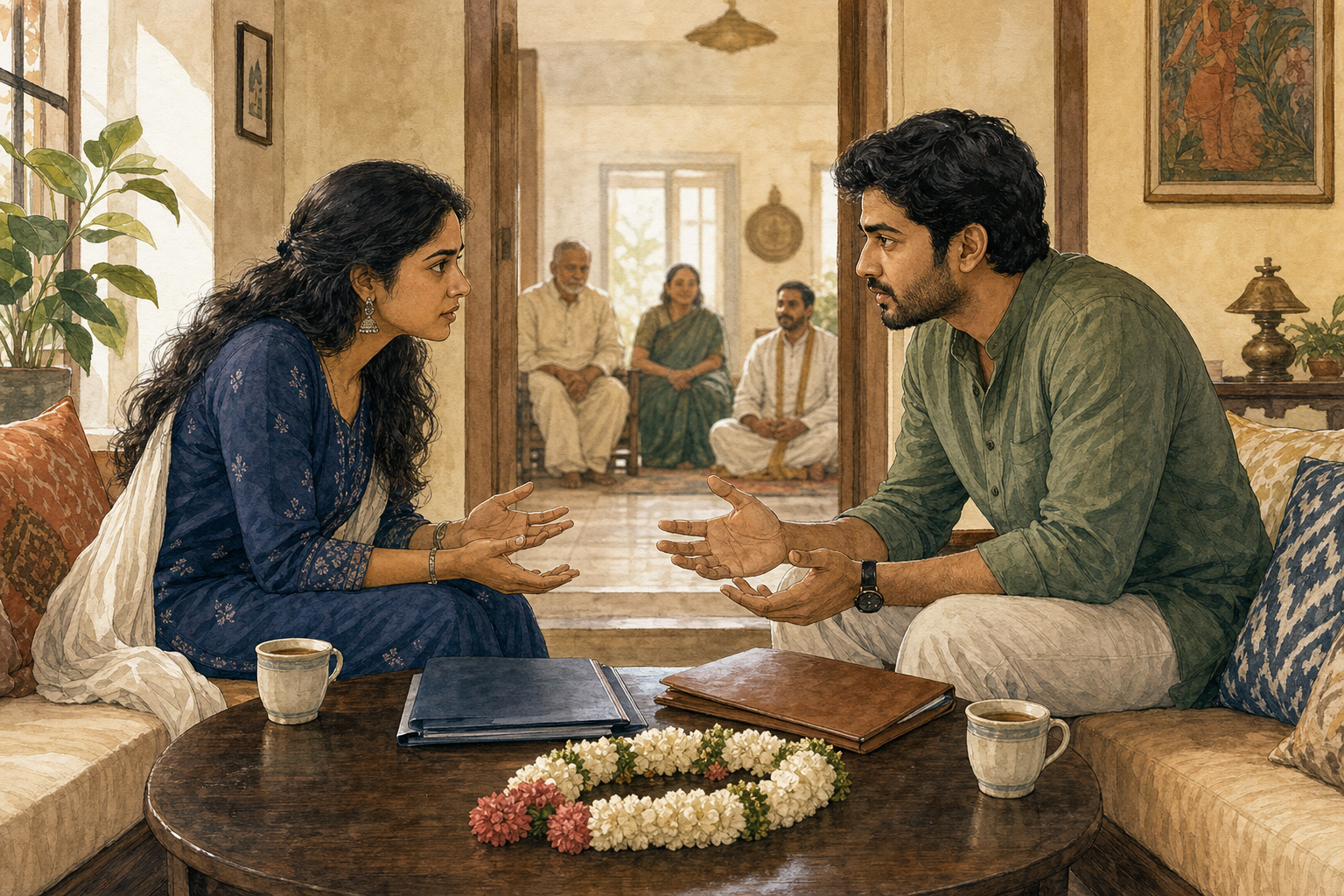
Marriage auspiciousness has three distinct layers. Each calls for a different decision:
- Muhurta is a scheduling question. The couple has freely agreed to marry, the families are ready, and you are selecting an appropriate time for the ceremony or a related beginning.
- A remedy is a response to delay. It may give a person devotional rhythm, patience, and confidence, but it cannot guarantee a proposal or compel another person’s consent.
- A household vrata is a recurring discipline. It begins after marriage and helps the couple return regularly to gratitude, truthfulness, generosity, and shared responsibility.
The order matters. Do not use muhurta selection to avoid a necessary conversation about compatibility. Do not diagnose an unmarried person as spiritually deficient merely because a match has not materialised. And do not adopt an elaborate household vrata before the spouses have agreed on who will prepare it, how often it will be observed, and what it is meant to cultivate.
Before consulting a Panchang, ask whether both people have spoken plainly about career plans, financial circumstances, family expectations, responsibilities, and the kind of household they want. These are among the practical conditions that can advance or delay a marriage. No auspicious hour can turn incompatible expectations into a stable shared life.
This gives you a useful boundary: suitability comes before timing. Muhurta can honour a sound decision. It should not manufacture one.
Build a marriage-date shortlist without misreading the Panchang
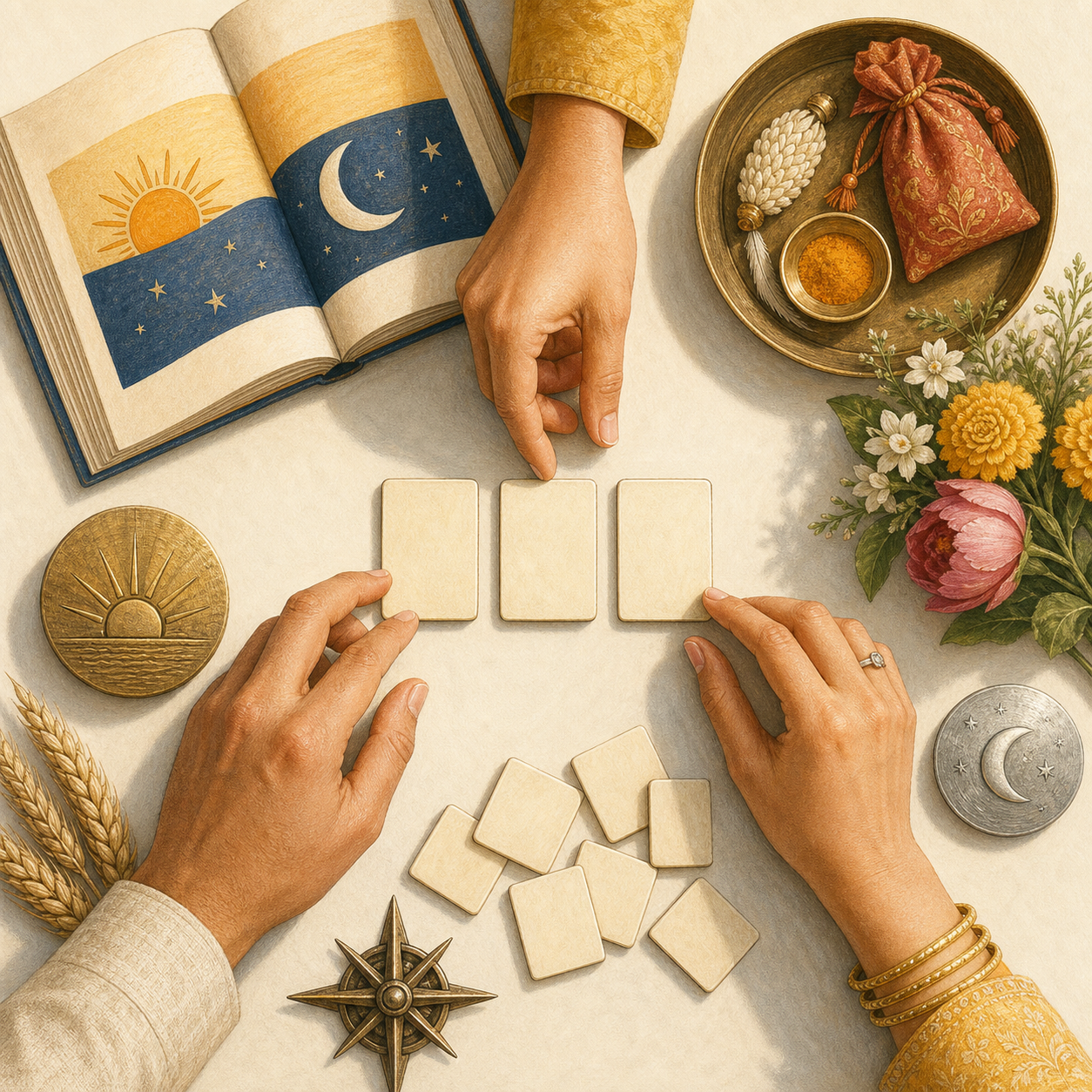
A calendar page labelled auspicious is not yet a personal marriage muhurta. Tithi, nakshatra, weekday, hora, local sunrise, family sampradaya, and birth-chart considerations can all affect the final choice. Work through them in a fixed order so that one attractive label does not decide the entire matter.
- Name the exact event. A day suitable for beginning wedding preparations, exchanging documents, making purchases, or conducting a domestic puja is not automatically suitable for the vivaha ceremony itself. Broadly favourable tithis must therefore be treated as a shortlist, not as universal permission for every rite.
- Use the Panchang for the ceremony’s location. Tithi boundaries and sunrise-based calculations vary by place and time zone. Record the city in which the rite will occur and confirm the local start and end of the relevant tithi before printing invitations or paying non-refundable deposits.
- Apply exclusions before preferences. Screen for eclipse windows, seriously adverse yogas, and periods your tradition reserves for solemn observance rather than celebration. Removing unsuitable windows first is safer than becoming attached to a convenient date and searching for reasons to defend it.
- Evaluate the supportive factors together. Shukla Paksha is often preferred for growth-oriented beginnings. Dvitiya, Tritiya, Panchami, Dashami, Ekadashi, and Trayodashi are frequently treated as favourable for various undertakings, but their appropriateness still depends on the purpose, nakshatra, yoga, weekday, and individual context.
- Add chart-specific refinements only after the general screen. If a family uses natal astrology, have a qualified practitioner assess the people concerned rather than relying on a generic Rashi forecast. Provide the information requested by that practitioner and tell them the actual ceremony location.
- Test the shortlisted window against reality. Make sure the couple, essential relatives, officiant, and venue can meet the chosen time without turning the rite into an exhausted rush. Practical disorder does not become spiritually desirable merely because a narrow window appears on a calendar.
Tula Rashi shows why personal context matters. In Vedic astrology, Rashi is determined by the Moon’s natal placement rather than a Western-style birth-date range. Tula spans Chitra pada three and four, all four padas of Swati, and the first three padas of Visakha. Friday and Venus hora may be favoured for Tula-associated harmony, while Wednesday may support documentation and Monday may suit calm domestic worship. These are Tula-specific refinements within a larger method, not blanket wedding rules for everyone.
Hora is best used as a final refinement, not as a rescue device. If the tithi, local timing, or broader chart assessment is unsuitable, a preferred planetary hour does not erase the problem. Ask the astrologer or priest to explain which factors are essential, which are merely desirable, and which family customs are being applied. That explanation lets you distinguish a principled decision from an endlessly moving target.
Use marriage remedies as disciplines, not guarantees
When marriage is delayed, families often reach immediately for a totka. Begin instead by identifying the actual bottleneck. Education and career demands, financial conditions, family expectations, personal readiness, a restricted social network, and requirements that leave too little room for genuine compatibility can all contribute. A devotional practice may steady the person facing this uncertainty, but it cannot update a biodata, clarify expectations, widen a search, or conduct a respectful conversation.
A sound remedy therefore has two tracks: an inward discipline and an outward action. Neither should be allowed to replace the other.
Choose one inward discipline you can practise honestly
Depending on family tradition, this might be lighting a lamp near Tulasi, Gayatri japa, Katyayani Vrat, simple japa and meditation, pranayama, or service in a temple or another Dharmic community setting. These practices are valuable when they create steadiness, self-examination, and a regular return to dharma. They should not be sold as mechanisms that force a wedding to happen.
Choose one practice that is recognised in your tradition and modest enough to sustain. Clarify its method with a trusted elder, guru, or priest rather than combining every remedy found in circulation. State the sankalpa without trying to control another person: ask for clarity, a compatible marriage, ethical conduct, and the strength to accept a sound outcome.
Pair every observance with one outward action
After the observance, complete one task that can actually move the marriage process forward. Update the biodata. Replace vague preferences with a short set of essential values. Ask trusted relatives and friends to reactivate their networks. Review a profile on a reputable matrimonial platform with appropriate care. If repeated discussions collapse for the same reason, consider qualified marital or life-balance counselling rather than repeating the same search unchanged.
Community participation can help without turning a sacred space into a marketplace. Seva, annadanam, and attendance at temple, gurudwara, Jain upashraya, or Buddhist vihara activities allow people to practise responsibility and meet a wider community naturally. The primary intention should remain service. Any social connection that follows should be approached with transparency and respect.
Reject remedies that violate dignity
A practitioner who guarantees marriage by a fixed deadline, demands escalating payments, or uses fear to keep a family dependent is not offering certainty; the family is being exposed to exploitation. Traditional remedies themselves carry no assured result, and exaggerated promises deserve caution.
- Do not let a remedy become a reason to pressure someone into accepting a match.
- Do not conceal material facts from a prospective spouse in the name of securing an auspicious outcome.
- Do not treat age, delay, or a chart interpretation as permission to shame the person seeking marriage.
- Do not keep paying for new rituals simply because an earlier promised deadline passed.
- Do not allow a totka to replace equality, transparency, consent, or a realistic review of the search.
The clearest test is ethical: does the practice make you more truthful, patient, responsible, and capable of respecting another person’s freedom? If it produces fear, secrecy, compulsion, or financial dependence, it is moving away from the purpose a Dharmic discipline should serve.
Turn a household vrata into a shared rule of life
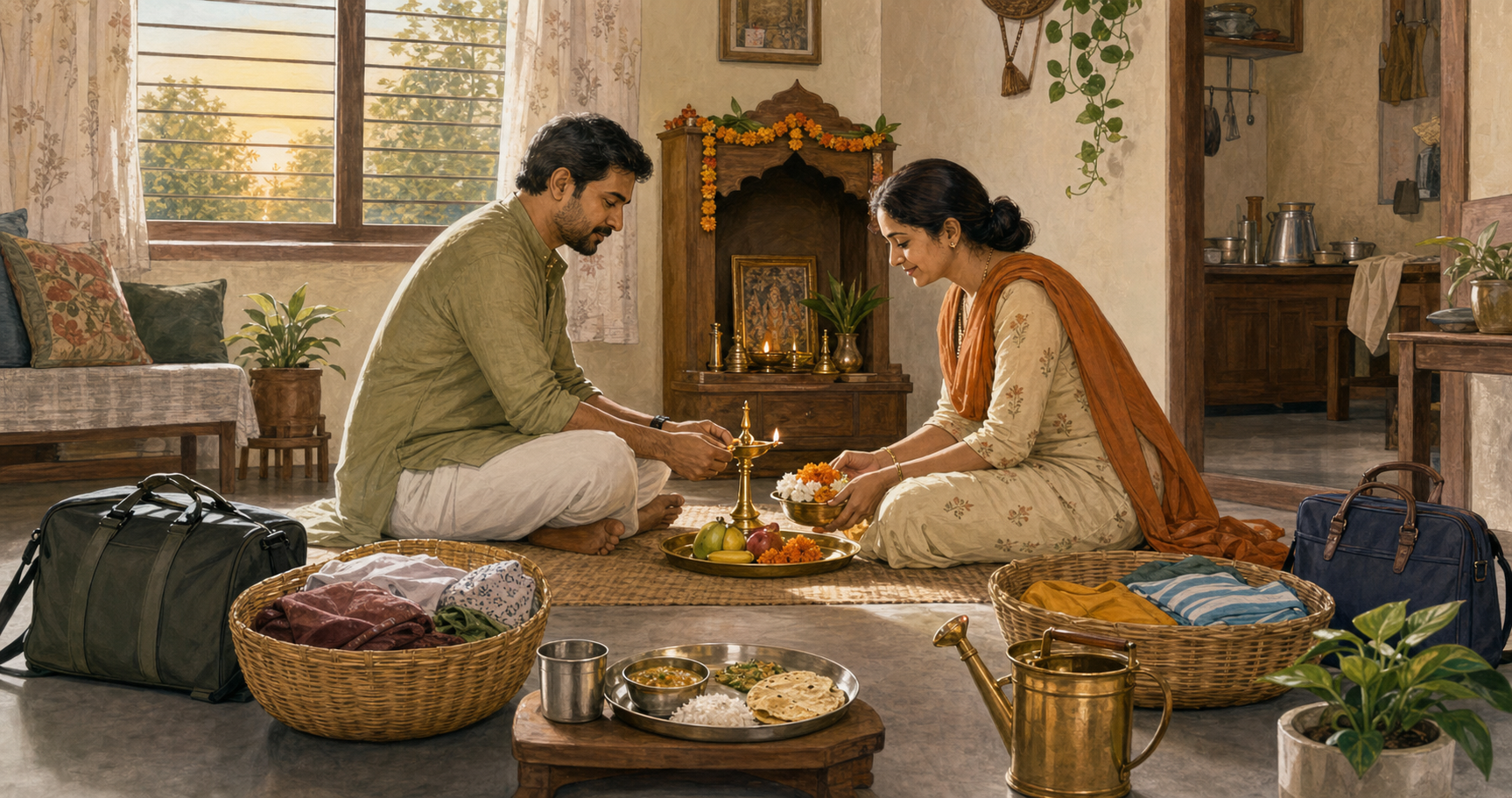
After the wedding, auspiciousness has to leave the calendar and enter daily conduct. A household vrata is useful when it gives both spouses a recurring occasion to worship, tell the truth about their shared responsibilities, offer something to others, and begin again with less resentment. It becomes burdensome when one spouse receives the spiritual credit while the other carries all the preparation.
Sri Satyanarayana Vratham is widely observed after a Hindu wedding, particularly during the first year of married life. Families differ on timing: some observe it on Shukla Paksha Chaturdashi, the lunar day before Purnima, while many perform it on Purnima itself. Both timings exist within living household traditions. The practical answer is to follow the family’s sampradaya or trusted guidance consistently rather than repeatedly switching dates in search of a supposedly stronger option.
- Agree on the observance. Both spouses should understand why the vrata is being undertaken. A family custom deserves respect, but willing participation gives it a sound household foundation.
- Choose Chaturdashi or Purnima through lineage guidance. Ask the relevant elder, guru, or priest which practice the household follows. Do not declare one universally superior when regional and family usage differs.
- Confirm the local tithi. Mark the intended lunar day using a reliable regional Panchang, then verify its local start and end time. A date copied from another country or time zone may not represent the same tithi window where you live.
- Keep the ritual sequence clear. The customary framework includes sankalpa, worship of Sri Satyanarayana with offerings, listening to the Satyanarayana Katha, and sharing prasada such as sheera, fruit, or sweets. Ask for lineage-specific details instead of improvising requirements.
- Divide the work visibly. Decide who will confirm the timing, arrange the worship space, obtain the offerings, communicate with relatives or the priest, prepare prasada, and restore the home afterward. Shared devotion should include shared labour.
- Connect worship with dana. A household may add annadanam, a modest charitable act, or coordination with a local temple. Decide this before the puja so generosity is part of the sankalpa rather than an afterthought.
The vrata’s ethical centre is more important than display. Satya can appear in a candid conversation about money, obligations, or hurt. Dana can appear in food or support offered without seeking status. Ahimsa can appear in the refusal to humiliate a spouse during disagreement. These values also resonate across Hindu, Buddhist, Jain, and Sikh traditions, even though their ritual forms and authorities are not identical.
That distinction matters in a household drawing from more than one Dharmic tradition. Shared values do not require you to blur separate practices into an invented hybrid. Discuss which rites each spouse wishes to retain, which observances can be shared, and where each person needs room for their own lineage. Mutual respect is more durable than forced uniformity.
Plan for ordinary disruption as well. If travel, work, illness, or another serious constraint interferes with an intended vrata, do not invent a replacement rule or blame a spouse. Ask the trusted authority who guides your observance what your sampradaya permits. Continuity means returning sincerely to the discipline; it does not mean making the household fearful of unavoidable imperfection.
Key takeaways
- Establish consent and compatibility before asking for an auspicious wedding time.
- Treat generic auspicious dates as a shortlist. Confirm the event, local tithi, exclusions, nakshatra, weekday, hora, family custom, and any chart-specific requirements.
- Do not assume that a tithi suitable for wedding-related planning is automatically a vivaha muhurta.
- Use a marriage remedy to cultivate steadiness, then pair it with a practical step that addresses the real delay.
- Reject guaranteed outcomes, fear-based pressure, escalating payments, concealment, and any practice that weakens consent.
- For Sri Satyanarayana Vratham, follow the household’s Chaturdashi or Purnima tradition consistently, verify the local tithi, and divide the labour between spouses.
- Judge a household vrata by the truthfulness, generosity, non-harm, and shared responsibility it produces beyond the puja room.
Your next action should match your actual question. If you are choosing a date, write down the ceremony location and family tradition before requesting a shortlist. If marriage is delayed, choose one sincere discipline and complete one practical search task alongside it. If you are newly married, sit together and agree on the vrata, timing tradition, responsibilities, and act of dana before placing anything on the calendar.
References
- DharmaRenaissance Blog — Tula Rashi 2026: Definitive Guide to Auspicious Days, Muhurats, and Mindful Beginnings
- DharmaRenaissance Blog — Sheegra Vivah Totke: शीघ्र विवाह के लिए समन्वयी, सरल और सार्थक उपाय जो उम्मीद जगाएँ
- DharmaRenaissance Blog — Sri Satyanarayana Vratham 2026 Dates: Auspicious Days, Purnima vs Chaturdashi, Puja Guide
