
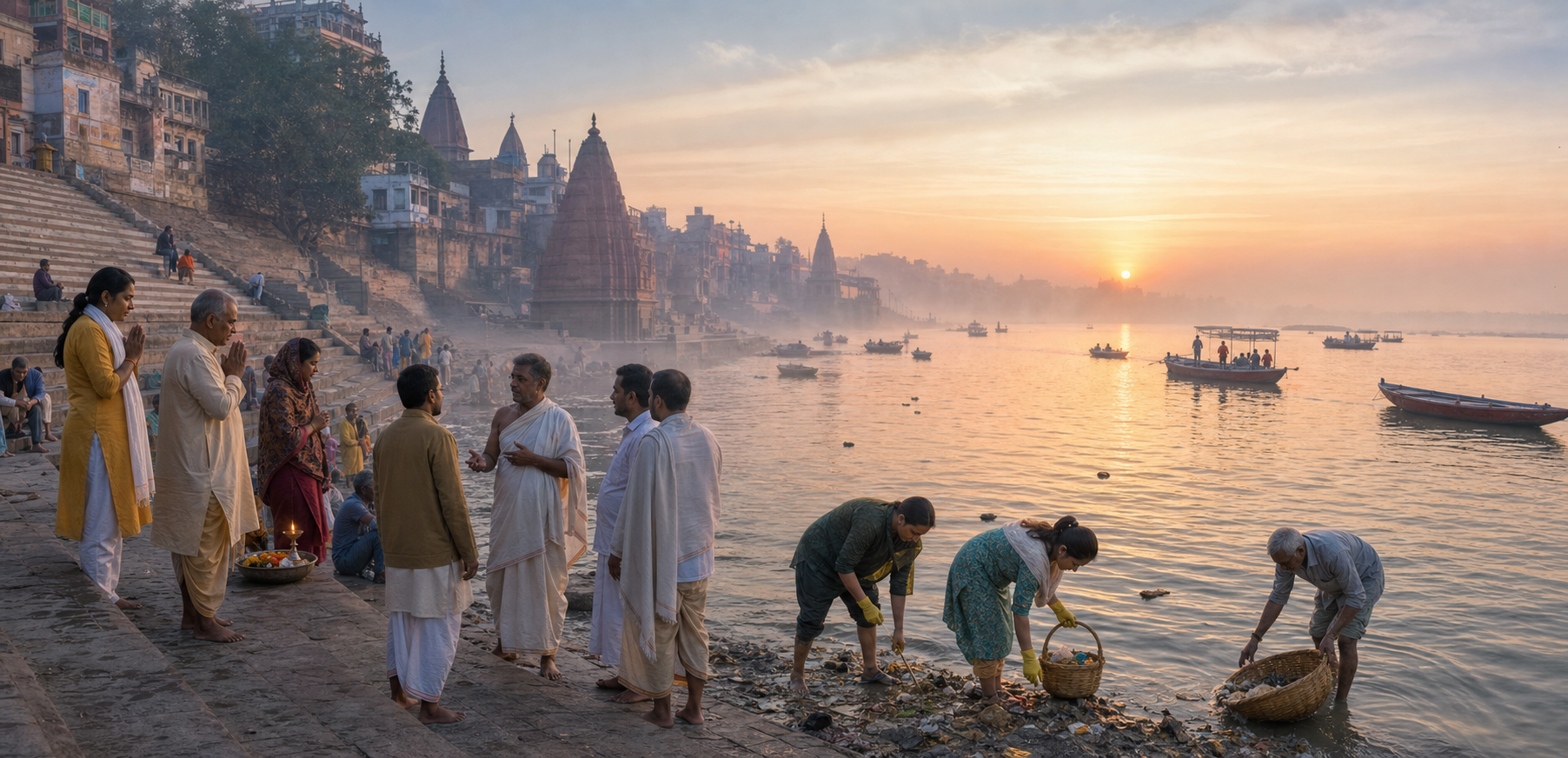
You may be planning a visit to a river ghat and wondering how to keep it from becoming a hurried sequence of temple queues, photographs, and purchases. A meaningful yatra needs a clearer shape: enter with a question, meet each sacred tradition on its own terms, and leave with a duty that changes how you treat the river.
This approach also answers a harder question. Sacred rivers can strengthen unity among dharmic communities, but only when unity means mutual regard and shared responsibility, not the erasure of real differences. Your conduct at the water’s edge is where that principle becomes visible.
A tirtha is a crossing, not a collection
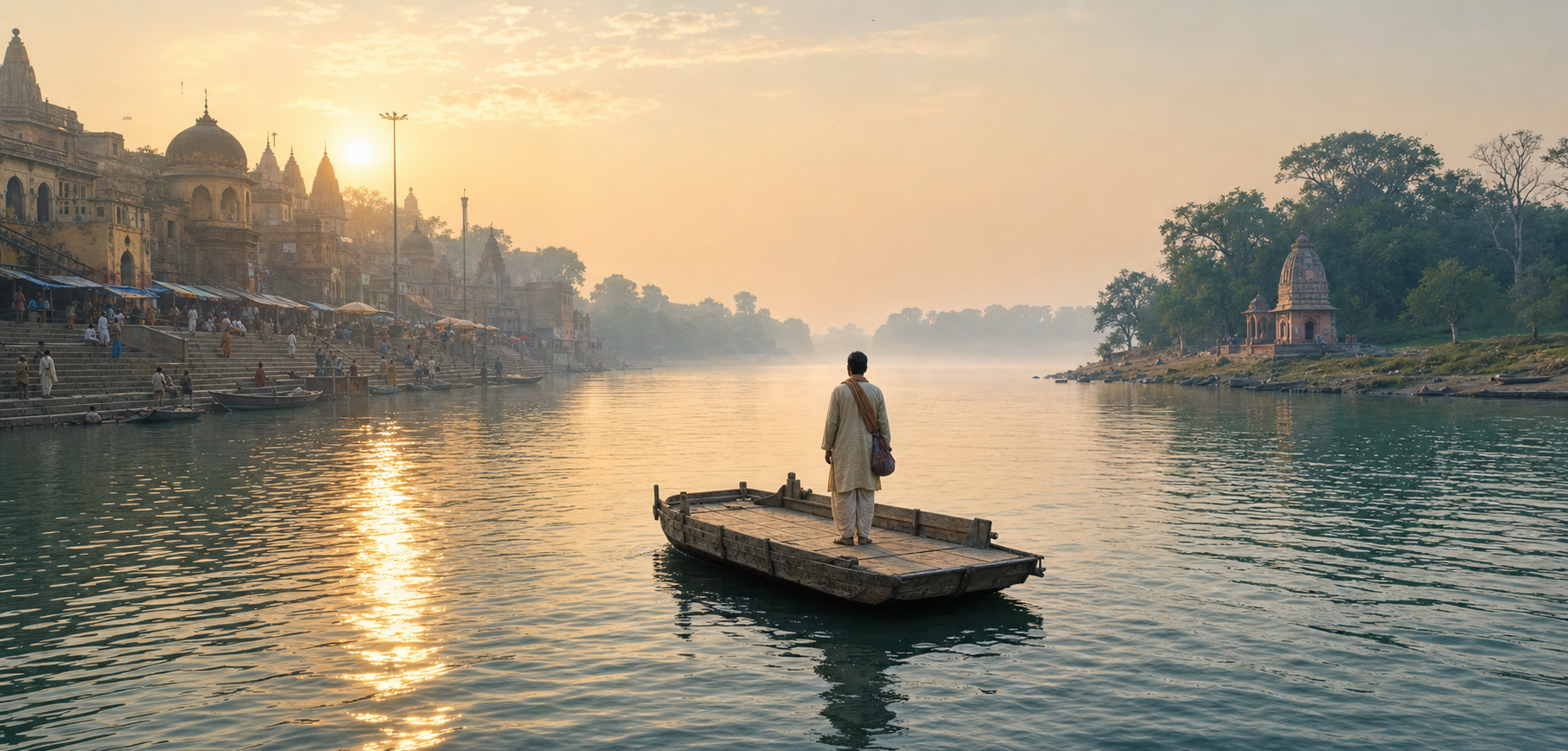
In its classical sense, a tirtha is a crossing-place between the visible and the invisible, often associated with sacred water. This is more demanding than calling a destination holy. It asks what you intend to cross: distraction into attention, fear into steadiness, self-concern into service, or inherited identity into lived practice.
That distinction changes how you plan. If the goal is to collect famous sites, the natural measure is how many places you cover. If the goal is pilgrimage, the measure is whether one place receives enough attention to alter your conduct. A full itinerary can still be spiritually thin; a single morning at one ghat can become a genuine yatra when prayer, observation, and responsibility remain connected.
The river is therefore not scenery behind the shrine. It joins geography to practice. A current passes settlements, receives tributaries, sustains life, and continues beyond the pilgrim’s field of vision. When you stand beside it, interdependence stops being an abstract teaching. What happens upstream reaches someone downstream. What one worshipper leaves on the bank becomes another community’s burden.
Before adding another temple to your route, ask two practical questions. What form of attention does this place require? What obligation should follow from visiting it? If your plan has no answer to either question, simplify the plan before you travel.
Choose the pilgrimage by the work before you
Sacred places need not be treated as interchangeable stops. Each landscape gives prominence to a different spiritual mode. Choose the setting that addresses the question you are actually carrying, then allow its own ritual grammar to guide you.
| Your present question | Landscape to consider | What the place brings into focus | Practice to prioritise |
|---|---|---|---|
| How do I face impermanence without becoming cold or fearful? | Tarapith | Tara, Bhairava, the mahashmashana, and the nearby Dwarka River bring compassionate Shakti into direct contact with Shaiva awareness of death and transcendence. | Reverent darshana, ethical self-examination, and an unhurried pause by the river. Amavasya and nocturnal worship belong to the shrine’s established rhythm, but they need not be your first choice if you require a quieter visit. |
| How can devotion shape conduct in the middle of urban life? | Kalighat | Kali worship, the Bhairava shrine of Nakuleshvara, and the historic Adi Ganga setting place intense Shakta devotion inside Kolkata’s civic life. | Darshana with attention to seva and public responsibility. Early morning or late evening arati may offer a more deliberate frame than simply entering at the busiest moment. |
| How can joy, study, and community become one discipline? | Nabadwip-Mayapur | The birthplace of Sri Chaitanya Mahaprabhu, the Bhagirathi-Jalangi landscape, and the nine islands associated with navadha-bhakti express the communal and sustaining current of Vaishnava devotion. | Sankirtana, scriptural study, satsanga, and seva. Gaura Purnima carries special significance, while ordinary daily routines may provide more room to notice how devotion becomes habit. |
| How does one river carry family duty, Krishna-bhakti, mortality, and renewal? | The Yamuna corridor | Yamunotri, Mathura, Vrindavan, and the meeting at Prayagraj form a sacred itinerary linking Yamunaji’s origin, Krishna’s lila, and the wider geography of tirtha-yatra. | Choose one reach of the river and attend to its local form of worship. Kartik snana, Yama Dwitiya, quiet prayer, japa, and kirtan each open a different doorway into the river’s sacred identity. |
You do not have to cover an entire river system to receive its teaching. A Yamuna yatra can centre on a quiet morning in Vrindavan rather than a compressed journey from Yamunotri to Prayagraj. A Bengal pilgrimage can give Tarapith, Kalighat, and Nabadwip separate attention rather than forcing all three into a race against the clock.
Festival timing also involves a real decision. Kali Puja and Deepavali intensify Kalighat’s public devotional life; Gaura Purnima draws practitioners to Nabadwip; amavasya carries particular weight at Tarapith; and Kartik and Yama Dwitiya shape Yamuna observance. Choose a festival when collective worship is central to your purpose. Choose an ordinary day when silence, study, or patient observation matters more. A larger occasion is not automatically a deeper one for every pilgrim.
Use a four-part discipline at every sacred river
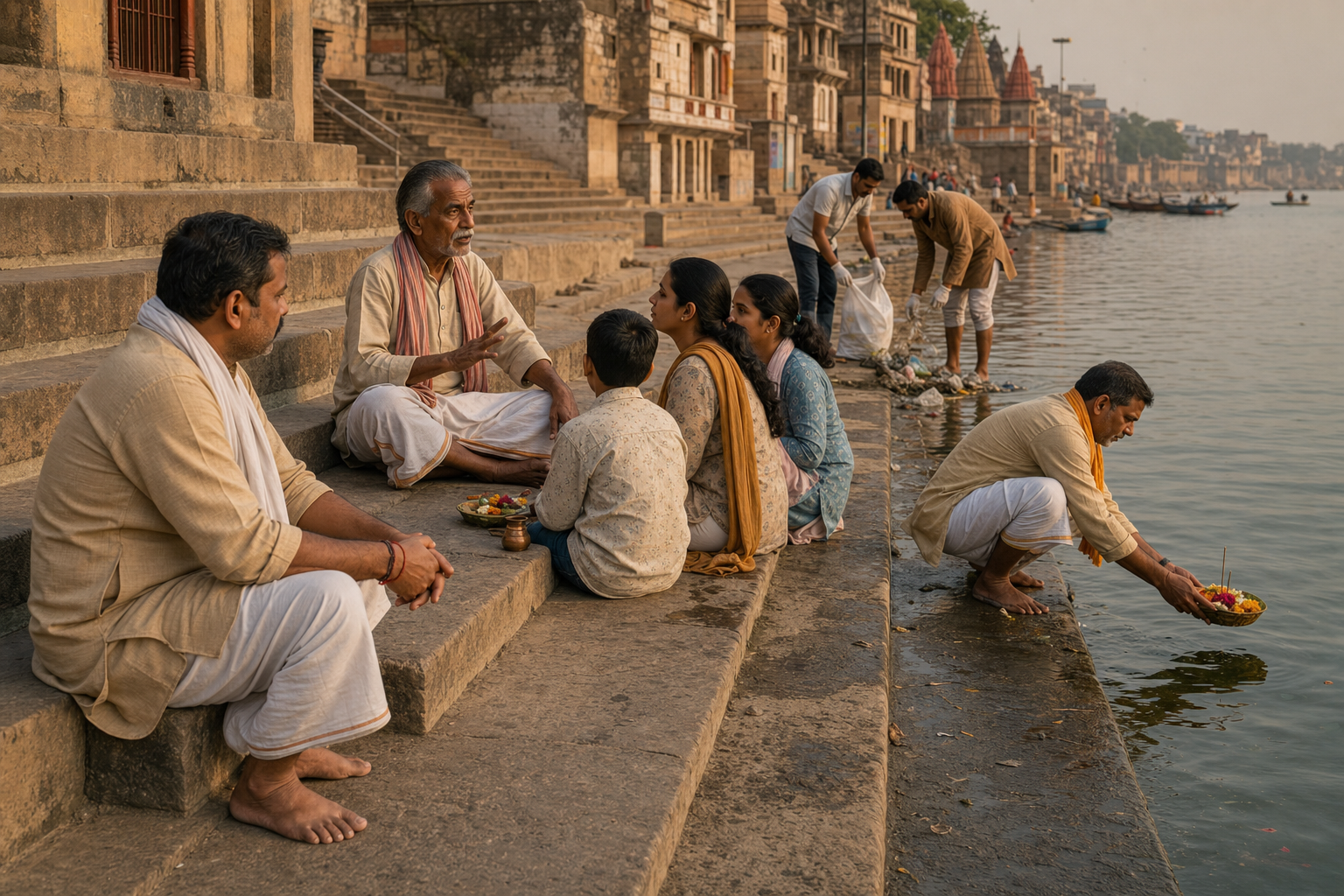
A pilgrimage becomes easier to practise when you give it a simple sequence. The same sequence works for a long journey or a visit to the nearest sacred ghat.
- Name the crossing before you leave. Write one plain sentence describing the inner work before you. You might be seeking steadiness in the face of loss, greater discipline in seva, or a less sectarian understanding of Dharma. Keep the intention narrow enough to remember when the day becomes crowded.
- Receive the place before trying to perform. When practical, let your first encounter be with the river or ghat rather than a shop or camera. Notice the flow, the people serving, the local rhythm of worship, and the condition of the bank. Learn the site’s customs before joining a rite. Modest attire and patient observation communicate respect without requiring a display of piety.
- Practise the local grammar. At Tarapith, do not reduce Tara and Bhairava to generic symbols detached from the shrine’s Shakta and Shaiva setting. At Nabadwip, allow sankirtana and community-centred bhakti to remain central. At the Yamuna, address the river as the sacred presence devotees understand her to be, not merely as a picturesque backdrop. Unity begins with accurate attention.
- Leave with a duty. Carry away everything you brought, keep packaging and non-biodegradable objects out of the water, and follow local rules governing offerings. Extend the visit through seva, support for river care, or a more restrained use of water at home. Responsible ritual and sustainable water practices belong within devotion, not outside it.
Do not confuse sacredness with physical safety. A revered river can still have a dangerous current, an unstable bank, or a local restriction on bathing. Follow instructions at the site and do not enter the water merely because other people do. If bathing is unsafe or prohibited, remain on the bank and continue with prayer, japa, darshana, or service.
This discipline also prevents a common split between ritual and ethics. Snana, darshana, arati, japa, and kirtan refine attention in different ways. Their fruit should be visible in greater restraint and care. If worship leaves the pilgrim more demanding of the place and less responsible for it, something essential has been missed.
Seek unity without flattening real differences
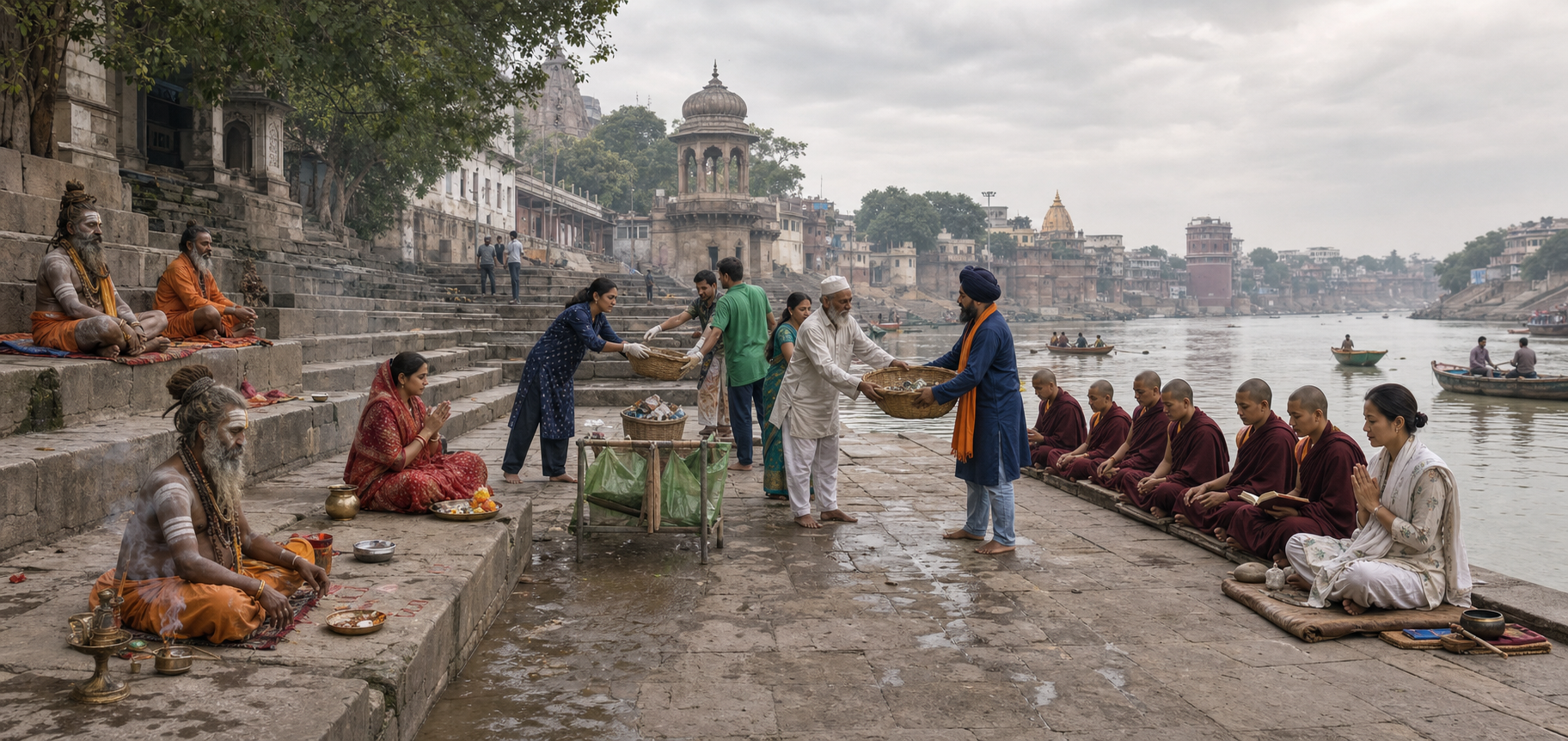
The strongest form of dharmic unity does not require everyone to use the same name for the sacred or accept the same metaphysics. It asks communities to recognise one another accurately, receive one another hospitably, and cooperate where duty is shared.
Within Sanatana Dharma, Bengal’s river-linked tirthas show how plurality can be complementary. Shakti’s transforming power, Shiva’s awareness, and Vishnu’s sustaining grace appear through different deities, rituals, moods, and communities. Tarapith is not Nabadwip, and neither becomes more inclusive by pretending the distinction is unimportant. Their relationship becomes intelligible when difference is approached without rivalry.
The wider relationship among Hindu, Buddhist, Jain, and Sikh paths requires equal care. These traditions do not all hold identical doctrines about river divinity, purification, images, or ritual action. Their common ground is more credible when expressed through interdependence, compassion, restraint, and respect for living beings. Shared ethics can unite communities without asking any community to surrender its language or lineage.
If you are organising a multi-tradition pilgrimage, discussion, or service day, begin with questions rather than declarations of sameness. Ask how each participating community understands water, restraint, purification, compassion, and seva. Then identify a concrete responsibility that everyone can undertake without doctrinal compromise: cleaning an accessible bank, reducing ritual waste, serving pilgrims, supporting a community kitchen, or teaching children not to leave refuse at a ghat.
This makes ahimsa visible. It also gives unity a test. If cooperation leaves the river cleaner, the vulnerable better served, and participants more capable of speaking about one another accurately, it has produced something durable. If unity exists only in ceremonial language while the river absorbs the cost, it remains incomplete.
The Yamuna’s sacred identity offers a particularly intimate example. Revered as Yami or Yamuna, the sister of Yama and daughter of Surya and Saranyu, she joins light, moral order, mortality, affection, and renewal within one river tradition. Yama Dwitiya recalls the bond between Yamuna and Yama, directing sacred memory toward the ordinary dharma of care between siblings. Cosmic meaning and family responsibility meet at the same water.
Key takeaways
- Begin with the inner crossing you need to make, not the number of sacred sites you hope to collect.
- Choose a river landscape whose dominant practice fits that work: contemplation at Tarapith, civic devotion at Kalighat, communal bhakti at Nabadwip, or the long sacred biography of the Yamuna.
- Move through the yatra in a deliberate order: receive the river, learn the local custom, participate respectfully, and carry a duty home.
- Treat Shakta, Shaiva, Vaishnava, Buddhist, Jain, and Sikh differences honestly. Dharmic unity is strengthened by accurate recognition, not vague claims that every path is identical.
- Make stewardship part of worship. An offering that burdens the river contradicts the gratitude it is meant to express.
Your next pilgrimage can begin before you book a journey. Name one question, choose one river landscape, learn its local customs, and decide how care for water will continue after you return. At the ghat, let your first act be attention and your last act be responsibility. That is how a visit starts to become a crossing.
References
- DharmaRenaissance Blog — Tarapith, Kalighat, Nabadwip: Bengal’s Sacred Tirthas Uniting Shakti, Shiva, Vishnu
- DharmaRenaissance Blog — Yamuna River’s Sacred Power: Mythic Origins, Living Devotion, and Dharmic Unity
