
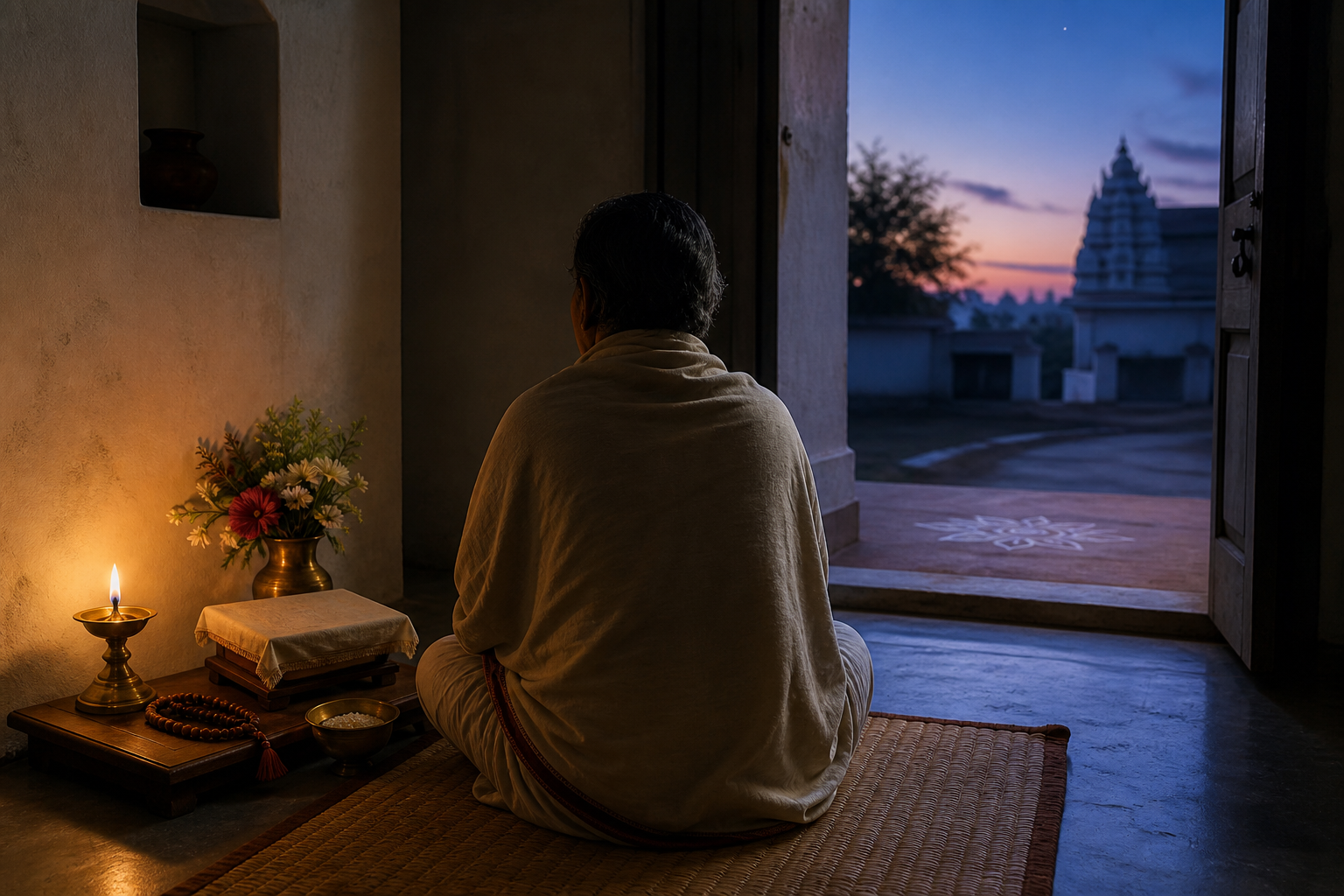
If you want to observe this sacred season but are unsure whether to follow Margashirsha dates, Margazhi dates, Bhagavad Gita recitation, or Tamil hymns, begin by separating the calendar from the practice. The devotional worlds overlap, but their dates and liturgical anchors are not interchangeable in every region.
You do not need to collect every custom into one crowded routine. Choose the calendar followed by your family or temple, select one primary devotional text, protect a quiet period before sunrise, and let the month’s discipline produce at least one form of dana or seva. That is enough to make the observance coherent.
Margashirsha and Margazhi overlap without being identical
Margashirsha, also called Margashira in several regional usages, is the ninth lunar month in the traditional Hindu calendar. It generally falls around late November and December, but its boundaries can vary between Purnimanta and Amanta systems. A date printed for one regional calendar should therefore not be assumed to govern every household or temple.
Margazhi is the ninth month of the Tamil calendar and is aligned with Dhanur Masa and the Sun’s transit through Sagittarius. Its dates are determined through a solar reckoning. For example, Margazhi in 2025-2026 ran from 16 December 2025 through 14 January 2026. Those dates describe that particular year; they should not be copied into a plan for another year without checking a current panchangam.
This distinction matters most when you are planning a vrata, arranging leave for a temple observance, or coordinating recitation with relatives in another region. Use the calendar your community actually follows. If your household tradition is unclear, ask the temple where you intend to participate and follow its announced schedule consistently for the month.
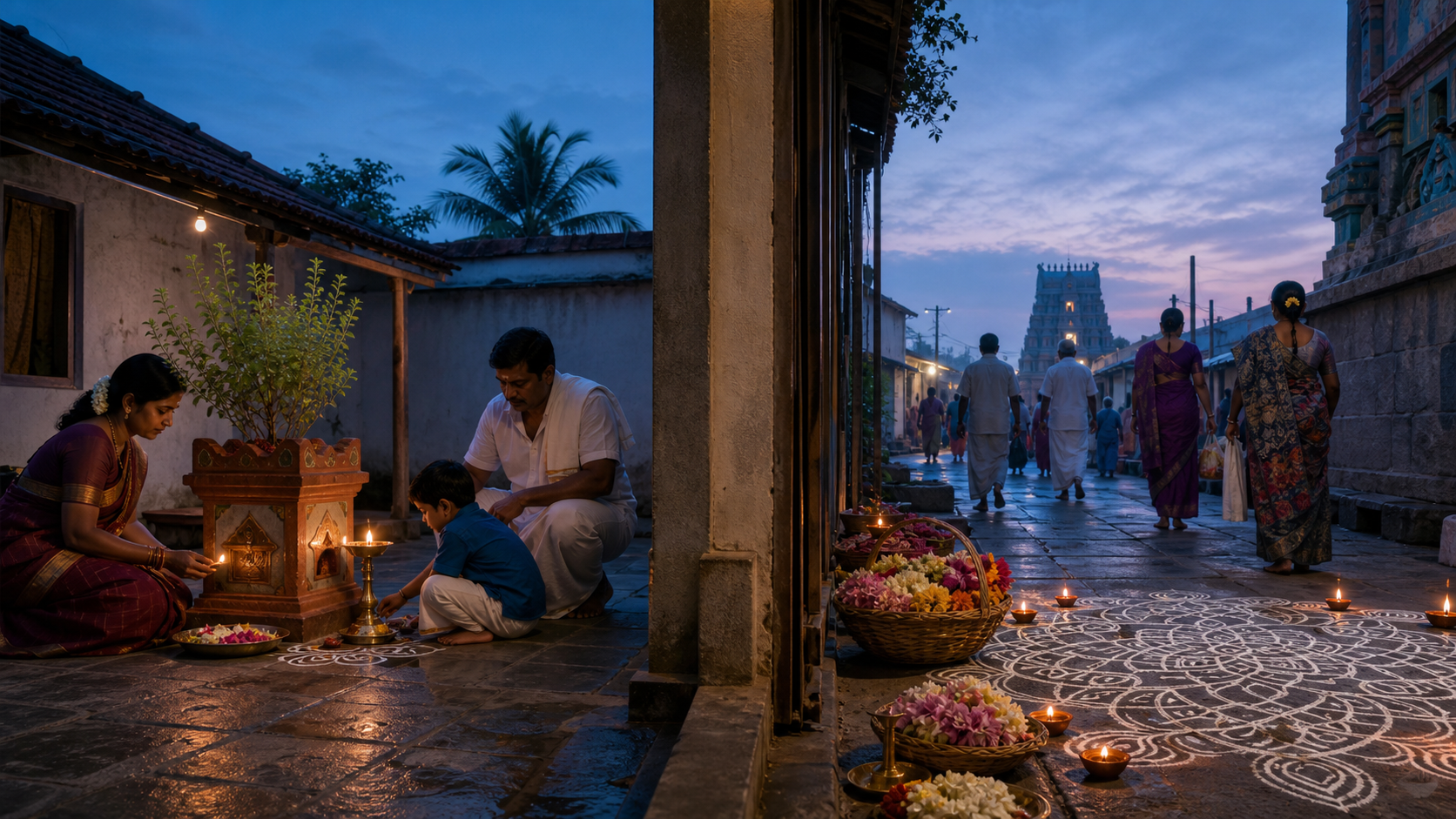
The safest way to understand the relationship is as a shared devotional season expressed through different calendar systems. Margashirsha carries a strong Bhagavad Gita, Sri Krishna, and Sri Vishnu emphasis. Tamil Margazhi brings its own especially visible Vaishnava and Saiva hymn traditions, dawn worship, kolam, temple ritual, and sacred music. Their kinship should invite participation, not erase their distinctions.
Choose one devotional center before adding more practices
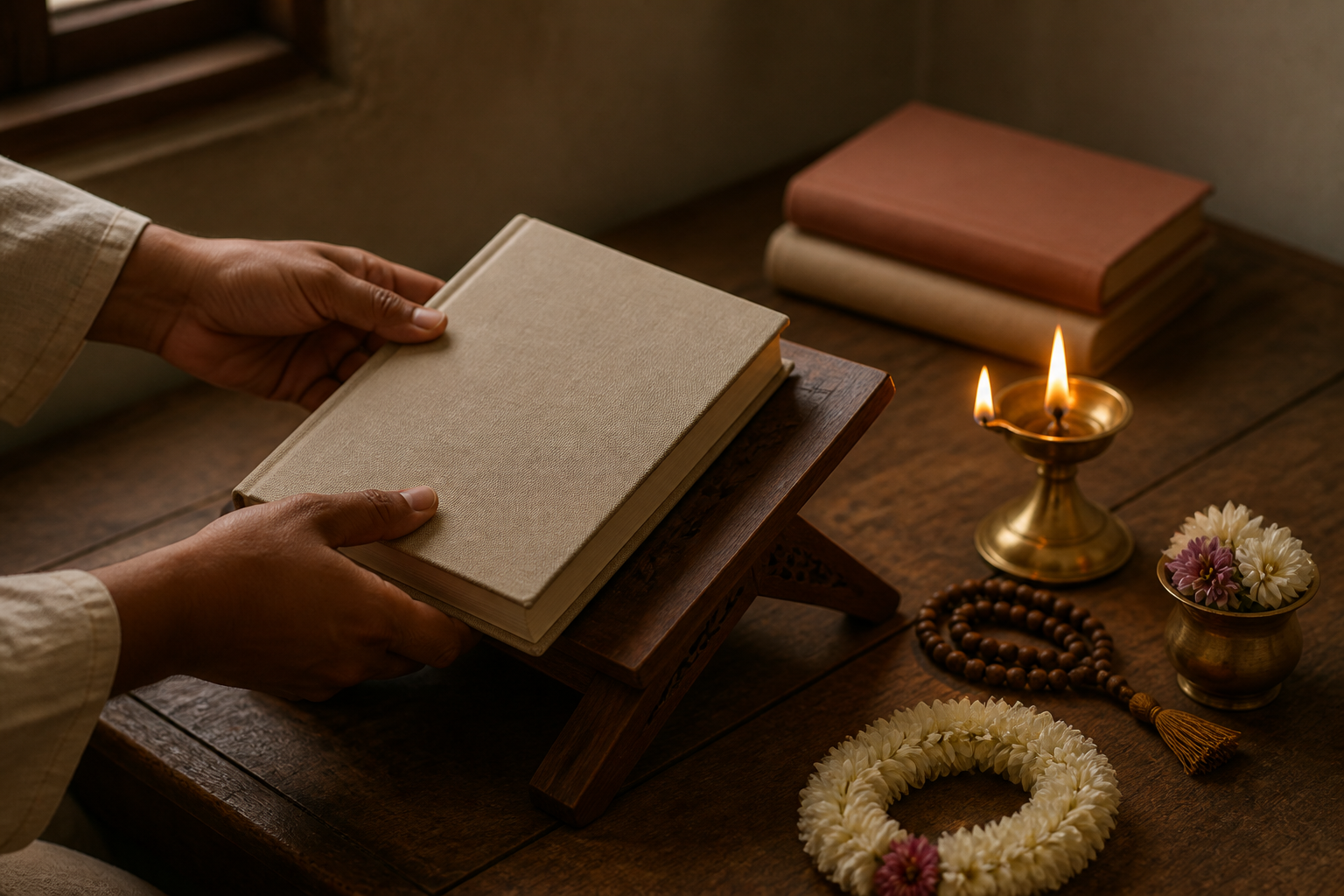
Bhagavad Gita 10.35 gives Margashirsha its best-known scriptural distinction: Sri Krishna identifies himself with Margashirsha among the months. That declaration makes the period a natural time for Gita study, japa, vrata, dana, and reflective sadhana. The point is not ritual accumulation. It is sustained attention.
A Gita-centered Margashirsha observance
If your family worship centers on Sri Krishna or Sri Vishnu, make the Bhagavad Gita your textual anchor. Read a chapter each day if that pace is realistic, or adopt a shorter daily portion that you can maintain attentively. Keep japa alongside the reading so that study does not become merely intellectual.
Gita Jayanti, commonly observed during Margashirsha, offers a natural occasion for collective parayana, discourse, kirtana, or satsanga. Check whether a nearby temple is conducting a full recitation. A communal observance can deepen your household practice, but it should reinforce rather than replace the daily discipline you have chosen.
A Vaishnava Margazhi observance
In a Tamil Vaishnava setting, use the daily recitation of Tiruppavai as the month’s center. Rise before sunrise, bathe according to your household custom, light the lamp, recite or listen with attention, and join temple worship when possible. If you are new to the hymns, follow a trusted temple’s order rather than improvising a hybrid sequence.
A Saiva Margazhi observance
In a Tamil Saiva setting, Thiruvempavai provides the corresponding hymn-centered discipline. Give it its own integrity. You may appreciate both Vaishnava and Saiva traditions, but you do not need to merge their texts into one undifferentiated ritual. Follow your kula, sampradaya, guru, or temple where you have one; otherwise, choose one sequence for daily observance and encounter the other through temple or cultural programs.
If your family already has an inherited practice, preserve that continuity before adding something found elsewhere. Margashirsha and Margazhi are particularly valuable for transmitting habits between generations: a child can light the lamp or help prepare prasadam, while an elder leads the recitation and explains one verse. Participation teaches more than a long lecture delivered after the ritual is over.
Build a dawn routine that can survive the whole month
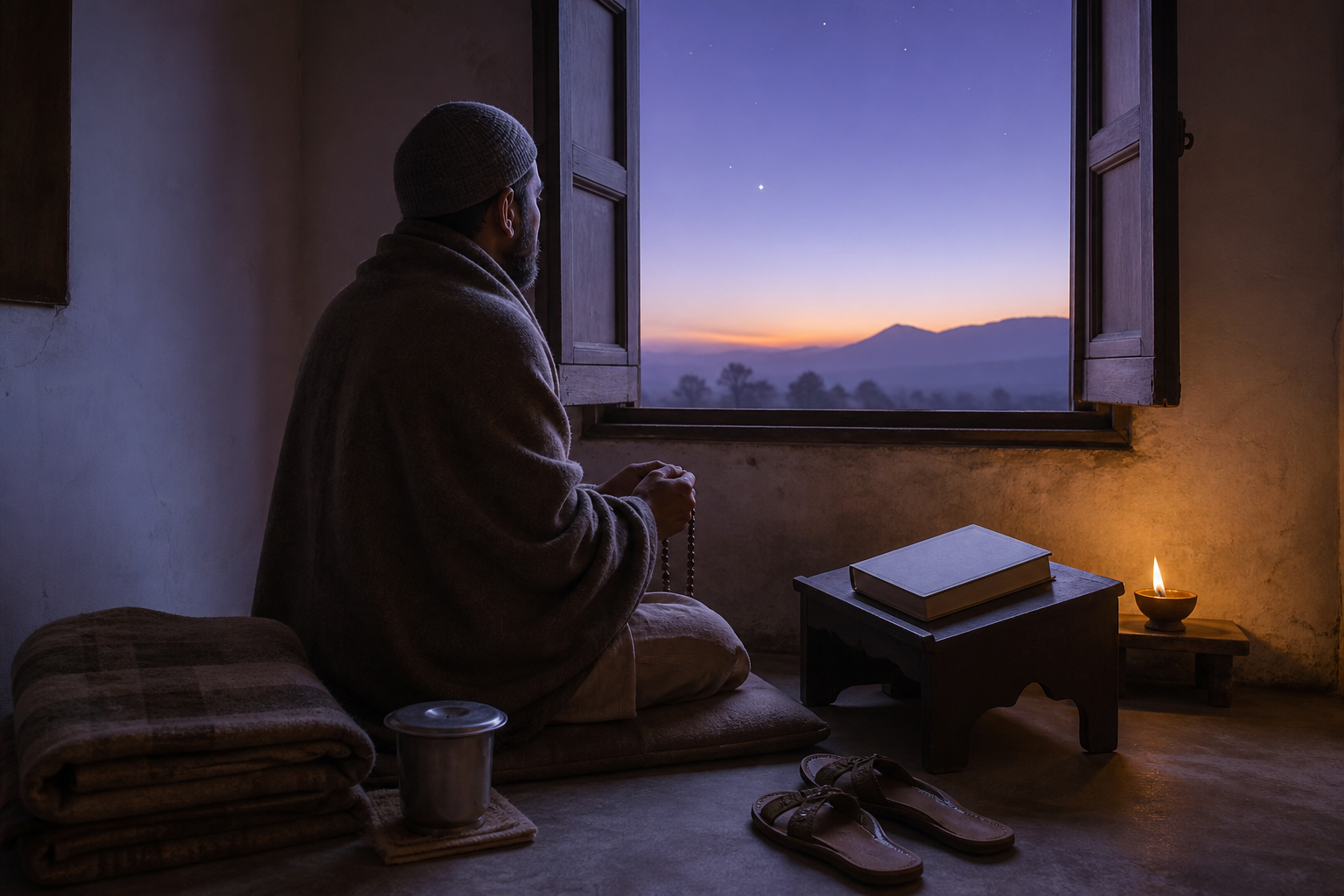
Margazhi places unusual emphasis on predawn worship. The cool, quiet hours associated with Brahma Muhurta support mantra, meditation, hymn recitation, and temple visits before the day’s demands begin. Margashirsha practice likewise benefits from a steady daily rhythm. The practical test is whether you can repeat your routine without turning sleep deprivation, elaborate preparation, or family tension into the defining experience.
- Decide the previous evening which text you will use. Keep it, the lamp, and any simple puja materials ready.
- Rise before sunrise at a time that fits your household duties. Bathe according to your custom, or complete your normal preparation for worship without making ritual complexity an excuse to skip the practice.
- Light the lamp and begin with the mantra, japa, or invocation already accepted in your tradition.
- Recite your chosen anchor: a portion of the Bhagavad Gita, Tiruppavai, or Thiruvempavai. Do not switch texts each morning simply to create novelty.
- Sit briefly in silence or mindful breath awareness after the recitation. This gives the words room to shape attention rather than ending the practice at the last syllable.
- Offer simple prasadam where that belongs to your custom, then identify one action through which the day’s devotion will become patience, dana, ahimsa, or seva.
On a demanding weekday, shorten the quantity while preserving the sequence. A smaller recitation performed attentively is more useful than an ambitious plan abandoned after a few mornings. On days when you have more time, add a temple visit, discourse, bhajan, or extended study without redefining the minimum you expect from yourself every day.
Vrata should also be proportionate. Simplicity, restrained consumption, and mindful eating can support the month without making severe food restriction the measure of devotion. If fasting does not suit your health or responsibilities, choose a form of restraint that does: reduce excess, give up a habitual indulgence, protect speech from needless harshness, or redirect saved resources toward dana. The discipline should sharpen awareness, not become a contest.
Carry devotion into community without flattening traditions
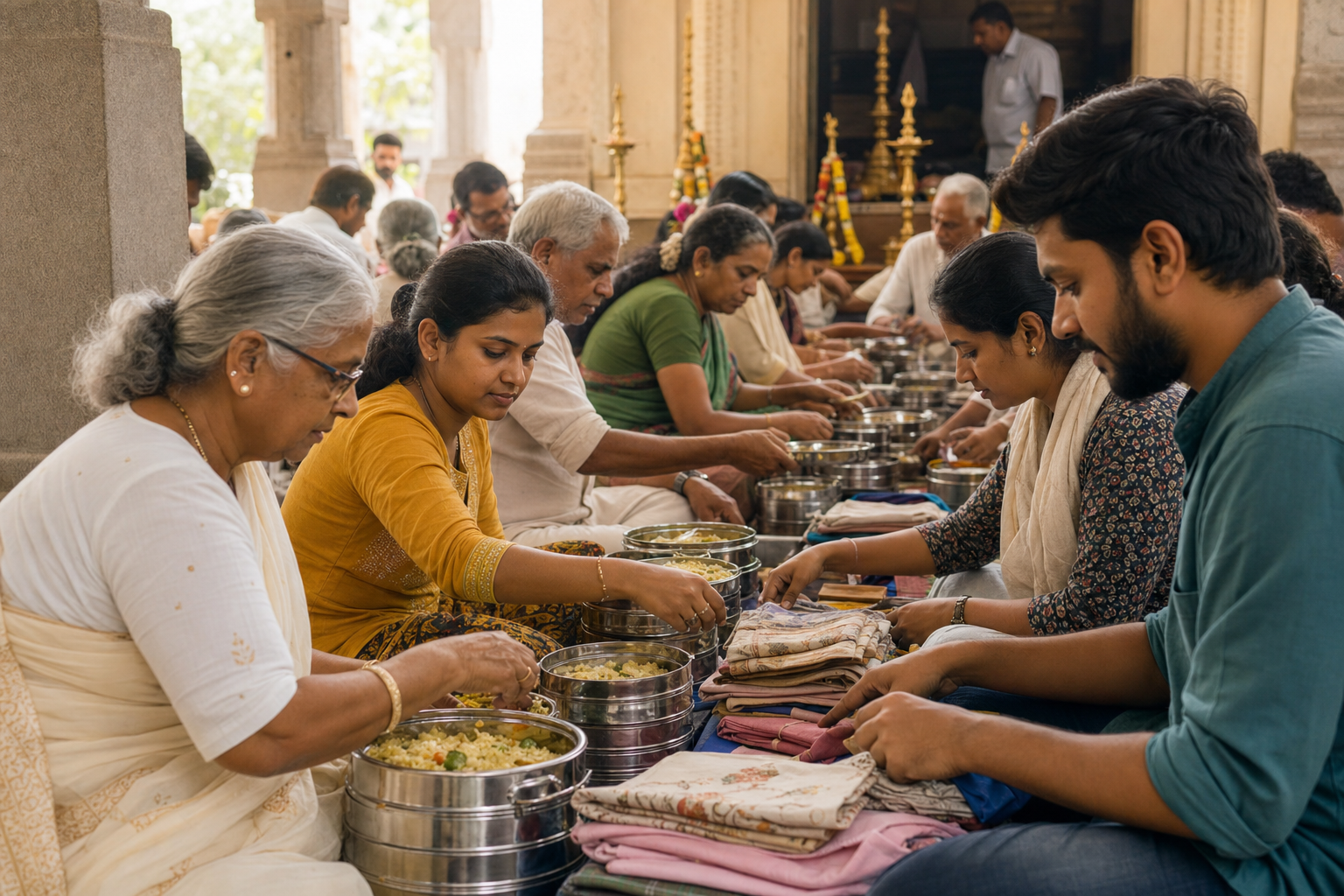
Home worship, temple participation, sacred art, and service each do different work. Home establishes repetition. The temple connects you to liturgy and community. Kolam and devotional music make sacred time visible and audible. Dana and seva prevent inward practice from becoming self-absorption.
During Margazhi, many temples open early and conduct special pujas. Daybreak kolams, bhajans, and devotional music associated with the Chennai Music Season give the month a recognizable public atmosphere. Before changing your schedule, check the local temple’s actual opening and program times; regional panchangam details and institutional schedules can differ.
You can give each setting a clear role. Keep your chosen recitation at home every day. Attend the temple for collective worship or a special observance. Use music, kolam, or a family reading to involve people who are not yet ready to lead formal ritual. Choose a recurring act of generosity or service so that the month’s inner discipline has an outward consequence.
The wider dharmic family offers a meaningful field of resonance. Mindfulness, ahimsa, study, restraint, remembrance, and seva have recognizable places across Hindu, Buddhist, Jain, and Sikh life. That does not make Margazhi a common liturgical month for every dharmic religion, nor does it make Tiruppavai, Thiruvempavai, Buddhist meditation, Jain vrata, and Sikh simran interchangeable.
When you speak about dharmic unity, distinguish shared values from distinct forms. You can invite a Jain friend into an act of compassionate giving without relabeling Jain practice as Margazhi ritual. You can recognize contemplative discipline in Buddhism without claiming that a Hindu calendar observance belongs to Buddhist liturgy. You can honor Sikh simran and seva without treating them as alternate names for Hindu japa and dana. Unity becomes stronger when it rests on accurate recognition rather than convenient blending.
Key takeaways for a faithful observance
- Confirm the dates through the panchangam and temple your household will actually follow; Margashirsha is lunar, while Tamil Margazhi follows a solar reckoning.
- Choose one primary textual anchor: the Bhagavad Gita for a Gita-centered Margashirsha practice, Tiruppavai in a Tamil Vaishnava setting, or Thiruvempavai in a Tamil Saiva setting.
- Protect a repeatable predawn sequence of preparation, lamp lighting, recitation, japa or meditation, and a deliberate ethical action.
- Let temple worship supplement a stable home practice. Verify early-opening times and special puja schedules locally.
- Use kolam, bhajan, devotional music, prasadam, and family participation to transmit the observance without making every element compulsory.
- Express dharmic unity through shared values such as ahimsa, study, restraint, remembrance, dana, and seva while naming each tradition’s practices accurately.
Your next step is simple: check the calendar used by your family or nearby temple, choose the text you will return to each dawn, and prepare the first morning before you go to bed. Let steadiness, not the number of observances you can assemble, define the month.
References
- DharmaRenaissance Blog – Unlock the Auspicious Power of Margashirsha Maas: Bhagavad Gita Insights and Dharmic Unity
- DharmaRenaissance Blog – Margazhi Masam 2025-2026 Dates: Auspicious Tamil Month of Devotion, Music, and Temple Rituals
