

If you are deciding when to perform puja, begin a course of study, travel, or start an important piece of work on March 4, do not treat the civil date as a single undivided unit. The tithi changes during the afternoon, and every clock-based muhurta must be adjusted for the place where you will actually observe it.
Wednesday, March 4, 2026 begins under Krishna Paksha Pratipada, which continues until approximately 4:15 PM in most regional calculations, followed by Krishna Paksha Dwitiya. That gives you a useful structure: verify the local transition, choose a modest spiritual intention, and apply the stricter Panchang checks only where the importance of the undertaking warrants them.
Plan around the tithi change, not midnight
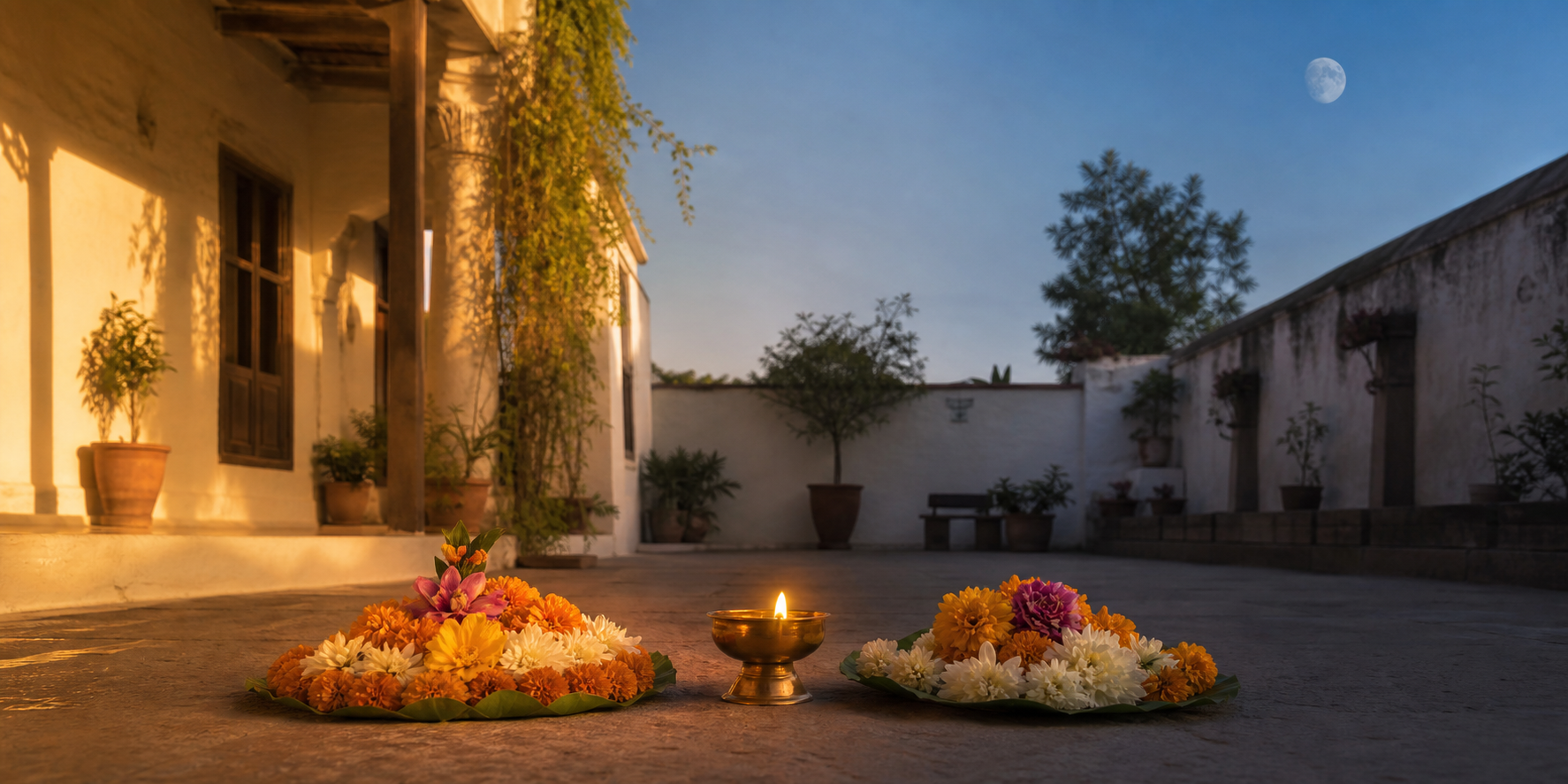
A Panchang day is commonly identified by the tithi present at sunrise. March 4 can therefore be called a Pratipada day even though Dwitiya begins later. The afternoon transition does not create a contradiction; it simply means that two tithis touch the same civil date.
A tithi is determined by successive 12-degree intervals in the angular relationship between the Sun and Moon. Because the Moon does not move at a perfectly uniform apparent speed, a tithi can last roughly 20 to 26 hours. It is therefore normal for its boundary to fall in the middle of a morning, afternoon, or night rather than at midnight.
- If your vrata or household custom specifically requires Pratipada, use the locally verified Pratipada end time as the boundary.
- If the intended observance belongs to Dwitiya, begin only after your local Panchang shows that Dwitiya has entered.
- If you are maintaining ordinary nitya puja, prayer, or scripture reading rather than a tithi-specific rite, keep the practice steady unless your sampradaya or family tradition gives a more exact rule.
You may also encounter different lunar-month labels. An Amanta calendar, in which the month ends at Amavasya, commonly places the date in Phalguna Krishna Paksha. Purnimanta calendars used in parts of North India may display a different month name around this fortnight. The naming system can change while the actual tithi and its astronomical boundary remain the same. When two calendars appear to disagree, compare the tithi and end time before comparing the month heading.
Localize every clock time before you act
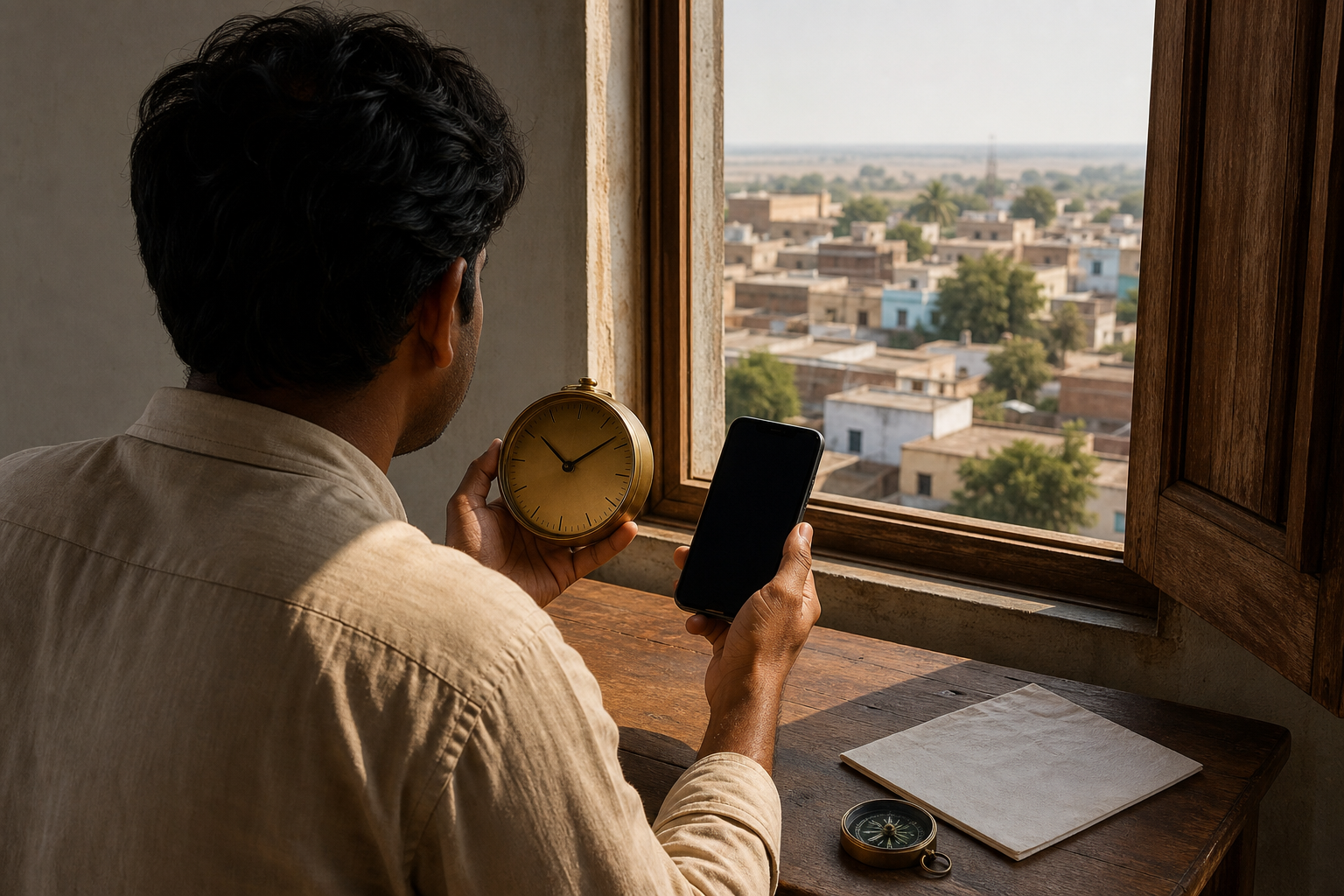
The approximate 4:15 PM transition is a planning marker, not a universal appointment time. Longitude, latitude, time zone, daylight-saving treatment, and the calculation system used by the almanac can all affect what appears on your clock. A time copied from another city is not reliable enough for a tithi-bound vrata, samskara, formal initiation, or temple observance.
- Set the Panchang to the exact city of observance, not merely the country or nearest major time zone.
- Confirm the displayed civil date, time zone, sunrise, sunset, and Pratipada end time. If the application applies daylight saving, make sure its setting matches the locality on March 4.
- For an important beginning, record Rahu Kalam, Yamaganda, and Gulika Kalam. These intervals are calculated from local daylight, so a generic Wednesday chart cannot supply universally valid clock times.
- Check the active Karana. If Vishti Karana, commonly called Bhadra, covers the proposed time, traditional practice generally avoids using that span for an auspicious ceremonial beginning.
- For a samskara, nama-karana, or another rite with astrological requirements, also confirm Nakshatra, Moon Rashi, and Yoga. These factors can change within the civil day.
- If you intend to use Abhijit Muhurat, obtain its local interval rather than assuming that 12:00 noon is correct.
Abhijit Muhurat is centered on local solar midday, which is found from the midpoint between local sunrise and sunset. Clock noon and solar noon are not always the same. For a consequential beginning, check Abhijit alongside the day’s cautionary intervals and Bhadra rather than treating one favorable label as an automatic override of every other factor.
A locally configured drik Panchang, a trusted temple bulletin, or guidance from the priest conducting the rite is the sensible final authority for time-sensitive observance. If two reliable calendars differ slightly, use the one consistently followed by your temple, family, or sampradaya instead of combining favorable fragments from several systems.
Use the day to restore one neglected discipline
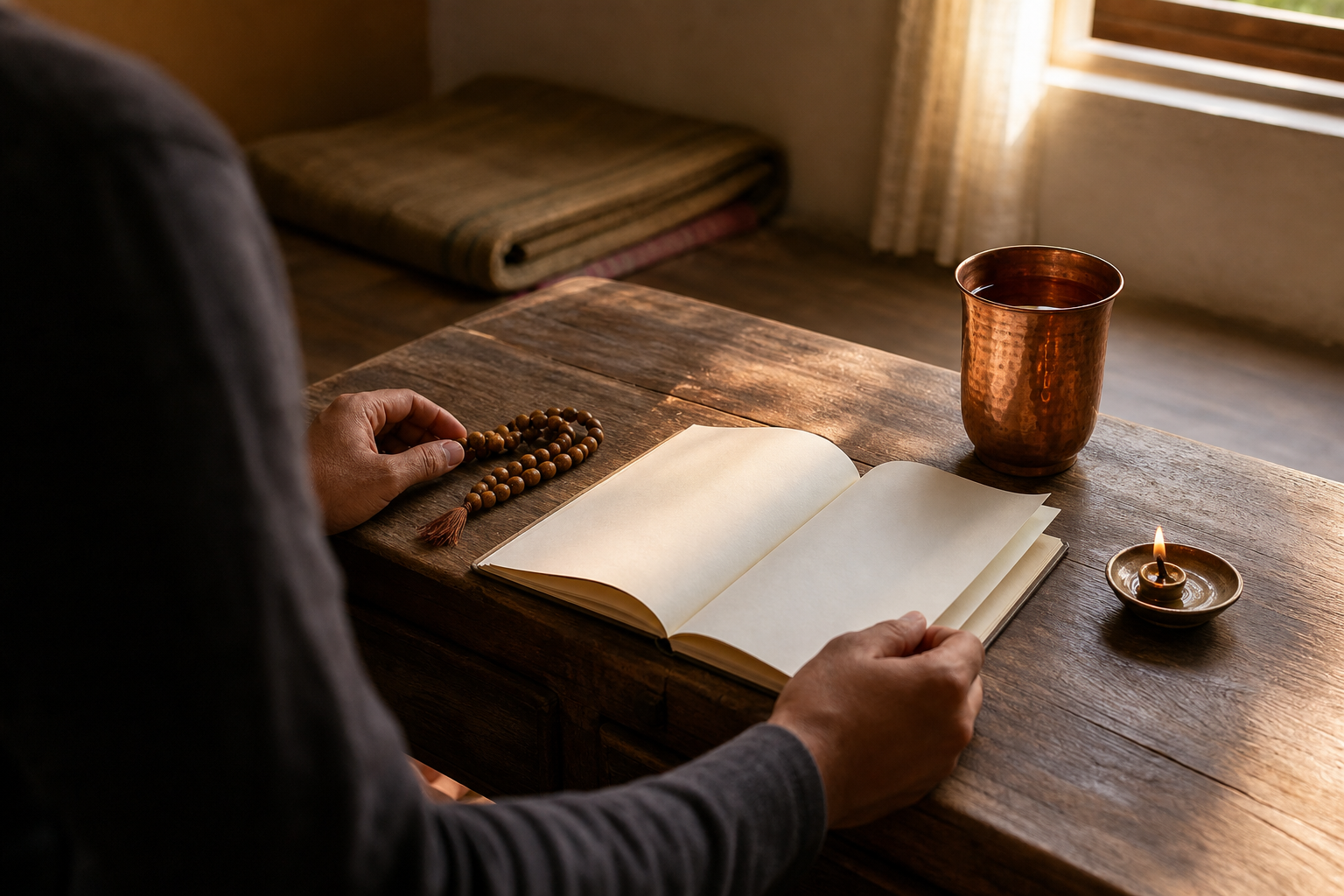
The early days of Krishna Paksha lend themselves to inward attention. That does not require an elaborate new ritual. A restrained observance is often more faithful to the day’s character than a crowded schedule of practices that you will abandon immediately afterward.
- Choose one narrow sankalpa. Resume a paused scripture practice, correct one neglected household duty, or recommit to one form of seva that you can continue.
- Give svadhyaya a definite object. Read a named passage from the Bhagavad Gita, an Upanishad, a Dharma text, or the scripture taught in your lineage. Avoid the vague intention to “study more” without deciding what you will open.
- Let Wednesday’s traditional association with Budha support careful study, analysis, accounting, trade, and communication. Use that symbolism to improve clarity, not to excuse haste.
- Keep the day’s discipline sattvic in the form recognized by your household or tradition. Pay particular attention to speech, attention, and the quality of the work you undertake.
- At twilight, light a lamp and close the observance with prayer or quiet reflection. Note the single discipline you intend to carry into the rest of Krishna Paksha.
If your family guru, temple, or vrata manual prescribes a specific sequence, follow that sequence. Panchang awareness should make practice more exact; it should not encourage you to invent a complex rite without the lineage instruction needed to perform it properly.
Lunar discipline also appears across the wider dharmic family in distinct forms. Hindu households organize puja and vrata around tithis; Buddhist communities may relate lunar days to Uposatha practice; and Jain communities use lunar rhythms in disciplines such as samayik and pratikraman during relevant periods. Sikh commemorative practice today is primarily organized through the solar Nanakshahi framework, even though the wider Indic culture retains familiarity with lunar reckoning. Shared civilizational memory deserves recognition, but the rites should not be treated as interchangeable.
Match the depth of the check to the weight of the decision
Not every action on March 4 needs a full electional calculation. The useful distinction is between maintaining life and ceremonially beginning something new.
- For daily worship, employment, caregiving, study already in progress, and other regular duties, maintain the duty. A cautionary interval is not a reason to neglect something necessary.
- For a reversible household task or an ordinary work session, choose a convenient favorable period if one is available, but do not turn minor scheduling into anxiety.
- For beginning a new course of study, submitting an important proposal, opening negotiations, or starting a household project, Wednesday’s Budha association can be supportive. Prefer a locally verified favorable interval and avoid Rahu Kalam or Bhadra where practicable.
- For signing an agreement, review the substance and consequences first. A muhurta can time the act of signing; it cannot make unsafe, unclear, or unfair terms sound.
- For marriage-related rites, nama-karana, major vrata commencements, or another samskara, do not rely on tithi and weekday alone. Have the full Panchang conditions checked for the participants, place, and governing tradition.
This keeps muhurta in its proper role. It refines a sound and dharmic choice; it does not replace judgment, preparation, responsibility, or the requirements of the rite itself.
FAQ: March 4 Panchang questions
Is 4:15 PM the Pratipada end time everywhere?
No. Treat approximately 4:15 PM as the general marker provided for the day, then verify the displayed end time for your city. A location-sensitive rite should follow the local calculation.
Can I assume Abhijit Muhurat begins at noon?
No. Abhijit is centered on local solar midday, derived from local sunrise and sunset. Use the actual interval shown by a city-specific Panchang and check whether a cautionary period or Bhadra affects the proposed start.
Why does another calendar show a different month?
Amanta and Purnimanta calendars end their months at different lunar boundaries. Compare the tithi, Paksha, and transition time. A different month label does not by itself mean that one calendar has the wrong lunar day.
Is there one compulsory ritual for this date?
Not from the date alone. Your sampradaya, family vrata, temple calendar, and purpose determine the ritual. Without a specific prescription, a sound observance is simple: keep daily worship, undertake focused svadhyaya or seva, maintain sattvic discipline, and light a lamp at twilight.
Your next step is practical: save a Panchang entry configured for the actual place of observance, write down the local tithi transition and any interval you intend to use, then choose one practice worthy of continuing beyond March 4. Precision in time matters, but steadiness is what turns calendrical knowledge into lived Dharma.
References
