

When a reality show turns a woman’s embarrassment, sexual exposure, or loss of control into the evening’s entertainment, you may know that something is wrong without knowing what to do next. Should you stop watching, protect a teenager from it, complain to the platform, or support a ban?
The useful answer begins with a distinction. Content can be tasteless without violating a person’s dignity, and provocative without requiring removal. But when humiliation becomes the product, inadequate warnings expose children to it, or a platform refuses to correct a documented failure, viewers have good reasons to act. The response should protect women without turning women themselves into targets of moral policing.
Recognise when discomfort becomes a dignity issue
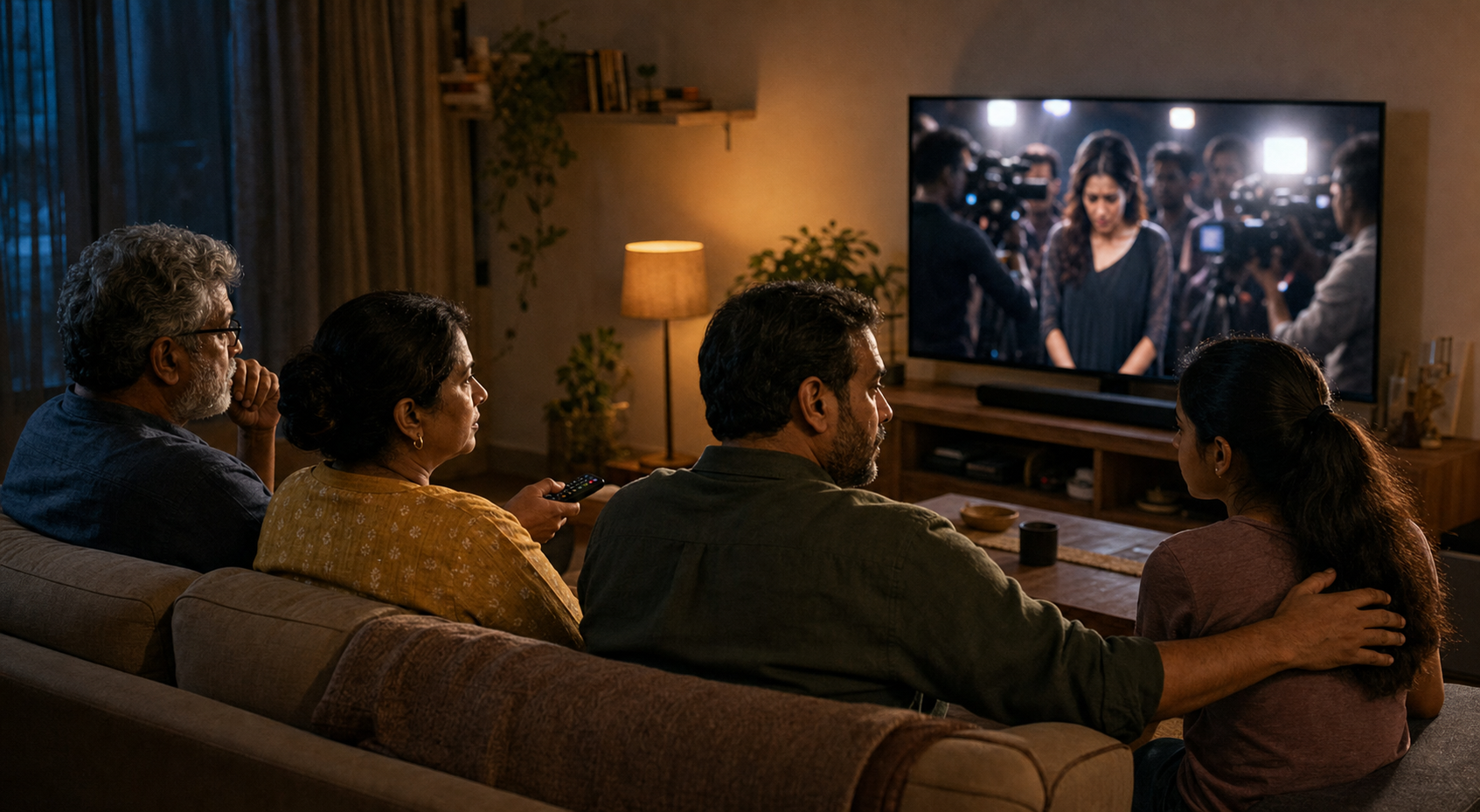
Hindu Janajagruti Samiti has called for a ban on Engaged 2 (Roka Ya Dhoka), alleging that the reality programme on Jio Hotstar normalises vulgarity and degrades women. That demand has brought a necessary question into view, but a demand for a ban is not itself a legal finding. The relevant task is to identify what the programme actually depicts, how it frames the conduct, and what remedy the evidence supports.
Do not use personal discomfort as the only test. A difficult story may depict manipulation, sexual conduct, or abusive speech in order to condemn it. Conversely, a polished programme can normalise degradation without showing nudity. Look at the relationship between conduct, framing, repetition, and reward.
- Agency: Could the woman make a meaningful choice, withdraw, or set a boundary, or was pressure presented as part of the fun? Agreeing to appear on a programme should not be treated as unlimited consent to every task, disclosure, or humiliating edit.
- Framing: Does the programme invite the audience to recognise mistreatment, or cue viewers to laugh at the woman experiencing it? The same act can carry a different ethical meaning depending on who receives sympathy and who becomes the punchline.
- Reduction: Is the participant allowed a personality, point of view, and response, or is her body, desirability, or sexual availability made her only function?
- Repetition and reward: Is degradation an isolated act with consequences, or a recurring device that earns attention, status, romance, or continued screen time?
- Editorial power: In reality programming, are reactions stripped of context, private disclosures converted into spectacle, or conflict intensified in ways that conceal the producer’s role?
- Audience safeguards: Does the displayed age classification match the material? Do the descriptors warn about sexual innuendo, derogatory humour, coarse language, or other relevant content before playback?
Write down what you observe in neutral language. “At 18:42, one participant repeatedly insults another’s body while the sequence is edited for laughter” is useful. “This programme has no values” is too broad to test or remedy. A precise description also protects your credibility if the scene is disputed.
Media-effects evidence calls for prudence rather than panic. Social-learning and cultivation theories offer plausible mechanisms through which repeated portrayals can shape expectations, particularly while younger viewers are still forming ideas about gender and relationships. Objectification research also associates persistent sexual objectification with body dissatisfaction and acceptance of gender stereotypes. None of this proves that one scene mechanically produces one behaviour. Frequency, context, framing, and the viewer’s age matter.
Apply a Dharmic ethic without policing women

A Dharmic response is stronger when it asks who is being harmed and who holds power, rather than merely counting explicit words or exposed bodies. Hindu, Buddhist, Jain, and Sikh traditions are not interchangeable, yet ahimsa, satya, right speech, restraint, and seva give us a shared ethical vocabulary for examining mass entertainment.
- Ahimsa asks about foreseeable harm. Is a participant’s vulnerability being exploited for ratings? Could the scene invite harassment, shame, or imitation beyond the screen?
- Satya asks whether the apparent reality is truthful. Selective editing is part of television, but a format becomes ethically suspect when it manufactures a misleading identity and then punishes a participant for that construction.
- Right speech asks what words do to a person. Speech need not be physically violent to demean. Repeated sexual taunts, body-based ridicule, and public shaming can make cruelty appear socially normal.
- Restraint asks producers and viewers to govern appetite. The fact that humiliation attracts clicks does not oblige a platform to recommend more of it, and curiosity does not require us to amplify a degrading clip.
- Seva redirects attention to responsibility. The relevant question is not only whether content can be streamed, but whether creators, platforms, families, and audiences are serving human well-being through their choices.
This framework must not become a pretext for blaming women who participate in entertainment, dress in a particular way, speak openly, or make choices that some viewers dislike. Dignity includes agency, privacy, informed consent, and freedom from coercion. A campaign that condemns a woman while ignoring the producer, editor, recommender system, and paying audience merely relocates the humiliation.
Apply the same standard across gender, caste, class, religion, and political identity. If public shaming is unacceptable when directed at a woman whose values you share, it remains unacceptable when directed at one whose choices you oppose. That consistency is what separates an ethical principle from factional outrage.
Use the regulatory ladder with specific evidence
OTT content in India is not handled in the same way as a theatrical film undergoing pre-release certification. The Information Technology (Intermediary Guidelines and Digital Media Ethics Code) Rules, 2021 provide a framework for online curated content built around classification, disclosures, parental safeguards, and a three-level grievance process.
The classification bands identified in that framework are U, U/A 7+, U/A 13+, U/A 16+, and A. Platforms are also expected to use relevant content descriptors, provide parental controls, and maintain a grievance-redressal mechanism. A bare age label is less useful than a label accompanied by clear warnings about sex, violence, language, substance use, sexual innuendo, or derogatory humour.
Level I: complain to the platform or publisher
Start with the platform’s Grievance Officer. The framework generally gives this level a 15-day response window. A strong complaint is short enough to review but detailed enough to reproduce the problem.
- Identify the platform, programme, season, episode, and displayed classification.
- Give exact timestamps for every segment at issue. If several scenes repeat the same pattern, list the clearest examples rather than describing the entire series.
- Describe visible and audible conduct without exaggeration. Separate what happened on screen from what you infer about motives.
- Explain the specific concern: humiliation, sexual objectification, inadequate consent, exposure of a minor, misleading classification, missing descriptor, or failure of parental controls.
- State who may be affected. If the complaint concerns adolescent access, say how the content reached a child or teen profile and what safeguard failed.
- Ask for a defined remedy: corrected descriptors, a higher classification, stronger gating, removal from a child profile, an edit to a particular segment, a warning card, or another targeted correction.
- Request an acknowledgement, complaint number, written decision, and reasons. Keep the original submission and response dates.
If you preserve a screenshot or short screen recording as evidence, keep it private and use only what is necessary for the complaint. Reposting the humiliating segment can multiply the very harm you are challenging. It may also expose a participant to fresh ridicule detached from the programme’s context.
A useful complaint might read: “At 24:10–25:05 of episode 3, the programme repeatedly presents body-based insults for audience laughter. The title was classified U/A 13+, but the displayed descriptors did not identify sexualised or derogatory humour. Please review the classification and descriptor, restrict this sequence from younger profiles, and explain the decision.” Adapt the wording to what you actually saw; never allege conduct that the recording does not support.
Levels II and III: escalate when the first answer fails
If Level I produces no adequate response, the complaint can move to a self-regulatory body for publishers at Level II. Include the original grievance, acknowledgement, response, timestamps, and a brief explanation of what remains unresolved. Do not replace the evidence with a longer expression of anger.
Level III provides oversight through the Ministry of Information and Broadcasting. Advisories and other measures may follow within the applicable process. Blocking is an exceptional remedy requiring due process, not the normal first answer to content that can be corrected through classification, gating, warnings, or targeted editing. If minors are directly implicated, the National Commission for Protection of Child Rights may offer an additional child-focused channel.
This is a practical account of the grievance route, not advice for litigation or for alleging a criminal offence. If you are considering court action, believe a participant faces an immediate threat, or intend to make an allegation carrying legal consequences, consult a qualified Indian lawyer and preserve the material without circulating it publicly.
Change exposure now while seeking better standards
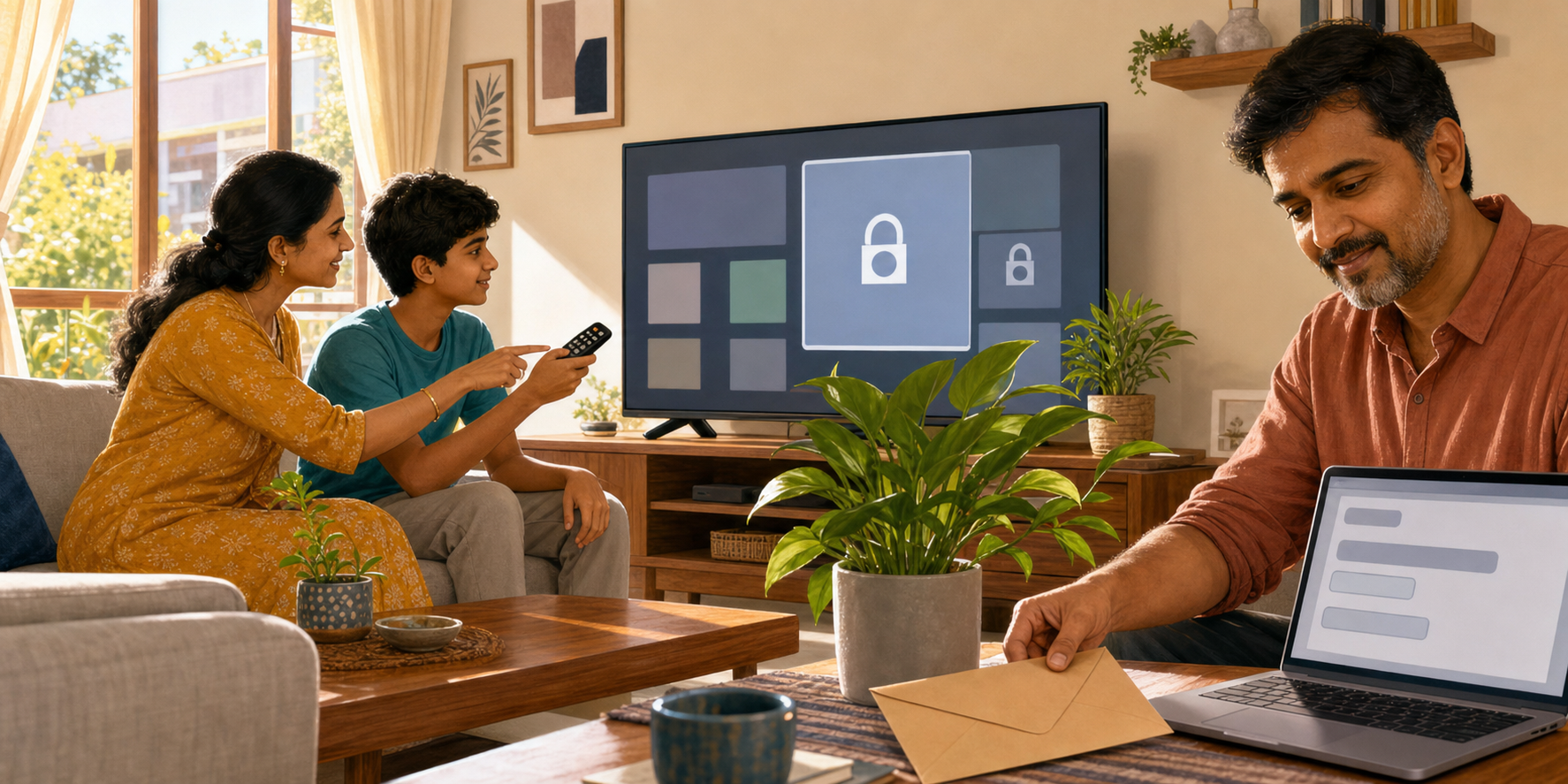
A regulatory complaint may take time. You can reduce unwanted exposure in your household immediately, while platforms and producers can prevent the problem before release.
What you can change at home
- Create separate adult, teen, and child profiles where the service permits them. A shared profile teaches the recommendation system that every viewer has the same appetite.
- Protect adult-rated playback with a PIN. Do not rely on a verbal family rule when one tap can bypass it.
- Read granular content descriptors before starting a title with children. If the platform supplies only a broad age label, preview the programme or choose something with clearer information.
- Co-view borderline content instead of treating the screen as a silent babysitter. The purpose is not constant surveillance; it is to be available when a scene needs context.
- After a troubling scene, ask three direct questions: Who held power? Whose boundary was ignored? What could a respectful person have done instead? These questions help a teenager analyse the behaviour rather than absorb the programme’s cues.
- Do not shame a child for having seen the content. Find out how it appeared, correct the profile or control that failed, and discuss why the portrayal was manipulative or degrading.
Technical controls cannot carry the whole burden. A teenager can learn more from one honest conversation about consent, mockery, editing, and peer pressure than from a blocked title whose appeal is left unexplained. Controls manage access; conversation develops judgement.
What platforms and producers should change upstream
Platforms should test reality formats for foreseeable dignity and exposure risks before publication. That includes conspicuous descriptors on title pages, meaningful age gates for A-rated material, and recommendation settings that do not push adult-themed content into mixed-age profiles merely because another household member watched something similar.
Reality producers need safeguards suited to the imbalance between a participant and a production company. Informed consent should cover the nature of tasks and intimate material, not merely the fact of being filmed. Programmes should establish red lines against coerced disclosure and humiliation tasks, use intimacy coordination where appropriate, and make psychological support available before and after filming. A signed release should not become an ethical excuse for preventable harm.
When a failure is established, the remedy should match its scale. Correct an incomplete warning. Raise a classification when the original label understates the material. Improve age gating when access is the problem. Edit a particular sequence when the degradation is concentrated. Consider temporary removal while a serious complaint is assessed. Reserve wholesale blocking for circumstances in which narrower measures cannot address the harm and lawful due process supports stronger action.
This graduated approach does not weaken the defence of women. It makes that defence more credible because each demand is tied to an identified failure. Creative freedom deserves protection, but freedom is not an exemption from consent, transparency, or accountability.
Key takeaways
- Judge the treatment of women through agency, framing, repetition, editorial power, and audience safeguards—not explicitness alone.
- Record the programme, episode, timestamp, classification, descriptor, and observable conduct before making a complaint.
- Ask first for the smallest remedy that fully addresses the failure: a warning, reclassification, access restriction, targeted edit, or temporary review.
- Escalate from the platform’s Grievance Officer to the self-regulatory and government-oversight levels when the first response is absent or inadequate.
- Protect younger viewers with separate profiles, PIN controls, co-viewing, and direct conversations about consent and humiliation.
- Defend women’s dignity without blaming women for the spectacle designed, edited, promoted, and monetised around them.
The next time a programme crosses the line, do not stop at an angry reaction or an indiscriminate call to ban everything. Protect the viewer in front of you, document the exact failure, and ask the responsible institution for a remedy it can implement and defend. That is how cultural concern becomes durable accountability.
References
