
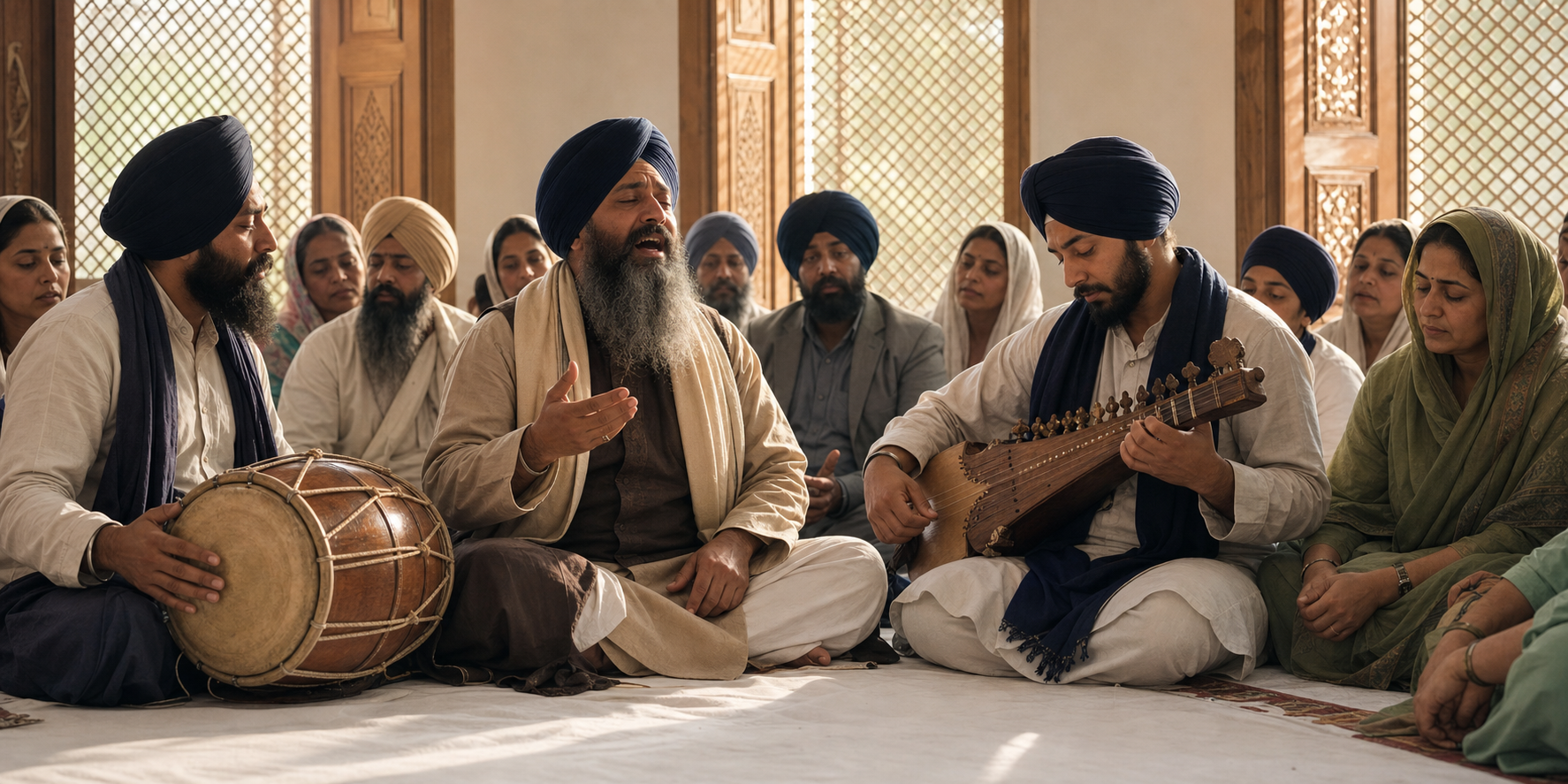
You hear a performance described as traditional Rababi kirtan. There is a rabab on the stage, the melody sounds old, and the presentation carries the language of revival. But how do you tell whether you are hearing a recovered discipline or merely an antique timbre?
Listen beyond the instrument. Rababi heritage lives in the relationship among shabad, raag, language, trained musicianship, and sangat. Once you know where to place your attention, you can recognize that relationship and help preserve more than its outward appearance.
First, separate the Rababi lineage from the rabab
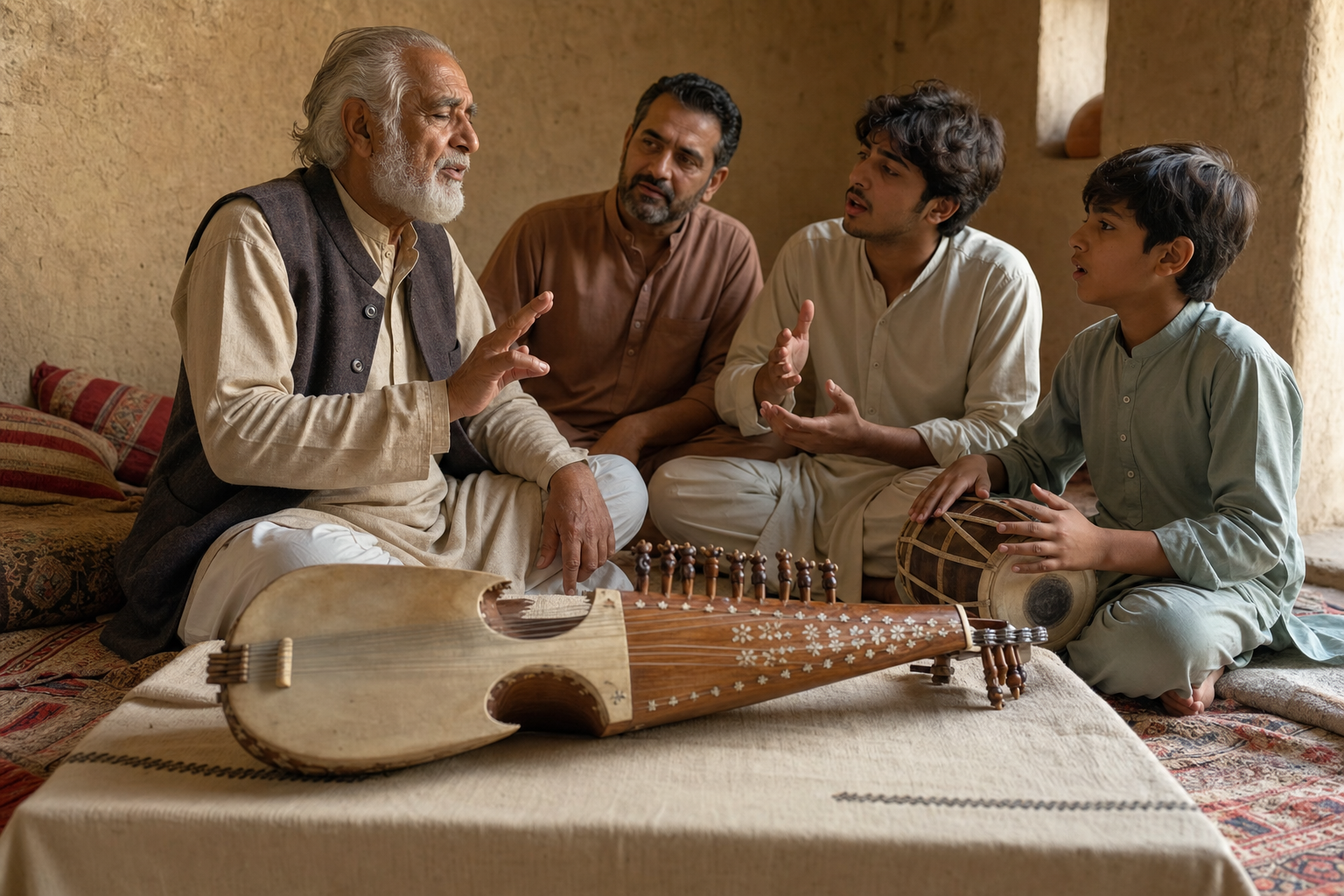
Three related terms are easy to collapse. A rabab is a string instrument. Rababis were specialist musicians and custodians of a musical vocation, often connected with hereditary Mirasi families. Gurmat Sangeet is the larger Sikh discipline in which Gurbani, raag, rhythm, pronunciation, and congregational devotion meet. Playing a rabab does not automatically make someone a Rababi, while Rababi heritage cannot be reduced to one instrument.
The distinction matters because this heritage begins with relationship. Bhai Mardana, the Muslim bard who accompanied Guru Nanak, gave musical voice to the shabad with his rabab. His presence was not a decorative interfaith gesture added to an already complete tradition. Musician, Guru, revealed word, and listening community formed the early Sikh kirtan experience together.
Later Rababis served Sikh congregations, courts, rites, and gatherings through a demanding craft. They had to know far more than melodies. Their work required bani, language, raag, rhythmic form, occasion, and the art of making sacred words intelligible to a sangat. That combination is a better test of continuity than the age or appearance of an instrument.
Rai Balwand and Bhai Satta make the point unmistakable. Their Ramkali ki Vaar entered the Guru Granth Sahib. The Rababi voice therefore stands not merely beside Sikh sacred history but within its scriptural memory.
This is a cross-communal inheritance, but it is not a vague claim that all traditions are the same. Sikh kirtan remains distinctively anchored in Gurbani and the sangat. Vaishnava kirtan, Sufi sama, Jain stavan, and Buddhist chant offer parallel examples of disciplined sound shaping attention, conduct, and consciousness. The useful civilizational insight is shared practice across boundaries, not the erasure of theological difference.
When you encounter a performance carrying the Rababi label, ask five concrete questions:
- Is the shabad clearly identified and kept at the center of the performance?
- Can you hear the words, or has virtuosity made the text secondary?
- Are the raag, taal, and instruments named accurately?
- Does the musician describe training and lineage honestly, without using hereditary identity as a marketing costume?
- Is the sangat treated as a participant in devotional listening rather than as an audience for heritage theatre?
Do not turn those questions into a bloodline examination. Hereditary transmission was historically important, but serious learning can continue beyond hereditary families. The honest standard is narrower: do not call every rabab player a Rababi, and do not call every string-led arrangement a restoration of Rababi practice.
Use Ramkali ki Vaar as a school for your ear
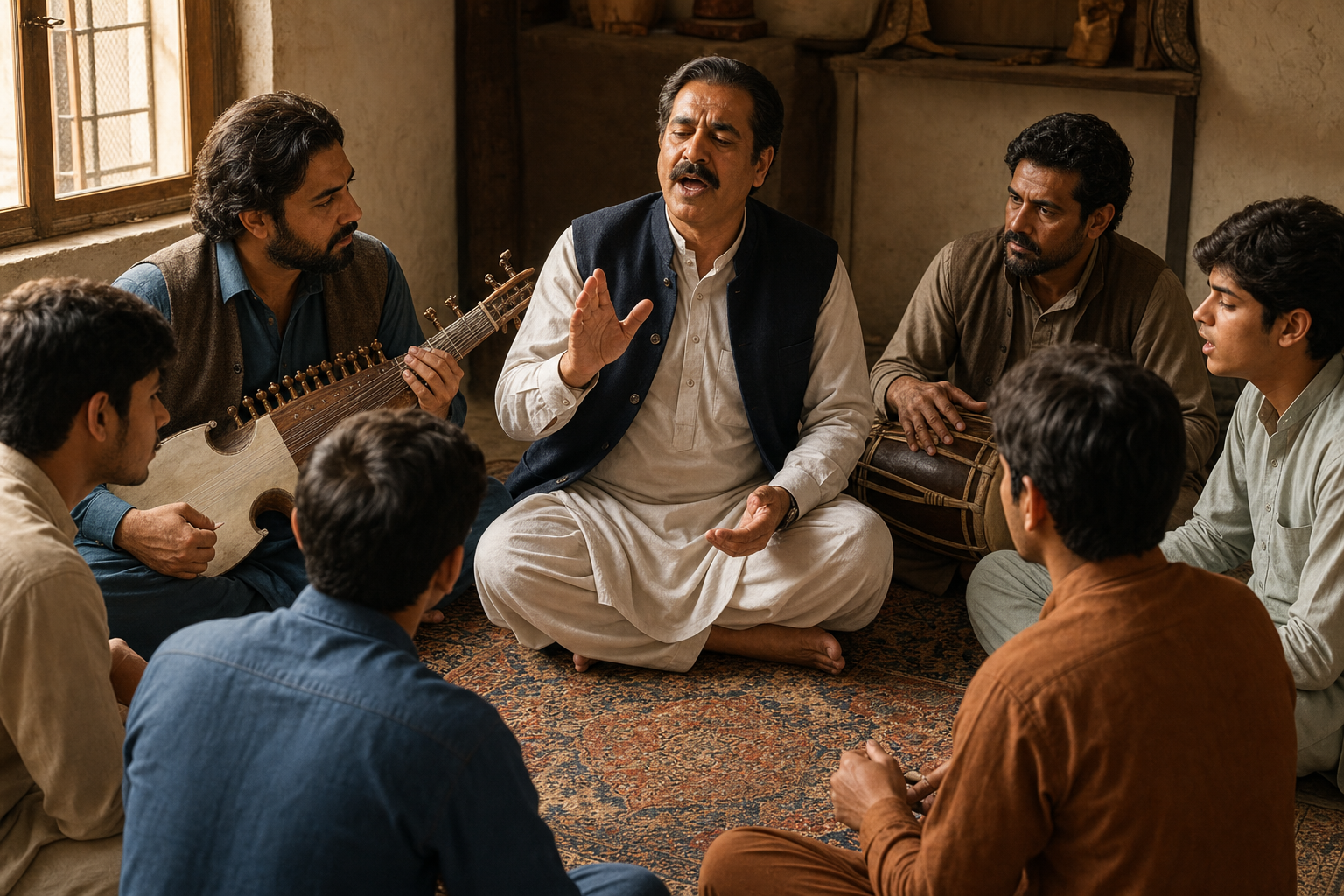
If you want one composition through which to begin listening, choose Ramkali ki Vaar. It joins scripture, history, theology, poetic structure, and the Rababi contribution in one place. The Vaar presents the transmission of Guruship from Guru Nanak through Guru Arjan as the continuity of spiritual light and responsibility, not the rise of a worldly dynasty.
Its pauris build thought cumulatively. Praise of the Gurus directs attention toward seva, humility, Divine Will, and faithful succession. Traditional accounts also connect Rai Balwand and Bhai Satta with estrangement from the Guru’s household and eventual reconciliation. Whether you receive that episode as literal history, moralized memory, or parable, its interpretive lesson is stable: artistic distinction cannot replace humility, and a damaged relationship can be restored through repentance and grace.
Use three listening passes rather than trying to absorb everything at once.
- Begin with the words. Read the bani and a reliable translation before listening. Mark the terms concerned with Guruship, service, humility, and continuity. During the performance, notice which words receive melodic weight and which lines are allowed to settle.
- Then follow the raag. In Sikh practice, Ramkali carries contemplative gravity and an ethically instructive character. Contemporary Hindustani classification commonly places it in Bhairav thaat. Oscillation around komal rishabh and dhaivat, together with careful handling of the madhyams, can contribute to its inward tension. These features are guides for attention, not a novice’s pass-fail authenticity test.
- Finally, hear the architecture. Notice how each pauri gathers momentum and reaches a cadence. Traditional treatment may move from a slow exposition into medium or faster declamation. Chautaal, jhaptaal, and rupak are among the rhythmic cycles that may be encountered, but no single tempo or taal proves authenticity by itself.
The decisive question is whether the music helps the meaning arrive. In a text-led rendering, melodic contours respond to the syntax and emotional force of Gurbani. A cadence gives you enough space to receive the end of a pauri. Percussion supports the declaration instead of competing with it. If speed, ornament, or instrumental display repeatedly hides the words, a central discipline of the tradition has been lost even when every instrument on stage is historically appropriate.
This method also protects you from mistaking solemnity for depth. A slow tempo can become inert, just as a fast tempo can become theatrical. Ramkali calls for alert inwardness: gravity with direction, not heaviness for its own sake.
Hear the historical break without blaming the harmonium
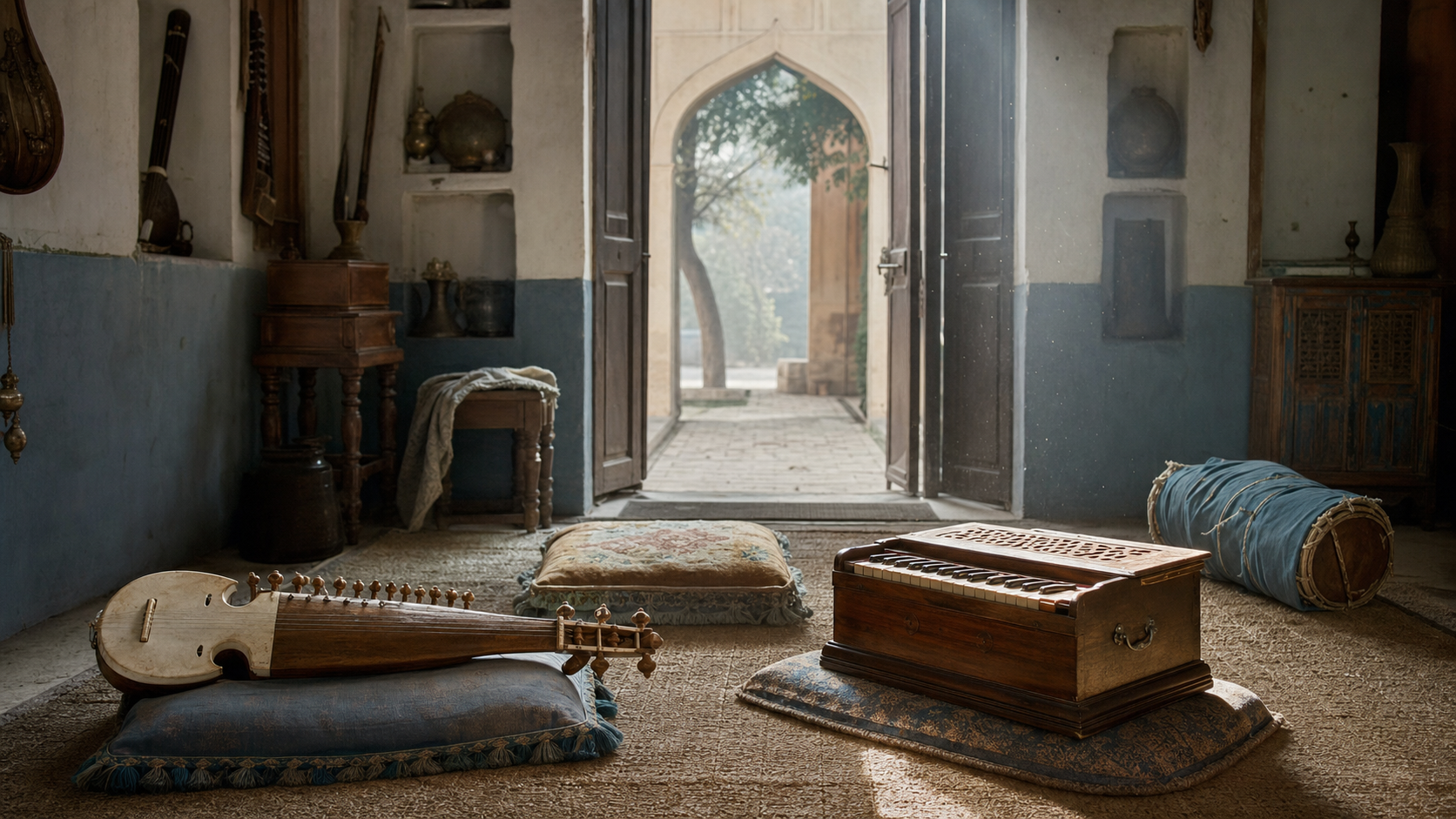
Rababi kirtan once depended on a social ecology as much as a musical method. Rababis maintained gurdwara liturgies, community gatherings, and life-cycle observances. Sangats, in turn, sustained musicians’ households and apprenticeships. Long training was possible because the relationship was continuous; it was not a sequence of isolated bookings.
Partition in 1947 displaced many Rababi families from East Punjab to Pakistan. It broke ordinary contact between musicians and the sangats that had supported them. What disappeared from many spaces was therefore not just a sound. Patronage, teaching relationships, local memory, repertoire, and everyday familiarity were fractured together.
In post-Partition India, harmonium-led ensembles and institutionally trained ragis became increasingly prominent. The harmonium was portable, comparatively accessible to learners, and practical for larger congregational settings. Colonial-era pedagogies and changing acoustic expectations also contributed to the shift.
It would be historically shallow and devotionally unfair to make the harmonium the villain. Generations have sung and received Gurbani through it. The useful distinction is between devotional continuity and musical range. Harmonium-led kirtan preserved congregational practice under changed conditions, while the diminished presence of tanti saaz narrowed access to certain articulations, phrase shapes, and tonal colors associated with older string-led practice.
You can hear that distinction for yourself. Find two competent renderings of the same shabad, one harmonium-led and one led by instruments such as rabab or saranda, ideally with comparable textual completeness. Then listen for:
- how each ensemble enters, sustains, and releases a syllable;
- whether the melodic phrase follows the grammar of the line;
- how the instruments leave room for consonants and word endings;
- whether jori or pakhawaj shapes the pauri without overpowering it; and
- what kind of attention each timbre asks from the listener.
You may conclude that both performances are sincere and spiritually effective while recognizing that they train the ear differently. Revival does not require contempt for the form through which many Sikhs first learned to love kirtan. It requires recovering disciplines that became difficult to hear.
Support the ecology, not just the revival concert
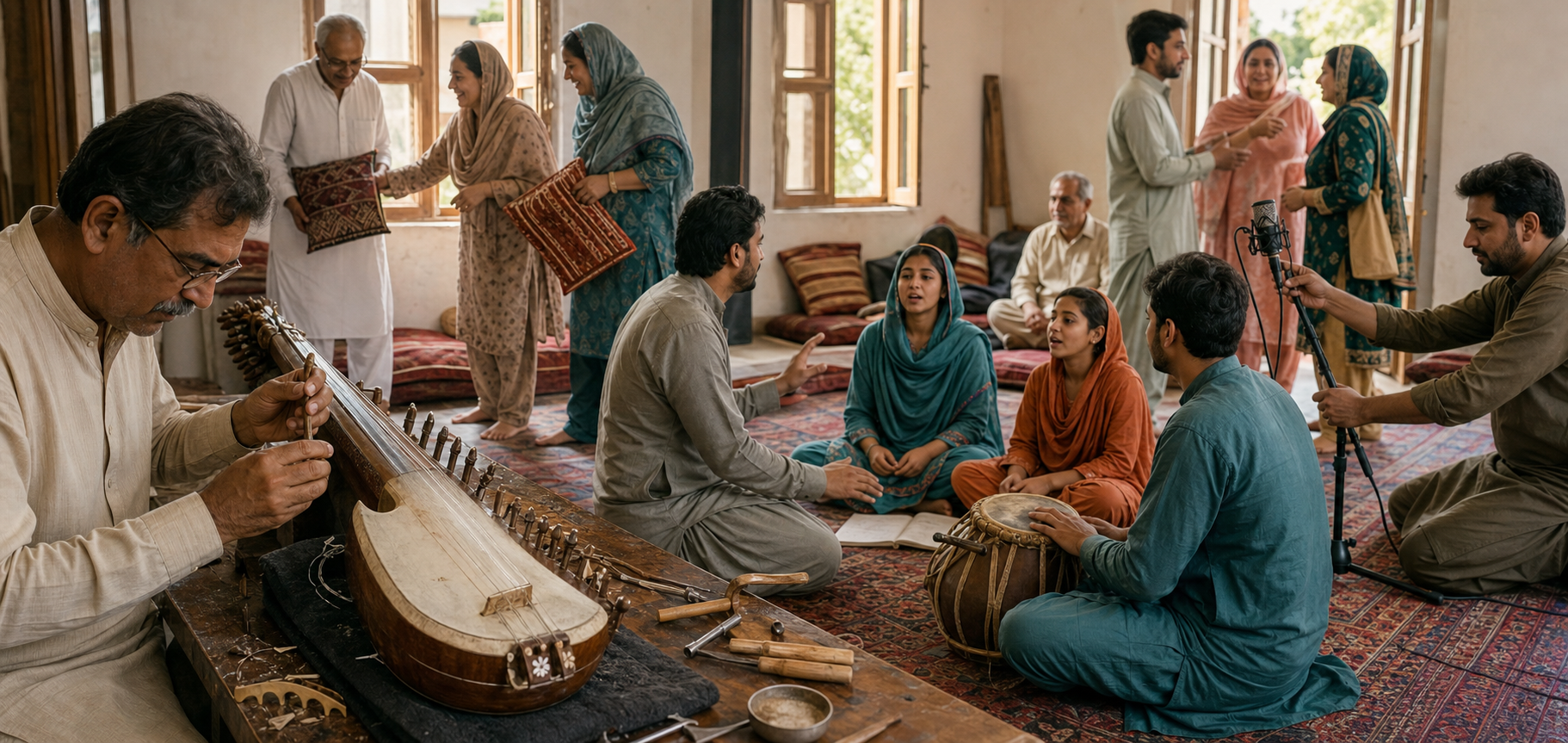
A living tradition cannot be restored by adding a rabab to an occasional commemorative program. It needs learners, teachers, repertoire, documentation, informed listeners, and recurring places to perform. Recent revival work has therefore joined training in rabab, saranda, and dilruba with renewed attention to the 31 primary raags of the Guru Granth Sahib, older rhythmic practices, archives, and rare recordings.
You do not need to be a professional musician to strengthen that work. Start with actions that reward depth.
- Demand useful credits. When saving or sharing a recording, retain the shabad, raag, taal, performers, instruments, place, and date when known. A file called traditional kirtan may attract clicks, but it teaches the next listener almost nothing.
- Learn one composition deeply. Begin with Ramkali ki Vaar rather than collecting dozens of disconnected clips. Compare complete and partial renderings. Track where pauris begin and end. Repeated listening will teach you more than rapidly sampling instruments.
- Support instruction, not novelty alone. A spectacular concert can introduce the sound, but regular lessons sustain it. Give preference to teachers and programs that combine tanti saaz technique with bani, pronunciation, raag, taal, and historical context.
- Preserve recordings responsibly. Keep the highest-quality available copy, record known metadata, and separate verified information from family recollection or inference. Respect the rights and wishes of performers and custodial families when circulating private material.
- Ask gurdwaras for continuity. If you can influence programming, request a recurring string-led kirtan or teaching session rather than a single heritage event. Pair performance with a short explanation of the shabad, raag, and instruments so the sangat learns how to listen.
- Keep displaced lineages inside the history. Recordings and family memories preserved in Pakistan are not foreign appendices to the story. Partition changed where many Rababi families lived; it did not erase their place in Sikh musical inheritance.
Be equally clear about what does not help. An unverified claim of ancient authenticity does not help. Treating a hereditary community as picturesque material does not help. Nor does putting old instruments into an arrangement that ignores Gurbani’s pronunciation, raag identity, or textual structure. Preservation begins when accurate credit and sustained training become more valuable than the appearance of antiquity.
The deepest measure is ethical as well as musical. Rababi heritage carries a memory of Muslim musicians serving Sikh shabad, Sikh sangats sustaining specialist families, and sacred authority making room for voices beyond a narrow communal boundary. You preserve that inheritance accurately when you honor both Sikh distinctiveness and the shared civilizational field in which the music matured.
Key takeaways
- Rababi names a musical lineage and vocation; rabab names an instrument. The two are connected but not interchangeable.
- Bhai Mardana, Rai Balwand, and Bhai Satta belong near the center of Sikh kirtan history, not at its interfaith margins.
- Ramkali ki Vaar gives you a practical listening doorway because its bani, raag, pauri structure, and Rababi authorship remain joined.
- Authenticity is heard in textual clarity, raag discipline, phrase shape, rhythmic judgment, and humility before the shabad, not in antique appearance alone.
- The rise of harmonium-led kirtan preserved devotion under changed conditions; recovering tanti saaz should broaden Sikh musical memory rather than demean that continuity.
- A durable revival needs recurring teaching, fair support, accurate metadata, responsible archives, and informed sangats.
Your next step can be small and exact. Choose one string-led recording of Ramkali ki Vaar. Identify the bani, raag, taal, musicians, and instruments. Listen once for the words and once for the shaping of each pauri. If the credits are missing, ask for them before you share it. Rababi heritage becomes living inheritance when our listening becomes as disciplined as our admiration.
References
