
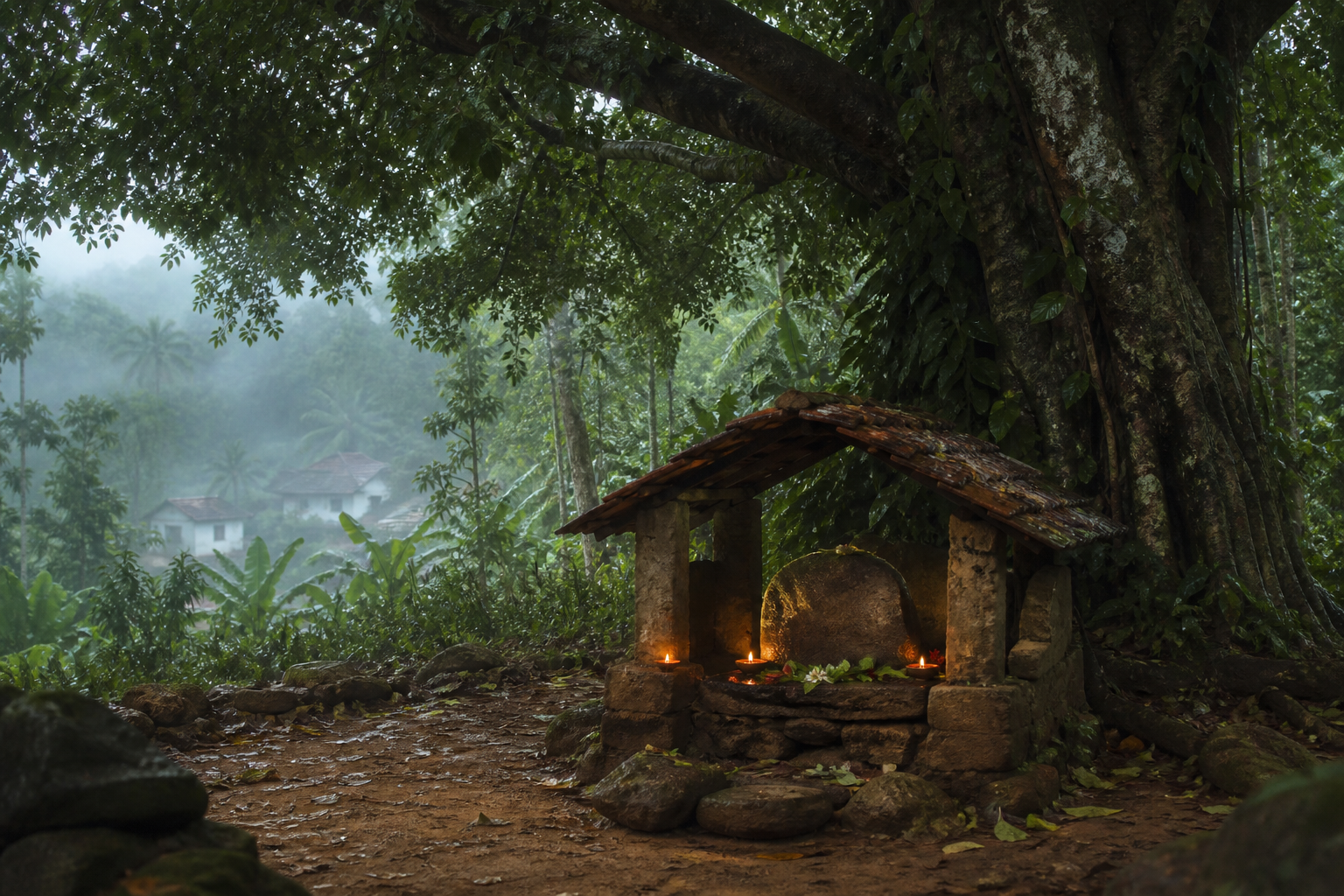
If you encountered the name Kopanari in a shrine reference, a family account, or a local tradition, your first question may be whether she is another name for a familiar Hindu goddess. That is understandable, but it is not the best place to begin.
Kopanari is a fierce guardian goddess associated with village and forest life in the South Indian borderlands of Kerala, Karnataka, and Tamil Nadu. Public information about her is limited. The responsible approach is therefore to understand her through her protective role, her landscape, and the community that worships her rather than filling the gaps with a convenient pan-Indian identity.
Read Kopanari’s fierceness through her protective role
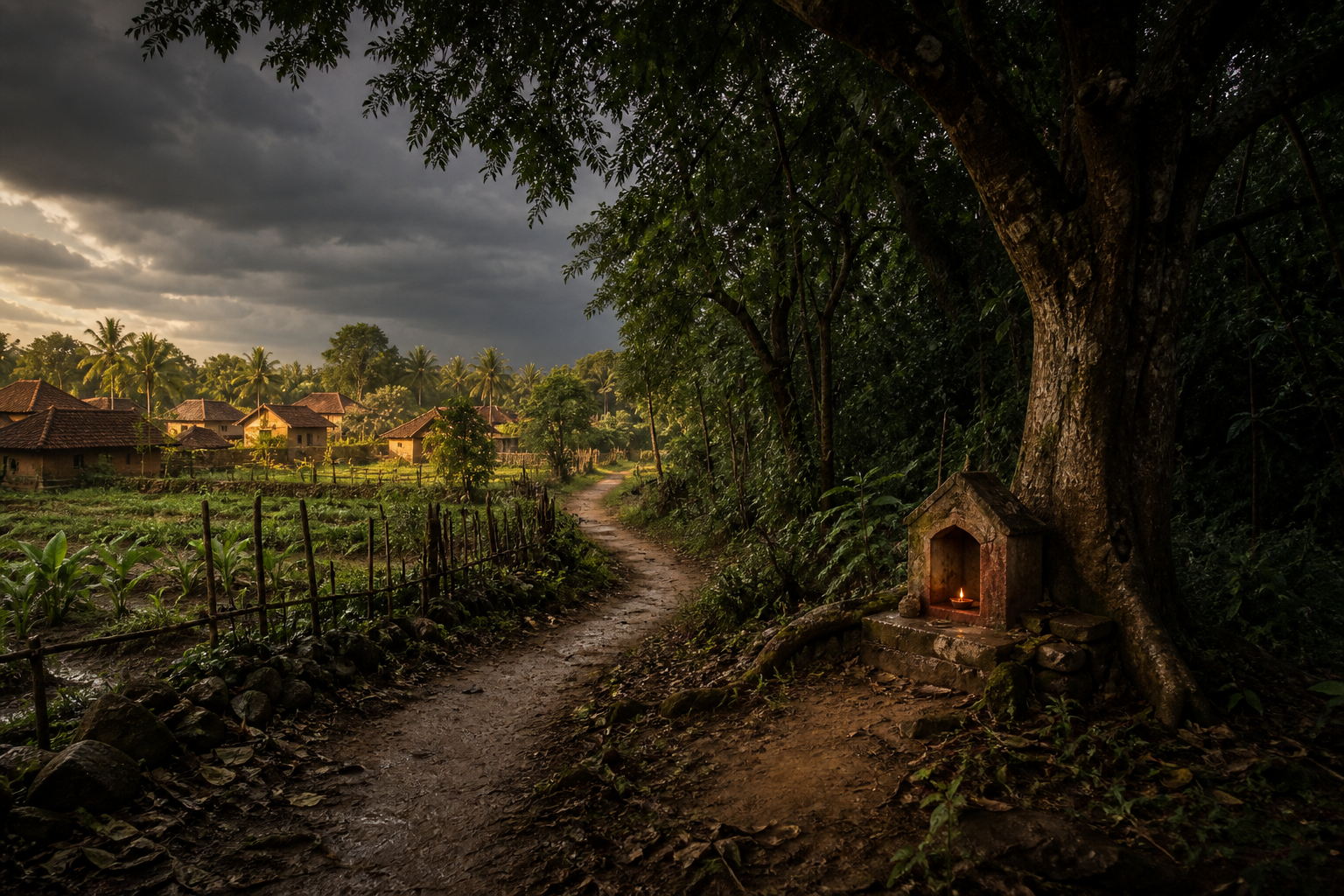
The words fierce, wrathful, and warrior can mislead a reader who treats divine anger as the opposite of divine care. In many Dharmic traditions, the two belong together. A guardian can be gracious toward those under her protection and formidable toward whatever threatens them.
This gives you the first interpretive rule: do not isolate Kopanari’s wrath from her guardianship. Fierceness describes the force with which protection is exercised. It should not be turned into a claim that the goddess is cruel, malevolent, or somehow outside the sacred order.
A careful introductory description would be: Kopanari Devi is a locally rooted South Indian goddess whose fierce power is associated with guarding village and forest. That sentence says what can be supported without assigning her an undocumented genealogy, consort, vehicle, weapon, mantra, or origin story.
This restraint matters. Lesser-documented deities are often made to look more intelligible by identifying them immediately with a better-known goddess. Such an identification may be meaningful when worshippers themselves make it. Without that local testimony, however, it replaces the deity’s own identity with an outsider’s expectation.
Place is part of the goddess’s identity
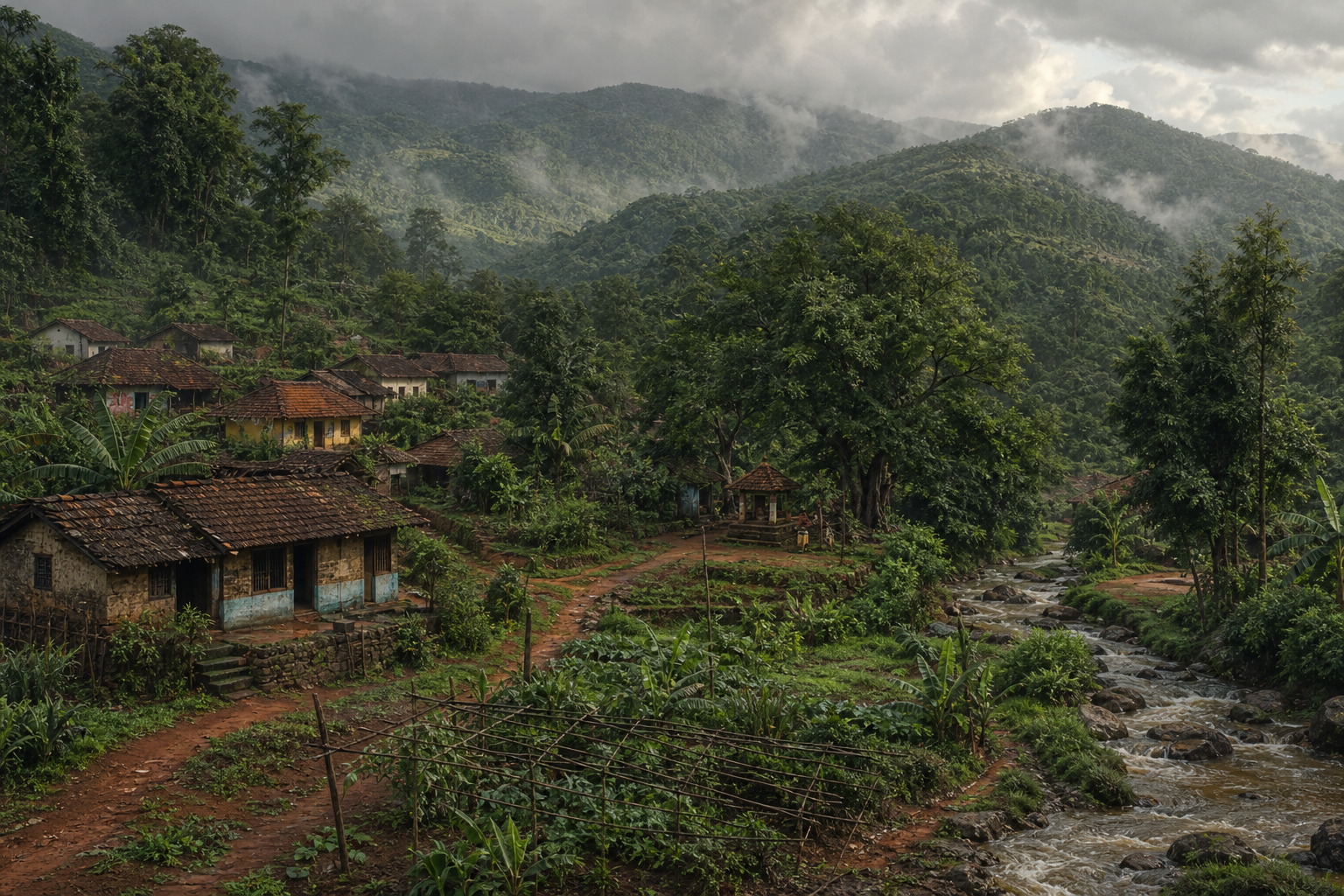
Kopanari belongs to a religious landscape near the borders of three modern states. You should expect local language, pronunciation, community memory, and ritual vocabulary to matter. State boundaries can organize a map without fully describing the older cultural relationships that cross them.
The village and forest associations are equally important. They are not merely scenery added to a theological profile. They identify the world within which Kopanari’s guardianship is understood: inhabited space and the surrounding landscape on which a community depends. At the same time, a forest association alone does not prove that she is exclusively a nature goddess. It tells you her sphere is place-bound; it does not supply an entire doctrine.
If you are trying to learn about a particular Kopanari shrine or tradition, begin with questions that preserve this local setting:
- How do local worshippers pronounce and write the goddess’s name?
- Which village or communities regard her as their guardian?
- What part of the village or surrounding landscape is connected with her?
- How do worshippers describe her protection in their own words?
- Are there particular observances, stories, or restrictions that may be shared publicly?
- Do local devotees identify her with another deity, or do they maintain Kopanari as a distinct name and presence?
These questions produce better understanding than starting with, “Which famous goddess is she really?” The latter assumes that a local deity becomes valid only after being translated into a more familiar form.
How to approach a living village tradition respectfully
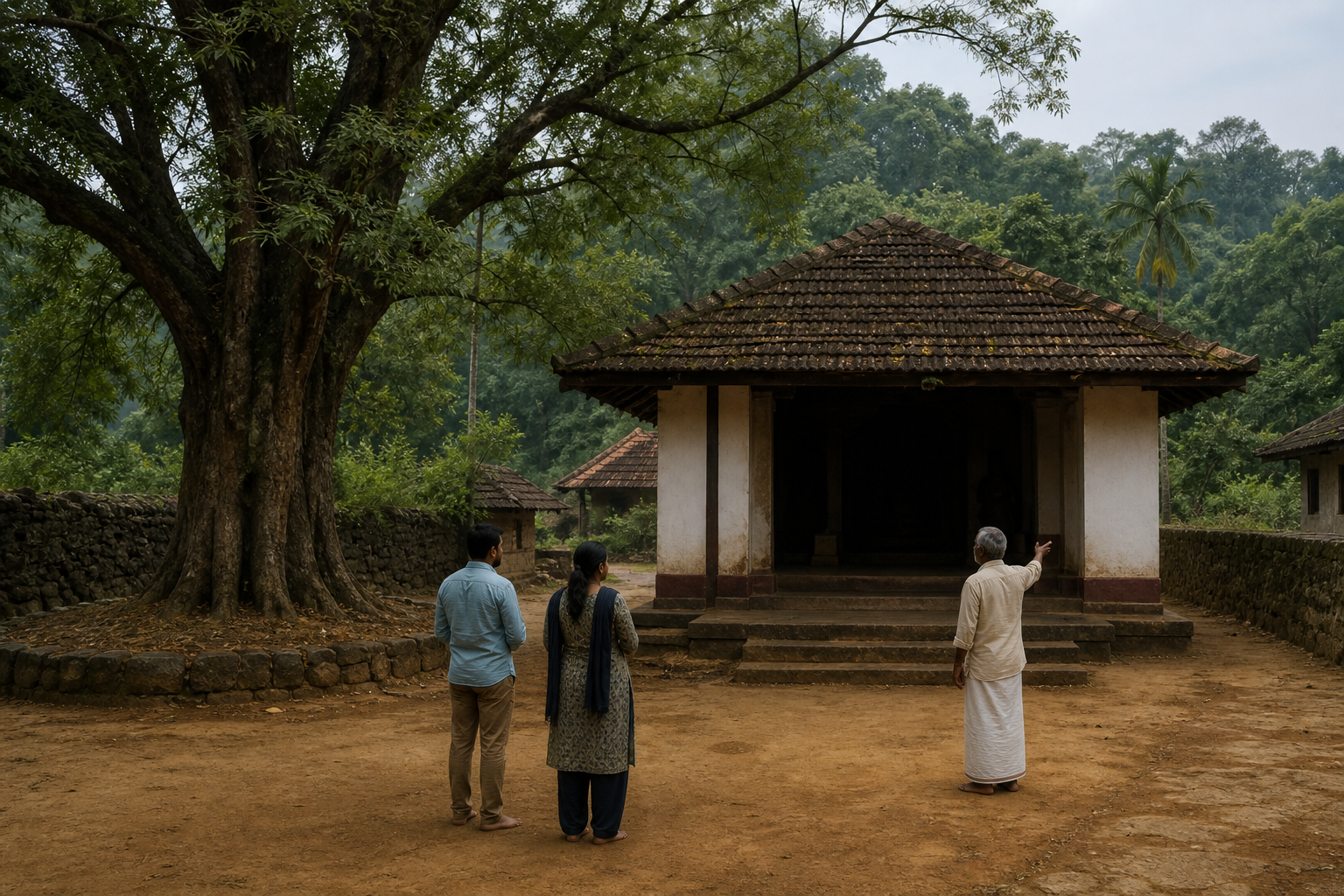
If you plan to visit, photograph, or document a place associated with Kopanari, ordinary temple-tourism habits may not be enough. A community guardian can be connected with rules that are locally understood but not displayed for visitors. You do not need to know those rules in advance; you do need to ask before acting.
- Find the appropriate local person first. Ask who looks after the sacred place or is trusted to explain its customs. Do not assume that the most confident bystander speaks for the tradition.
- State your purpose plainly. Say whether you are visiting for darshan, family inquiry, academic interest, photography, or publication. The answer may affect what the community is willing to show or explain.
- Ask before photographing or recording. Permission to enter is not automatically permission to photograph an image, offering, ritual, participant, or sacred boundary.
- Observe before participating. Do not touch an image, move an offering, cross a marked area, or imitate a ritual action simply because you have seen something similar elsewhere.
- Record language precisely. Write down the local spelling, pronunciation, place name, and the wording used by the person speaking. Do not silently replace unfamiliar terms with more recognizable Sanskrit or English categories.
- Ask what may be shared. Information given in conversation is not always intended for unrestricted publication. Confirm whether names, photographs, ritual details, and oral accounts are public.
Local accounts may differ. That does not automatically make one of them false. One family may preserve a story that another does not; a ritual explanation may vary by language, lineage, or role. Record who gave each account and where it applies. Do not force several voices into a single universal version.
Claims to avoid when information is limited
Thin documentation invites confident invention. A vivid but unsupported detail can circulate until repetition makes it look traditional. When you read or write about Kopanari, watch for these warning signs:
- A forced equation with a famous goddess. Similar protective or fierce qualities do not, by themselves, establish that two named deities are identical.
- An instant etymology. A name should not be split into convenient Sanskrit words without evidence from local language and usage.
- A universal ritual prescription. One locality’s practice, if verified, should not be presented as the rule for every community that uses the name.
- An unsupported claim of antiquity. “Ancient” is not a substitute for a dated inscription, text, shrine record, material history, or traceable oral lineage.
- A complete iconographic profile assembled from analogy. Weapons, mounts, colours, companions, and hand gestures associated with other goddesses cannot simply be assigned to Kopanari.
- The use of “folk” to mean inferior. Local religious traditions are not defective versions of textual Hinduism. They are forms through which communities relate dharma, protection, memory, and place.
A useful discipline is to separate every statement into one of three kinds. First is what can be verified publicly: Kopanari’s name, regional setting, fierce character, and village-and-forest guardianship. Second is what a particular community reports about its own practice. Third is interpretation: what an observer thinks those details may mean.
Keep the labels visible in your writing. Use wording such as “worshippers in this village describe” for a local account and “this may indicate” for an interpretation. Reserve unqualified statements for what is genuinely established. This prevents one person’s inference from becoming someone else’s invented tradition.
Key takeaways
- Kopanari Devi is best understood first as a fierce guardian of village and forest in the South Indian border region of Kerala, Karnataka, and Tamil Nadu.
- Her wrath and warrior character should be read in relation to protection, not separated from it as evidence of malevolence.
- Do not assign her a famous divine identity, fixed iconography, etymology, or ritual system unless local testimony or other evidence supports it.
- When visiting or documenting her tradition, ask the relevant community about names, boundaries, practices, photography, and what may be made public.
- Distinguish verified information, community testimony, and personal interpretation every time you speak or write about her.
Your best next step is not to search for a grand universal theory. Identify the village or shrine connected with the name, take these questions with you, and let the people who live with the tradition establish its contours. Until that local knowledge is available, a modest description is not incomplete scholarship. It is intellectual and devotional honesty.
References
