
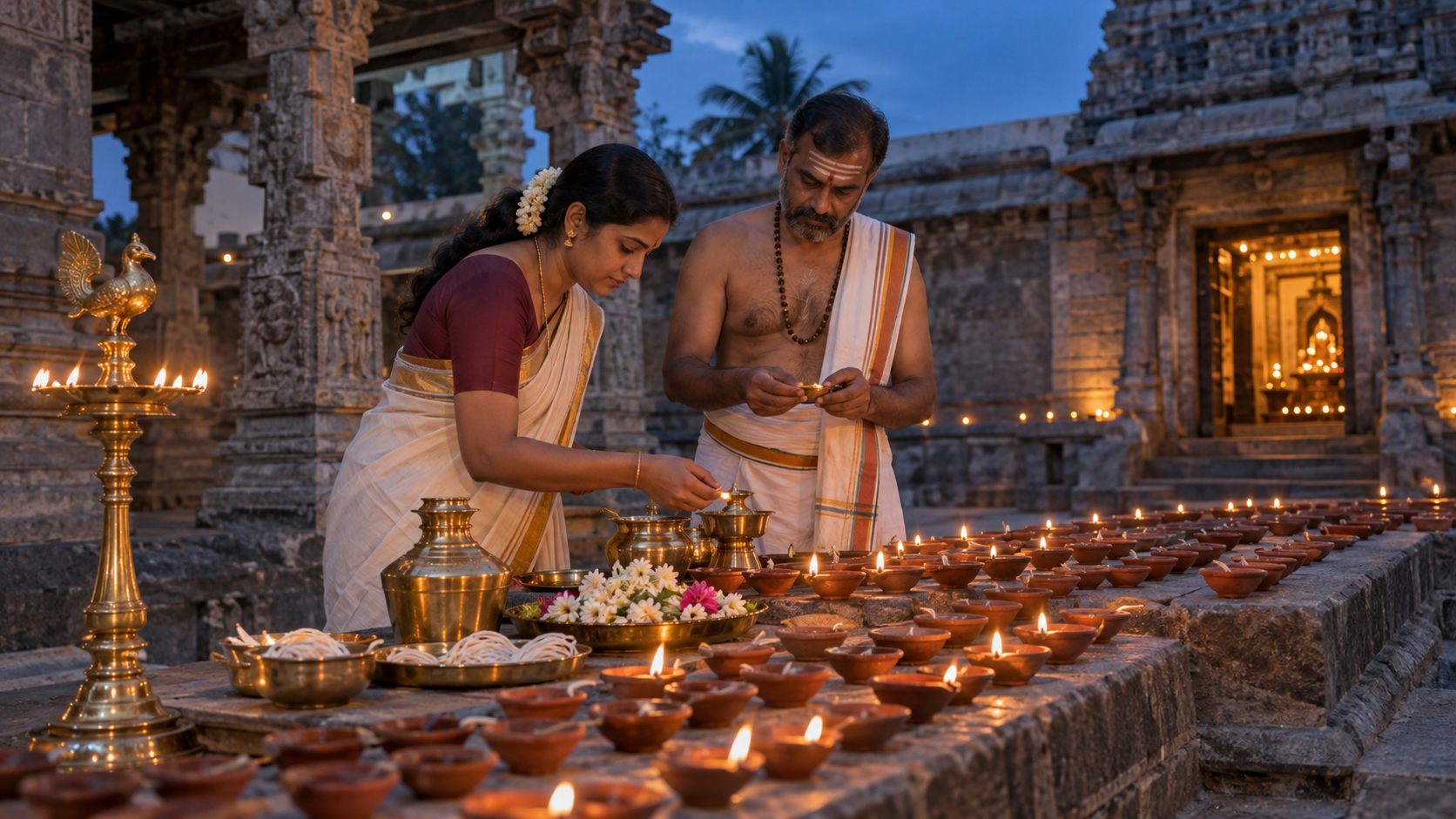
If someone in your family has asked you to perform Karthika Deepam Nomu but handed you little more than its name and the number 120, the difficult part is knowing what is fixed and what must be confirmed locally. You do not need a longer collection of internet rituals. You need the right date, the Shiva temple’s procedure, and a safe plan for carrying it out.
For 2026, begin with three decisions: which eligible day you will observe, which temple will guide the offering, and exactly what that temple counts as 120. Settling those points before buying materials will prevent most of the confusion surrounding Karthika Deepam Nomu, Karthika Deepa Vratham, and Deepadaana Vratham.
Fix the day before you plan the ritual
Karthika Deepam Nomu is an austerity observed during Karthika Masam in the Telugu calendar. In 2026, the relevant month begins on November 10 and ends on December 8. The prescribed choices are a Krittika Nakshatra day within that period or Pournami, the full-moon observance.
That gives you a choice between eligible occasions; it does not make every date in the month interchangeable. If your family tradition identifies either Krittika Nakshatra or Pournami, follow that route. If it does not, ask the Shiva temple where you intend to perform the observance which eligible day it is supporting.
- If you inherited a family practice, preserve its choice of Krittika Nakshatra or Pournami.
- If a temple is conducting the vratham collectively, use the eligible date and arrival time confirmed by that temple.
- If you are arranging it independently, check the tithi or nakshatra timing in a Telugu panchanga calculated for your location.
- If the civil date appears to differ between calendars, do not settle the question from the month-long date range alone. Ask the temple which local timing governs the observance.
Make this decision first. The date determines when the temple can receive you, while the temple determines what materials and arrangement you will actually need.
Read the three names as practical instructions
The names point to related aspects of one observance. Nomu is a Telugu term for a religious vow or undertaken observance; vratham likewise emphasizes discipline and commitment. Deepa identifies the lamp, while deepadaana adds the dimension of offering or giving. The practice is therefore more than decorative lamp-lighting.
You can use those meanings to keep the observance balanced:
- The calendar discipline: choose an eligible Krittika Nakshatra or Pournami occasion during Karthika Masam.
- The vrata: approach the act as a deliberate religious commitment, not an item to rush through because a date arrived.
- The deepa: give sustained attention to the act of lighting, including the temple’s rules and the physical safety of everyone nearby.
- The daana: ask what the temple recognizes as the offering in its form of Deepadaana Vratham. Do not assume that purchasing lamps, donating materials, and making a general contribution are automatically identical acts.
This distinction matters when the visible number begins to dominate the preparation. A count can preserve ritual form, but it cannot replace sankalpa, reverence, temple discipline, or the giving implicit in deepadaana. Confirm the form precisely, then perform it without turning it into a display.
Settle the 120-count temple procedure in advance
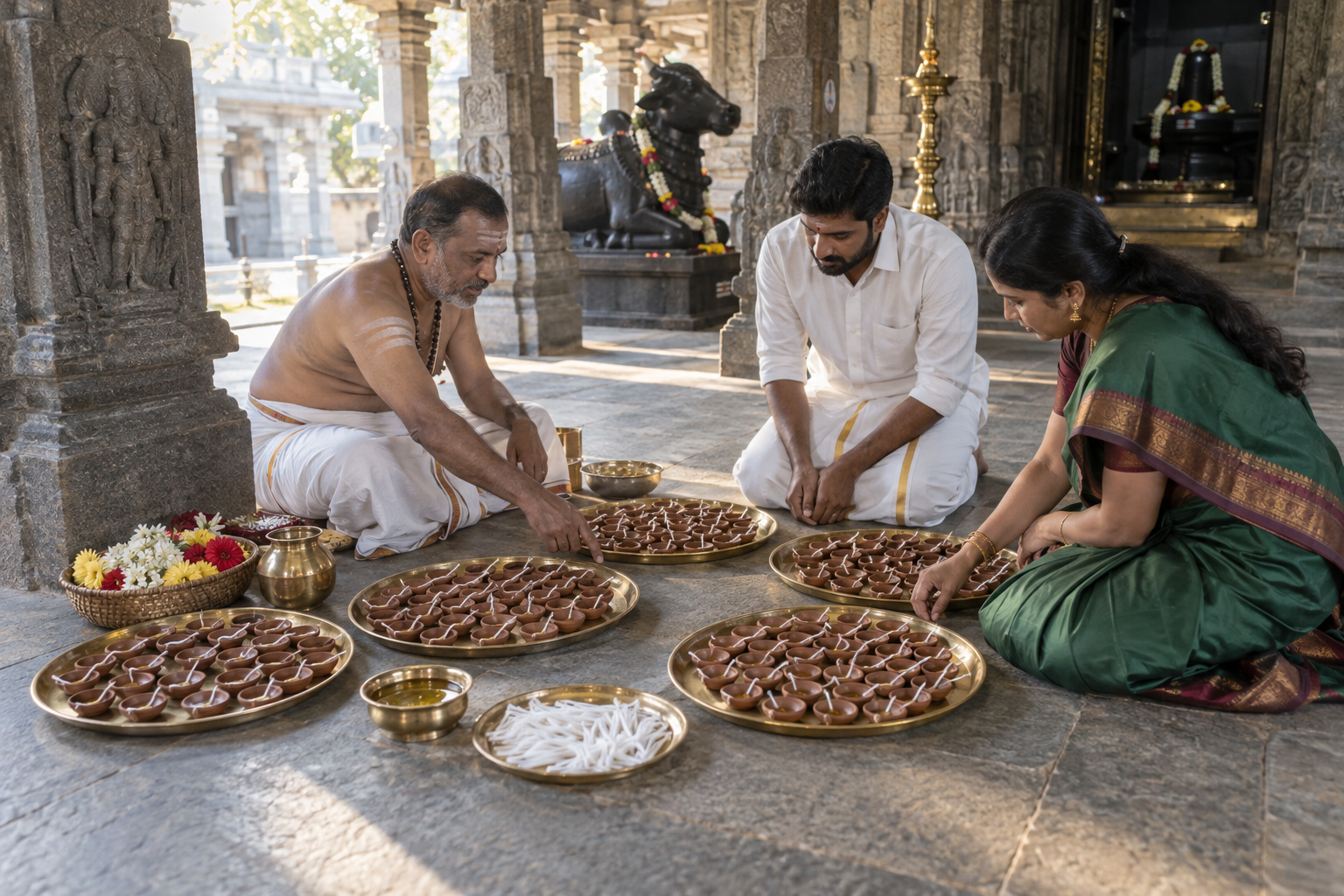
The Shiva-temple form of this observance includes a lighting count of 120. That is a significant practical detail, but the number alone does not tell you whether the local procedure counts individual lamps, individual wicks, or another arrangement accepted by the temple.
Call the temple before purchasing anything. Use the full names Karthika Deepam Nomu and Deepadaana Vratham so that the priest or temple office understands which observance you mean. Ask these questions plainly:
- Does 120 mean separate lamps, separate wicks, or a temple-specific arrangement?
- Does the temple supply the vessels, wicks, and fuel, or must you bring them?
- Which materials does the temple permit in its lighting area?
- Where will the offering be placed, and at what time may you begin?
- Does a priest lead a sankalpa, prayer, or other part of the vratham?
- What form of daana belongs to the temple’s procedure?
- Who supervises the flames and handles the vessels after the observance?
Write down the answers. A verbal instruction such as “bring everything” is still incomplete if you do not know the permitted vessel, fuel, count, placement, or disposal procedure. If different relatives remember different versions, let the family tradition govern devotional details and the host temple govern what may physically happen on its premises.
A large lighting arrangement also needs ordinary fire discipline. Use only the location assigned by the temple. Keep loose fabric, bags, paper packaging, and children away from the flames. Do not leave burning lamps unattended, crowd the lighting area, or pour fuel into a hot or burning vessel. If the temple cannot accommodate the requested count, ask a priest for an accepted alternative instead of recreating a large arrangement at home without guidance.
A careful order for observing the vratham
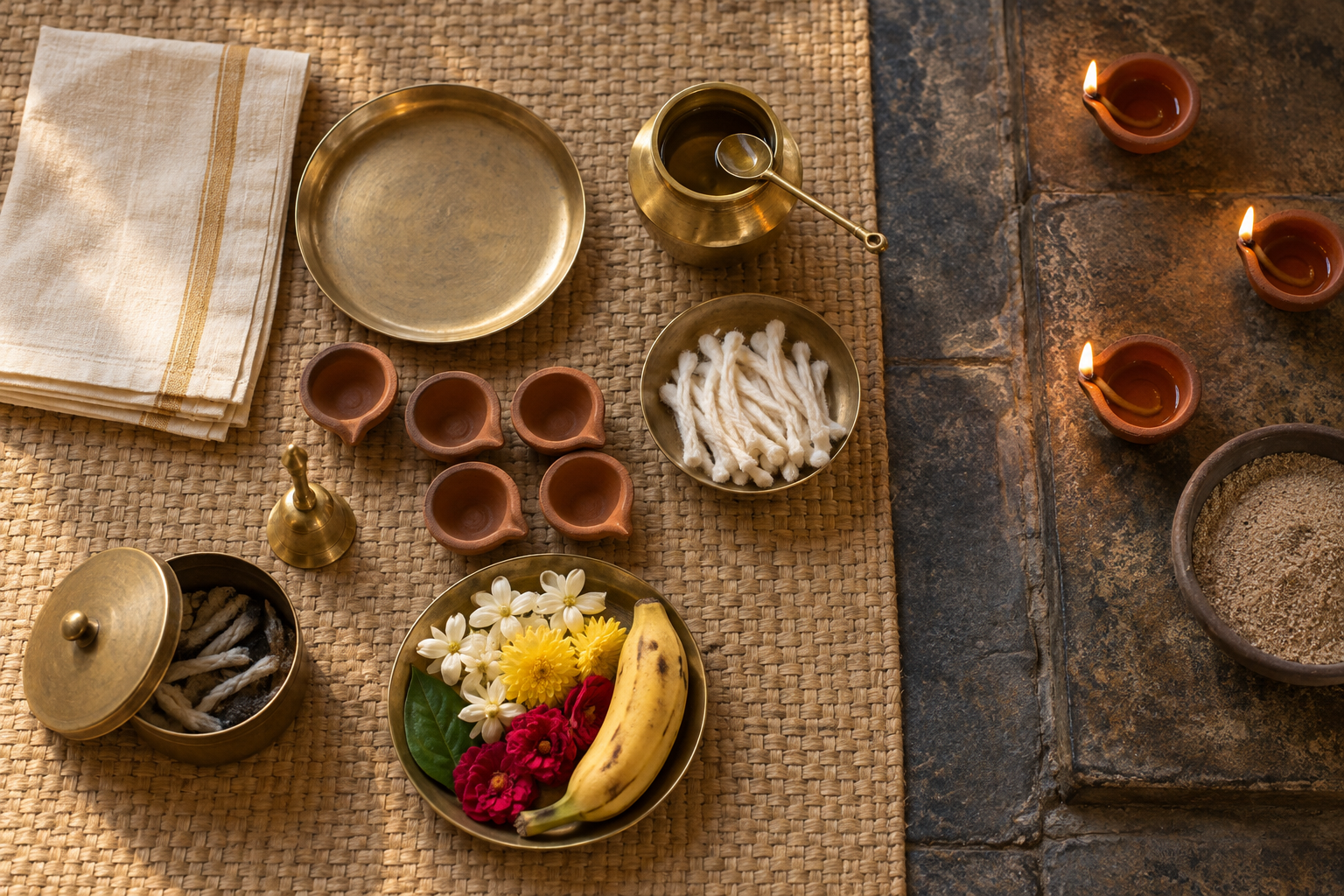
The following sequence keeps confirmed tradition separate from personal improvisation. It is not a substitute for the procedure given by your family or temple.
- Identify the tradition you are following. Ask whether your household has an inherited form of Karthika Deepam Nomu. Record any established family instruction rather than combining several unrelated online checklists.
- Select the eligible occasion. Choose a Krittika Nakshatra day or Pournami within the November 10 to December 8, 2026 Karthika Masam window, then verify the applicable local timing.
- Confirm the temple arrangement. Establish what 120 counts, what you must bring, where the offering will be placed, and who will guide it.
- Obtain only approved materials. Buying first and asking later can leave you with lamps or fuel the temple will not permit. Pack liquids securely and keep lighting materials separate until you reach the assigned area.
- Make the sankalpa in the recognized form. Use the words supplied by your priest or inherited tradition. If none have been given, ask rather than presenting a newly copied Sanskrit formula as mandatory.
- Light the offering under temple direction. Work at a steady pace, protect the prescribed count, and allow the temple to control spacing, ignition, and movement around the lamps.
- Complete the daana as instructed. If the observance is specifically being performed as Deepadaana Vratham, complete the form of giving recognized by that temple or lineage. Do not silently substitute one kind of contribution for another.
- Close responsibly. Offer your concluding prayer, follow instructions for the burning lamps, help clear permitted materials, and record the procedure for the next Karthika Masam.
That final written record is valuable. Note the calendar basis, temple, counted unit, materials, prayers, daana, and the person who guided you. Next year, your family will inherit a usable procedure rather than another unexplained number.
Practical questions that prevent avoidable mistakes
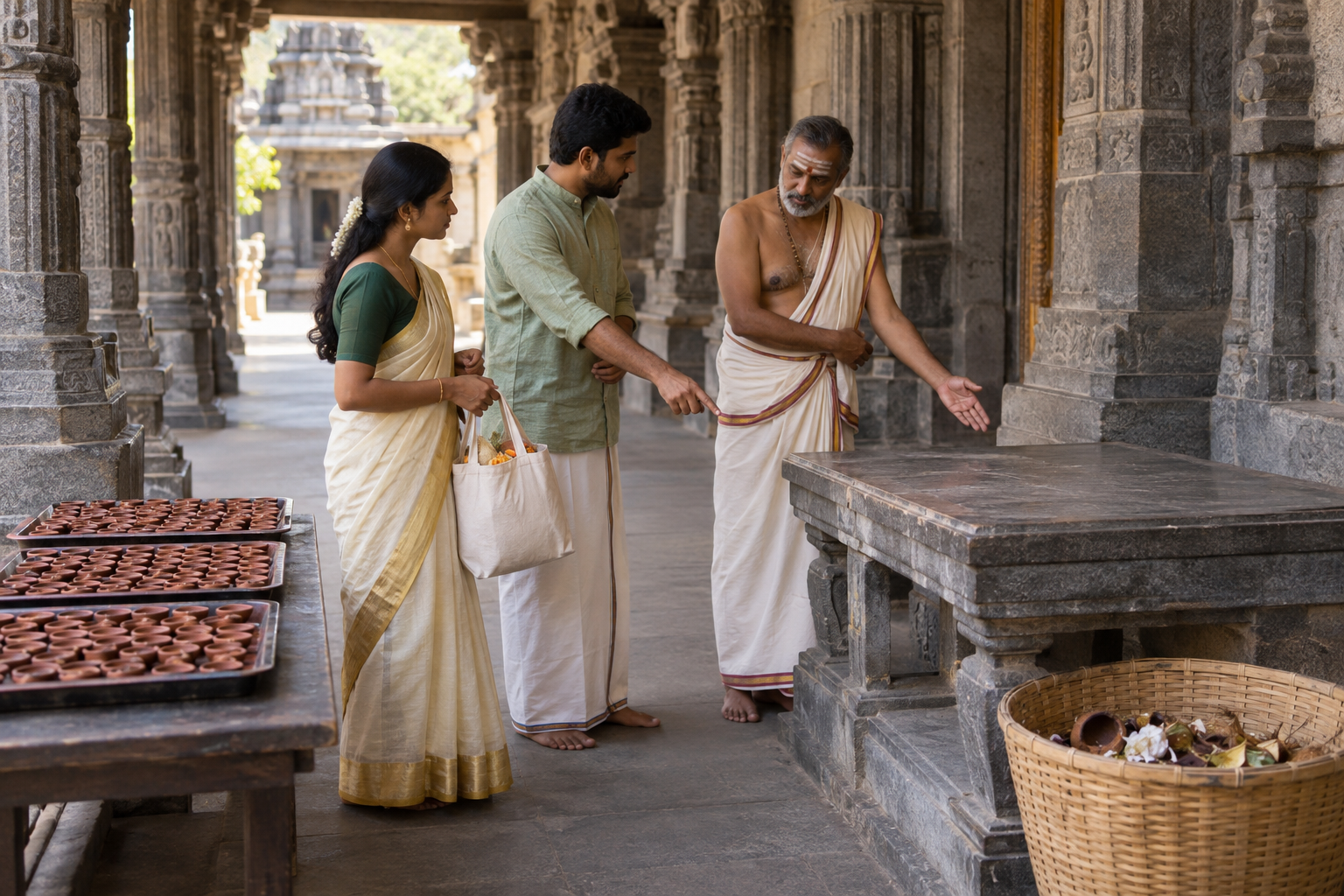
Can I perform Karthika Deepam Nomu on any day of Karthika Masam?
Not under the stated form. The eligible occasions are a Krittika Nakshatra day or Pournami during Karthika Masam. Use a locally applicable panchanga or the host temple’s schedule to identify the civil date and time.
Can I replace the Shiva-temple observance with a home ritual?
Do not assume they are equivalent. The specified form is centered on a Shiva temple. Your family or priest may know a permitted household form, but that should be confirmed and named as such rather than treated as an automatic substitute.
Does the number 120 always mean 120 separate lamps?
The required lighting count is 120, but you should confirm the counted unit with the temple conducting the observance. This is exactly the kind of operational detail that can vary in local execution and should not be guessed.
What if I cannot safely arrange the full count?
Tell the priest before the day of the vratham. Ask whether the temple can prepare or supervise the arrangement and whether your tradition recognizes another form when the full setup is impractical. An openly authorized adaptation is preferable to an unsafe array of flames or an unannounced change presented as the exact rite.
Your next move is simple: choose the Krittika Nakshatra or Pournami route, verify its local 2026 timing, and call the Shiva temple with the seven preparation questions above. Once the date, count, materials, and daana are settled, you can approach the vratham with attention instead of last-minute uncertainty.
References

Leave a Reply
You must be logged in to post a comment.