
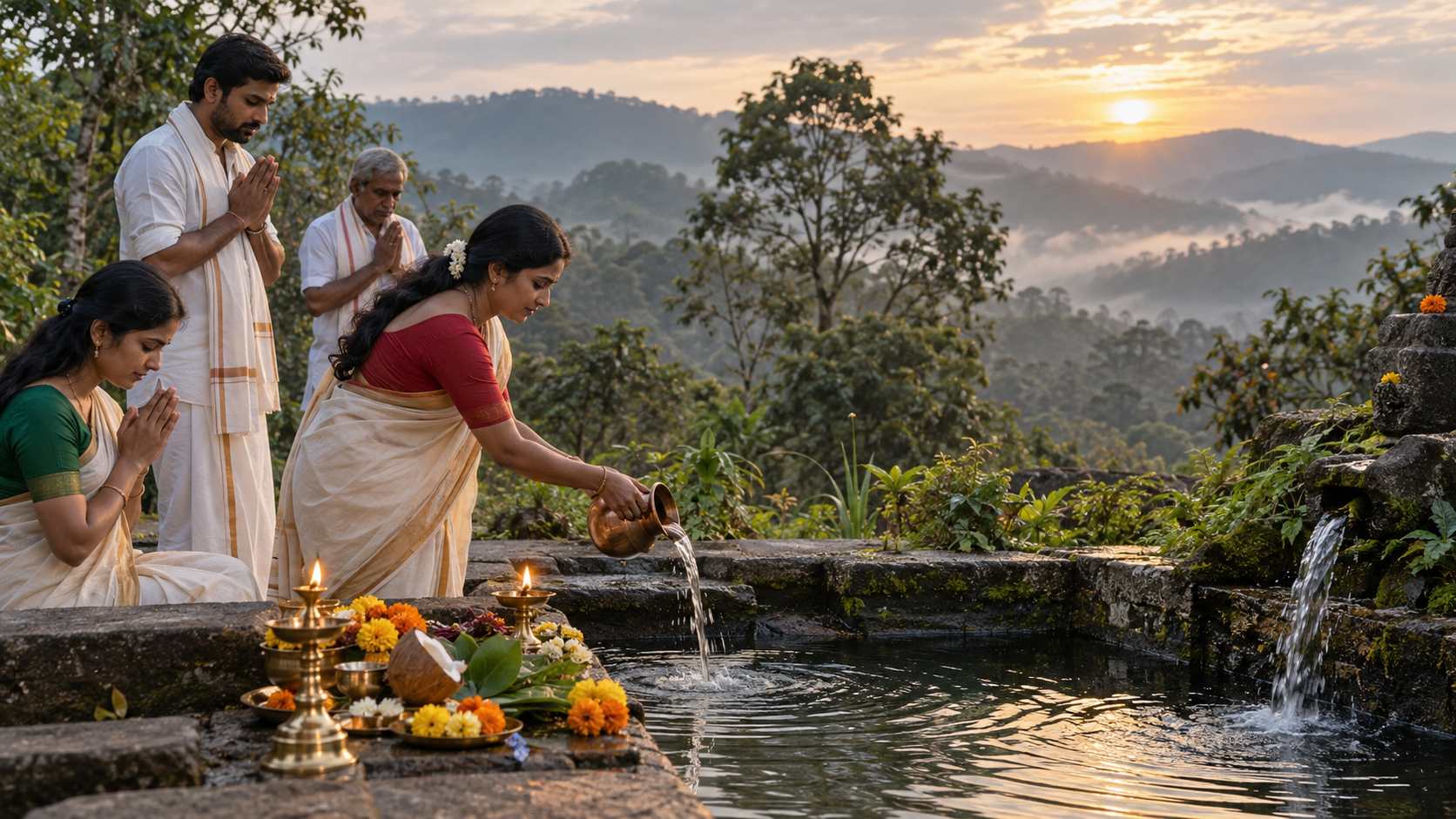
If your calendar shows both Tula Sankranti and Kaveri Sankramana, you may be wondering whether they require two separate observances. In 2026, they meet on Saturday, 17 October: Kaveri Sankramana is observed in connection with the same solar transition that defines Tula Sankranti.
Your first task is therefore not to collect two sets of rituals. It is to understand the shared sacred time, identify the custom your family follows, and decide whether you will worship at home or join the pilgrimage observance at Talakaveri.
One solar transition, two layers of observance

Tula Sankranti, also called Tula Sankramana or Thula Sankramanam, marks Surya’s passage from Kanya Rashi into Tula Rashi – from Virgo into Libra. The transition also begins Thulam in the Malayalam calendar and Aippasi in the Tamil calendar. These regional month names differ, but they point to the same movement of the Sun.
Kaveri Sankramana gives that transition a particular sacred geography. Its major pilgrimage observance takes place at Talakaveri in Karnataka’s Kodagu district, where devotees gather at the source associated with the Kaveri, or Cauvery, River. It is not a second, unrelated Sankranti. It is the Kaveri-centred expression of Tula Sankramana.
Keep three things separate when planning the day:
- The date: the civil-calendar day on which the observance falls. In 2026, that is Saturday, 17 October.
- The punya kala: the ritually significant period associated with the solar ingress. The date by itself does not supply the exact local schedule.
- Your household observance: the rites preserved by your family, sampradaya or temple. A pilgrimage bath, Vishnu worship and ancestral offerings are distinct practices; one should not be casually substituted for another.
This distinction prevents the most common planning mistake: treating the entire date as though every rite may be performed at any convenient hour. Check a dependable panchanga for your location, or ask the temple or purohita whose tradition you follow, before fixing the time.
Plan the observance in the right order
A sound plan begins with time and tradition, not with a shopping list. Use this order:
- Confirm the local punya kala. Look for a location-specific panchanga entry for Tula Sankranti on 17 October 2026. If two calendars disagree, follow the authority normally used by your family or temple instead of combining their timings.
- Choose home worship or pilgrimage. If you are going to Talakaveri, the journey, crowd and on-site arrangements become part of your preparation. If you are remaining at home, build the day around practices you can perform attentively.
- Identify inherited rites. Ask whether your household performs only snana and puja or also observes tarpana. Do this before the day itself, especially if another family member normally leads the rite.
- Prepare the complete text you actually know how to use. Keep the Vishnu Sahasranama or other customary prayer ready. For a Sanskrit sankalpa, use a complete form appropriate to the year, place and tradition rather than joining together isolated phrases.
- Protect the worship period from ordinary errands. Finish bathing arrangements and other preparation beforehand so the punya kala does not become a hurried search for instructions.
This sequence matters because a precise-looking ritual can still be wrong if its timing or sankalpa belongs to another place or convention. Fidelity to your received practice is more important than making the observance look elaborate.
A simple and grounded home observance
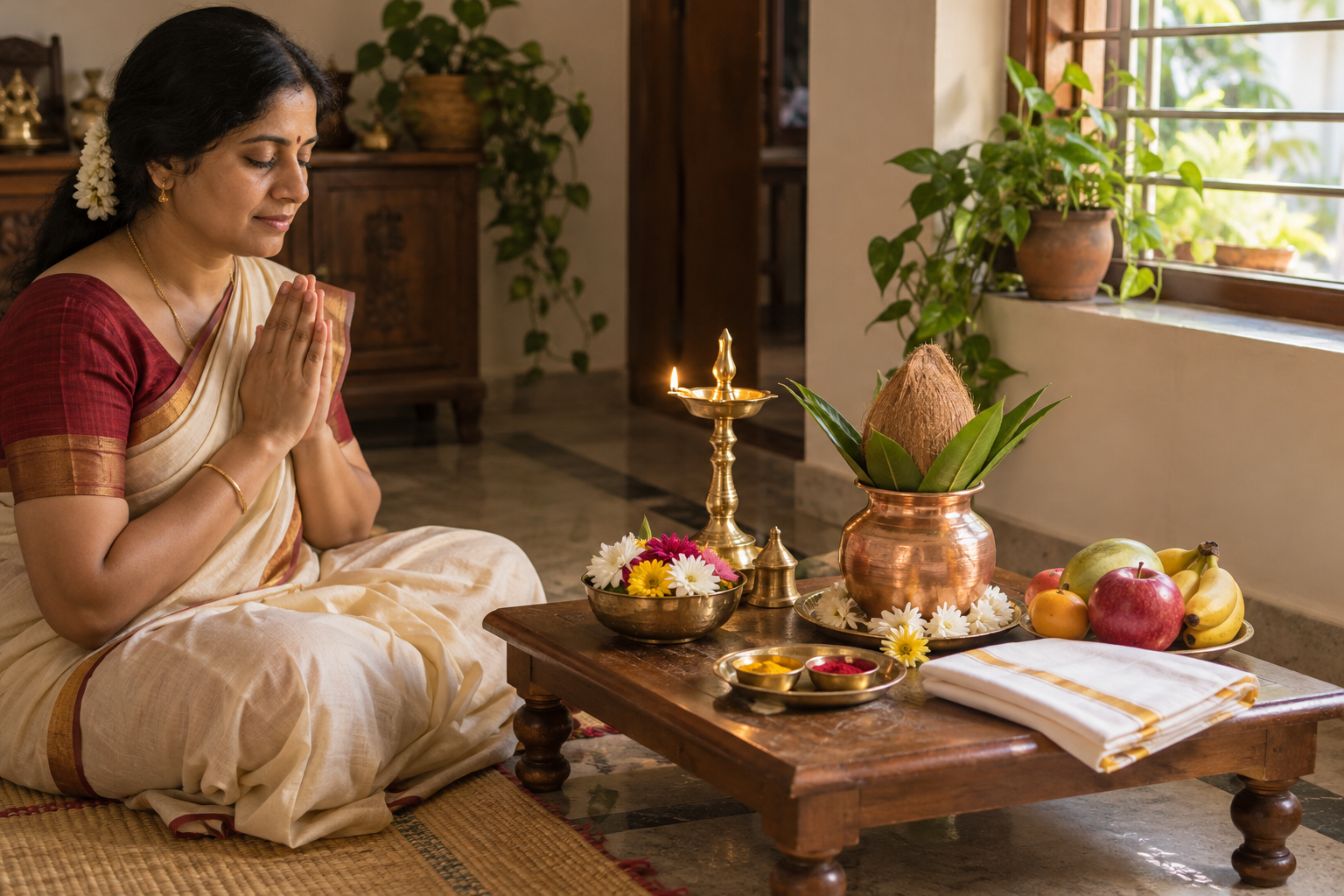
If you do not have a longer inherited procedure, keep the observance centred on practices clearly associated with Tula Sankranti: Sankramana snana, Vishnu puja and Vishnu Sahasranama parayana. A practical sequence is:
- Take the ritual bath during the locally observed period, as far as your circumstances and household custom allow.
- Prepare a clean worship space and perform Vishnu puja in the form familiar to your family.
- Recite the Vishnu Sahasranama with enough time to finish without racing through it.
- If tarpana belongs to your family practice, perform it with the correct sankalpa and procedure. If it does not, do not add it merely because you encountered a mantra online.
- Close the observance quietly. Let reverence for Kaveri and other sacred rivers inform how you use and protect water after the ritual, not only how you speak about it during worship.
Tarpana sankalpa is a specific ritual undertaking, not a decorative preface to be recited without context. If you have not been taught the procedure, ask a family elder or purohita for the full form and its pronunciation. Omitting an unfamiliar optional rite is more honest than performing fragments with false confidence.
Do not worry if relatives use different regional names. Tula Sankranti, Tula Sankramana and Thula Sankramanam can refer to the same ingress, while Thulam and Aippasi name the resulting month in different calendars. First establish what the speaker means; spelling alone does not indicate a different festival.
If you are travelling to Talakaveri
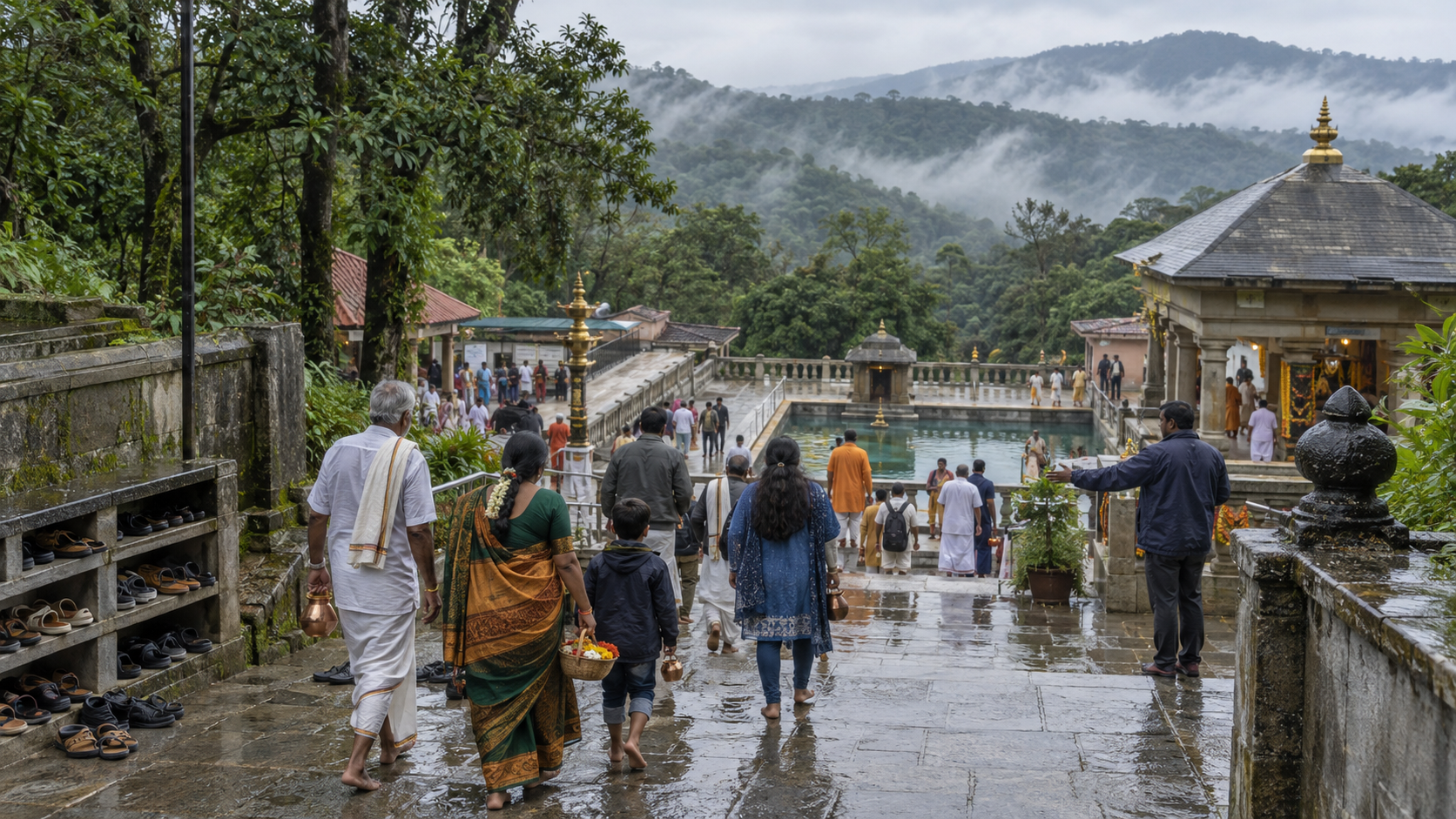
At Talakaveri, Kaveri Sankramana is a collective pilgrimage observance rather than a private bath transplanted to a famous location. Thousands of devotees gather for the sacred snana, so build your plan around the conditions of a major gathering.
- Verify the on-site schedule and access arrangements close to the date. A general festival date is not a substitute for current local instructions.
- Allow more time than the road journey alone requires. Arrival, walking, queues and bathing arrangements can all affect whether you reach the observance calmly.
- Carry only what you can manage in a crowd, including suitable dry clothing and any essential personal items.
- Follow the directions of temple and local authorities around queues, bathing areas and restricted spaces.
- Do not enter the water against safety instructions or beyond your physical limits. Darshana and prayer should not be turned into a test of endurance.
- Take every item you bring away with you. Leaving plastic, packaging or discarded offerings near sacred water contradicts the reverence the pilgrimage is meant to express.
- If travelling with others, agree on a meeting point before entering a crowded area rather than relying entirely on phone contact.
If you cannot travel, do not imitate Talakaveri by claiming that an ordinary bath is geographically the same pilgrimage. Observe Tula Sankranti faithfully at home and honour Kaveri in prayer. A clear distinction between pilgrimage and home worship preserves the meaning of both.
Key takeaways for 17 October 2026
- Tula Sankranti marks Surya’s transition from Kanya Rashi into Tula Rashi.
- Kaveri Sankramana falls with that transition and has its principal pilgrimage observance at Talakaveri in Kodagu, Karnataka.
- The shared date does not mean you need two unrelated sets of rites.
- For home worship, the established core includes Sankramana snana, Vishnu puja and Vishnu Sahasranama parayana.
- Perform tarpana only when it belongs to your received practice and you have the correct sankalpa and procedure.
- Use a trusted local panchanga or temple authority for the exact punya kala; do not infer it from the date alone.
Before 17 October, settle three details: the local punya kala, whether you will be at home or Talakaveri, and which complete prayers or rites your family actually follows. Once those are clear, the day can remain what a Sankramana observance should be – disciplined, prayerful and free of unnecessary confusion.
References
- Hindu Pad – Tula Sankramanam Mantras for Tharpana Sankalpam – 17 October 2026
- Hindu Pad – Tula Sankranti 2026: Tula Sankramana Punyakalam Timings
- Hindu Pad – Kaveri Sankramana 2026: Kaveri Sankramana Snana at Talakaveri, Coorg in Karnataka

Leave a Reply
You must be logged in to post a comment.