
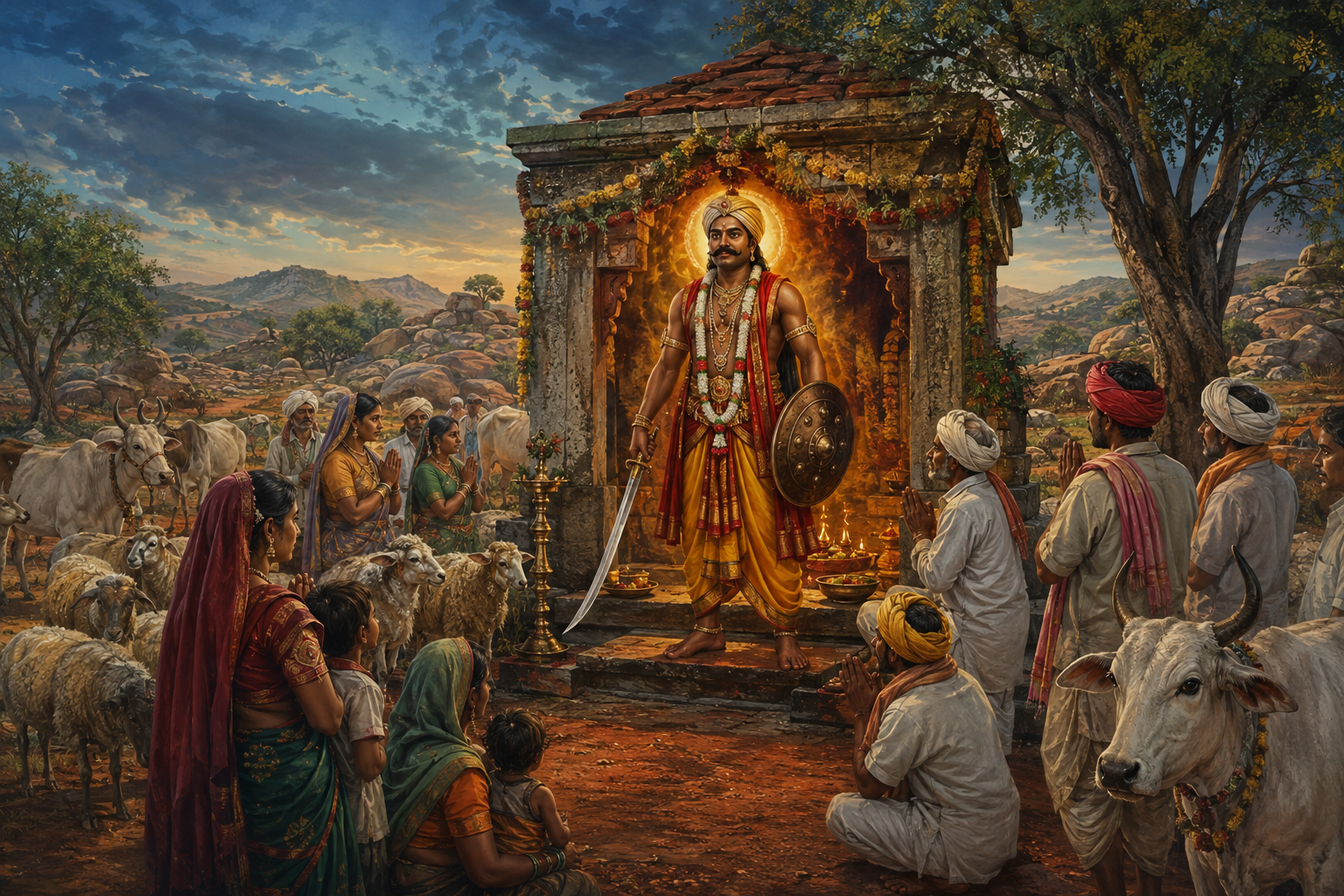
If you have heard Junjappa named beside Veerabhadra and are trying to decide whether he is a community deity, a cultural hero, or a manifestation of Shiva’s power, do not force him into only one of those categories. Each name tells you something different about how the tradition understands him.
The shortest accurate answer is this: Junjappa is revered in Karnataka as an incarnation of Veerabhadra, a guardian with miraculous powers, and a cultural hero especially important to Golla (Yadav) and Kuruba communities. Understanding why all those dimensions belong together is the key to approaching him respectfully.
Key takeaways
- Junjappa’s connection to Veerabhadra is one of divine identity, not merely a loose comparison between two heroic figures.
- Calling Junjappa a cultural hero does not make him less sacred. It identifies his place in community memory alongside his standing as a revered deity.
- His importance among Golla (Yadav) and Kuruba communities is essential context, not a demographic footnote that can be removed from the story.
- Accounts of his miraculous birth and heroic deeds survive through folklore and oral tradition, so a responsible listener records who tells a version rather than demanding one flattened script.
- Chinnamma’s trials should remain visible when the story is retold. They connect divine power with devotion, endurance, and the human cost of an ordeal.
One deity, four dimensions
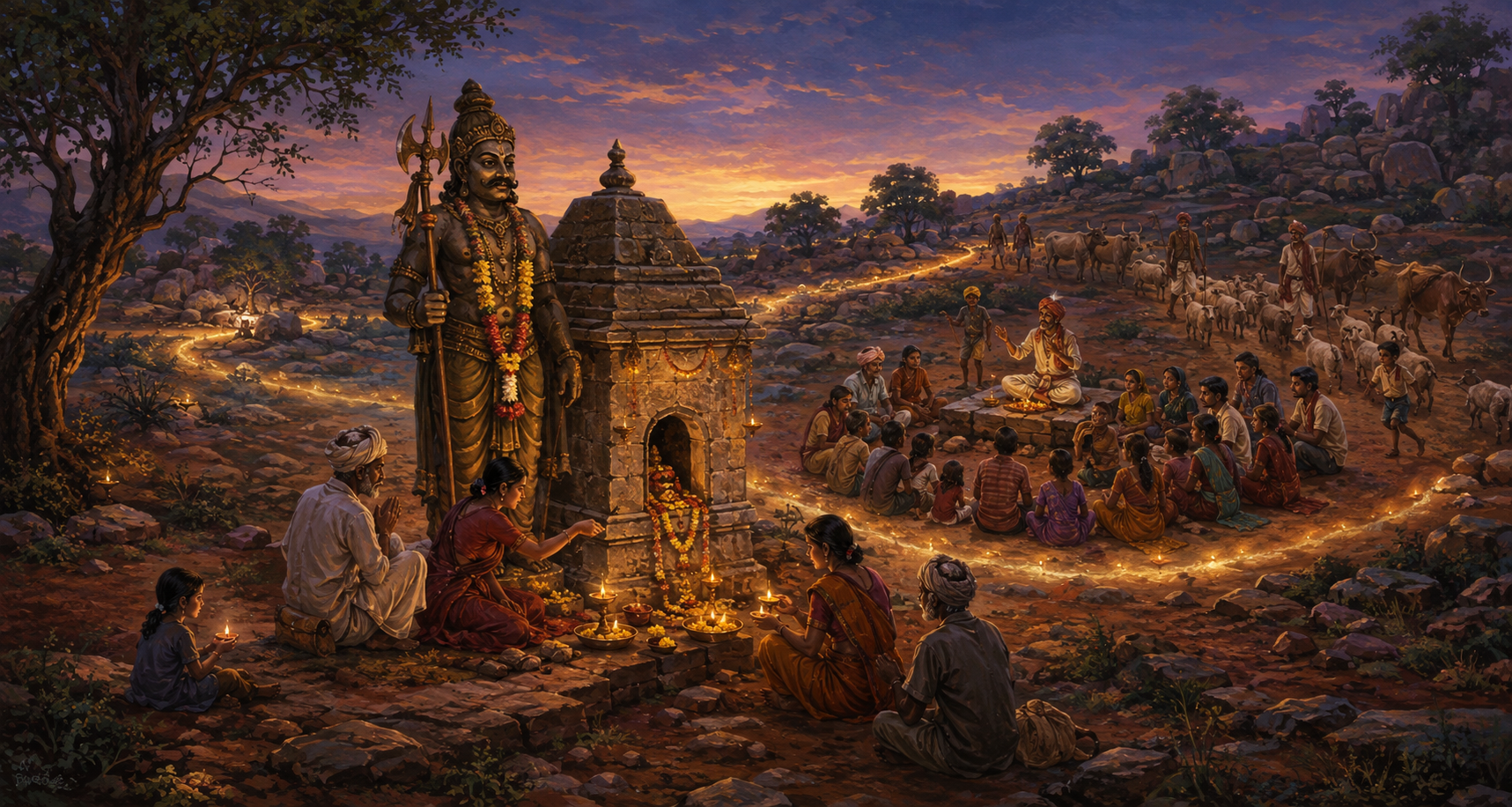
The labels attached to Junjappa answer four separate questions. “Incarnation of Veerabhadra” identifies his divine relationship. “Revered deity” describes his devotional standing. “Cultural hero” names his place in collective memory. “Guardian” explains what his power does for the people who turn toward him.
Confusion begins when one label is used to cancel another. A cultural hero is sometimes treated as though he must be merely human. A local guardian is sometimes presented as a reduced or provincial version of a supposedly more important deity. Neither assumption works here. Junjappa’s local identity is the means through which Veerabhadra’s protective power becomes intelligible within a particular community world.
This is a familiar strength of Dharmic religious life: unity does not require sameness. A deity can be connected to a wider Hindu theological identity while possessing a distinctive name, narrative, social relationship, and field of devotion. The local form is not disposable packaging around the “real” deity. It is where theology becomes lived memory.
If you need to explain Junjappa in one sentence, use wording that preserves both levels: “Junjappa is a Karnataka guardian deity and cultural hero, revered especially among Golla (Yadav) and Kuruba communities as an incarnation of Veerabhadra.” That is more accurate than calling him only a folk hero or simply substituting the name Veerabhadra for Junjappa.
Why the Golla, Yadav, and Kuruba context must remain visible
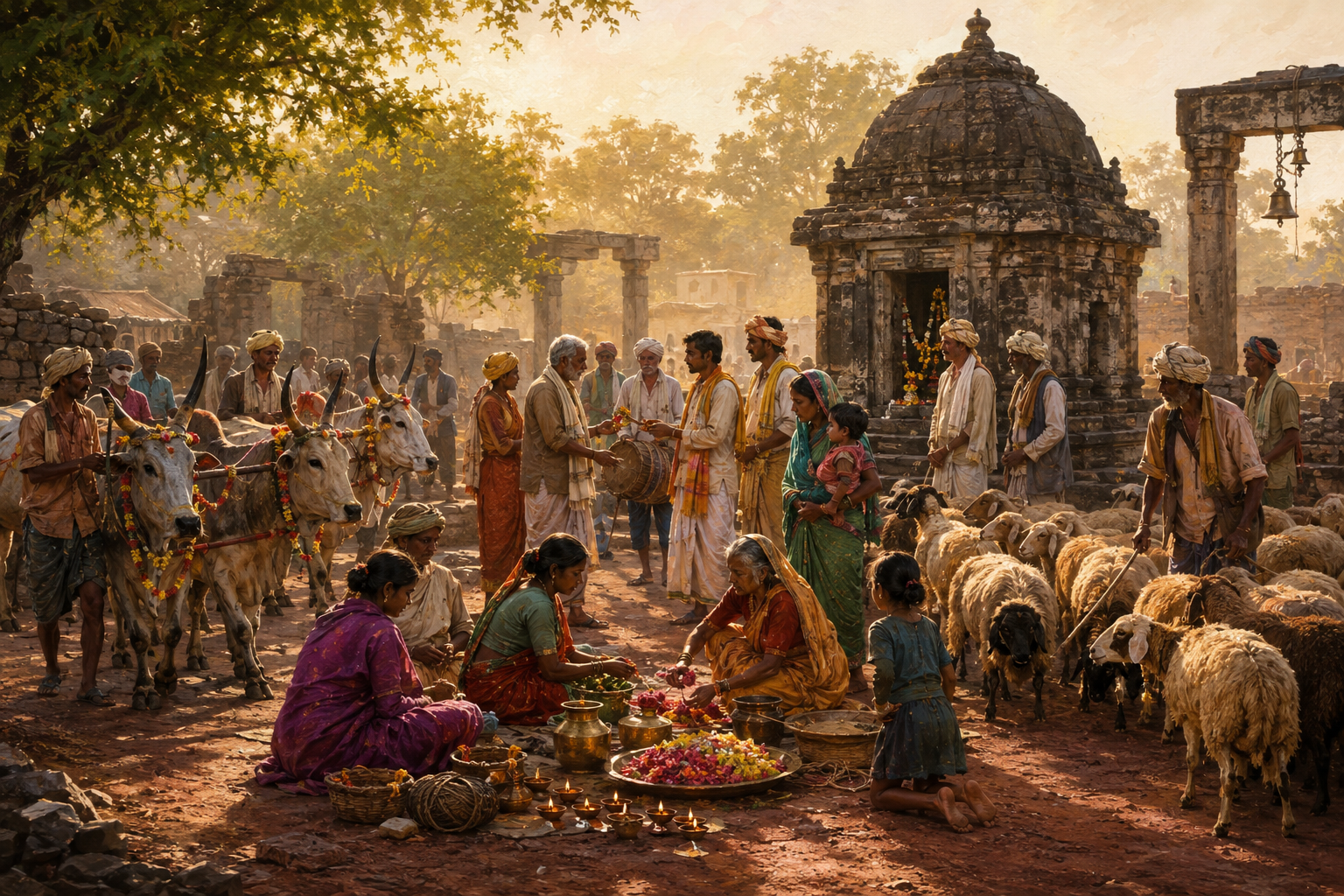
A community connection is not incidental information added after the religious meaning has been explained. Golla (Yadav) and Kuruba devotion stands near the centre of Junjappa’s remembered identity. Remove those names, and you lose part of the answer to why this form of Veerabhadra matters.
This does not mean reducing Junjappa to a sociological emblem or claiming that a sacred figure can matter only to the communities most closely associated with him. It means recognising where the tradition has been cherished and transmitted. There is a difference between honouring a tradition’s community roots and enclosing it behind a boundary.
The word “folk” requires similar care. It can properly point to oral narration and community memory. It becomes misleading when used to imply that a tradition is crude, non-theological, or somehow outside Hinduism. Oral traditions can carry sophisticated ideas about divine presence, duty, suffering, protection, and moral power without presenting them as a formal philosophical treatise.
If you encounter Junjappa through a local narration, do not begin by replacing its vocabulary with more familiar pan-Indian labels. First note the name the narrator uses, the community context, the relationship drawn between Junjappa and Veerabhadra, and the purpose served by each episode. Translation should clarify those relationships, not erase them.
The same discipline applies when different tellings do not line up perfectly. Oral transmission need not produce a single frozen sequence. A changed emphasis or differently ordered episode is not automatically a mistake. Record the variation and its context before trying to reconcile it. That preserves evidence of a living tradition instead of manufacturing uniformity after the fact.
How to read Chinnamma, miracle, and protection together
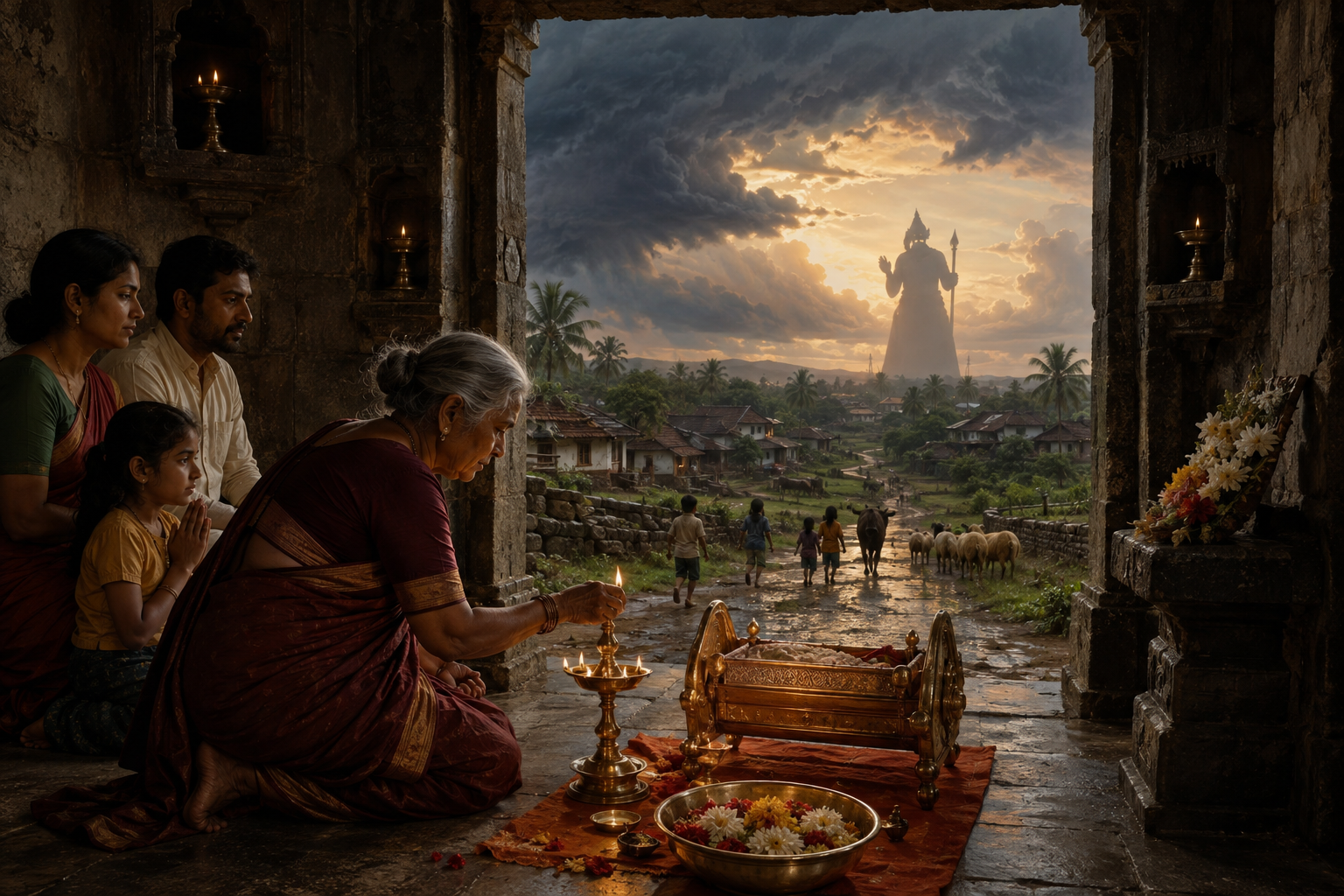
Junjappa’s sacred story joins a miraculous birth and heroic acts with devotion, Shiva’s power, and the trials of Chinnamma. The details should not be pulled apart as though the miracle were the only part worth remembering. The ordeal surrounding the manifestation helps explain the moral character of the power that follows.
That changes the questions you should ask while listening. Do not stop at “What miracle occurred?” Notice why divine help is needed, what devotion must endure, who bears the burden of the trial, and how Junjappa later uses his power. The narrative movement from ordeal toward guardianship presents strength as a response to vulnerability, not as spectacle for its own sake.
Chinnamma therefore should not be treated as scaffolding that can be discarded once the hero arrives. Her trials give the birth narrative its human stakes. A retelling that races from the announcement of divine origin to Junjappa’s exploits may preserve the most dramatic events while losing the ethical centre that makes them meaningful.
The miraculous elements deserve the same interpretive patience. If your purpose is to understand a sacred oral tradition, asking only whether a miracle can be verified as an ordinary event is too narrow a starting point. First ask what truth the community communicates through it. In Junjappa’s case, miraculous power establishes that the guardian is capable of answering danger, overcoming limits, and protecting those for whom ordinary strength is insufficient.
Veerabhadra’s fierce energy sharpens this reading. Fierceness in a guardian tradition is not necessarily uncontrolled anger. Its religious value lies in being directed against threat and toward protection. Junjappa’s identity brings that power close to a particular field of devotion, where the divine warrior is remembered not as an abstraction but as a protector with a name and a story.
A five-step way to learn without flattening the tradition
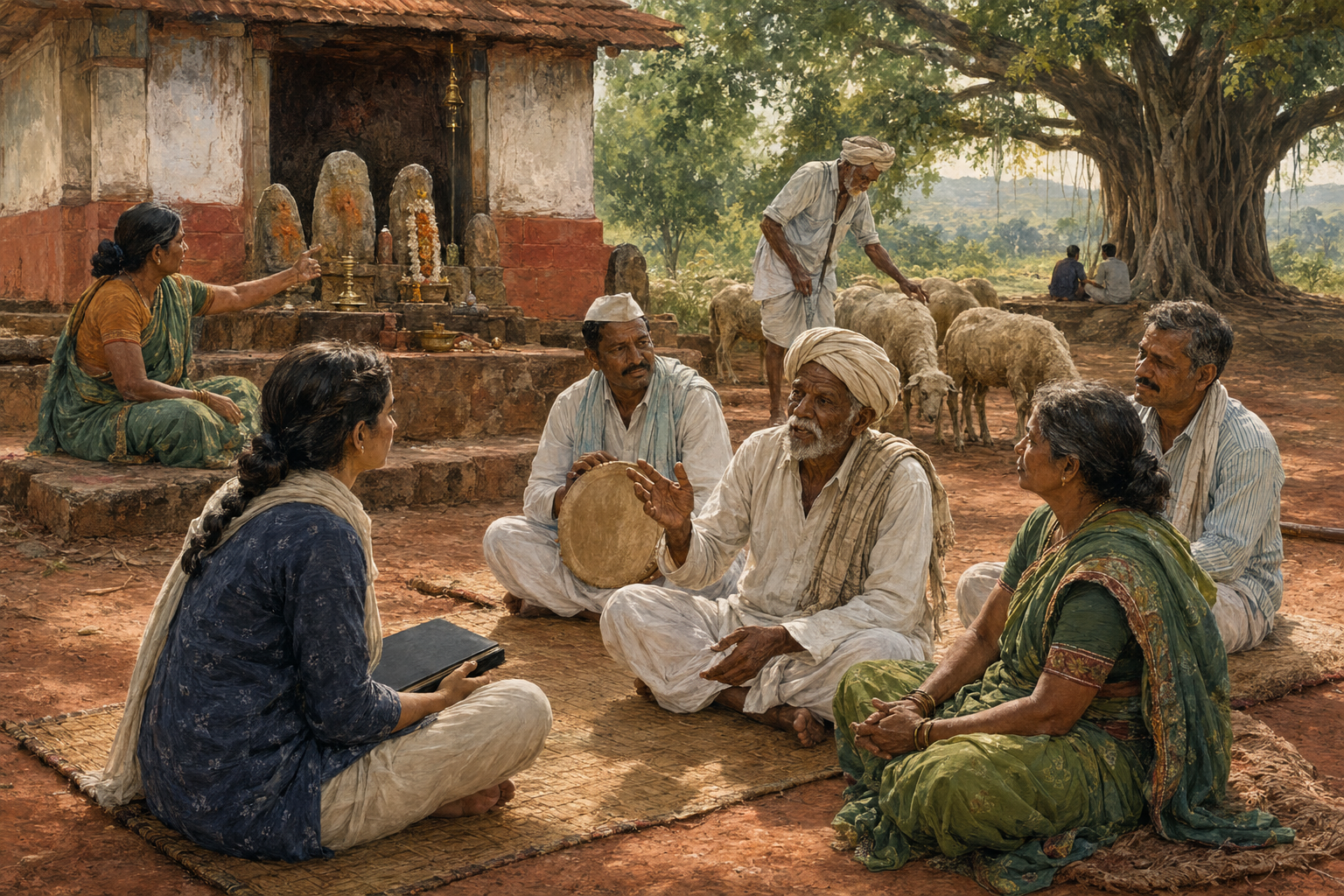
- Begin with the complete identification. Write down Junjappa’s connection to Veerabhadra, his guardian role, his standing as a cultural hero, and his Golla (Yadav) and Kuruba associations. Do this before drawing comparisons with other deities.
- Separate the stable core from the details of a particular telling. Divine identity, miraculous power, guardianship, birth, heroic action, and community importance form the available core. Treat the precise wording and sequence you hear as belonging to that narrator’s version unless you can establish otherwise.
- Keep Chinnamma in the frame. When making notes or retelling the narrative, track her trials alongside Junjappa’s birth and deeds. This prevents a story about devotion and ordeal from shrinking into a catalogue of supernatural feats.
- Ask what each episode accomplishes. Does it establish divine origin, demonstrate protection, test devotion, or preserve community memory? Identifying the function usually reveals more than treating every event as an isolated marvel.
- Use modest language about variations. Say “in this telling” when you cannot show that a detail belongs to every version. Do not call a variation corrupt merely because it differs from a version you encountered first.
These steps are useful whether you are preparing a short introduction, speaking with a devotee, documenting oral heritage, or simply trying to understand where Junjappa belongs within Hindu tradition. They keep theological connection and local distinctiveness visible at the same time.
When you next encounter a Junjappa narrative, place four headings at the top of your notes: identity, community, ordeal, and protection. Record what that particular telling reveals under each one. That small discipline will help you recognise a living Veerabhadra tradition on its own terms and pass it on without making it smaller.
References
