
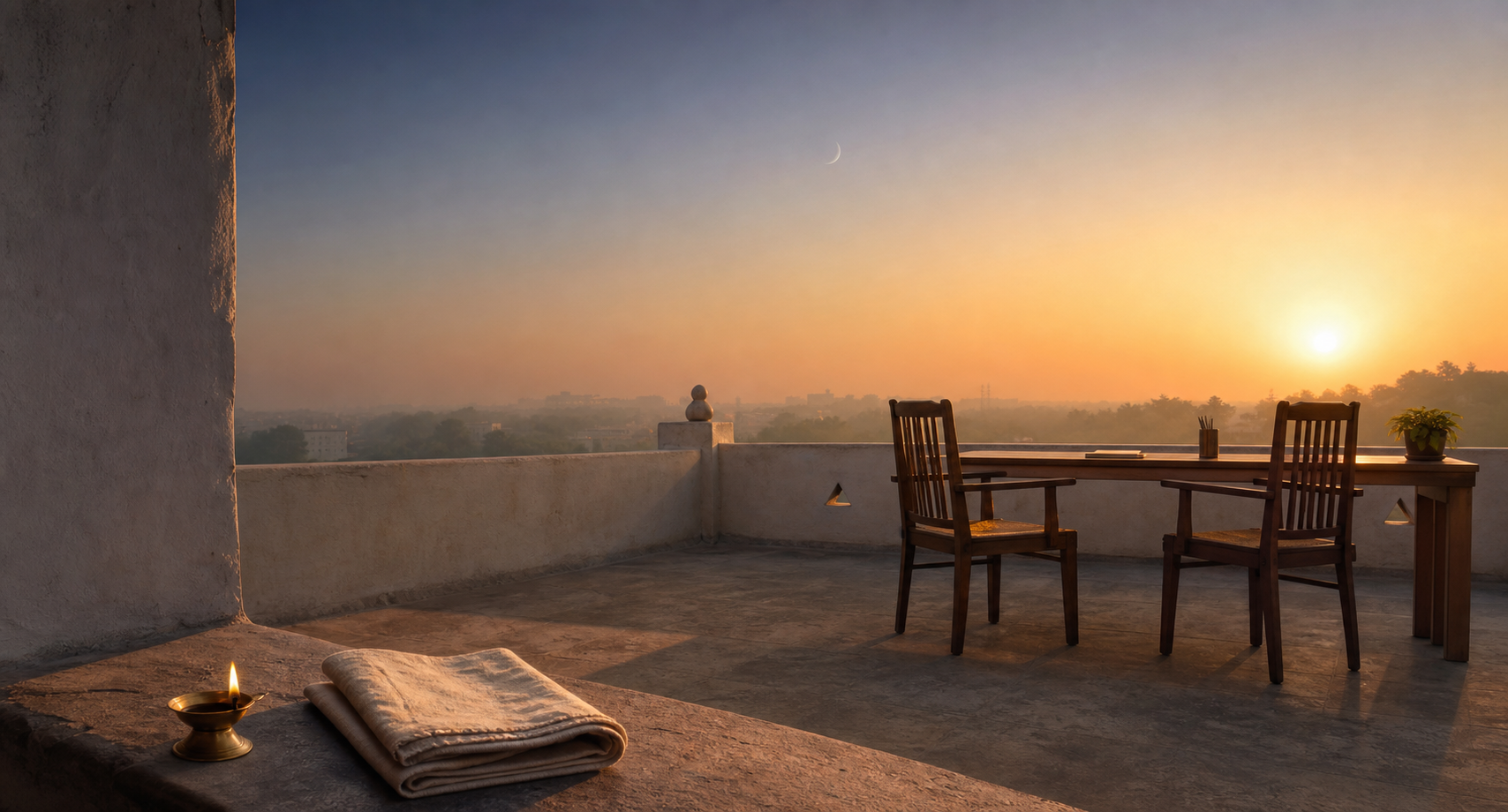
If you need to begin something on Tuesday, June 16, the useful answer is not simply “auspicious” or “inauspicious.” The date changes character shortly after sunrise in much of India: Shukla Paksha Pratipada ends at 06:17 IST and Dwitiya begins.
That boundary gives you a practical plan. Use the short Pratipada period for sankalpa, prayer, intention-setting, and preparation. After 06:17 IST, use Dwitiya for discussions, agreements, shared projects, and orderly routines. Then choose the actual starting minute from a Panchang calculated for your city.
Start with the 06:17 IST tithi transition

A tithi does not begin at sunrise or midnight. It changes whenever the angular separation between the Moon and Sun crosses the next 12-degree boundary. That is why one civil date can contain parts of two tithis, as June 16 does.
The usual sankalpa rule takes the tithi present at local sunrise as the principal tithi of the day. Sunrise occurs before 06:17 IST across most of India in mid-June, so Pratipada will ordinarily be named in the morning sankalpa. This does not make Pratipada the operating tithi for everything you do later. Once the transition occurs, Dwitiya governs the remainder of the date.
| When | Panchang condition | Best practical use |
|---|---|---|
| At local sunrise, if it is before 06:17 IST | Pratipada is the sunrise tithi | Name Pratipada in the usual morning sankalpa |
| Before 06:17 IST | Pratipada, classified as Nanda | Prayer, hospitality, creative preparation, intention-setting, and auspicious openings |
| From 06:17 IST onward | Dwitiya, classified as Bhadra | Dialogue, partnerships, role-setting, agreements, household organization, and sustainable routines |
This distinction prevents two common errors. Do not treat the date as Pratipada until midnight merely because Pratipada prevailed at sunrise. Do not call it an all-day Dwitiya either merely because Dwitiya occupies most of the day. Sunrise tithi answers the sankalpa question; the tithi operating at the moment of action helps answer the Muhurat question.
Build your Muhurat in five passes

A favorable tithi is only the first filter. For an everyday action, work through the following checks in order rather than searching for one supposedly perfect time.
- Set the location and intended action. Note the city where the action will physically begin and decide what counts as the beginning: placing the call, signing the document, departing, making the first payment, or commencing the puja.
- Apply the tithi boundary. If the action is cooperative or organizational, place it after 06:17 IST under Dwitiya. Reserve the earlier Pratipada period for worship, preparation, creative work, or a brief auspicious opening.
- Remove the cautionary intervals. Check locally calculated Rahu Kaal, Yamagandam, and Gulika Kaal. On Tuesday, Rahu Kaal falls in an afternoon portion of daylight, while Yamagandam occupies a forenoon portion. Their clock times must come from local sunrise and sunset.
- Find a positive working window. For a short, important action, consider locally calculated Abhijit Muhurat. For travel, calls, proposals, and commerce, look for Shubh, Labh, or Amrit Choghadiya.
- Confirm Nakshatra and Moon Rashi. Check the lunar star and sidereal Moon sign at the intended minute, not merely at sunrise. If a listing does not show its location or transition times, do not use it for a consequential ceremony.
Rahu Kaal, Yamagandam, and Gulika Kaal are calculated from eight equal divisions of the local daylight period. A difference of even 10 to 15 minutes in sunrise changes the displayed clock windows. Copying a Delhi, Mumbai, Toronto, or London schedule into another location can therefore put your start in the wrong segment.
Abhijit Muhurat is centered on local solar noon, which is not automatically 12:00 on the clock. Use the window printed by a reliable city-specific Panchang rather than estimating it from lunchtime. If you have a choice between a mixed window and one in which Dwitiya, a favorable Choghadiya, and the absence of the cautionary periods all agree, choose the cleaner intersection.
If the action has legal or financial consequences, do the substantive work as well. A favorable minute cannot repair unclear contractual language, an unsuitable obligation, or missing professional review. Use Muhurat to time a sound decision, not to make an unsound decision safe.
Do not guess the Nakshatra or Moon Rashi
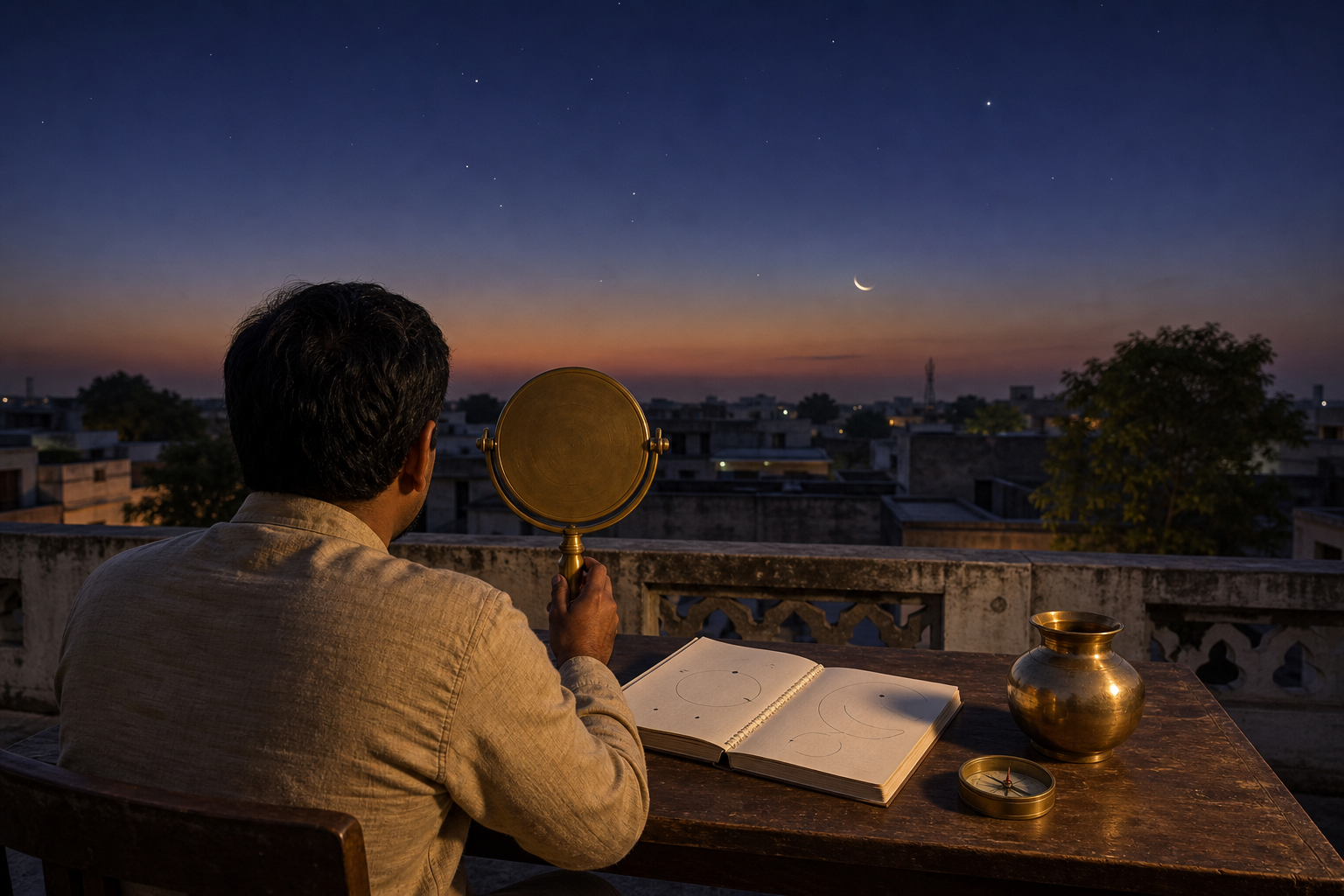
The exact Nakshatra and Moon Rashi add useful detail, but they must be confirmed for the intended location and time. A list of stars that commonly occurs around this seasonal part of the lunar cycle is not a substitute for the star actually operating when you begin.
Nakshatra can refine the kind of activity supported by the day. A soft or communicative configuration may suit study and outreach; a movable one may support travel; a turbulent one may call for caution and planning rather than a rushed launch. Moon Rashi adds another layer concerning the style of engagement, such as communication, practical organization, care, or assertive action. These qualities are useful only after the underlying lunar placement has been verified.
For an ordinary household decision, you do not need to turn every choice into a full astrological election. The operating tithi, locally computed avoidance periods, and one affirmative window such as Abhijit or an auspicious Choghadiya usually provide a workable structure. A wedding, griha pravesh, major samskara, or festival observance needs the orthodox rules of the relevant tradition and should not be scheduled from an everyday Muhurat checklist alone.
A simple observance and action plan for the day
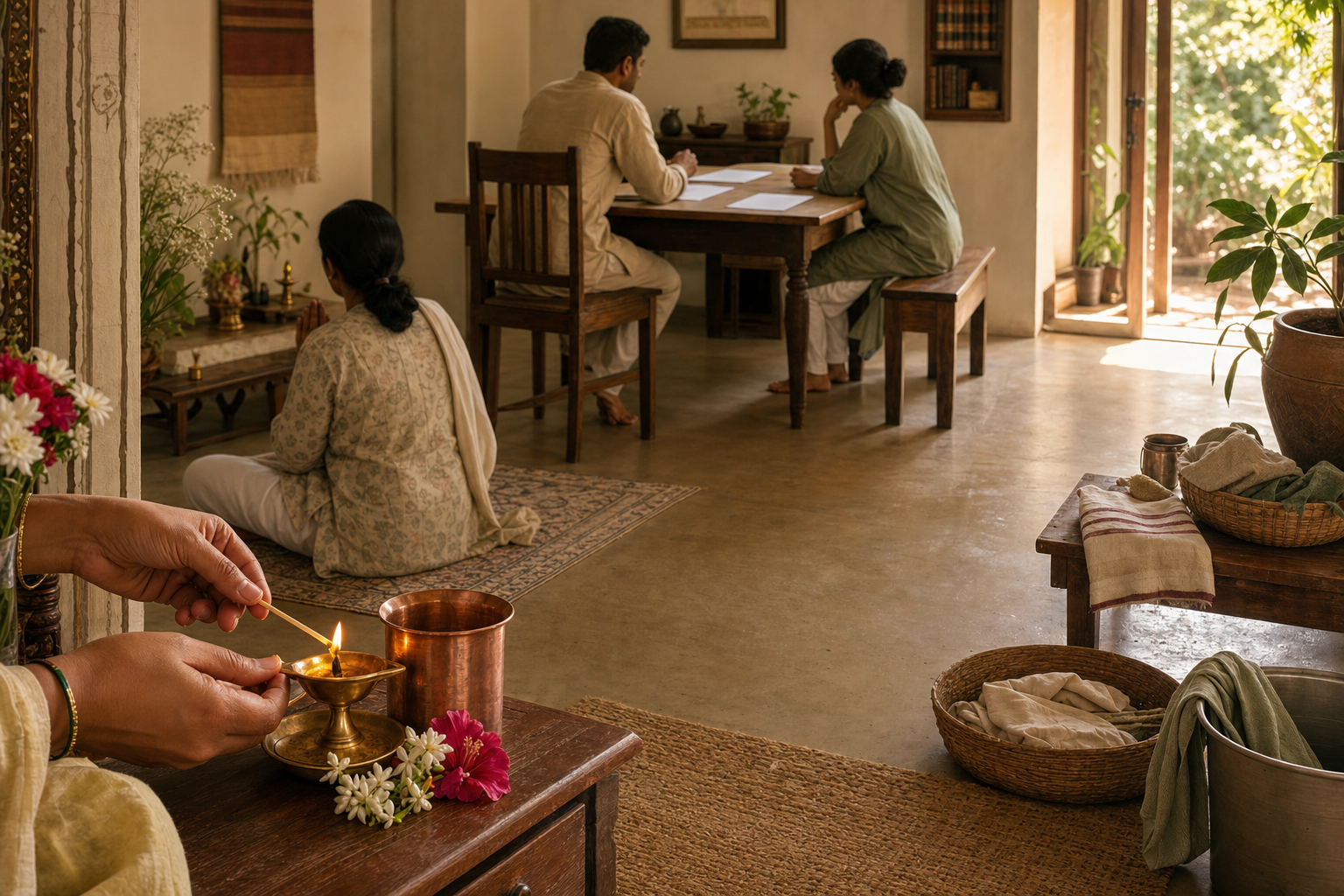
You can honor the Pratipada-to-Dwitiya movement without making the morning elaborate. The waxing fortnight is a natural time to establish constructive momentum, but the strongest rhythm is incremental: purify the intention, prepare the work, and then make one clear beginning.
- At sunrise: if sunrise in your location precedes 06:17 IST, make the sankalpa with Pratipada. Light a lamp, offer gratitude, or perform a brief Ganesha dhyana or japa according to your practice.
- Before the transition: write the intention, assemble what you need, review the plan, or prepare the first communication. Pratipada’s Nanda quality suits an affirmative opening, but the available morning period may be short.
- After 06:17 IST: let Dwitiya carry the practical beginning. Hold the partnership conversation, clarify responsibilities, organize a family budget, restart a study schedule, or initiate another cooperative task.
- At the chosen Muhurat: perform the first unmistakable act. Send the proposal, begin the meeting, depart on the journey, open the lesson, or commence the agreed ritual.
- Before the day ends: record the next small commitment. The early Shukla Paksha is better used to establish a repeatable discipline than to load a new cycle with too many promises.
This household plan is optional guidance, not a mandatory vrata. Dharmic communities relate to lunar time in distinct ways. Hindu sankalpa and Muhurat rules should not be carelessly imposed on Buddhist, Jain, or Sikh observances, even where families share the waxing Moon’s broader emphasis on clarity, discipline, compassion, and seva. Sikh Gurpurab observance, for example, now commonly follows the largely solar Nanakshahi reckoning, although some families may still consult traditional almanacs for personal rites.
Key takeaways
- June 16 begins with Shukla Paksha Pratipada and changes to Dwitiya at 06:17 IST.
- If your local sunrise is before the transition, Pratipada is ordinarily used in the morning sankalpa.
- For a cooperative or organizational beginning, prefer a locally suitable window after 06:17 IST under Dwitiya.
- On Tuesday, check the local afternoon Rahu Kaal and forenoon Yamagandam rather than copying clock times from another city.
- Use locally calculated Abhijit Muhurat or Shubh, Labh, or Amrit Choghadiya as an affirmative window.
- Confirm the exact Nakshatra and Moon Rashi locally; do not promote a seasonal possibility into a precise daily claim.
Before June 16 arrives, save a Panchang for the city where you will act and write down the exact act you want to time. If you need one straightforward plan, prepare during Pratipada, wait for Dwitiya after 06:17 IST, remove the local cautionary intervals, and make the first decisive move in the cleanest available positive window.
References
