

If you came here after an animal bite, scratch, or possible contact with saliva, act before you read further. Wash the affected skin promptly with soap and running water, rinse the eyes or mouth with clean water if they were exposed, and seek urgent medical care. Do not postpone that care for a prayer, temple visit, family consultation, or home remedy.
Once those arrangements are underway, you can turn to Hadkai Mata without setting faith against medicine. Her tradition speaks to the fear of rabies and sudden death; responsible devotion turns that fear into protective action rather than dangerous delay.
A Gujarati guardian known by several names
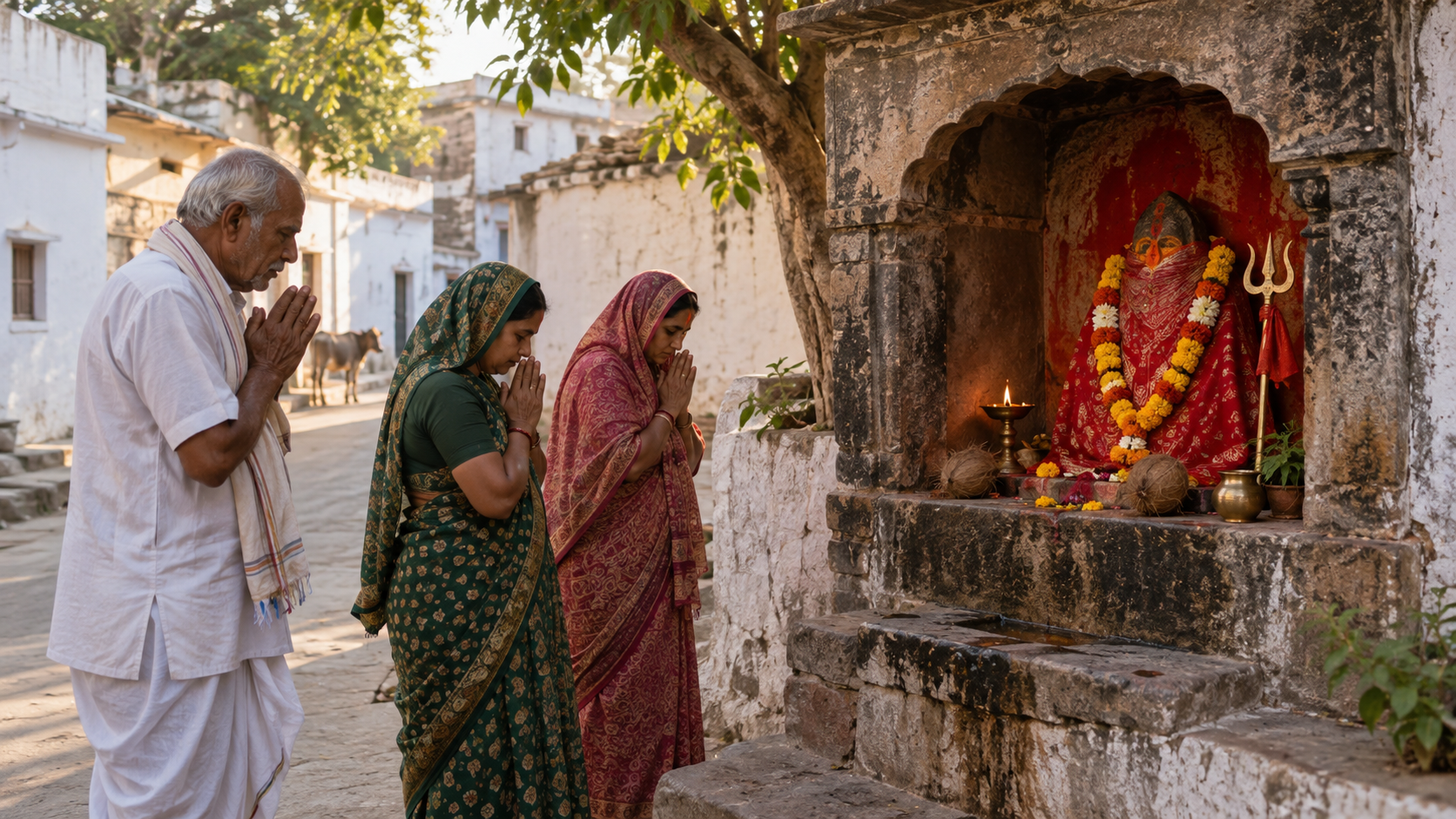
Hadkai Mata is a Gujarati folk goddess worshipped chiefly by the Vaghri community, also known as Devipujak. She is also called Hadkamai, Hadaksha Mata, Hadkabai, and Hulan. Her devotees invoke her especially for protection from rabies, as well as illnesses feared for their sudden, communicable, and fatal character.
Calling her a folk goddess does not make her a lesser deity. It identifies a form of worship rooted in a particular community and a concrete human danger. Hadkai Mata is not merely an abstract symbol of well-being. Her identity is bound to a terrifying situation in which a seemingly small encounter with an animal can place a life at risk.
The title “Mata” places that danger within a relationship of maternal refuge and responsibility. You may ask for courage, protection, clarity, or recovery. Yet the same protective idea also asks something of the devotee: do not hide an exposure, do not dismiss a scratch, and do not allow embarrassment or uncertainty to waste the time in which medical prevention is possible.
If this tradition belongs to your family, preserve its local form carefully. Record the name and pronunciation your elders use, the place associated with the worship, the customary observance, and what “protection” means in their own words. Do not assume that every regional name has exactly the same ritual history, and do not fill gaps with invented details merely to make the tradition appear uniform.
Protection is not a choice between faith and treatment
Rabies creates a dangerous kind of uncertainty. A wound may look minor, and the exposed person may initially feel well. Neither fact can establish that there is no risk. Rabies prevention therefore has to begin with the exposure, not with waiting to see whether illness appears.
Devotion and medical care do different work:
- Prayer, a family observance, or a visit to Hadkai Mata can express trust, steady the mind, gather community support, and renew a commitment to protect life.
- Clinical care evaluates the exposure, treats the wound, and determines whether preventive rabies treatment or other medical attention is needed.
A religious observance cannot determine whether the rabies virus entered the body. It cannot replace a clinician’s assessment or post-exposure treatment. No blessing, vow, sacred substance, thread, or ritual result should be treated as proof that an exposed person is medically safe.
This distinction does not require you to belittle the tradition. A sound Dharmic response is to protect life with every legitimate means available. Faith need not be tested by refusing treatment. If you understand medicine itself as one of the means through which protection becomes possible, prayer and prompt care can proceed without contradiction.
What to do after a possible rabies exposure
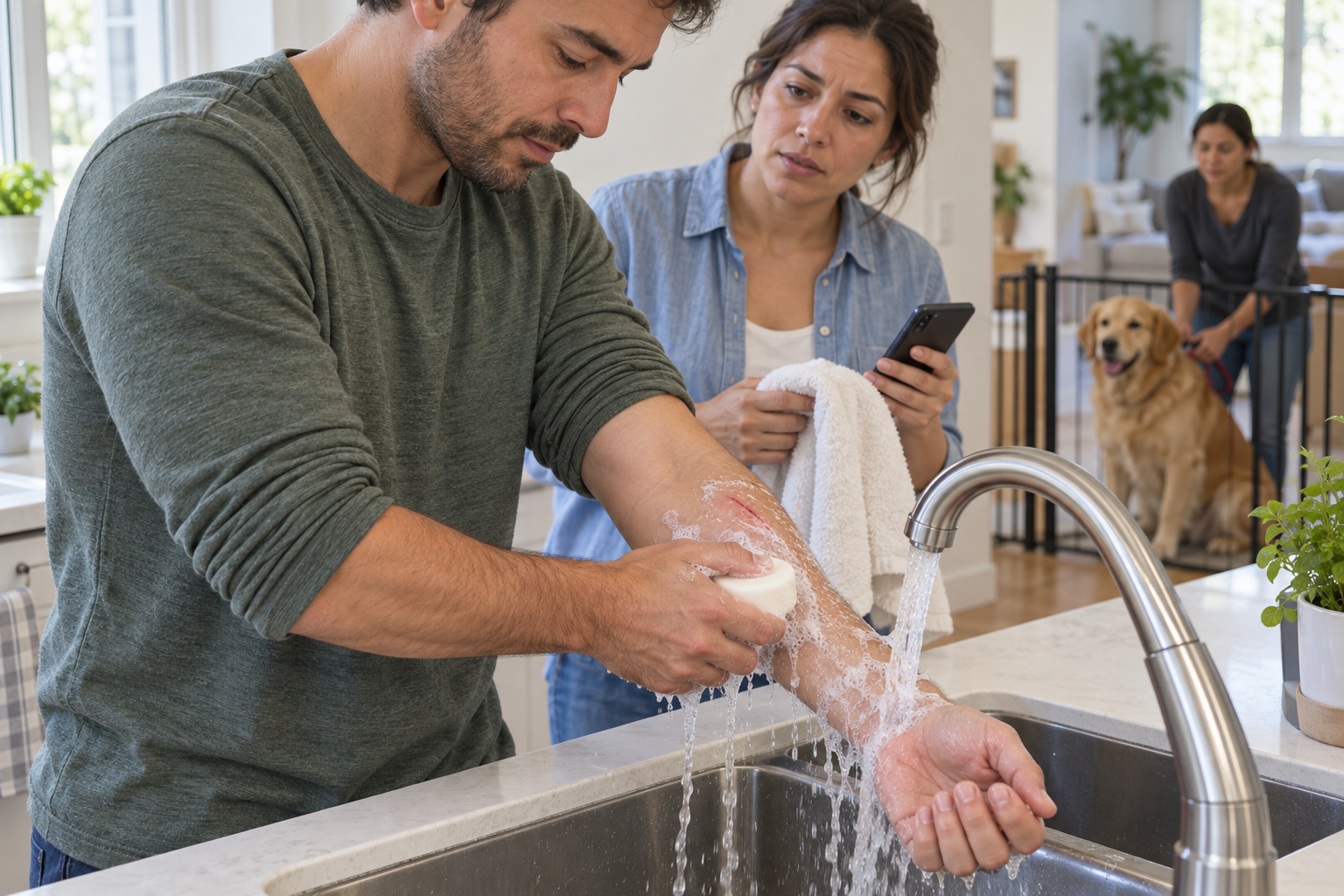
A bite is not the only contact worth reporting. Tell a medical professional about scratches and about animal saliva reaching broken skin, the eyes, or the mouth. Do not diagnose the risk yourself from the animal’s appearance, the size of the mark, or the absence of pain.
- Move away from the animal without provoking it or risking another exposure. Do not try to catch an unknown or agitated animal yourself. Note its appearance, location, and direction of travel if you can do so safely.
- Wash bitten or scratched skin promptly and thoroughly with soap and running water. If saliva reached the eyes or mouth, rinse with clean water. Do not put caustic household substances into the wound.
- Contact an urgent medical service, emergency department, clinician, or local public-health service. Say clearly that the concern is a possible rabies exposure so the request is triaged appropriately.
- Give the clinician practical details: the kind of animal, what contact occurred, where on the body it occurred, when it happened, whether the animal is known and available to authorities, and whether you have previously received rabies vaccination. Let medical and public-health professionals apply the relevant local protocol.
- Follow the complete plan you are given. Keep treatment records and attend every recommended appointment. Feeling well or seeing the wound heal is not a reason to stop.
If the incident happened some time ago, do not decide on your own that care is now pointless. Seek professional advice as soon as possible and give the actual timing. Rabies is generally fatal after symptoms begin, which is why preventive decisions must be made before symptoms become the signal to act.
If the animal is known, share that information with the appropriate professionals. Do not kill, release, hide, or privately handle it in an attempt to settle the question yourself. Observation, testing, and animal-control procedures vary by place and should be directed by qualified local authorities.
How a protective tradition can protect people now
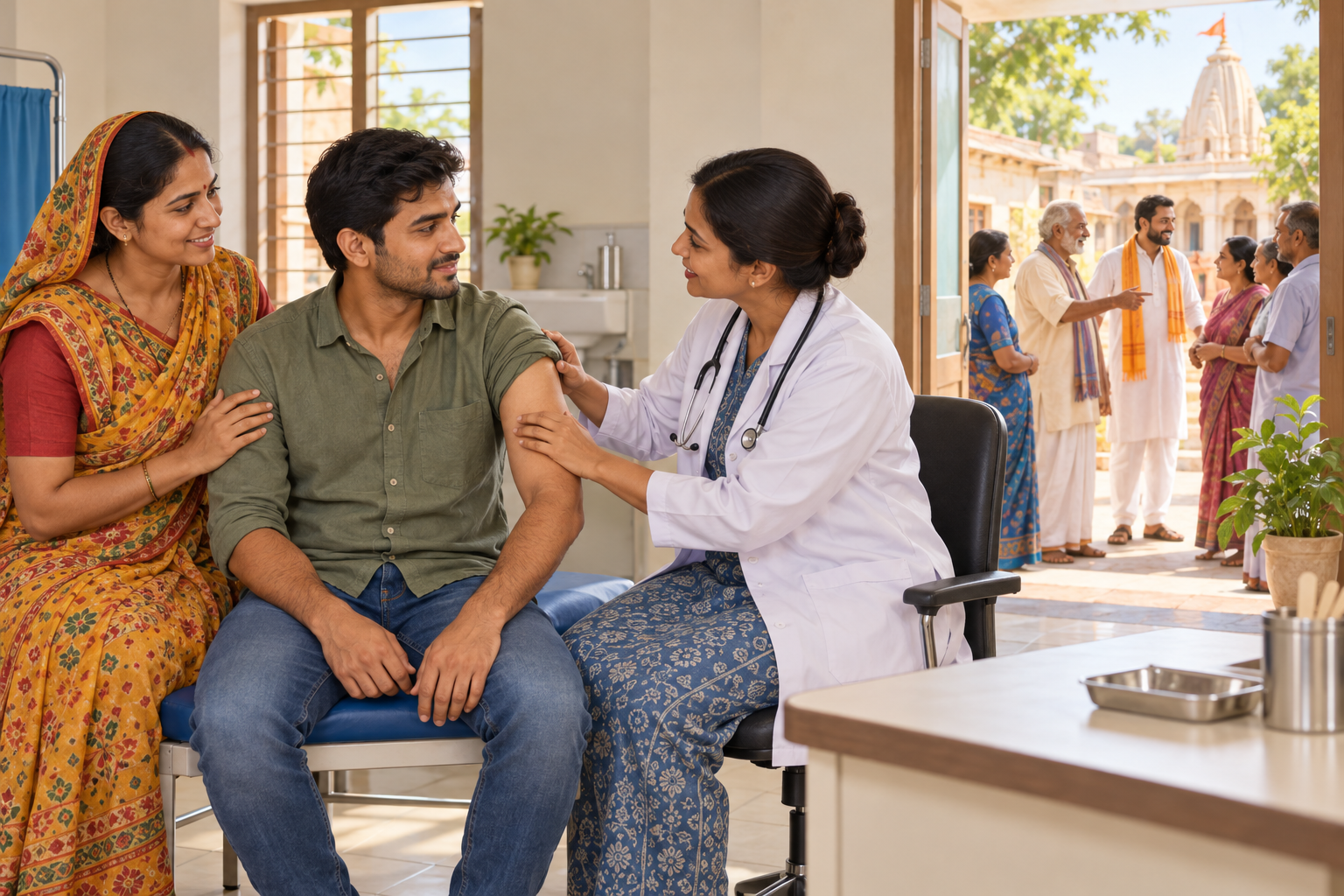
A community that honours Hadkai Mata can make one sentence habitual: “Wash the wound and arrange medical care first; complete the observance without delaying either.” That instruction is simple enough to remember when a family is frightened, divided, or unsure whether an incident is serious.
- At a shrine or community gathering, display the first action after an animal exposure and keep current contact details for nearby medical and public-health services.
- Ask priests, elders, and volunteers to direct an exposed person to care immediately. They do not need to estimate the medical risk.
- Teach children to report every bite and scratch at once, even if they fear blame for approaching the animal.
- Never declare someone medically protected, cured, or free of risk on the basis of a ritual outcome. Leave that judgement to qualified professionals.
- Preserve songs, names, vows, oral histories, and family customs as cultural knowledge while keeping unverified remedies separate from emergency instructions.
This approach keeps the tradition’s central concern intact: protection from a feared and fatal danger. It also prevents the name of Hadkai Mata from being used to justify inaction. A guardian tradition should shorten the path to safety, not lengthen it.
Key takeaways
- Hadkai Mata is a Gujarati folk goddess associated chiefly with the Vaghri, or Devipujak, community and invoked especially for protection from rabies.
- Worship may accompany medical care, but it cannot assess an exposure, neutralize the virus, or replace preventive treatment.
- After a bite, scratch, or relevant saliva contact, wash or rinse the exposed area and seek urgent professional care without waiting for symptoms.
- Families and religious communities can honour Hadkai Mata by making rapid reporting, first aid, and referral to care part of their protective discipline.
If you are dealing with a possible exposure now, make the medical call before arranging anything else. Once care is in motion, pray in the form your family knows—and let that prayer strengthen your resolve to complete every protective step.
References

Leave a Reply
You must be logged in to post a comment.