
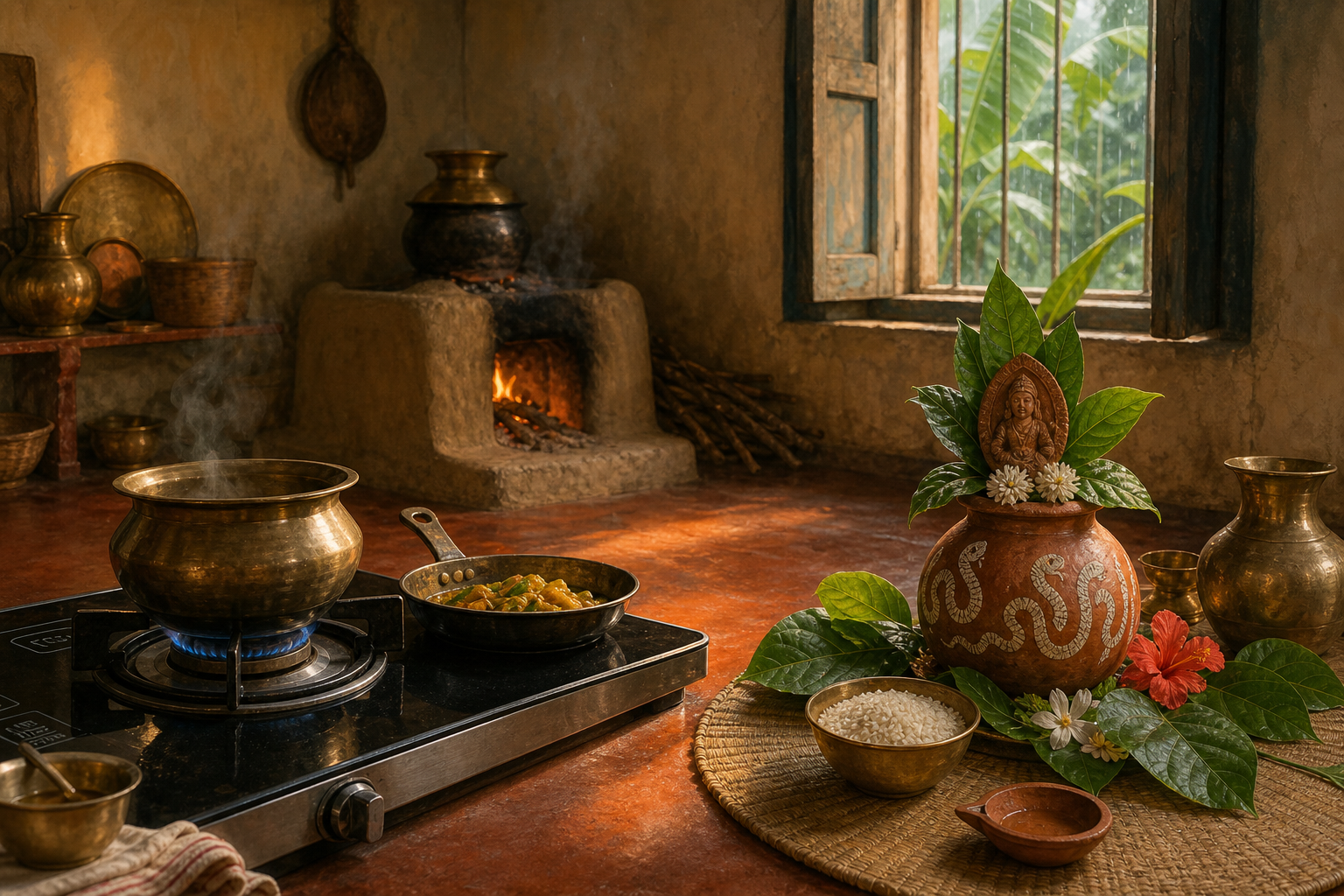
If you inherited memories of an earthen chulha but now cook on gas or induction, you may wonder whether Manasa’s place at the Bengali hearth disappeared with the old stove. It didn’t. The continuity lies in how you prepare the cooking place, receive the first heat, remember the living world beyond the household, and turn an ordinary meal into an act of gratitude.
You don’t need to recreate a village kitchen or claim rituals your family never practised. You need to understand what each gesture is doing. Then you can preserve the tradition honestly, safely, and without reducing it to decoration.
Why Manasa belongs beside the Bengali hearth
Manasa is not simply a deity attached to a cooking appliance. In Bengali Hindu tradition, she governs serpents and protects against venom. Her names include Bishahari, the destroyer of poison, as well as Jagat Gauri and Padmavati. Her worship becomes especially prominent during Bengal’s monsoon months, when encounters between people and snakes become more frequent.
The hearth is a fitting place for that protection because it joins two elemental powers. The earthen body of the chulha belongs to the ground from which grain grows; its controlled fire turns that grain into food. Manasa, whose presence is associated with fields, wet weather, thresholds, and serpents, presides over the vulnerable boundary between the cultivated household and the wider ecology around it.
This makes the kitchen more than a convenient location for worship. It is where earth and fire meet, where uncooked grain becomes nourishment, and where the household must maintain order without pretending to stand outside nature. A Manasa image or snake-shaped alpana near the hearth marks that relationship. It expresses respect at the boundary; it should not be mistaken for a literal barrier against snakes.
The Manasamangal account of Behula and Lakhindar gives this domestic symbolism its moral depth. Behula’s steadfastness places devotion beside courage, disciplined care, and loyalty to family. At the hearth, those values become daily work rather than distant ideals: keeping the cooking place orderly, feeding the household, remaining attentive during the wet season, and responding to danger without abandoning reverence for life.
Read the household rites as a practical sacred language
A traditional gesture survives best when you know its purpose. Copying its outer form without that understanding can leave you with attractive ritual objects but no coherent practice.
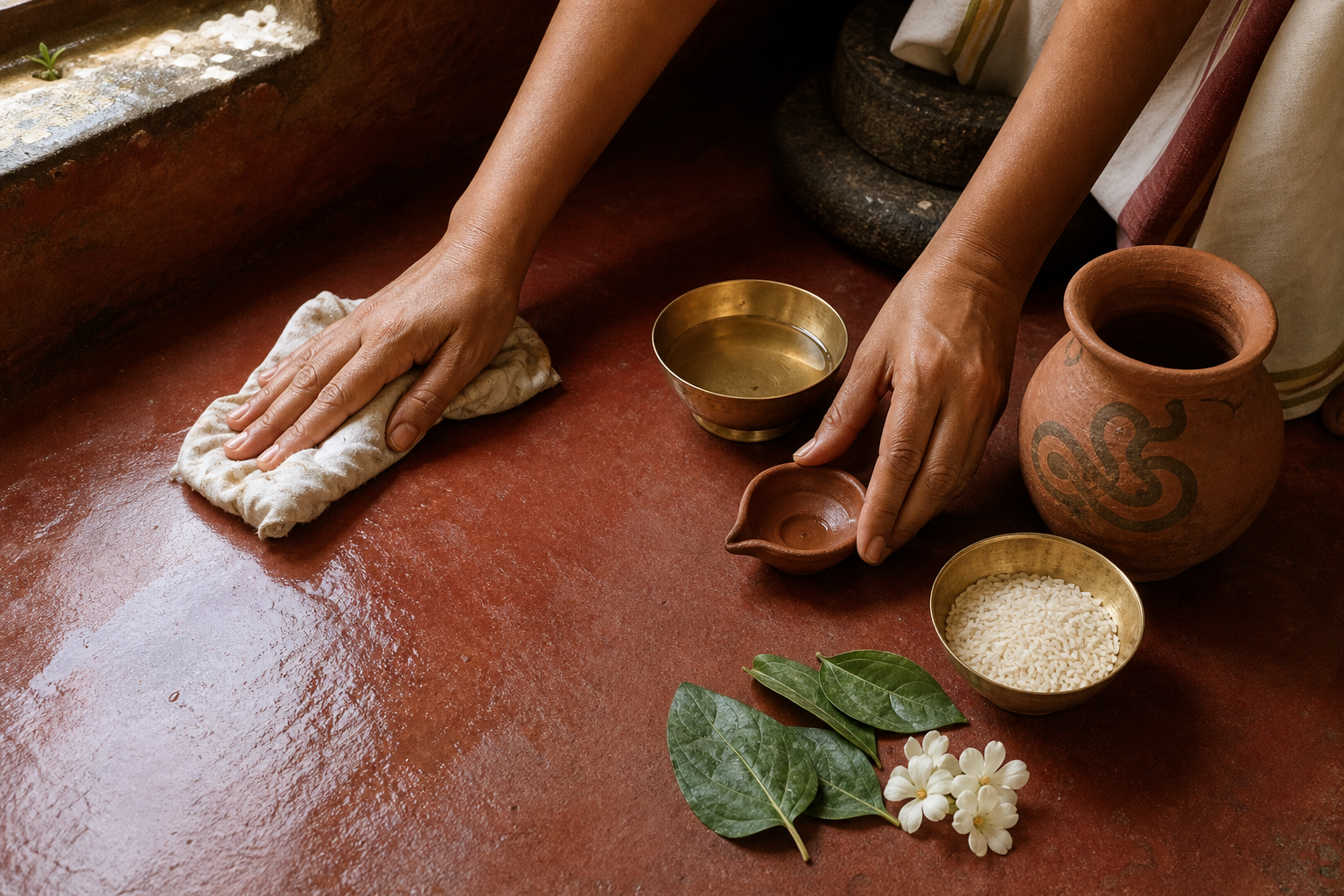
Cleaning the stove at dawn establishes readiness before the day’s food is prepared. In earthen kitchens, the chulha could be replastered with clay; an older rural practice sometimes used a clay and cow-dung mixture. That historical material is not a requirement in a contemporary home. The enduring principle is to begin cooking from a deliberately cleaned and ordered space.
An alpana made with rice paste turns that preparation into a visible offering. A small serpent form near the hearth or threshold does not portray the serpent merely as an enemy. It acknowledges that human beings, animals, fields, and homes occupy an interconnected landscape. Place such a mark on a cool, stable surface where it won’t interfere with cooking or create a slipping hazard.
The first flame and the first cooked rice establish the day’s order of attention. Gratitude comes before consumption. The offering need not be theatrical: a silent intention before turning on the stove and a moment of dedication when the rice is ready can preserve the meaning. If your family has a particular prayer, vrata, song, or order of offerings, that inherited form should take precedence over a newly assembled routine.
During Manasa Puja, commonly kept between the Bengali months of Āṣāṛh and Bhādrā, the observance becomes more visible. A painted Manasa pata or small clay image may be placed in the kitchen or courtyard where it can be seen from the hearth. Flowers, turmeric, milk, and seasonal fruits accompany the worship. Where a brief aarti is customary, its flame may be taken from the kitchen fire, joining the household’s cooking flame to the ritual offering.
A simple Manasa observance for a modern kitchen
If you want to revive the hearth practice, start with a form small enough to repeat. Consistency carries more meaning than an elaborate arrangement performed once and forgotten.
- Identify what you actually inherited. Ask older relatives whether your household used a pata, clay image, vrata, song, alpana, or food offering. Record the local words and sequence before memories are lost. Do not label a new adaptation as an ancestral custom.
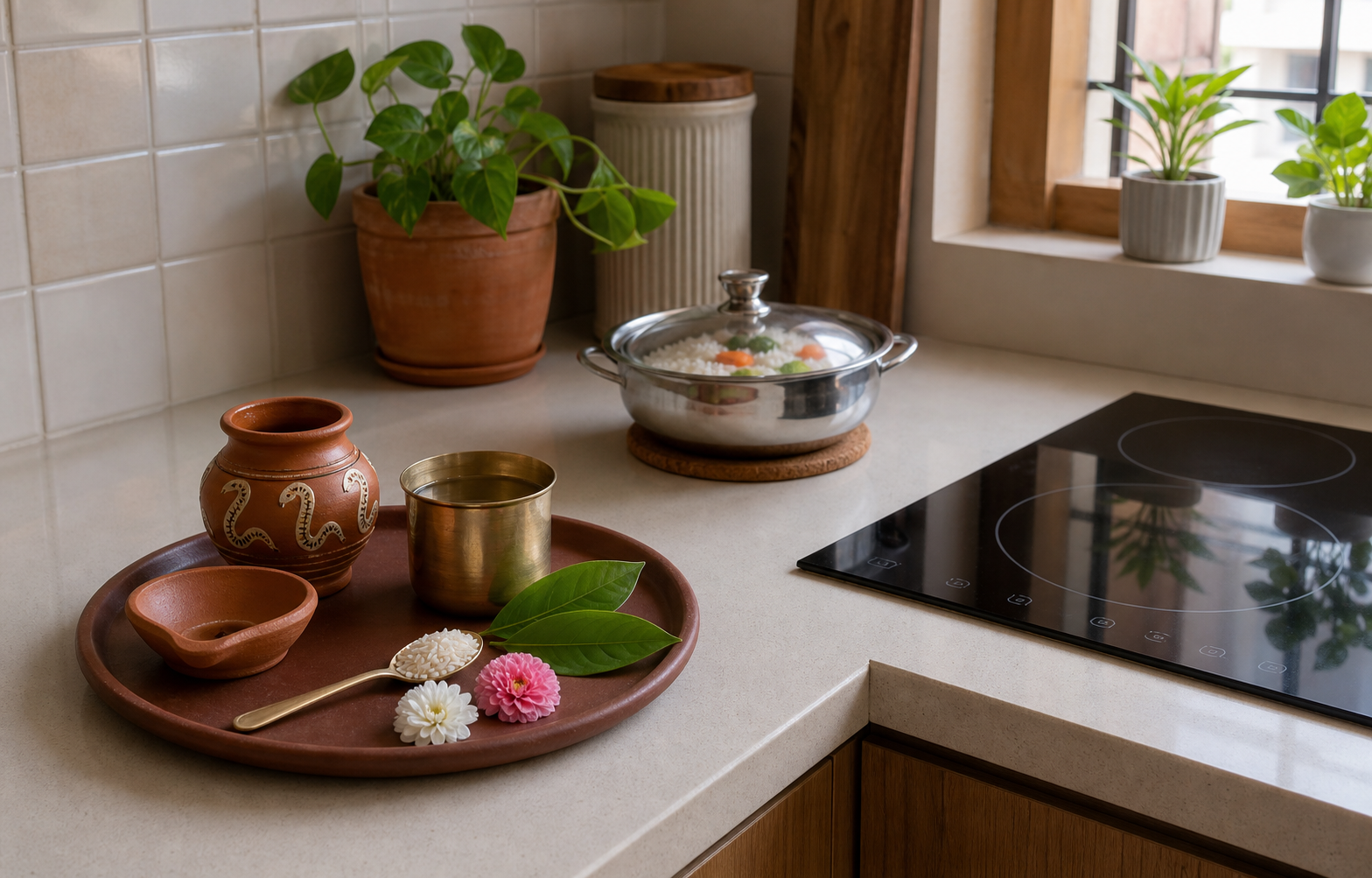
- Choose a safe devotional point. Clean the stove and the surrounding work surface. Put any image, flower, or lamp on a stable place away from burners, hot cookware, loose cloth, and splashing oil. A courtyard location visible from the kitchen is also consistent with the domestic tradition.
- Make one restrained mark. Draw a small rice-paste alpana or serpent motif near the stove or threshold if the surface permits it. The mark should define a respectful sacred space without obstructing a walkway or food-preparation area.
- Dedicate the first heat. Pause before lighting the gas burner or activating the induction zone. Offer gratitude for food and ask for care, steadiness, and safety in the household. An induction cooktop doesn’t require you to introduce an open flame merely to imitate an earthen hearth.
- Remember the first rice. When the first grains are cooked, make the offering in the manner known to your family. If no inherited procedure survives, a silent dedication is more honest than inventing an elaborate rule and presenting it as tradition.
- Mark the monsoon season. During the customary months, place a modest Manasa image or pata, flowers, turmeric, milk, or seasonal fruit in the chosen devotional space. Use an aarti flame only when it can be handled safely and accords with your household practice.
If you need words for a personal intention, speak plainly in Bengali or the language you use at home. Ask that the household act with gratitude, courage, care, and respect for living beings. Treat those words as your own sankalpa, not as a recovered mantra or scriptural verse.
Protection means attention, not magical confidence
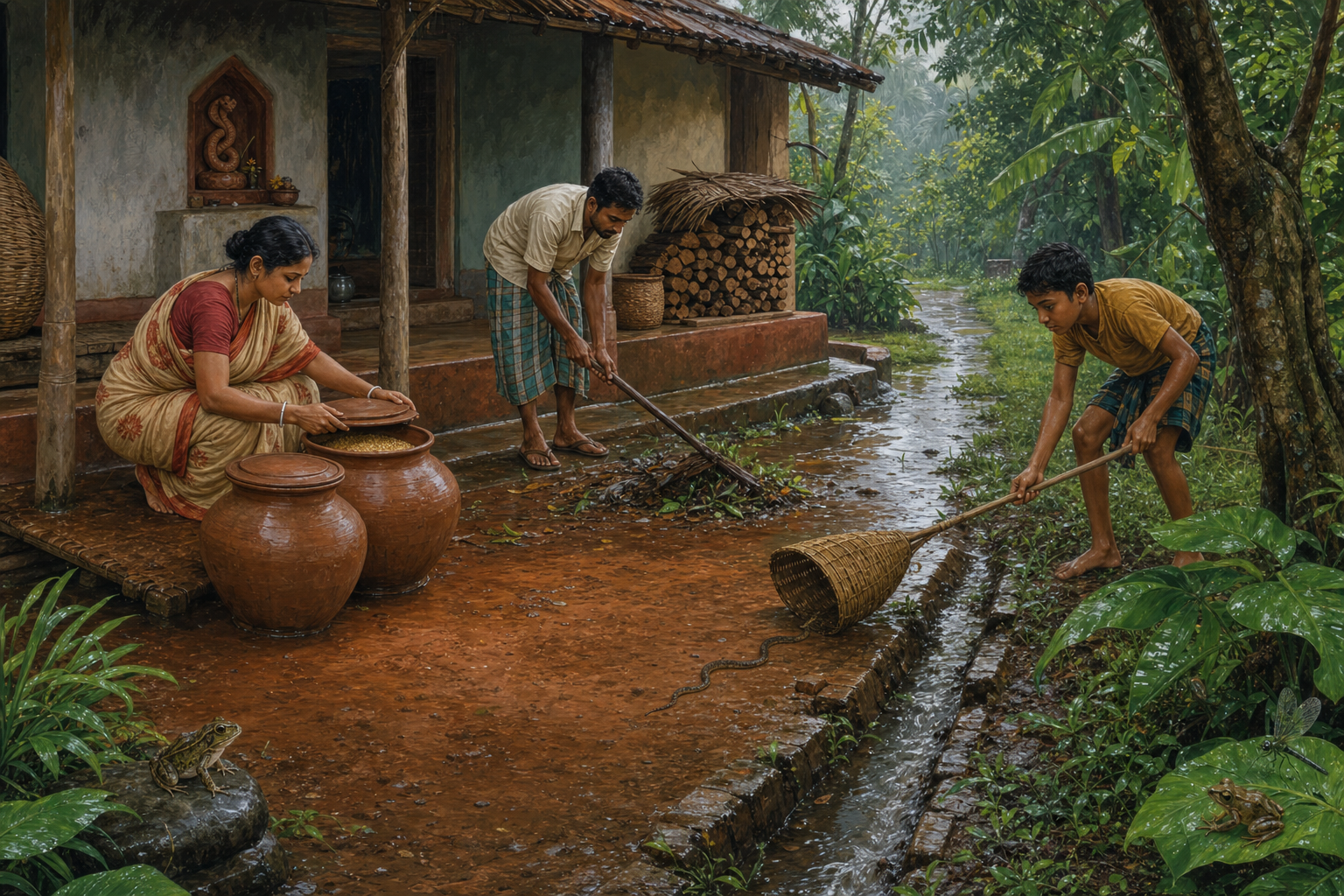
Women’s vratas and songs have carried Manasa’s presence through generations of Bengali household life. They also carried practical habits: keeping food-storage and cooking spaces clean, noticing increased snake movement in wet weather, and teaching children not to treat every serpent as something to be killed. Ritual memory and ecological awareness reinforced each other.
That lesson needs a careful modern expression. Reverence does not mean approaching, feeding, cornering, identifying, or attempting to handle a snake. Teach children to keep their distance, leave the animal an escape route, alert an adult, and seek suitable local assistance. Ahimsa does not require amateur intervention; it requires avoiding needless harm while refusing reckless contact.
Manasa worship must never be used as a substitute for urgent medical help after a suspected snakebite. Prayer, aarti, offerings, or household remedies can express devotion, but they cannot determine whether venom has entered the body or provide the necessary emergency treatment. The sacred meaning of protection should make the family more attentive to danger, not more confident in delaying care.
This distinction is crucial when passing the practice to children. Tell them what the serpent motif means, but also tell them what it does not do. It expresses coexistence; it does not make a kitchen snake-proof. It reminds the household to remain watchful; it does not promise immunity. In this form, faith supports clear conduct rather than competing with it.
Key takeaways for carrying the tradition forward
- The sacred character of the hearth rests in repeated acts of cleanliness, gratitude, nourishment, and attention, not in whether the appliance is made of clay, steel, or glass.
- Manasa’s place near the kitchen connects domestic safety with Bengal’s monsoon ecology and its respect for serpents as fellow inhabitants of the landscape.
- A small, accurately understood observance is preferable to an elaborate invented ritual presented as old family tradition.
- Gas and induction kitchens can retain the first-light intention, first-rice dedication, seasonal image, flowers, and alpana without recreating unsafe fire arrangements.
- Serpent reverence must be taught together with physical distance and urgent medical care after any suspected bite.
- The practice remains distinctly Bengali and Hindu while expressing wider Dharmic values: transformation through Agni, mindful gratitude, Jain ahimsa, and the seva and equality embodied by the Sikh langar.
These resonances don’t make the traditions interchangeable. They show why a kitchen can carry spiritual weight across the Dharmic family: food becomes an occasion for service, restraint, gratitude, and care for life. Manasa gives that shared moral field a specifically Bengali form shaped by rain, fields, serpents, household courage, and the daily cooking fire.
This monsoon, choose one practice you can keep truthfully. Clean the stove before the first cooking, make a small alpana in a safe place, dedicate the first rice, or ask an elder to teach you the family’s Manasa song. A living tradition is preserved when its smallest gestures still guide what you notice and how you act.
References
