
You may have inherited a Lakshmi Puja custom without inheriting its instructions. Is a painted image necessary? Will an ordinary earthen ghot do? Which additions belong to the tradition, and which are merely decorative?
In Bengal, a properly prepared Lakshmi Ghot can be the complete ritual center. A face-bearing pot or painted Lokkhi Shora may accompany it, but neither ornament nor expense makes the worship more authentic. What matters is a coherent household practice: a clean vessel, a sanctified space, attentive worship, honest livelihood, and food shared as prasada.
Key takeaways
- A plain earthen ghot can serve as a complete seat of Goddess Lakshmi; a painted face or Lokkhi Shora is a respected Bengali variation, not a universal requirement.
- Choose your family’s inherited form before adding coins, extra grains, five leaves, decorative cloth, or other optional elements.
- Prepare the altar in a deliberate order: clean and dry the space, draw alpana, arrange the pidi and raw rice, establish the ghot, and only then begin invocation and offerings.
- Kojagari wakefulness is not merely staying awake late. It trains attention toward the conditions under which prosperity endures: cleanliness, gratitude, vigilance, generosity, and truthful work.
- Locally made clay, rice paste, seasonal plants, and homemade food keep the rite connected to Bengal’s potters, household economy, and ecological responsibilities.
Understand the ghot before arranging the altar
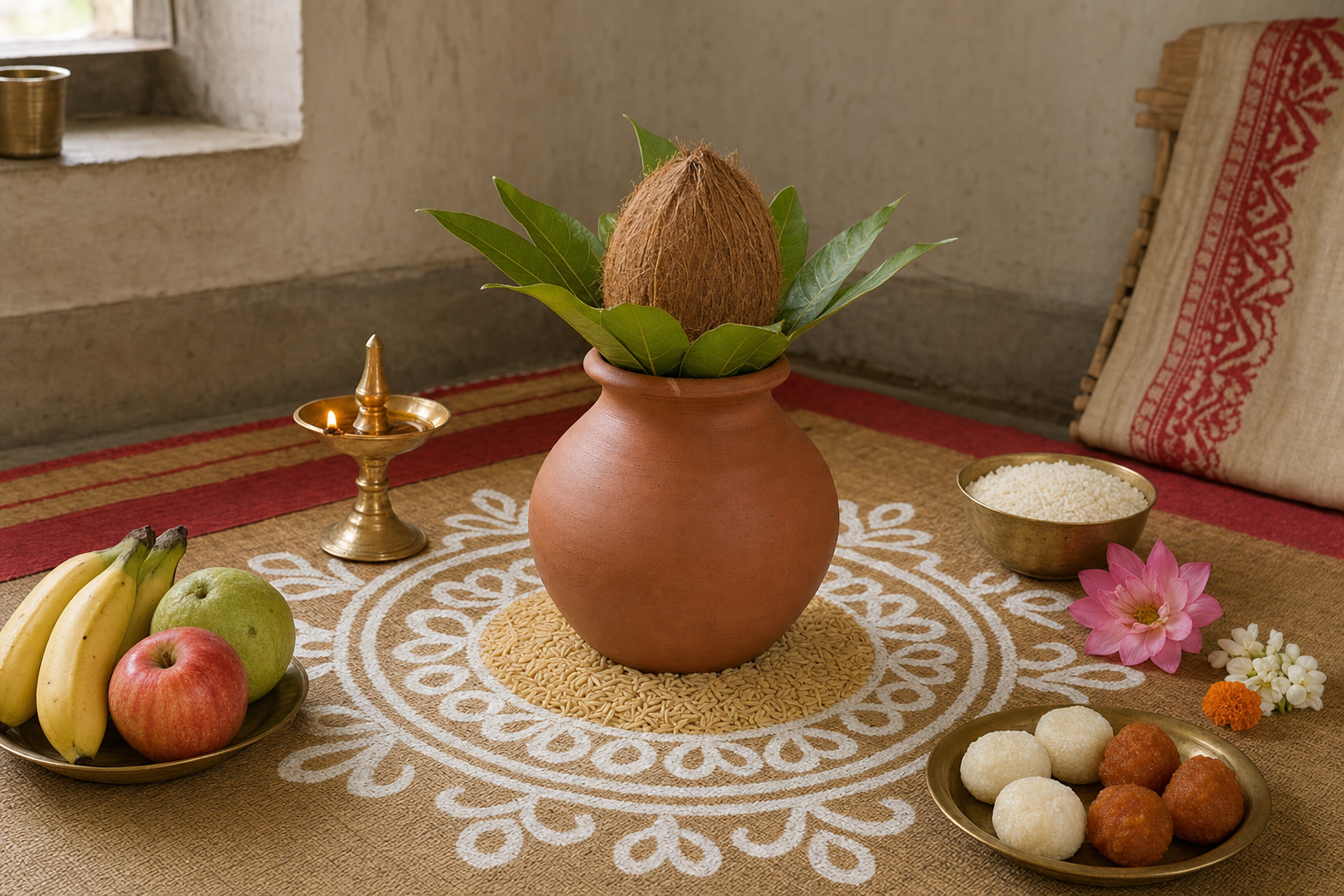
The ghot, also called a ghata or kalasha, is not a symbolic container placed beside the real object of worship. Once ritually prepared and invoked, it becomes the temporary seat of the divine presence. That distinction changes how you handle it: the vessel is established with care, worshipped directly, and treated as the altar’s living center.
This Bengali practice is a regional expression of the wider Hindu purna-kalasha tradition. The kalasha represents fullness because several dimensions of life meet within one form. Earth becomes the vessel, water sustains life, leaves and grains signify growth, and the coconut crowns the arrangement. The whole altar can therefore remain modest without becoming theologically incomplete.
| Element | What it expresses | What to notice while preparing it |
|---|---|---|
| Earthen ghot | Prithvi, the earth element, stability, and the material basis of household life | Use a clean, sound pot rather than treating it as disposable decoration. |
| Consecrated water | Life, purity, and the sacred rivers | Ganga jal may be used where available; clean potable water is a practical alternative. |
| Mango leaves and grains | Vegetative vitality, fertility, harvest, and continuity | Use fresh, clean materials available to your household rather than chasing display. |
| Coconut | The crowning or axial element that completes the kalasha | Seat it securely above the leaves; turmeric and vermilion may be applied according to custom. |
| Raw rice beneath the ghot | Anna-Lakshmi: abundance grounded in nourishment and food security | Place it deliberately on the prepared pidi rather than using it as loose ornament. |
| Alpana and Lakshmi’s footprints | Purity, welcome, and the goddess’s gracious entry into the home | Let the path lead meaningfully from the threshold toward the altar. |
This symbolic grammar also explains why prosperity here cannot mean money alone. Sri includes nourishment, beauty, order, harmony, dignity, and the capacity to care for others. The ritual loses its center if a costly display is paired with waste, dishonest earning, neglected food, or exclusion from prasada.
Choose one coherent household form
Bengal does not have one compulsory visual design for every Lakshmi Ghot. Some families worship a plain red or natural-clay vessel. Some use a sculpted or painted ghot bearing Lakshmi’s face. Others place a painted terracotta Lokkhi Shora beside or behind the vessel. These forms belong to the same ritual family, but you do not need to combine all of them.
If you are restoring a custom after a generational break, make three decisions before buying anything:
- Identify the household form. Ask whether your family used a plain ghot, a face-bearing ghot, or a separate Lokkhi Shora. A photograph, an older relative’s memory, or guidance from the family’s purohit is more useful than assembling unrelated elements from several online images.
- Separate the core from the optional. The vessel, water, leaves, coconut, altar base, lamp, invocation, offerings, and respectful conclusion form a clear working structure. Coins, pancha-shasya, pancha-pallava, durva grass, turmeric-smeared betel nuts, red cloth, and particular markings vary by district and lineage.
- Decide what can be sustained. Kojagari worship may be elaborate, while weekly Thursday devotion may use a smaller ghot, lamp, fruit, or homemade sweet. Choose a form you can maintain with care rather than beginning a display the household will later treat mechanically.
A traditional Sri sign or the ancient Indian auspicious swastika may be painted on the pot, and a red protective thread may be tied around its neck. Use the design recognized by your household. These marks support the consecrated vessel; they do not replace preparation, invocation, or conduct.
Buying directly from a local kumor or kumhar community also keeps the material logic intact. A handmade clay vessel or Shora carries the regional craft tradition into the home, provides seasonal income to artisans, and avoids turning a biodegradable rite into a collection of plastic accessories.
Prepare and worship the Lakshmi Ghot step by step
Do not begin with mantra selection while the physical space remains unsettled. The order of preparation matters because the rite makes household discipline visible. Cleanliness, food, beauty, attention, and devotion are brought into alignment before Lakshmi is invoked.
- Confirm the family sequence. Decide which form of ghot, recitation, offerings, and optional substances you will use. If your lineage prescribes a sankalpa or order of worship, keep that order instead of replacing it with a generic mixture.
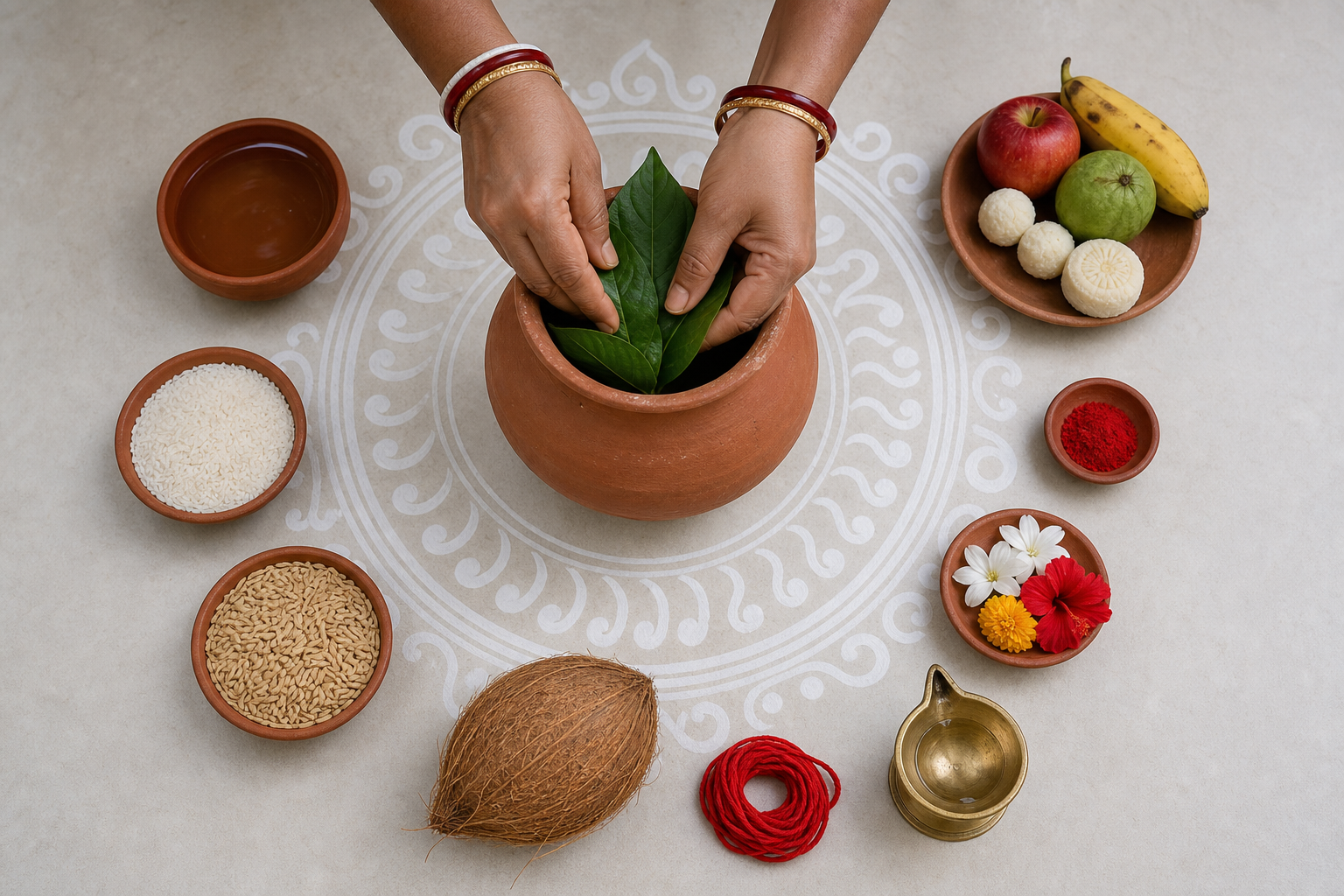
- Wash and dry the vessel. A red or natural-clay pot may be washed, purified, and sun-dried before use. Check it for cracks before placing it on the altar.
- Clean and dry the worship area. Pay attention to the threshold as well as the altar. In household Lakshmi worship, the ordered home is part of the offering rather than a neutral background.
- Draw the alpana. Use diluted rice paste for lotus forms, vines, owl motifs, and the small paired footprints associated with Lakshmi. Let the footprints face inward and lead from the entrance toward the prepared seat.
- Prepare the pidi. Cover the low wooden seat with a fresh cloth, then arrange a bed of raw rice on which the ghot can stand securely. The rice identifies household abundance with food before it is identified with money.
- Establish the vessel. Fill it with Ganga jal or clean water to a level that can receive the leaves without spilling. Add coins, grains, betel nuts, durva, or other substances only if they belong to your household method.
- Complete the kalasha. Arrange mango leaves around the mouth and place the coconut securely above them. Apply turmeric, vermilion, auspicious signs, or red thread according to custom.
- Light the lamp and make the sankalpa. State the purpose of the worship using the wording recognized in your tradition, then invite Goddess Lakshmi into the ghot. Keep an oil lamp on a stable, heat-safe surface, clear of cloth and leaves, and never leave it unattended during a night vigil.
- Recite and offer. A household may use the Sri Sukta, Mahalakshmi Ashtakam, Bengali Lakshmi Panchali, or a lineage-specific sequence. Choose the current your family can recite attentively; ritual depth does not come from hurriedly accumulating the greatest number of texts.
- Conclude with aarti and auspicious sound. Conch-blowing and uludhwani commonly accompany the conclusion. Sprinkle the sanctified water respectfully through rooms and across thresholds, then distribute prasada to family and neighbors.
Decide before the puja how your household keeps or retires the ghot afterward. Practice differs among lineages, so this is not the moment to assume a universal disposal rule. Ask a knowledgeable elder or purohit in advance, especially when you are reviving a custom that has not been performed recently.
Make Kojagari wakefulness practical
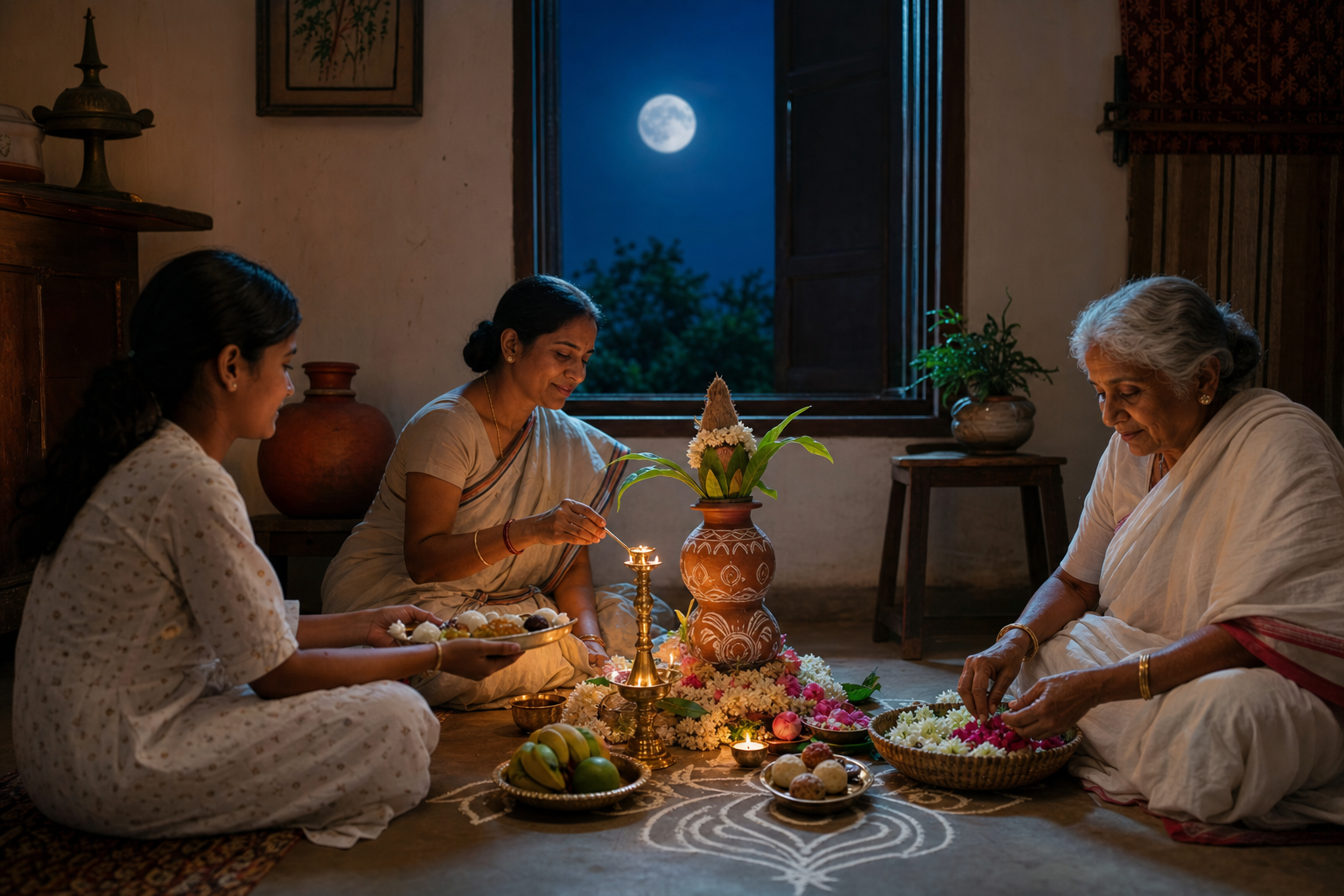
The principal annual setting is Kojagari Lakshmi Puja on Sharad Purnima in the month of Ashwin. The name carries the question Ko jagrati?, or Who is awake? The vigil is suited to Lakshmi because wakefulness is also a moral capacity: noticing how food enters the home, how money is earned, whether work is truthful, and whether abundance reaches anyone beyond the immediate household.
That meaning helps you plan the night. Do not spend so much effort on decoration that the family reaches the puja exhausted, irritated, and unable to participate. Divide preparation earlier: one person can ready the ghot, another draw the alpana, another prepare food, and children can place flowers or learn the meaning of Lakshmi’s footprints and owl.
The owl, Lakshmi’s vahana in Bengal’s visual tradition, is especially fitting for Kojagari. It can see through darkness and therefore evokes alertness and discernment. When children ask why an owl appears on the Shora, lamp, or alpana, the answer need not stop at identification: prosperity requires the ability to recognize danger, waste, greed, and poor judgment even when outward conditions look favorable.
Offerings should arise from the household’s capacity and season. Bengali naivedya may include khichuri with labra, payesh, narkel naru, muri, sandesh, fruit, flowers, grains, and lotus where it is available. You do not need every named dish. A smaller offering prepared cleanly and shared generously expresses the tradition more clearly than excess food purchased for appearance and later wasted.
Kojagari is not the only occasion on which the ghot can shape domestic life. Many Bengali households keep a simpler Thursday devotion to Lakshmi, placing the vessel on a clean pedestal, lighting a lamp, offering fruit or a homemade sweet, and maintaining the threshold and altar. The weekly rhythm turns one festival’s ideals into habits: order before display, nourishment before accumulation, and gratitude before consumption.
Let Sri continue after the lamp is extinguished
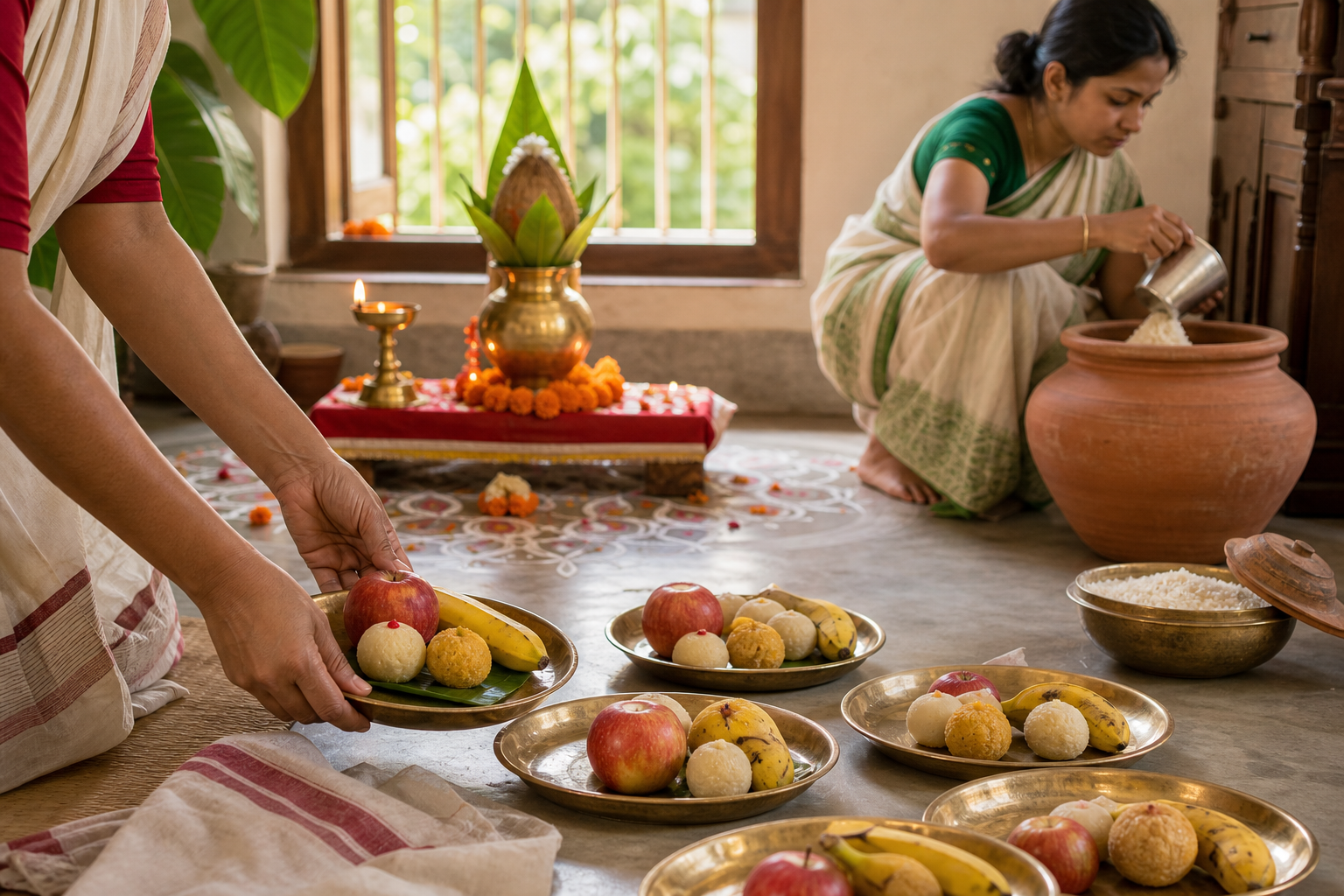
Lakshmi worship asks what kind of prosperity your home is prepared to receive and preserve. Wealth under dharma must be honestly earned, carefully stewarded, and generously shared. That is why sweeping, cooking, decorating with rice paste, offering grain, and distributing prasada are not minor domestic tasks surrounding the puja. Together, they define the household order in which Sri can remain meaningful.
Women’s ritual leadership has often carried this knowledge through Bengali homes. Alpana patterns, recipes, the arrangement of the pidi, local pronunciations, and the sequence of Panchali recitation may survive through participation long after formal explanations are forgotten. If an elder still knows your household method, record it now: note which leaves were used, where the Shora stood, which dishes were obligatory, which recitation followed the invocation, and how the ghot was handled afterward.
Invite children into real tasks rather than leaving them as spectators. They can clean the pidi, sort sound grains, help make rice paste, place flowers, serve prasada, or write down the meaning of each element. This teaches more than ritual procedure. It joins prosperity to care, truthfulness, food security, gratitude, and responsibility toward neighbors.
The material choices carry the same lesson. Clay returns the rite to earth; rice paste and natural colors reduce needless waste; seasonal leaves and foods keep worship connected to place; and a locally purchased Shora supports the hands that preserve Bengal’s sacred art. Remove plastic decoration wherever it adds no ritual meaning. Eco-devotion here is not a modern slogan attached to an old custom. It follows directly from worshipping Sri through earth, water, vegetation, nourishment, and restrained consumption.
Sanctified vessels also appear across several Dharmic ritual worlds: the kalasha in Hindu consecration, the ritual vase in Buddhist blessings, the auspicious kalasha in Jain settings, and the bata used in Sikh Amrit Sanchar. The rites are not interchangeable, but they share a recognition that a simple vessel can gather purity, disciplined intention, and service into a tangible form. Bengal’s Lakshmi Ghot gives that broad Indic intuition a distinctly domestic, agricultural, and artistic language.
Before your next observance, do one concrete thing: write down your household’s version on a single page and place it with the puja materials. Record the core sequence separately from optional decorations. Then obtain one sound clay ghot from a local artisan and prepare only what you can offer without haste or waste. That is enough to begin restoring the tradition as a lived discipline rather than a festival display.