
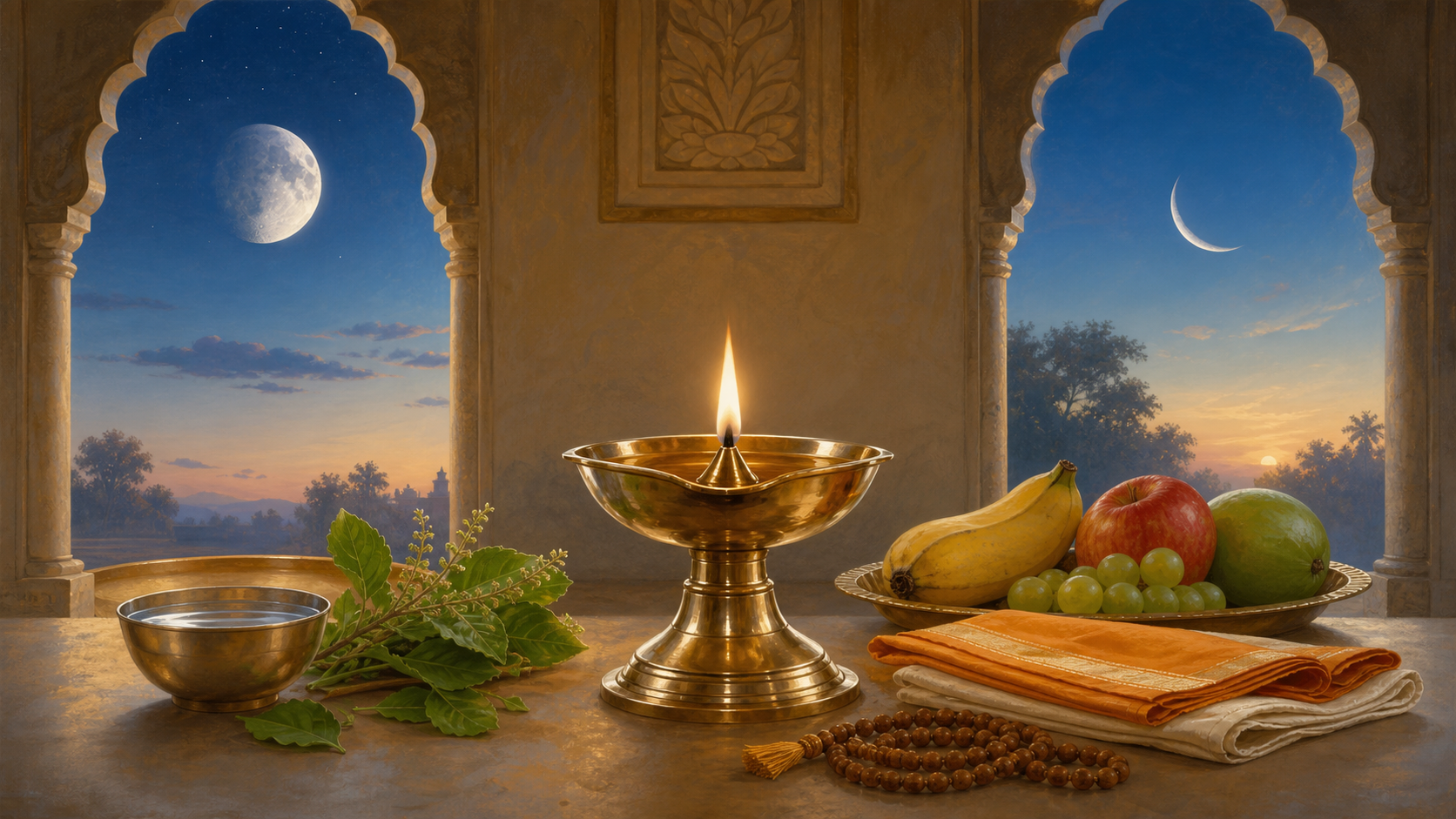
If you are adding the 2026 Purushottam Maas vrats to a family or temple calendar, write the India dates in pencil first: Padmini Ekadashi is expected on Tuesday, 26 May, and Parama Ekadashi on Thursday, 11 June. Then verify both for your city. Ekadashi follows the tithi at local sunrise, not a universal date beginning at midnight.
Your safest plan is to settle three questions together: which local panchang or sampradaya you will follow, what level of fasting your health and duties permit, and when Dwadashi parana will occur. Recording only the Ekadashi date and leaving parana until the next morning risks missing the most time-sensitive part of the vrata.
Mark the two dates, but identify them by paksha
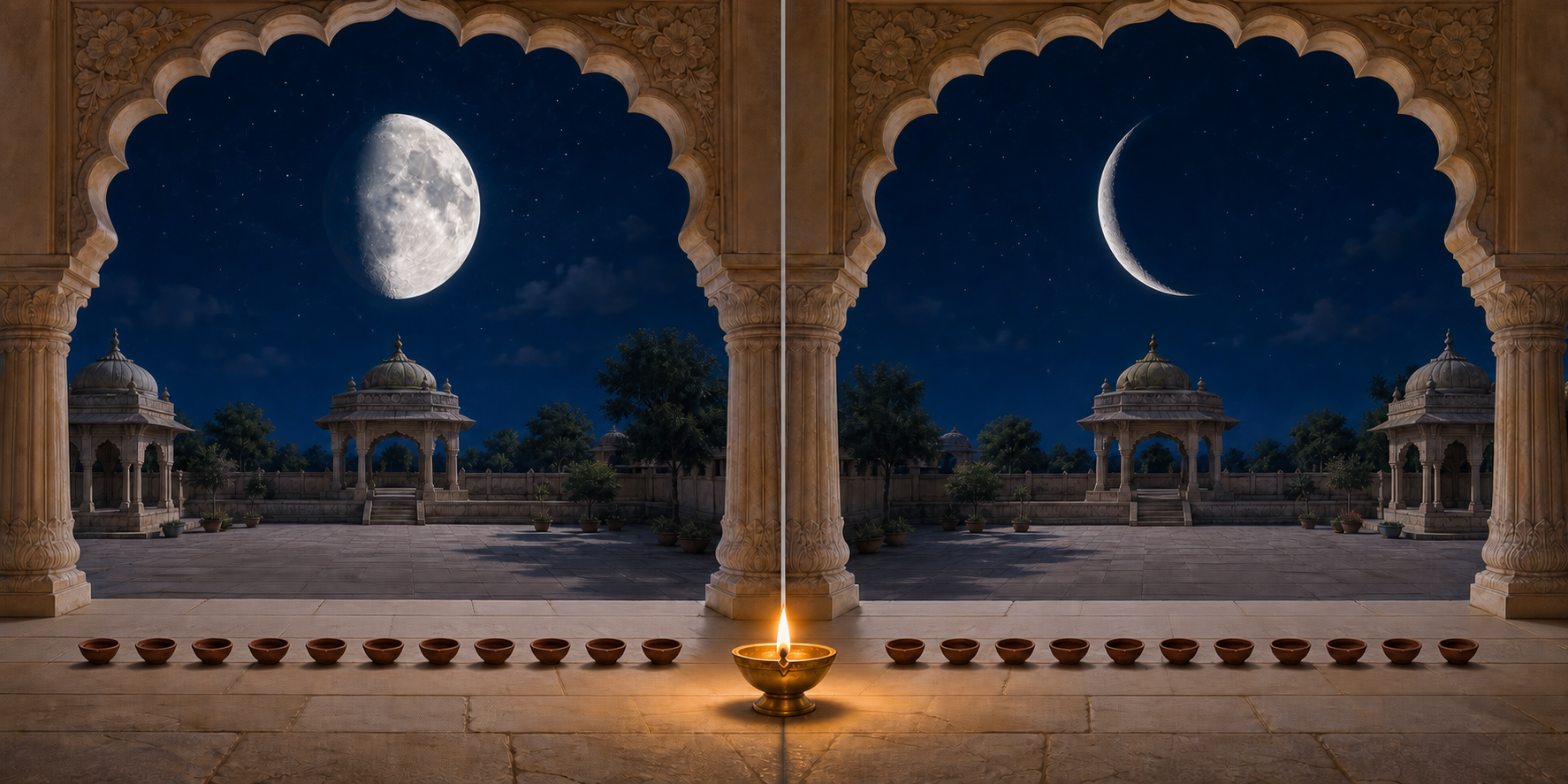
The intercalary month in 2026 is expected to be Adhik Jyeshtha, honoured ritually as Purushottam Maas. A lunar month becomes Adhika when no solar ingress, or sankranti, occurs within it. The added month keeps the lunar calendar aligned with the solar cycle while creating an especially valued period for Vishnu worship, japa, vrata, dana and sacred study.
| Observance | Lunar half | Indicative date in India | Practical spiritual emphasis |
|---|---|---|---|
| Padmini Ekadashi | Shukla Paksha, the waxing half | Tuesday, 26 May 2026 | Purity, gentleness, gratitude and a lotus-like opening of the heart |
| Parama Ekadashi | Krishna Paksha, the waning half | Thursday, 11 June 2026 | Resolve, restraint, vairagya and clarity |
Do not rely on the word “Kamala” by itself when reading calendars. Some traditions use Kamala for Padmini, connecting the name with the lotus and Sri Lakshmi; some regional usage applies Kamala to the early-June Parama observance. Parama may also appear as Parama Shuddha Ekadashi. The dependable identifiers are the Adhika month and the paksha: Padmini is the Shukla Ekadashi, while Parama is the Krishna Ekadashi.
June also contains another major vrata that should not be folded into this pair. Nirjala Ekadashi is expected on Thursday, 25 June 2026. It belongs to the succeeding regular Jyeshtha cycle, whereas the 11 June Parama Ekadashi belongs to Adhik Jyeshtha. If a June calendar shows both dates, that is not a duplicate or contradiction.
Key takeaways
- Treat 26 May and 11 June as indicative India dates until a location-specific panchang confirms them.
- Use paksha to resolve naming differences: Padmini is Shukla Paksha; Parama is Krishna Paksha.
- Choose one panchang school consistently. Do not take the Ekadashi date from one calculation and parana from another.
- Plan Dashami preparation, Ekadashi practice and Dwadashi parana as a single observance.
- Select a fasting level that preserves health, steadiness and the performance of your actual duties.
Confirm the local date and parana before making plans
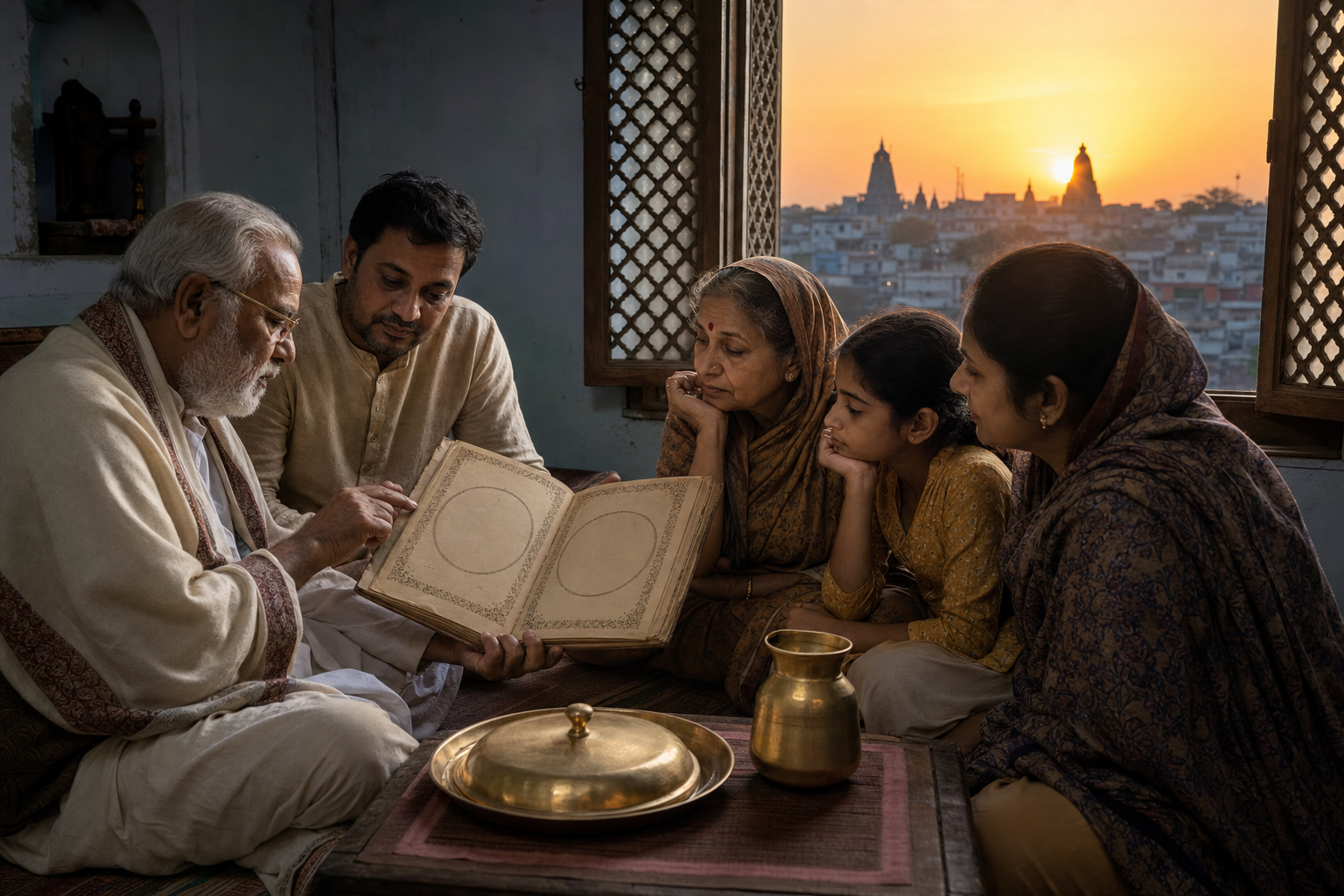
A civil calendar date is only the outer container for an Ekadashi vrata. The deciding question is whether Ekadashi tithi is in force at sunrise where you are observing. Longitude, latitude and time zone affect that answer, so a devotee outside India may observe on the civil date before or after the indicative IST date.
The Amanta and Purnimanta systems can give the surrounding month different labels without necessarily placing the vrata on different days. Amanta reckoning is common in many parts of South India, while Purnimanta reckoning is widespread in North India. For an Ekadashi decision, concentrate on the local sunrise tithi and the rules of your chosen tradition rather than trying to reconcile month names by sight.
Smarta and Vaishnava calendars can also differ when Dashami, Ekadashi or Dwadashi touches sunrise in a way that activates lineage-specific rules. This is why a generic list of festival dates is not enough for someone keeping the full vrata.
- Set the panchang location to the city where you will physically observe, not to Delhi, your birthplace or the headquarters of a temple in another time zone.
- Select the Smarta or Vaishnava convention that matches your household, guru-parampara or temple.
- Find Adhik Jyeshtha and confirm which civil date has Ekadashi tithi at local sunrise.
- Record the beginning and end of Dwadashi, the end of Hari-vasara and the published parana interval.
- If your temple publishes a schedule for your city and lineage, use that schedule consistently for both the fast and its conclusion.
Avoid building a hybrid calculation. For example, taking the Indian Ekadashi date, adjusting it informally for your time zone and then borrowing a parana hour from another city can produce a combination that belongs to no valid local observance. The correct workflow is to calculate the tithi for one location from the beginning.
Plan the vrata from Dashami through Dwadashi
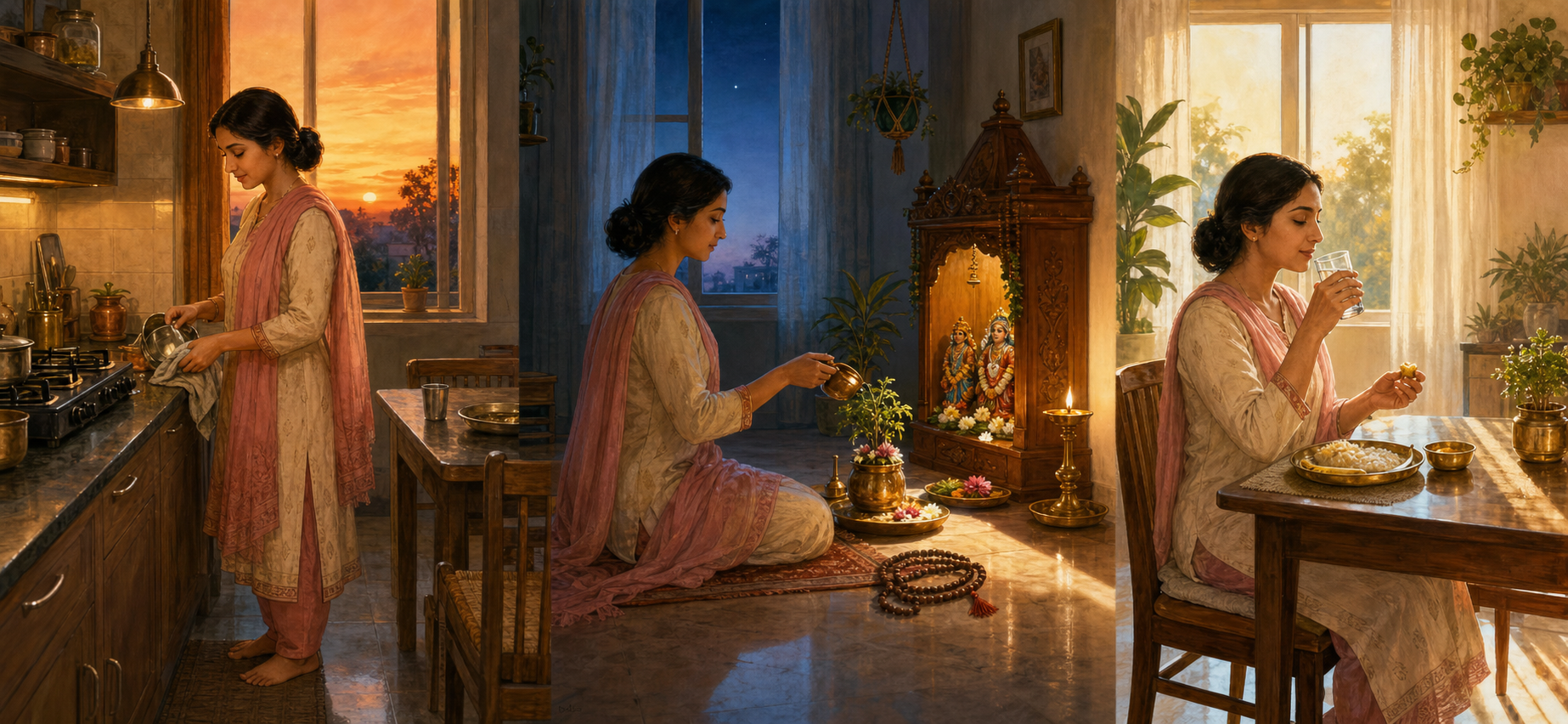
Upavasa is more than skipping food. It is a deliberate movement closer to the Divine through restraint, remembrance and cleaner conduct. Planning the surrounding days keeps hunger, kitchen decisions and calendar uncertainty from occupying the attention meant for Sri Vishnu.
Dashami: reduce friction before the fast begins
- Take light, sattvic food and avoid a heavy late meal. The aim is a composed transition, not indulgence followed by abrupt deprivation.
- Decide whether you will keep nirjala, water-only, phalahara or a simple sattvic anukalpa fast. Do not leave that decision to hunger or social pressure on Ekadashi morning.
- Prepare permitted ingredients, puja materials, clean clothing and any text you intend to recite.
- Check the Dwadashi parana interval and protect that time on your work or family calendar.
- Choose a realistic act of dana or seva in advance so it does not remain a vague intention.
Ekadashi morning: make worship the centre
Begin according to household practice with snana, clean attire and a clear sankalpa. Worship Sri Vishnu with a lamp, tulasi, suitable naivedya and prayer. If an elaborate puja would make the day rushed, keep the external form simple and preserve unhurried attention.
Choose a defined recitation rather than assembling more material than you can complete with attention. Suitable practices include Vishnu Sahasranama, the mantra “Om Namo Narayanaya,” “Om Namo Bhagavate Vasudevaya,” or study of Bhagavad-Gita chapters 7, 9, 12 or 15. One text read carefully is more useful than a long checklist performed mechanically.
For a standard food-based Ekadashi fast, grains and pulses are generally left aside. Common alternatives include fruit, milk, nuts, sabudana, kuttu and sama, or barnyard millet, prepared simply. Onion, garlic and strongly rajasic or tamasic foods are also commonly avoided. Ingredient rules vary across families and sampradayas, so follow the discipline you have accepted rather than using an unfamiliar recipe list as a new ritual authority.
Give the two Adhika-month observances distinct sankalpa accents. On Padmini Ekadashi, notice harsh speech, impatience and ingratitude, then practise a deliberately gentler response. On Parama Ekadashi, identify one distraction or indulgent habit that repeatedly weakens your practice and keep a firm boundary around it for the day. These are not replacements for Vishnu puja; they make its ethical meaning visible in ordinary conduct.
Ekadashi evening: protect attention, not merely the menu
Return to prayer, japa or sacred reading in the evening. Reduce entertainment and unnecessary digital input. Keep speech truthful and non-injurious, and avoid turning food rules into an argument with relatives. Jagaran may be undertaken when your tradition and capacity support it, but wakefulness that damages health or makes essential duties unsafe the next day is not a useful display of resolve.
Dwadashi: break the fast inside the correct window
Parana completes the vrata; it is not an incidental breakfast. The customary rule is to break the fast after sunrise on Dwadashi, avoid Hari-vasara, the first quarter of Dwadashi, and finish parana before Dwadashi tithi ends. Because the usable interval is location-dependent, no single clock time can responsibly be given for every reader.
Follow your lineage’s sequence. Many devotees first offer prayer and take water, charanamrita or tulasi-tirtha before eating a light sattvic meal. Break gently rather than compensating with a large or highly seasoned meal. If family members follow different sampradayas, label each person’s parana window clearly instead of assuming that one timetable governs everyone.
Measure the vrata by steadiness, not severity

Nirjala is one possible level of fasting, not the universal measure of sincerity. A waterless fast can create avoidable health risk, especially for children, older adults, pregnant or nursing people, anyone managing a medical condition, and those doing physically demanding work. Such devotees can take water, keep phalahara or choose a simple sattvic anukalpa meal. Where health is uncertain, the responsible course is to agree on a modified observance with a qualified clinician and the relevant spiritual authority rather than attempting austerity competitively.
The same principle applies when you are responsible for children, elders or other dependants. A fasting rule that prevents necessary care has displaced dharma with rigidity. Ahimsa toward the body, truthful awareness of capacity and faithful performance of duty belong inside the vrata, not outside it.
The worship of Vishnu gives Padmini and Parama Ekadashi their particular religious form. Their disciplines of mindful restraint, compassion and generosity also make respectful contact with Buddhist Uposatha, Jain posadha-style observance, and Sikh commitments to simran and seva. These practices should not be treated as interchangeable. In a mixed Dharmic family or community, shared silence, charity and service can express civilizational kinship without asking every participant to adopt the same ritual theology.
Open your city-specific 2026 panchang now and create entries for Dashami preparation, Ekadashi worship and Dwadashi parana for each vrata. Put the location and the Smarta or Vaishnava convention in the calendar title. Then choose your fasting level and one devotional practice before the dates approach; those two decisions will do more for a steady observance than an ambitious plan made on Ekadashi morning.
References
- DharmaRenaissance Blog — Adhika Masa Ekadashi 2026 (Purushottam Maas): Padmini & Parama Dates, Vrat and Puja Guide
- DharmaRenaissance Blog — Ekadashi June 2026: Parama (Kamala) & Nirjala Dates in Jyeshtha, Meaning and Fasting Guide