
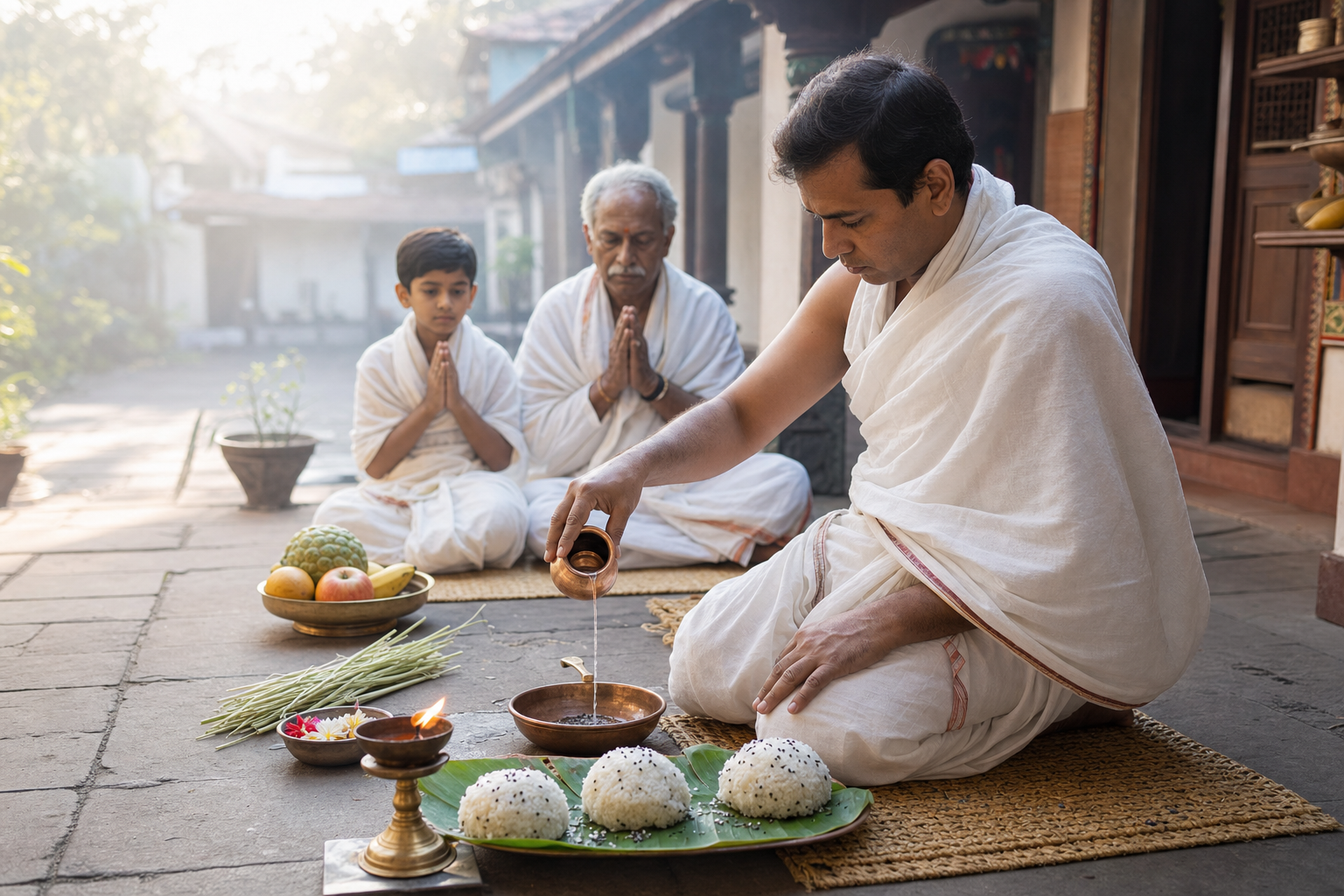
You want to honor your ancestors on the right sacred day, but the instructions seem to multiply: fast, bathe, offer sesame-water, perform pinda-dana, worship Shiva, light a lamp, visit a river, or call a priest. Trying to combine every custom usually produces more anxiety than devotion.
Use a simpler rule. First establish the tithi at your location. Then identify the particular duty of the day. Finally, perform the smallest complete observance that agrees with your family parampara, health, and level of ritual training. That sequence protects both calendrical correctness and the spirit of the rite.
Fix the local tithi before planning the ritual

A Hindu observance is ordinarily attached to a tithi, not to the civil date printed at midnight. A tithi measures a 12-degree change in the angular separation of the Moon and Sun. Amavasya occupies the final such segment before their conjunction, while Purnima is associated with their opposition. Because a tithi can begin or end at any hour, it may touch two civil dates and fall differently across time zones.
This is why a date copied from an Indian calendar may be wrong for a family in Toronto, London, Singapore, or another diaspora location. Your panchang must be calculated for your city or a nearby location in the same time zone. It should show the tithi’s beginning and ending times, local sunrise, paksha, lunar month, and any event-specific observance window.
The tithi at sunrise, or udaya-tithi, commonly determines the festival day. It is not a universal timing rule for every act. Ancestral rites may give importance to aparahna, the afternoon period traditionally used for Shraddha-related duties, while Chaturdashi worship can also emphasize pradosha, the evening twilight. A river observance such as Saryu Jayanti places its principal snana near sunrise and its aarti at twilight. Identify both the correct day and the correct window for the act you intend to perform.
Month names can introduce a second layer of confusion. In an Amanta calendar, the lunar month ends with Amavasya; in a Purnimanta calendar, it ends with Purnima. The same tithi can therefore carry different month labels without either calendar being defective. An intercalary Adhik Maas can shift later month boundaries as well. For example, Gatari Amavasya falls on 12 August in the 2026 Maharashtra and Goa calendar, after an Adhik Jyeshtha Maas has moved the Ashadh boundary; Shravan begins the following day under the regional Amanta convention.
Before putting an observance on the household calendar, record five things:
- Your location and time zone.
- The tithi, paksha, and lunar month used by your regional tradition.
- The tithi’s local start and end times.
- Whether the rite follows sunrise, aparahna, pradosha, or another prescribed window.
- The guidance of your family elder, guru, priest, or temple when two calendars apply different rules.
If two apps disagree, do not choose the date that is more convenient. Check whether they use different locations, Amanta and Purnimanta month names, or different observance rules. A trusted regional panchang and an established local temple are better tie-breakers than a generic global festival list.
Identify the duty of the day instead of mixing every rite
Ask one question before gathering any materials: what obligation or discipline is this particular date asking you to address? Ancestral remembrance, a remedial rite, deity worship, ritual bathing, and preparation for a vrata may overlap, but they are not interchangeable.
| Sacred-calendar setting | Primary purpose | A coherent household core | Where guidance matters |
|---|---|---|---|
| Regular Amavasya | Gratitude and peace for the Pitrs | Snana, simple sankalpa, tila-water remembrance where customary, dana, and a lamp | Use the family’s established tarpana method; do not assume a full Shraddha is required every month |
| Somvati Amavasya | Ancestral duty joined with Monday worship of Shiva | Pitru remembrance, Shiva puja or japa, appropriate fasting, dana, and evening deepa-dana | Follow local panchang timing and adapt the fast to health |
| Gatari or Ashadh Amavasya in Maharashtra and Goa | Ancestor remembrance and preparation for Shravan | Tarpana where customary, charity, Kuladevata or Shiva worship, and a realistic Shravan sankalpa | Use the regional Amanta calendar rather than transferring another region’s month boundary |
| Saryu Jayanti on Jyeshtha Purnima | Purification, reverence for sacred water, and remembrance of Ayodhya’s dharmic geography | Safe snana or a home kalasha observance, river archana, Rama remembrance, aarti, and dana | Obey local bathing restrictions and use a city-specific panchang |
| Pisacha Mochini Chaturdashi | Traditional remedial prayer for unsettled departed beings and lineage peace | Sankalpa, Pitru remembrance, tilodaka or tarpana where learned, suitable japa, dana, and deepa-dana | Pinda-dana, specialized mantras, and homa should follow parampara or competent priestly direction |
Pisacha Mochini Chaturdashi belongs to Margashirsha Shukla Chaturdashi, not to the Naraka Chaturdashi of the Deepavali cycle. In traditional Hindu cosmology, preta and pisacha can denote transitional or disturbed conditions rather than permanent identities of a soul. These terms should never become accusations against a deceased relative or a dramatic explanation for every family difficulty.
An untimely death, incomplete mourning, or repeated dreams about a departed relative may lead a family to seek a peace rite. None of these experiences proves a supernatural cause. You can perform a compassionate observance without turning uncertainty into a diagnosis. Persistent grief, fear, disturbed sleep, or impairment in daily life also deserves appropriate medical or mental-health support; ritual remembrance can accompany that care, but it should not replace it.
You do not need every ancestor’s name to remember the lineage. A sincere offering can include known and unknown forebears, those remembered clearly, and those whose names have been lost. This protects the rite from becoming a mere genealogy exercise: its deeper work is gratitude, responsibility, and the healing of how the living carry their inheritance.
Use this complete household sequence
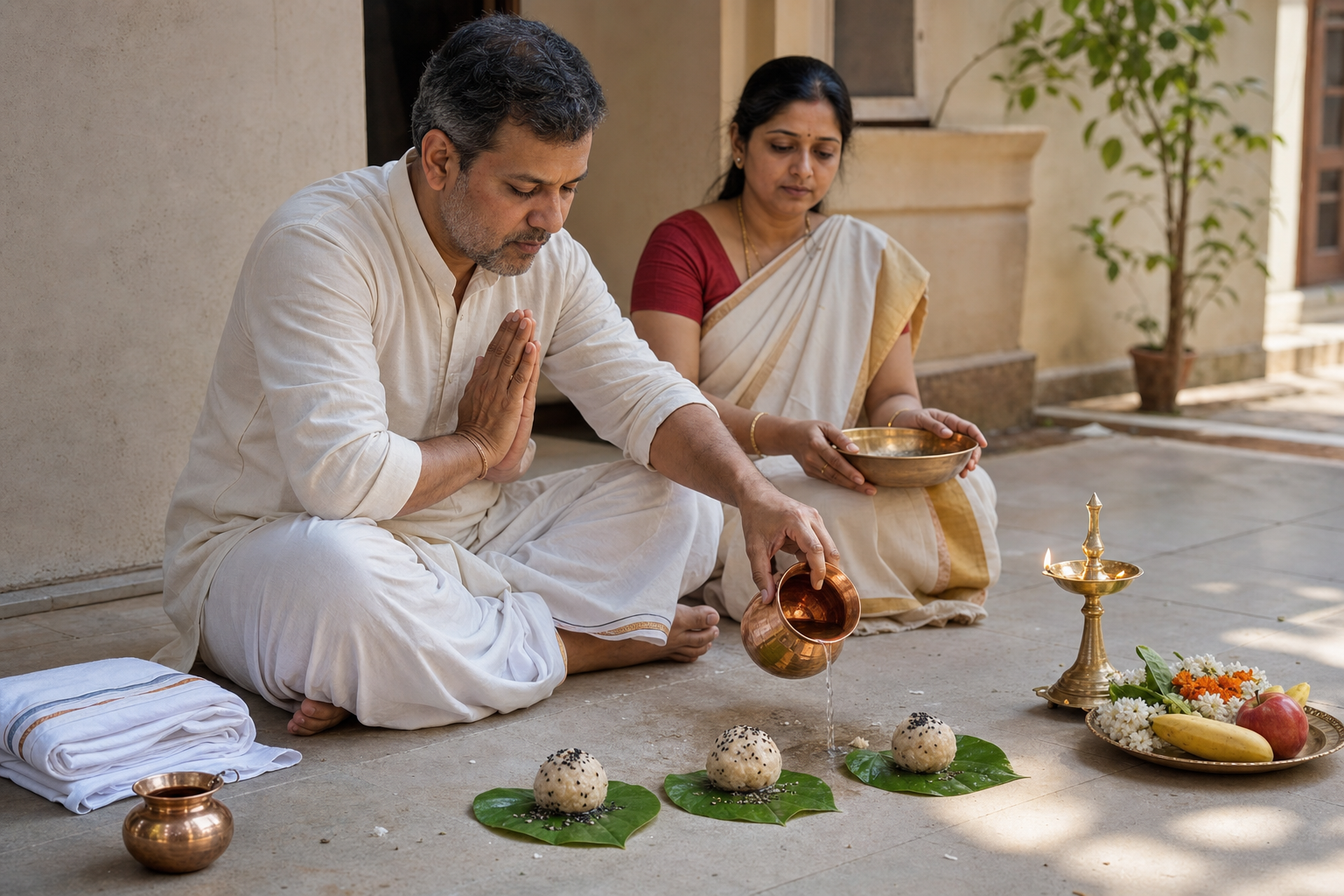
A modest observance can be complete without imitating a temple ceremony. The following sequence gives you a stable framework. Keep the ancestral, deity-specific, and charitable parts distinct enough that you understand why each is present.
- Set the scope before the day arrives. Decide whether you are performing simple remembrance, a familiar household tarpana, a deity vrata, or a priest-guided rite. If pinda-dana or homa is contemplated, arrange guidance in advance rather than improvising from fragments found online.
- Prepare only what the chosen rite needs. A clean vessel of water, black sesame for an established Pitru practice, darbha if your parampara uses it, flowers or akshata, a safe lamp, and the item intended for dana are enough for many home observances. Prepare sattvic food only in quantities the household can consume or share.
- Begin with physical order. Bathe, wear clean clothing, clean the altar area, and settle the mind through achamana or a short silent pause according to your practice. Travel to a river is not compulsory. A mindful home bath and a clean vessel of water can carry the intention when pilgrimage is impractical.
- State a precise sankalpa. Name the tithi as given by your panchang, your purpose, and the discipline you will actually complete. A simple form is sufficient: on this sacred tithi, for the peace of our known and unknown ancestors, the welfare of the lineage, and purification of our conduct, we undertake this observance. Use Sanskrit only if you have learned an appropriate formulation; sincerity does not require mispronouncing a long text.
- Open with your established devata practice. Remember Ganesha and the household’s ishta-devata or Kuladevata, light the lamp safely, and offer water, flowers, or akshata. This creates a devotional foundation before the more specific ancestral act.
- Perform the ancestral offering you know. If tila-tarpana belongs to your family practice, offer sesame and clean water with the taught hand position and mantras, naming ancestors where known. If you have not learned the physical method, do not invent one. Offer water respectfully, remember the lineage, recite a peace prayer, and arrange dana while you seek instruction for a future observance.
- Add the day’s specific devotional layer. On Somvati Amavasya, this may be Shiva puja, abhisheka, or Om Namah Shivaya japa. A Gatari observance can conclude with a concrete Shravan vow. Saryu Jayanti can include Rama remembrance, river-goddess archana, or a home kalasha. Pisacha Mochini Chaturdashi may include Mahamrityunjaya japa, Rama-nama, Vishnu Sahasranama, or an appropriate Pitru prayer.
- Translate remembrance into dana and closure. Give food, grain, sesame, clothing, a blanket where seasonally useful, or support to a community need according to your means. Conclude with prayer, deepa-dana, and respectful distribution of prasad. Record the rite and any family instructions so the next generation does not have to reconstruct them from memory.
Do not stack every available mantra into one ceremony. One recitation you can sustain attentively is better than a long sequence performed in haste. The Pitri Sukta of Rigveda 10.15 should be approached with appropriate guidance where your tradition prescribes Vedic recitation. The Garuda Purana and the Kashi Khanda of the Skanda Purana supply important traditional frames for departed-soul duties and the Pisacha Mochana Tirtha in Kashi, but a householder does not need to reproduce a tirtha’s specialized prayoga without instruction.
Pinda-dana is likewise not a decorative addition. Where your family tradition prescribes it, cooked rice, sesame, and ghee may be formed into pindas and offered with the relevant procedure. Where it does not, or where you lack guidance, simple tarpana, remembrance, prayer, and dana remain meaningful. A specialized fire offering requires someone competent in its mantras and fire procedure; home puja, tarpana, and charity form a sufficient observance when homa is not feasible.
Make purification visible in conduct
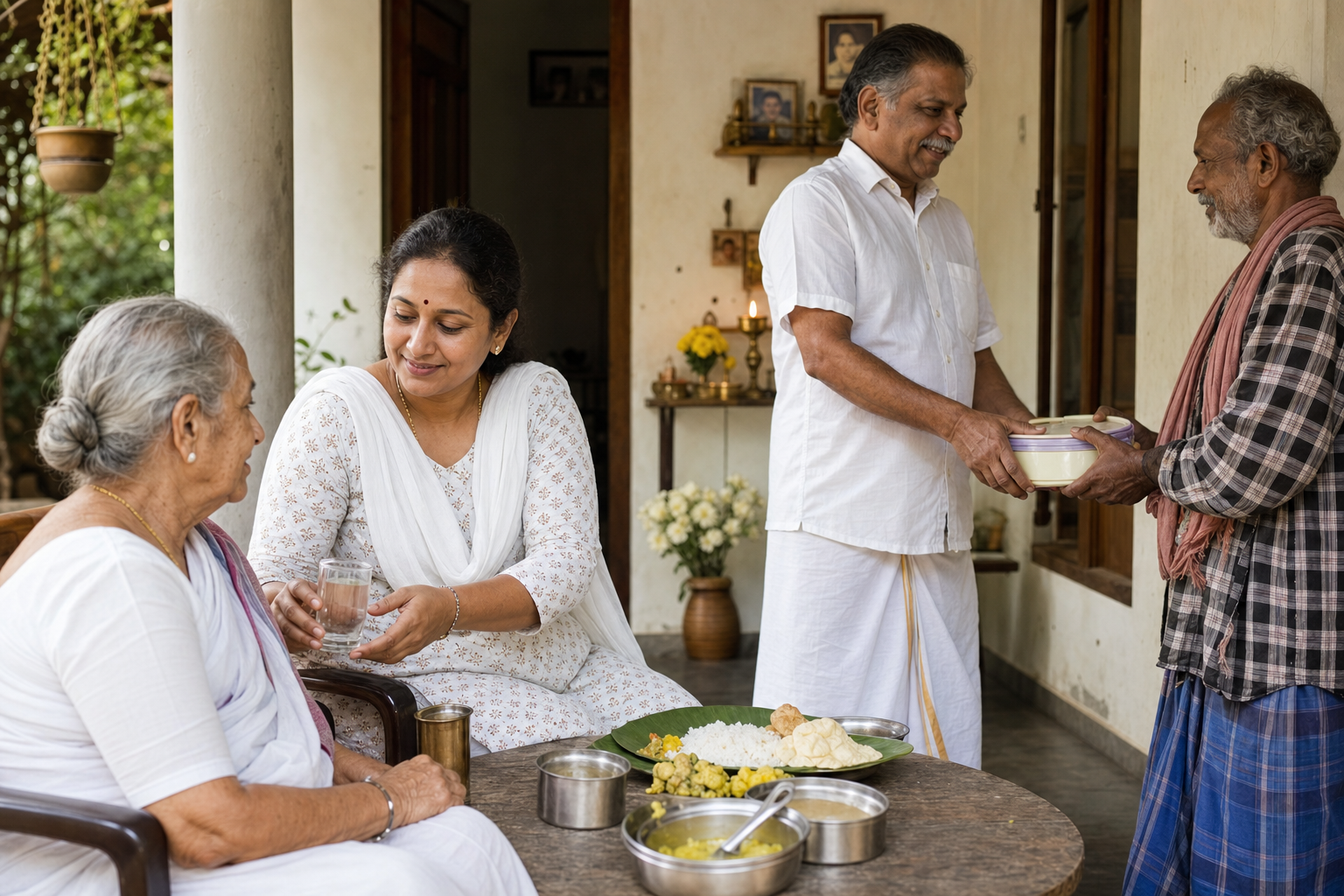
Ritual purification is not a claim that water mechanically erases consequences. Snana, achamana, fasting, japa, and a cleaned altar establish a threshold: you interrupt ordinary habits and become more deliberate. The test comes afterward. If the rite leaves your speech, consumption, relationships, and treatment of living beings unchanged, its purificatory promise has remained unfinished.
- Purify the body without harming it. Choose nirjala, phalahara, or a simple sattvic diet only to the extent your health permits. A mental vow supported by japa, kind speech, and dana is a valid alternative when fasting is not possible. Do not interrupt necessary food, hydration, or medication merely to imitate another person’s vrata; obtain clinical advice when your health makes fasting uncertain.
- Purify speech and attention. Reduce harsh speech, gossip, intoxication, and avoidable distraction for the period of the vow. Set a defined prayer or reading window rather than vaguely promising to be more spiritual.
- Purify the relationship with lineage. Remember beneficent inheritance with gratitude, acknowledge painful inheritance without romanticizing it, and choose one harmful family pattern you will not pass forward. Ancestor reverence does not require denying wrongdoing by ancestors.
- Purify consumption through dana. Give something useful, clean, and proportionate to your means. Food distribution, elder care, community kitchens, education, health support, and service to vulnerable beings turn remembrance into present-tense responsibility.
- Purify the ritual’s environmental footprint. Do not release plastic, synthetic cloth, food heaps, oil containers, or unsuitable offerings into rivers. Return a small water offering to clean earth or a plant when appropriate, use designated collection points at ghats, and feed animals only in ways that local conditions make safe.
Water and fire require ordinary safety even on a sacred day. Bathe only in marked river zones, follow lifeguard or local-authority instructions, and do not enter strong currents for the sake of ritual completeness. Use a stable lamp, keep it away from children and flammable material, and never leave it unattended. A safe home offering preserves the intention better than a hazardous imitation of pilgrimage.
Sacred-calendar discipline also appears across the wider dharmic family without making every tradition identical. Buddhist Uposatha and Vassa intensify sila, dana, and bhavana; Jain samayika, pratikraman, fasting, and Chaturmas emphasize restraint and ahimsa; Sikh simran, seva, and langar unite remembrance with responsibility. The rains-retreat disciplines associated with Shravan, Vassa, and Chaturmas share an ethical rhythm of restraint and service, even though their doctrines and ritual forms remain distinct. You honor that kinship best by practicing your own tradition accurately while recognizing the virtues held in common.
Key takeaways for a repeatable family observance
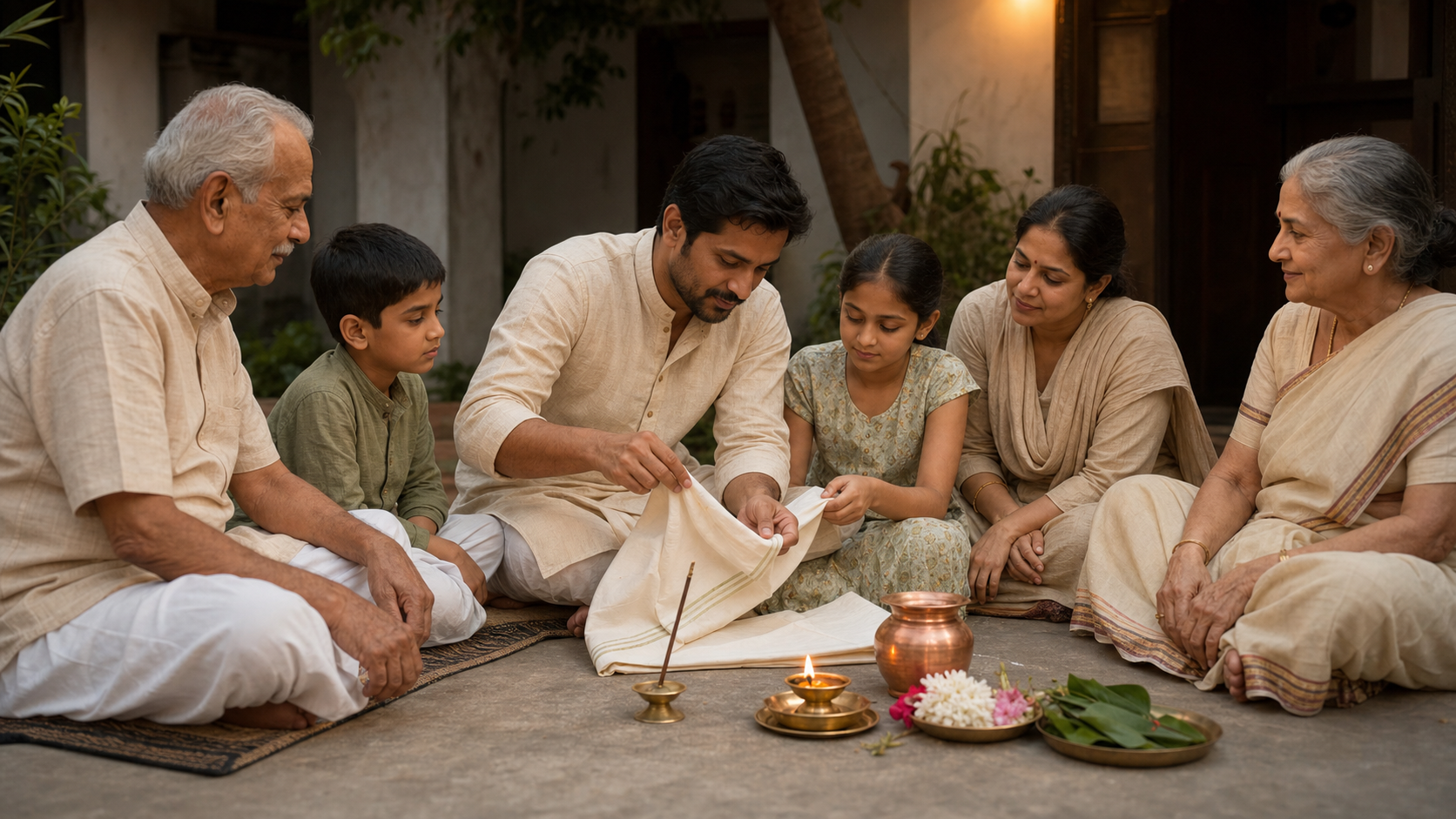
- The sacred date is local. Verify the tithi for your city, not merely the civil date used in Bharat.
- The ritual window depends on the act. Sunrise, aparahna, and pradosha cannot be treated as interchangeable.
- Purpose comes before procedure. Decide whether the day calls for Pitru remembrance, remedial prayer, deity worship, purification, or preparation for a longer vrata.
- Parampara sets the method. Use your family’s learned tarpana and Shraddha procedure instead of assembling one from unrelated regional customs.
- A simple core is enough: snana, sankalpa, remembrance, appropriate japa or puja, dana, and safe deepa-dana.
- Pinda-dana, Vedic recitation, and homa deserve competent guidance; their complexity is not a measure of your devotion.
- Purification should produce observable restraint, repair, service, and ecological care after the ceremony ends.
Before your next ancestral tithi, save one trustworthy local panchang, speak to the family member who knows the parampara, write a one-sentence sankalpa, and choose the dana in advance. Those four decisions turn a crowded ritual checklist into a practice your household can perform calmly and transmit faithfully.
References
- DharmaRenaissance Blog — Pisacha Mochini Chaturdashi: Sacred Rites for Ancestral Peace on Margashirsha Shukla Chaturdashi
- DharmaRenaissance Blog — Gatari Amavasya 2026 in Maharashtra & Goa: Date, Rituals, Meaning, and Shravan Prep
- DharmaRenaissance Blog — Saryu Jayanti 2026 in Ayodhya: A Definitive Guide to Jyeshtha Purnima Rituals and the Sacred River’s Grace
- DharmaRenaissance Blog — Somvati Amavasya on 15 June 2026: Unlock Powerful Blessings with Amasomvar Vrat, Puja and Daan
