
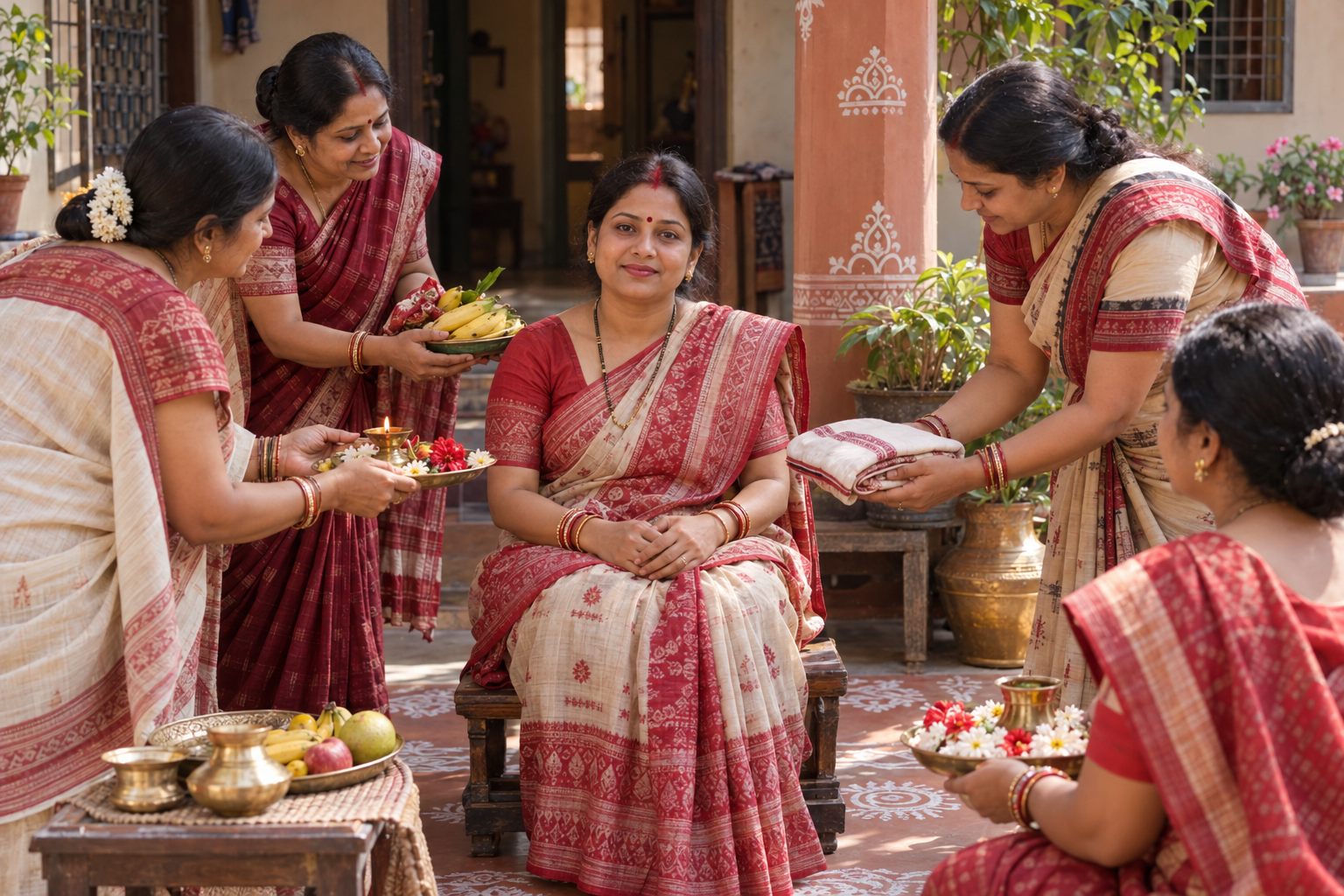
If you have been invited to a Sadhaba Puja, or your family is preparing to conduct one, the central question is not merely what to wear or which offering to bring. It is what the act of worship asks you to recognize in the woman seated before you.
Properly understood, the puja is neither ceremonial flattery nor a claim that marital status makes one woman more human than another. It trains the household to recognize the presence of Devi in a living person, and then asks whether its everyday conduct reflects that recognition.
What Sadhaba Puja recognizes
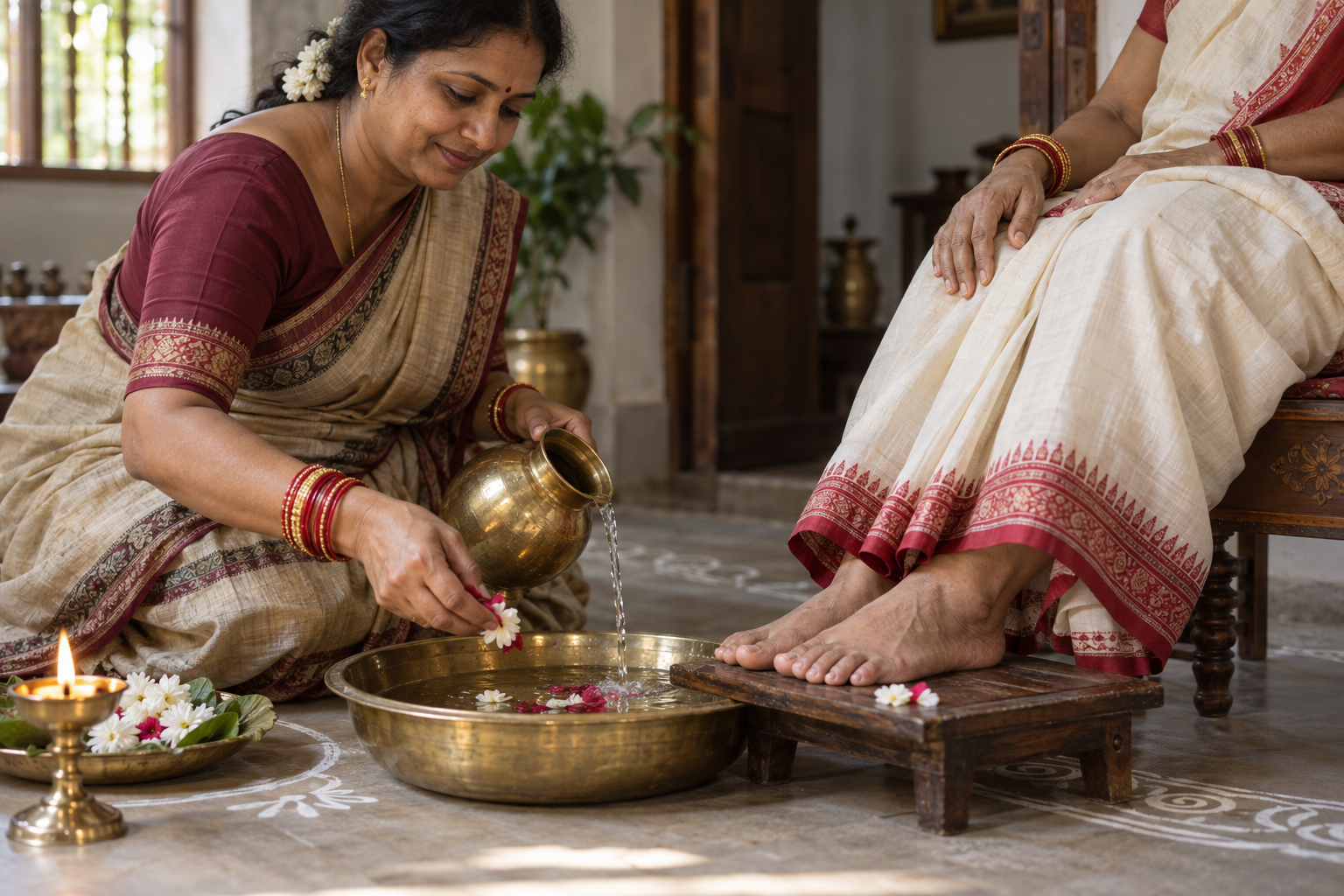
In this ritual context, a sadhaba is a married woman whose husband is living. She is honoured during Durga Puja not simply as an individual guest, but as a living bearer of auspicious feminine presence.
Durga is approached as the universal mother and as the source of strength, love and protection. Sadhaba Puja brings that theological vision into the household. The divine feminine is not treated as distant or confined to a sacred image. The family is asked to encounter her through a woman it can welcome, honour and serve.
This gives the observance three connected dimensions:
- Theological recognition: the woman is received as a manifestation or representative presence of Shakti, the divine power expressed through the Goddess.
- Household discipline: family members practise reverence through attention, hospitality and restraint rather than leaving devotion at the shrine.
- Ethical accountability: ritual honour becomes meaningful only when women are also treated with dignity after the ceremony ends.
The woman does not have to pretend that she has become personally perfect. Nor should participants turn her into an object of spectacle. She occupies a sacred role for the puja, and everyone present is responsible for protecting the seriousness of that role.
Why marriage is a symbol, not a measure of human worth
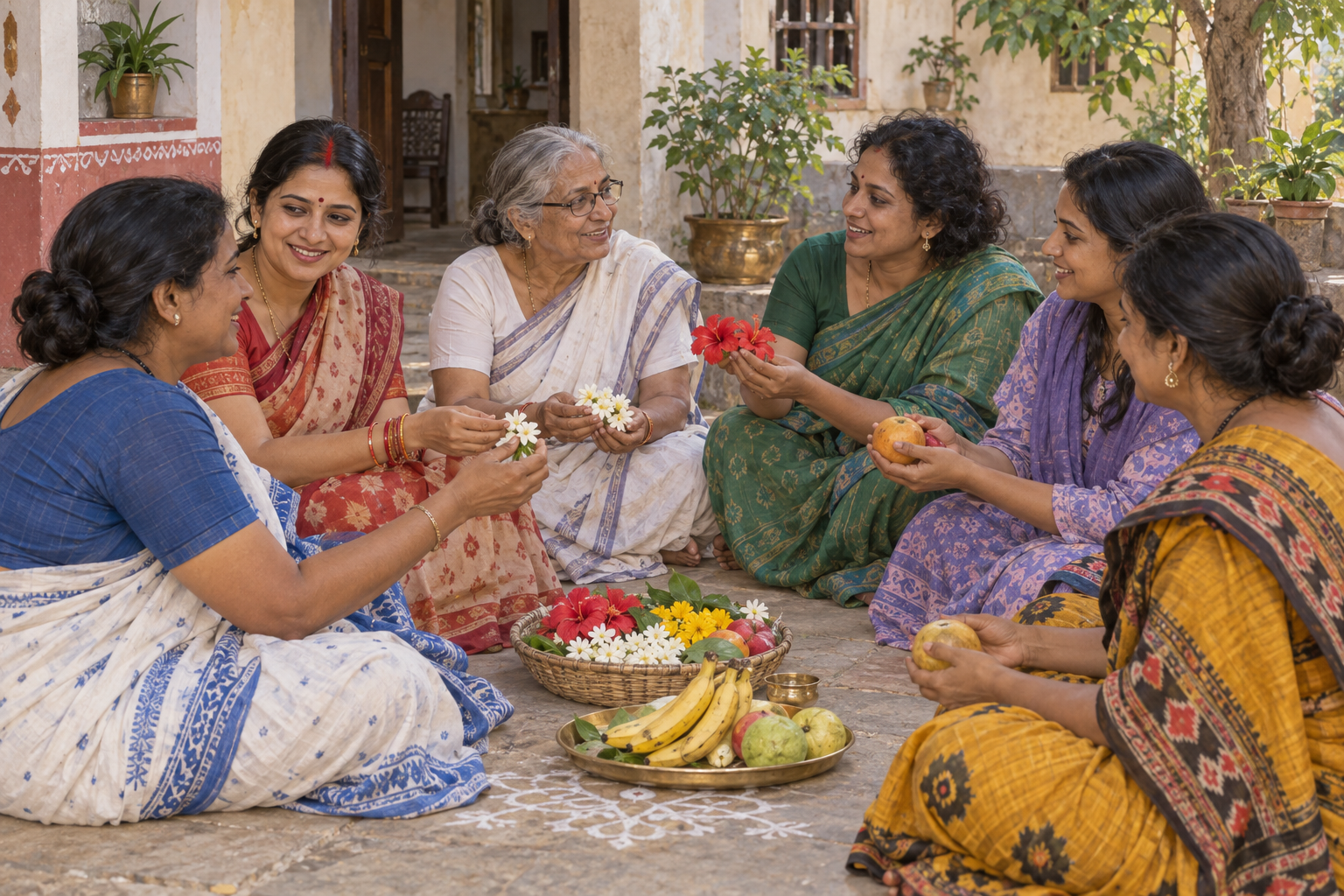
Marriage appears in Sadhaba Puja because Hindu ritual frequently works through defined relationships and stages of life. Here, the married woman can represent household continuity, mutual obligation, fertility in its broad sense of life-sustaining abundance, and the auspicious hope that a family will flourish.
That symbolism must be read precisely. The fact that a living husband identifies the ritual category does not make the husband the source of the woman’s spiritual dignity. It also does not prove that every marriage is harmonious, that a married woman is morally faultless, or that marriage is the only meaningful form of a woman’s life. The ritual selects a particular form through which to contemplate Shakti; it does not exhaust the meaning of Shakti.
Ritual eligibility and spiritual worth answer different questions. A person may hold a particular role in one vrata or puja without everyone outside that role becoming inferior. If a family remembers this distinction, it can preserve the traditional form of Sadhaba Puja without using it to demean widowed, unmarried, separated or divorced women.
This matters in practice. Do not turn one woman’s inclusion into another woman’s humiliation. Do not make comparisons about who is more auspicious, joke about someone’s marital circumstances, or use the occasion to pressure a woman about marriage. A ritual distinction may remain a ritual distinction; contempt cannot be smuggled into it and renamed dharma.
The same test applies within marriage. Publicly worshipping a woman while privately dismissing her judgment, labour, safety or legitimate needs empties the gesture of its dharmic force. Sacred status is not a decorative title. It creates an obligation in those who offer the honour.
How to take part without reducing the woman to a symbol
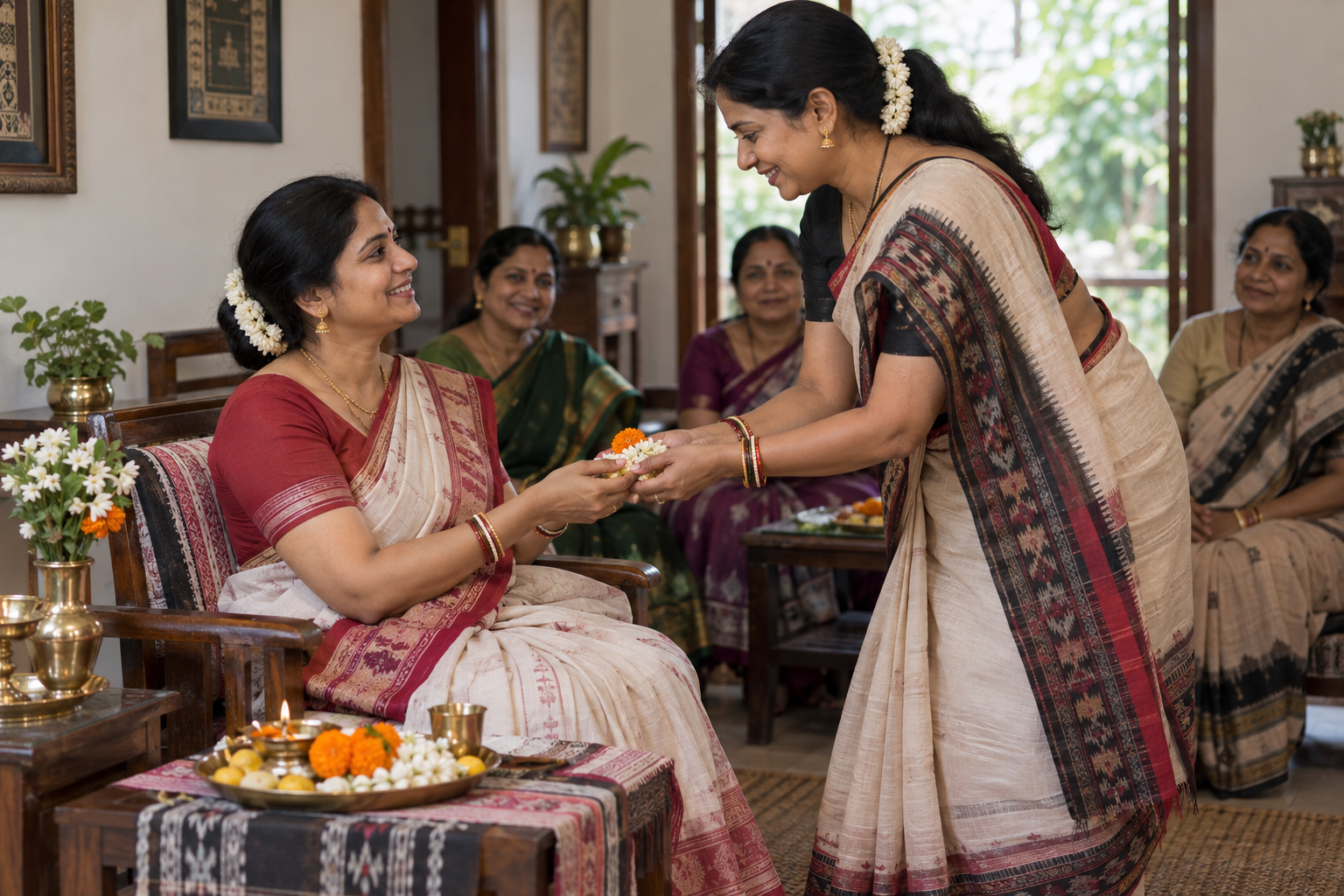
If you are invited as the sadhaba
You do not need to guess what the household expects. Sadhaba Puja can differ by family and regional tradition, so ask a few practical questions before accepting:
- Who will guide the puja, and at what time should you arrive?
- Does the family expect particular clothing, food observances or preparation?
- Which ritual gestures are customary in that household?
- Will photographs or a public gathering be involved?
- Is there anything you are uncomfortable receiving or doing?
Consent does not weaken a sacred observance. It prevents confusion and allows you to enter the role attentively. If illness, family circumstances or personal discomfort make participation difficult, you may decline respectfully rather than agreeing under pressure.
During the puja, receive the honour with steadiness rather than embarrassment or personal pride. The reverence is directed through you toward Devi. You are not being asked to advertise your marriage or to perform an image of domestic perfection. Follow the person guiding the rite, ask quietly if an instruction is unclear, and accept only those gestures with which you are comfortable.
If you are attending or assisting
Your conduct helps determine whether the woman experiences the puja as honour or as display. Keep conversation respectful, follow the family’s ritual sequence and avoid turning solemn moments into opportunities for jokes, unsolicited advice or photographs. Ask before recording or posting anything. A sacred role does not cancel a person’s privacy.
Pay attention to ordinary hospitality as well. A comfortable place to sit, clear explanations, unhurried timing and help with practical needs can express reverence more convincingly than an elaborate offering followed by neglect. If you are unfamiliar with the practice, observe first and let the family elder or priest direct you.
How a household can host the puja with integrity
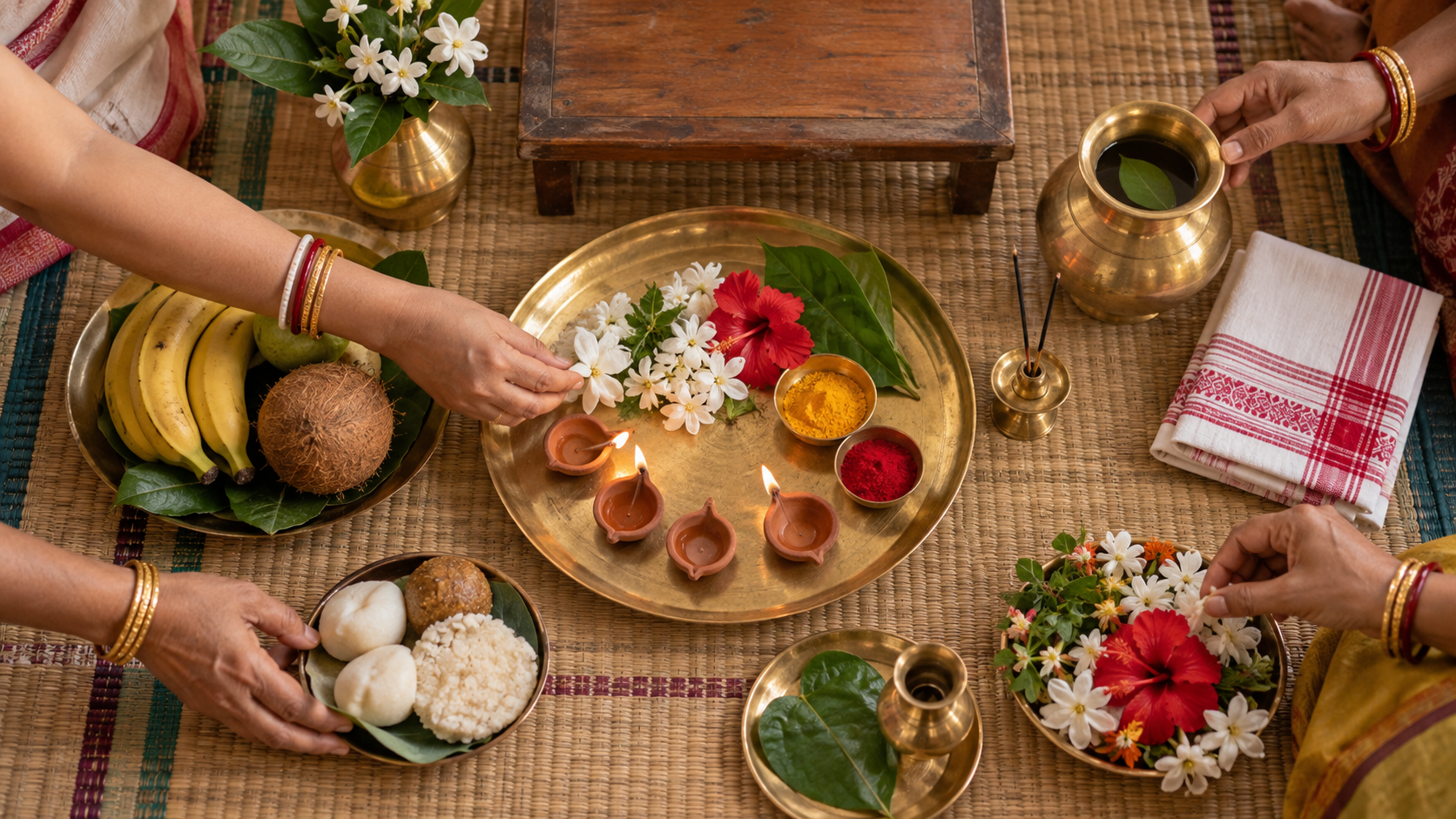
The name of the observance does not supply one universal script. Mantras, offerings, bodily gestures and the order of worship may depend on family custom. Preserve the form you have actually inherited, and consult a trusted elder or priest when the household no longer remembers it. Do not assemble a supposedly traditional ceremony from disconnected instructions simply because they appear online.
A sound preparation process is simple:
- Identify the tradition you are following. Decide who can explain the family’s customary sequence and resolve questions before the gathering.
- Invite the woman as a participant, not a prop. Tell her what will happen, who will be present and whether images will be taken. Make room for her preferences.
- Explain the purpose briefly. Family members, especially younger ones, should know that they are honouring Devi through a living woman. Without that explanation, the gestures can look like unexplained pageantry.
- Prepare for hospitality as carefully as worship. Arrange the space, timing and assistance around the guest’s comfort. Complexity and expense are not measures of devotion.
- Guard the dignity of everyone present. Do not use the rite to compare marriages, comment on fertility or exclude other women from ordinary affection and hospitality.
- Name one conduct that will continue afterward. The household might commit to listening without contempt, sharing care work fairly, respecting women’s decisions or giving an elder consistent practical support.
The last step is essential. A puja can concentrate attention for a few hours, but its purpose is larger than the event. If reverence disappears as soon as the ritual space is cleared, the household has preserved the outer act while missing its demand.
There is also no need to make the honoured woman carry an impossible burden. Calling her a form of the Goddess does not mean expecting endless patience, unpaid service or silence in the face of wrongdoing. Shakti signifies power and presence. A practice that uses sacred language to erase a woman’s agency reverses the very recognition it is supposed to cultivate.
Key takeaways
- Sadhaba Puja honours a married woman whose husband is living as a representative presence of the divine feminine during Durga Puja.
- Marriage supplies the ritual symbol; it does not establish a hierarchy of women’s spiritual worth.
- The honoured woman remains a person with agency, privacy and the right to set boundaries around participation.
- Local family tradition should determine the precise ritual sequence, so consult a trusted elder or priest instead of improvising details.
- The puja becomes credible when ceremonial reverence is followed by respectful conduct in everyday family life.
Before your next Sadhaba Puja, ask one practical question in the family: what will we do differently after offering this honour? Choose one visible habit and continue it when Durga Puja is over. That is how recognition of the Goddess at the altar begins to shape the home around it.
References

Leave a Reply
You must be logged in to post a comment.