
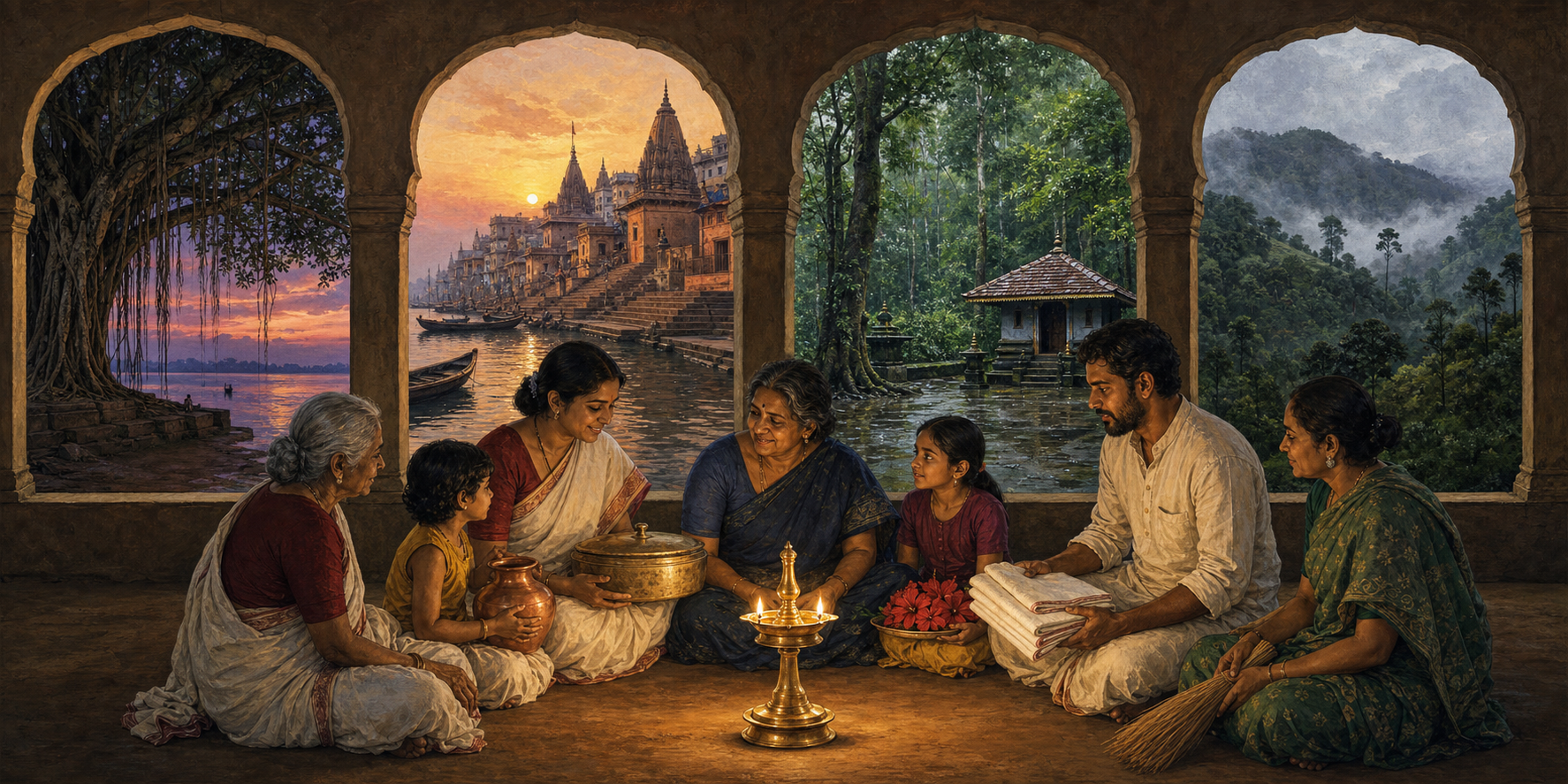
You may arrive at Shakti worship with a simple question: why does the Mother appear as Tara beside a cremation ground, as Annapurna with a vessel of food, and as Vasoorimala guarding communities against disease? If these forms are flattened into a list of goddess names, the practical intelligence of the traditions disappears.
Use a more revealing question: what kind of care is this form of Devi teaching her community to give? That question lets you recognize a shared Shakti without erasing Bengal, Kashi, Kerala, or Kodagu. It also turns pilgrimage, puja, and study into something you can carry into ordinary conduct.
Key takeaways
- A regional form of Shakti is not merely a local name for a generic goddess. Place, memory, ritual, and a community’s needs shape how divine care is encountered.
- Tara trains the devotee to face mortality without abandoning compassion; Annapurna makes nourishment a sacred obligation; Vasoorimala joins prayer for protection to communal responsibility during illness.
- The symbols differ, but each tradition moves from divine power to human duty: remain present, feed, protect, and serve.
- Respect requires learning which practices are public, which depend on local custom, and which require guidance or initiation.
- Ritual may sustain courage and solidarity during illness, but it must accompany appropriate medical and public-health care, never replace it.
Begin with the need the local form is answering
In lived Shakta practice, geography is not decorative background. A cremation ground, a food vessel, a seasonal observance, or a ritual performance can disclose what a community has learned to fear, protect, share, and sanctify. You understand a regional Devi more clearly when you connect her icon and worship to that local work of care.
Tara at Tarapith: care that does not turn away from mortality
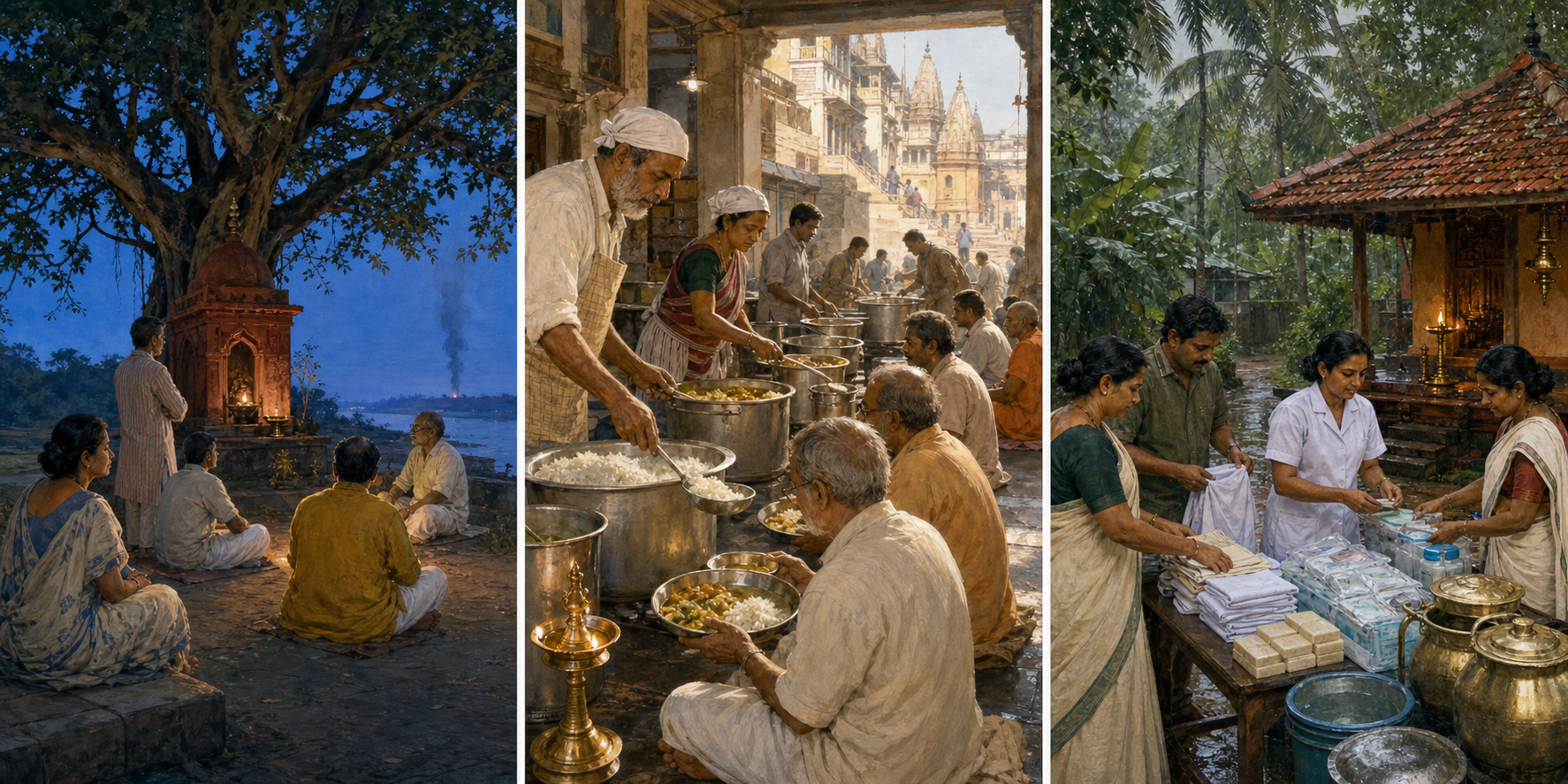
At Tarapith in Birbhum, West Bengal, Tara is revered within a sacred landscape that includes the temple and the nearby smashan, or cremation ground. The juxtaposition matters. Tara’s compassion is not limited to experiences that feel gentle. It accompanies the devotee into fear, loss, impermanence, and the collapse of ordinary certainties.
The cremation ground does not instruct every visitor to become a Tantric practitioner. It makes one spiritual fact difficult to avoid: whatever we love in embodied life is vulnerable to change. The practical response is neither morbid fascination nor denial. It is steadiness. You learn to remain present when fear would normally make you flee, harden, or look away.
Bamakhepa, the nineteenth-century mystic remembered as being absorbed in Tara, embodied an intense union of disciplined sadhana and intimate devotion. His example is often described through divine madness, but theatrical eccentricity is not the useful lesson for a visitor. The more demanding lesson is that mantra, meditation, simplicity, and love must become mutually accountable. Ecstasy without discipline can become self-indulgence; discipline without tenderness can become sterile.
If Tarapith draws you, begin with reverence rather than imitation. Receive darshan, observe the temple’s customs, and let the presence of the smashan sharpen your awareness of impermanence. Keep mantra or meditation within the bounds of what you have genuinely learned. Specialized Tantric practices should be approached through a competent teacher, not reconstructed from spectacle, fragments, or curiosity.
Annapurna in Kashi: care measured by whether someone is fed
Annapurna makes the ethics of Shakti immediately tangible. Associated especially with Kashi, she is depicted with a ladle and a vessel of food. The ladle signifies active service; the full vessel signifies sustenance held in trust. Together they refuse a merely sentimental idea of abundance. Food has to move from the vessel to a living being.
The affirmation annam brahma treats food as sacred because life depends upon it. That changes the moral character of cooking, serving, eating, and discarding. A meal is not only private consumption. It depends on soil, water, labor, skill, hospitality, and restraint. Waste therefore becomes more than poor household management, while feeding becomes more than occasional generosity.
You can translate Annapurna worship into three ordinary disciplines: prepare food attentively, reduce avoidable waste, and participate in annadana through a trustworthy temple or community kitchen. The manner of giving matters. Offer nutritious food respectfully, without turning the person receiving it into a prop for your devotion. Annapurna’s vessel represents shared provision, not the giver’s superiority.
Vasoorimala in Kerala and Kodagu: protection as a shared duty
Vasoorimala is revered in Kerala and the Kodagu region of Karnataka as a protective goddess associated in regional memory with smallpox, chickenpox, and measles. Her worship is found within Bhadrakali and Shiva temple settings, while North Kerala gives the tradition a powerful public expression through Vasoorimala Theyyam. Costume, drumming, choreography, shrine, household memory, and prayer bring communal vulnerability into a sacred frame.
Turmeric, neem leaves, and rice belong to the tradition’s ritual vocabulary of purity, healing, and protection. Keep them in that ritual register. Their presence in an offering does not turn them into a diagnosis, a guaranteed prevention, or a substitute for treatment.
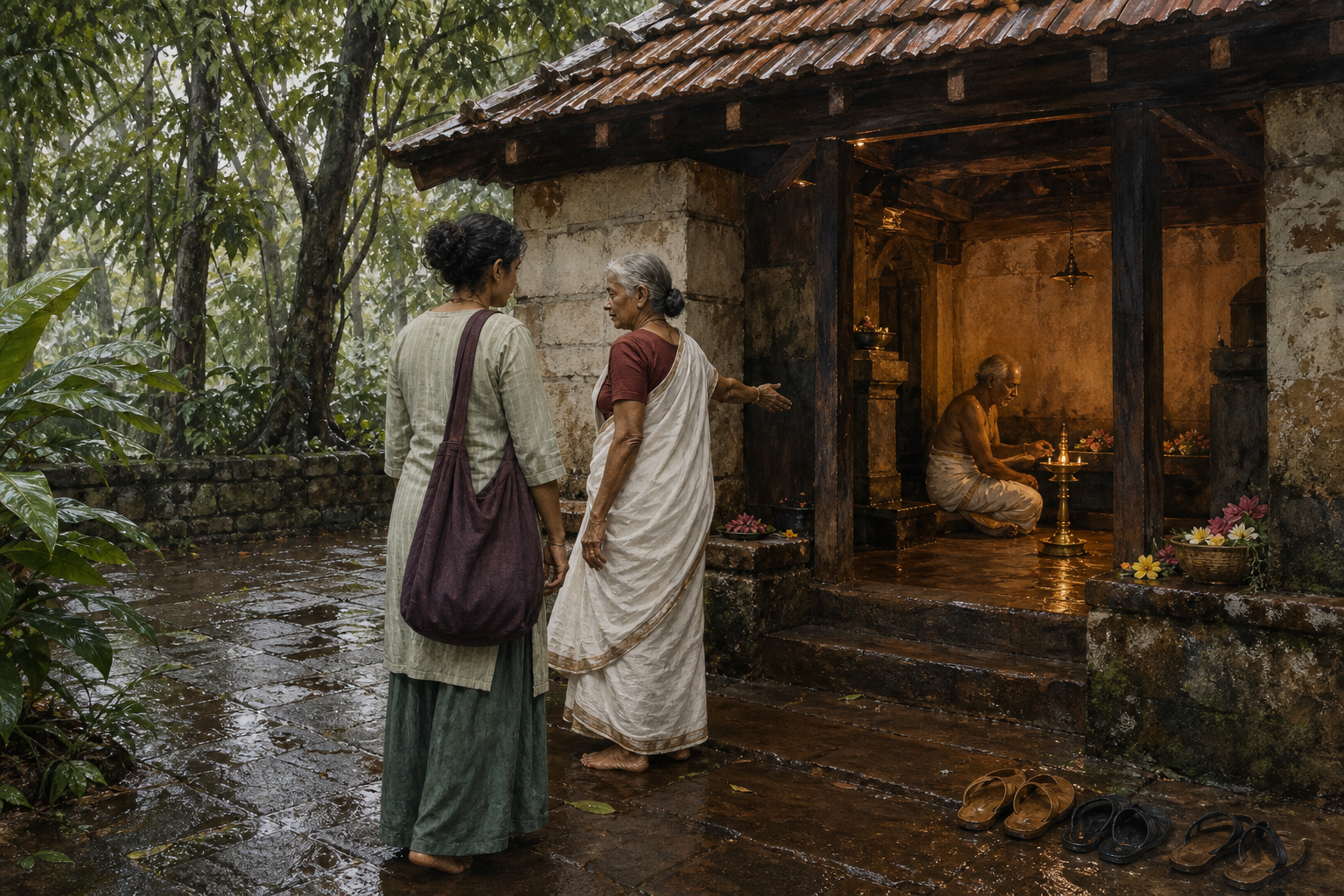
This distinction is especially important because devotion concerns real illnesses. Prayer can steady a frightened household, preserve cultural continuity, and remind neighbors that protection is a collective responsibility. It cannot determine what illness a person has or replace clinical and public-health measures. If someone is ill or may be contagious, seek appropriate medical guidance promptly and use ritual as spiritual accompaniment.
Vasoorimala’s continuing ethical force lies here: asking for the Mother’s protection also places obligations on the devotee. Calm care, practical help, responsible health behavior, and attention to vulnerable people are not secular additions to worship. They are ways of refusing indifference when a community is under strain.
Recognize Dharmic kinship without declaring everything identical
Regional Shakti traditions reveal a wider Dharmic grammar of care, but kinship is not sameness. Tara’s presence in Hindu Shakta Tantra can resonate with the reverence of Tara in Vajrayana Buddhism without requiring you to collapse their lineages, doctrines, or ritual methods into a single system. The honest word is resonance, not identity.
Nourishment offers another clear meeting point. Sikh langar, Buddhist dana, and Jain anna-ksetra each place generosity and the preservation of life within a disciplined religious context. They can be appreciated beside Annapurna’s annadana without being described as interchangeable practices or absorbed into Shakta theology.
When you speak about unity among Hinduism, Buddhism, Jainism, and Sikhism, keep three distinctions in view:
- A shared ethical direction is not a shared doctrine. Traditions may all value compassion, service, or non-harm while explaining their purpose differently.
- A familiar symbol is not proof of identical meaning. The meaning of Tara, food-giving, protection, or offering must be learned within the lineage and community that practices it.
- Solidarity should produce service, not homogenization. Cooperation in feeding, caring, and protecting is stronger when each community can retain its own vocabulary and discipline.
This approach protects two things at once: the civilizational relationships among Dharmic paths and the integrity of their differences. You do not have to choose between unity and precision.
Enter a regional Shakti tradition without flattening it
A visitor can easily arrive with a pan-Indian image of Devi and notice only what confirms it. A more respectful approach begins locally and expands outward. Use this sequence when visiting a shrine, attending a performance, or beginning serious study.
- Learn the local name and the local need. Ask what the deity protects, nourishes, confronts, or restores in that place. Tara at Tarapith, Annapurna in Kashi, and Vasoorimala in Kerala or Kodagu should not be reduced to three decorative versions of an abstract Mother.
- Distinguish darshan from initiation. A temple may welcome public worship while reserving particular mantras, rites, or interpretations for people who have received guidance. Access to a sacred site does not imply authorization to reproduce every practice associated with it.
- Observe before explaining. Notice the sequence of worship, the role of local custodians, the offerings, the boundaries around sacred space, and the conduct expected of visitors. Ask permission where custom is unclear, especially around ritual performance and photography.
- Keep symbols in context. The cremation ground at Tarapith, Annapurna’s ladle, and the neem or turmeric associated with Vasoorimala do not belong to one universal code that can be decoded instantly. Let practitioners explain how a symbol functions before converting it into psychology, wellness advice, or social-media content.
- Support the care the tradition already performs. If a shrine organizes feeding or another form of seva, ask what is actually needed and contribute through an established channel. Useful support respects local competence instead of imposing the visitor’s preferred project.
- Bring home a duty, not only a souvenir. Decide what the encounter asks you to change: face a fear honestly, waste less food, feed someone with dignity, help a household managing illness, or sustain a community institution.
This method also protects you from two common mistakes. The first is romanticizing a local practice because it appears dramatic or ancient. The second is dismissing it because its symbols do not fit a modern, standardized idea of religion. Careful participation begins neither in fascination nor embarrassment, but in attention.
Turn reverence into a repeatable practice of care
You do not need to combine all three traditions into a new personal ritual. That would erase the very regional integrity worth preserving. Instead, allow their ethical questions to examine the life you already lead.
When fear is making your decisions
Remember Tara’s union of fierceness and compassion. Name the impermanence you are trying not to see. Sit with it through a form of meditation or mantra you are qualified to practice, and then take the responsible action fear has delayed. The point is not to imitate cremation-ground sadhana. It is to stop demanding that spiritual life protect you from every encounter with loss.
When food passes through your hands
Remember Annapurna before food is purchased, prepared, served, or discarded. Ask whether you are treating nourishment as a private entitlement or a shared trust. Reduce waste where you control it. When you undertake annadana, give what can be served safely and respectfully through people who understand the community’s actual needs.
When illness enters a household or community
Remember Vasoorimala’s protective ethos. Prayer may be part of the response, but so should practical care: help the household reach appropriate medical support, reduce avoidable exposure, and make sure fear does not isolate the person who is ill. Do not circulate folk remedies as guaranteed treatments merely because their ingredients also carry ritual meaning.
When devotion risks becoming private consumption
Ask what your worship preserves beyond your own emotional state. Does it sustain a temple, feed a person, accompany the frightened, transmit a local tradition respectfully, or strengthen responsible conduct? A powerful experience of Devi may begin inwardly, but sacred care becomes visible in how you handle another being’s vulnerability.
Choose the regional form you already revere or genuinely wish to understand. Learn one local account, observe one authorized practice, and attach one act of care to what you learn. Let Tara make you harder to frighten away from suffering, Annapurna make you less willing to tolerate hunger or waste, or Vasoorimala make protection a shared responsibility. That is how regional Shakti remains living: the form is honored, the place is remembered, and the devotee becomes more dependable.

References
- DharmaRenaissance Blog — Bamakhepa of Tarapith: Essential Insights into Tantra, Devotion, and the Shakti Experience
- DharmaRenaissance Blog — Annapurna Mahatmyam: Essential Guide to the Goddess of NourishmentDiscover Her Sacred Legacy
- DharmaRenaissance Blog — Discover Vasoorimala: Complete Guide to the Goddess guarding against Smallpox, Chickenpox, Measles
