
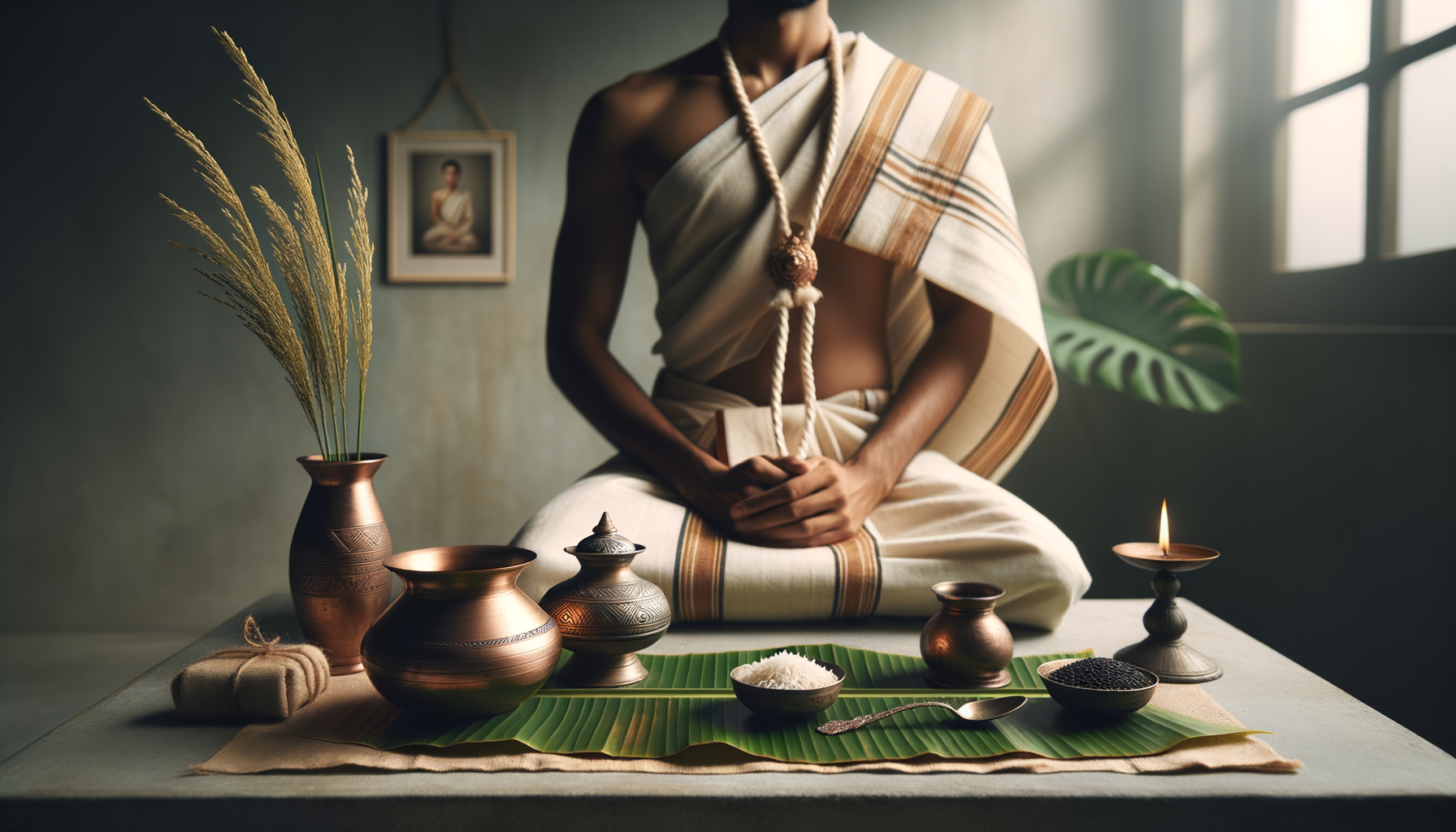
The yajnopavita, or sacred thread, holds a defining place in Hindu dharma as a symbol of learning, duty, and disciplined living. Conferred during the upanayana samskara, it inducts dvija communitiesBrahmanas, Kshatriyas, and Vaishyasinto a life of study, worship, and ethical responsibility. Understanding how this thread is worn in different ritual contexts clarifies meanings that are both doctrinally precise and emotionally resonant.
In daily worship, study, and auspicious rites, the thread is typically worn in the upavita mannerdraped over the left shoulder and under the right arm. This orientation accompanies acts such as sandhya, yajna, and temple worship, aligning the practitioner with purity, learning, and the forward-moving disciplines of dharma.
By contrast, Pracinavita refers to the reversed position of the sacred threadover the right shoulder and under the left armadopted during Shraddha (Śrāddha), antyeṣṭi (funeral rites), pitru tarpana, and pindadana. Gṛhya-sutras and Dharmashastra traditions note that this inversion signals a shift in ritual intention, orienting the worship toward the Pitrs (ancestors) and, by convention, to the southern direction associated with ancestral realms in Vedic thought.
The symbolic depth of Pracinavita is twofold. First, it marks a deliberate transition from auspicious, world-affirming action to solemn remembrance and gratitude. Second, it becomes a tactile mnemoniceach adjustment of the yajnopavita reminds the practitioner of rṇa-traya (the three debts), especially the debt to ancestors repaid through Shraddha, ethical conduct, and the preservation of lineage wisdom.
Traditional practice also recognizes other orientations, such as nivita (worn around the neck) in specific contexts across lineages. While details vary by parampara, the governing principle remains consistent: the thread’s position communicates ritual intent. Careful transitionsupavita for auspicious rites, pracinavita for pitru-focused observanceshelp maintain clarity and fidelity to Dharmashastra guidance.
For many practitioners, Shraddha awakens a quiet humility. The subtle shift of thread over the right shoulder can feel like a gentle bow to forebears, a moment of stillness within the rhythm of life. Families often recount how elders guided these gestures with affection and precision, making the rite both a doctrinal transmission and a heartfelt act of remembrance that nurtures intergenerational continuity.
Although the yajnopavita is a distinct Vedic samskara, the values it enshrinesgratitude to ancestors, ethical living, and serviceresonate across the broader dharmic family of Hinduism, Buddhism, Jainism, and Sikhism. Each tradition, in its own way, honors lineage, memory, and community. Recognizing this shared ethos fosters unity, mutual respect, and a deeper appreciation of South Asia’s interconnected spiritual heritage.
In practical terms, Pracinavita is adopted from the commencement of pitru-focused segmentssuch as tarpana and pindadanauntil their completion, after which one may return to upavita for auspicious portions. Cleanliness, attentive recitation of mantras as taught in one’s lineage, and guidance from knowledgeable elders or priests help ensure both accuracy and sincerity. While form carries meaning, it is intentionshraddha, or heartfelt reverencethat completes the rite.
Seen through the lens of Vedic traditions and samskaras, Pracinavita is more than a procedural detail; it is a refined ritual language. Learning this language deepens understanding of Shraddha, strengthens ancestral bonds, preserves cultural continuity, and supports harmony across dharmic communities committed to truth, compassion, and service.
Inspired by this post on Hindu Blog.
