
If the name Parabhava has made you wonder whether 2026-2027 is destined to be a bad year, do not give a calendar name more power than Dharma requires. Parabhava can carry the sense of defeat, decline, or being overcome. Its practical lesson is to notice how avoidable defeat develops: haste, weak accounting, neglected duties, uncontrolled speech, and spiritual routines that collapse under pressure.
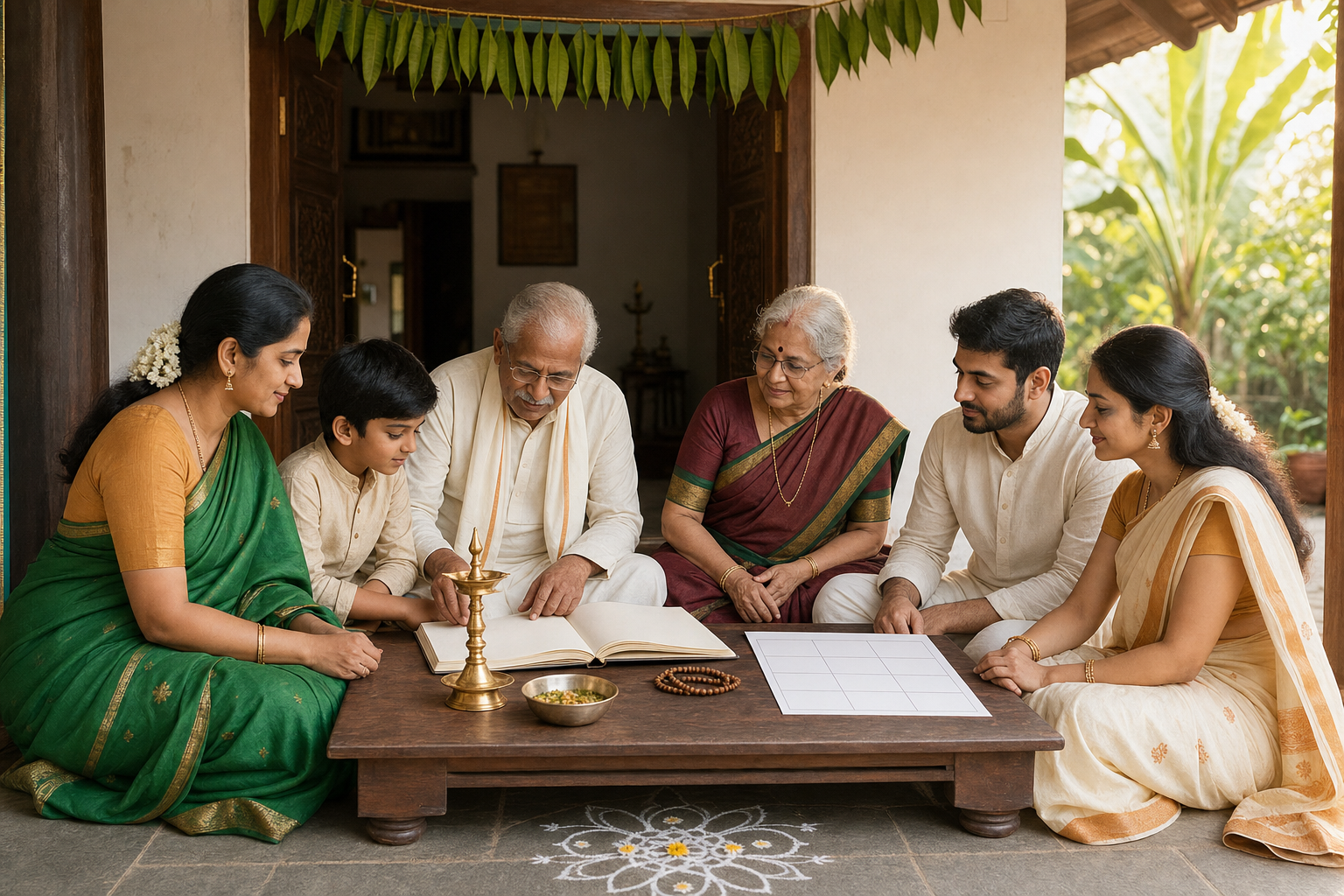
For Telugu and Kannada communities, Ugadi falls on Thursday, 19 March 2026, beginning Parabhava Nama Samvatsaram. It is also identified as Shalivahana Shaka 1948 and the fortieth year of the sixty-year cycle. Regional reckonings and observances can differ, so use your local Panchang for exact ritual timings rather than assuming that one published time applies everywhere.
Read the year-name as a risk lens, not a sentence
A Samvatsara name gives a community a shared theme for reflection. It is not a personal horoscope, and it does not cancel individual karma, judgment, or effort. The annual Panchang offers a broad orientation through tithi, vaara, nakshatra, yoga, karana, and regional Aaya-Vyaya calculations. Personal astrological guidance requires a separate reading of your rashi, nakshatra, circumstances, and the calculations accepted in your tradition.
This distinction matters. A general warning about expenditure is not proof that you will lose money. A collective indication concerning social tension is not permission to suspect your neighbors. The useful question is narrower: where could inattention turn an ordinary difficulty into an expensive or painful one?
Traditional mundane interpretations of Parabhava place recurring risks around strategic overreach, expenditure outrunning income, uneven water or food pressures, misinformation, and neglected health routines. These are best treated as a red-team checklist. If you lead a household, business, temple committee, or community group, look for unclear ownership, unrecorded commitments, fragile cash flow, delayed maintenance, and disputes being conducted through rumor.
The planetary backdrop is also interpreted symbolically. Jupiter moves from Gemini into Cancer during the period, while Saturn traverses Pisces. Traditional readings associate this combination with support for learning, caregiving, and water-related work, tempered by a demand for sober processes and ethical discipline. It does not prove that any specific event will happen. Use it to ask better questions, not to manufacture certainty.
Key takeaways
- Parabhava is a warning against avoidable loss, not a declaration that defeat is inevitable.
- Use a local Panchang for dates and timings; use personal rashi and nakshatra guidance only when you need an individual astrological assessment.
- Choose a small daily practice, one recurring act of seva, and one financial discipline that can survive an unusually busy week.
- Treat Aaya-Vyaya as a prompt to inspect real accounts, not as a substitute for budgeting or professional financial advice.
- Judge every remedy by the conduct it produces: steadier attention, truthful speech, fulfilled duties, restrained consumption, and practical compassion.
Use Ugadi to make a sankalpa you can actually keep
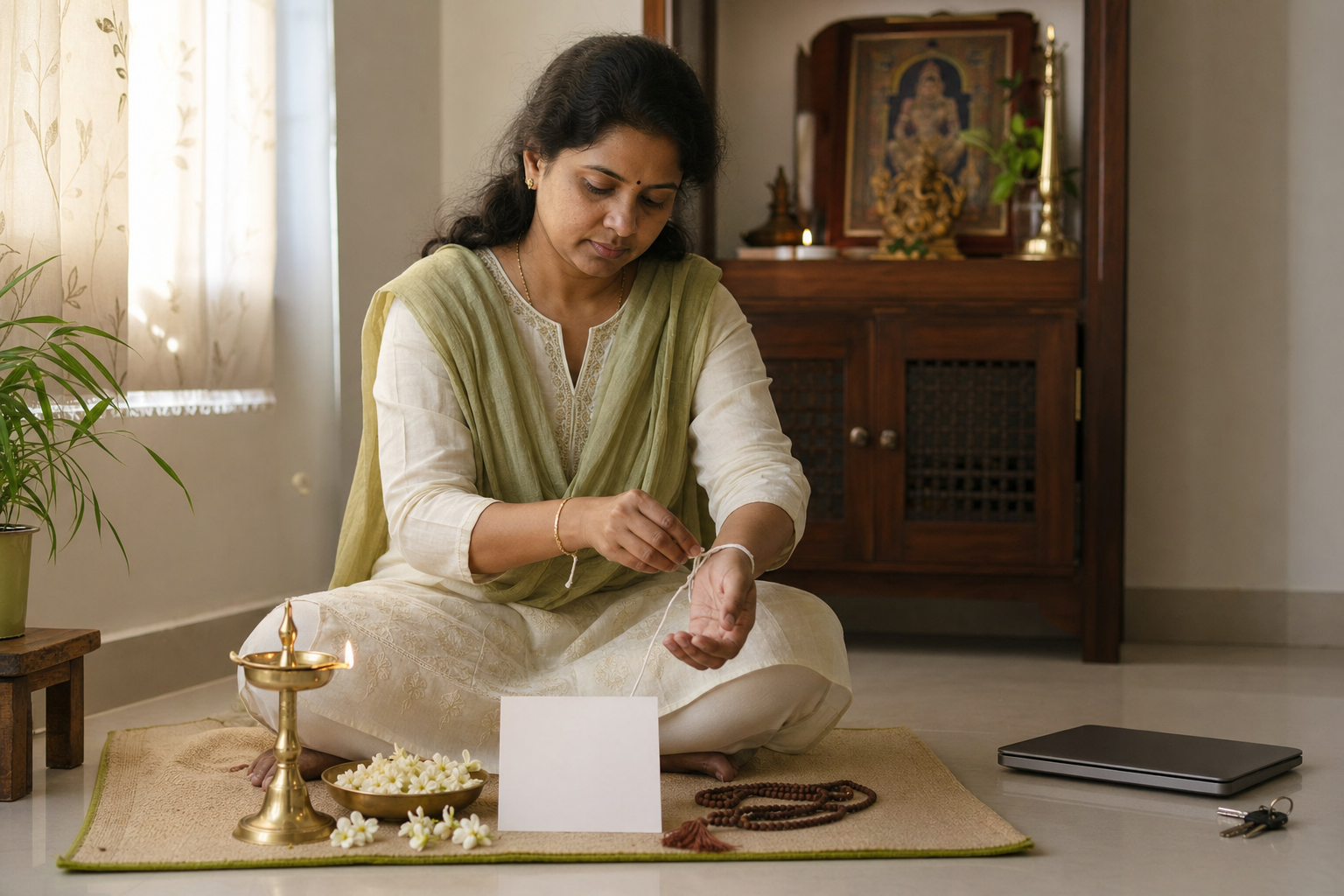
Ugadi works best as a threshold between reflection and action. You do not need an elaborate ceremony to begin well. You need a clear sequence that joins worship, listening, intention, and generosity.
- Begin with abhyanga snana and put on clean clothes. Clean the place of worship before adding decoration.
- Place a torana at the entrance where that is customary, light a lamp, and begin with Ganesha worship or the opening prayer followed in your family.
- Offer brief salutations to the Navagraha or perform your established home puja. Do not add unfamiliar rites merely because the year-name sounds severe.
- Share Ugadi pachadi or bevu-bella according to regional custom. Its mixed tastes give the household a direct lesson in receiving pleasure, disappointment, surprise, and effort without losing balance.
- Attend or hear Panchanga Shravanam. Listen for the collective orientation, then note the local dates relevant to your vratas, family rites, and community duties.
- Make one sankalpa for disciplined practice and one for service. Complete the morning with dana, annadana, or a definite commitment to perform it.
A traditional sankalpa may include the words asmin Parabhava-nama samvatsare. A fuller form is asmin Parabhava-nama samvatsare, sarva-shubha-phala-prapty-artham, dharmartha-kama-moksha-siddhy-artham, imam niyama-sevam karishye. In practical terms, you are undertaking a discipline and service during the named year in support of auspicious living and the four purusharthas.
Then state the behavior in ordinary language. For example: after lighting the morning lamp, you will sit for ten minutes of your chosen japa; once each month, you will support a meal, an educational need, or another service you can sustain. A workable sankalpa names the action, its cadence, and its beneficiary. A vague promise to become more spiritual usually disappears as soon as the calendar becomes crowded.
Do not measure the seriousness of your vow by its size. Five to fifteen minutes of daily meditation, breath awareness, svadhyaya, japa, or simran can create a more reliable center than an ambitious observance attempted only a few times. Parabhava calls for continuity because continuity is what prevents a small lapse from becoming a pattern.
Build a spiritual cadence that survives busy weeks
The classical remedial streams of mantra, puja, dana, vrata, niyama, seva, svadhyaya, and yoga are a complete framework, not eight simultaneous obligations. Select practices that address your actual weakness and fit your sampradaya, health, family duties, and stage of life.
| Cadence | Core practice | How to keep it workable |
|---|---|---|
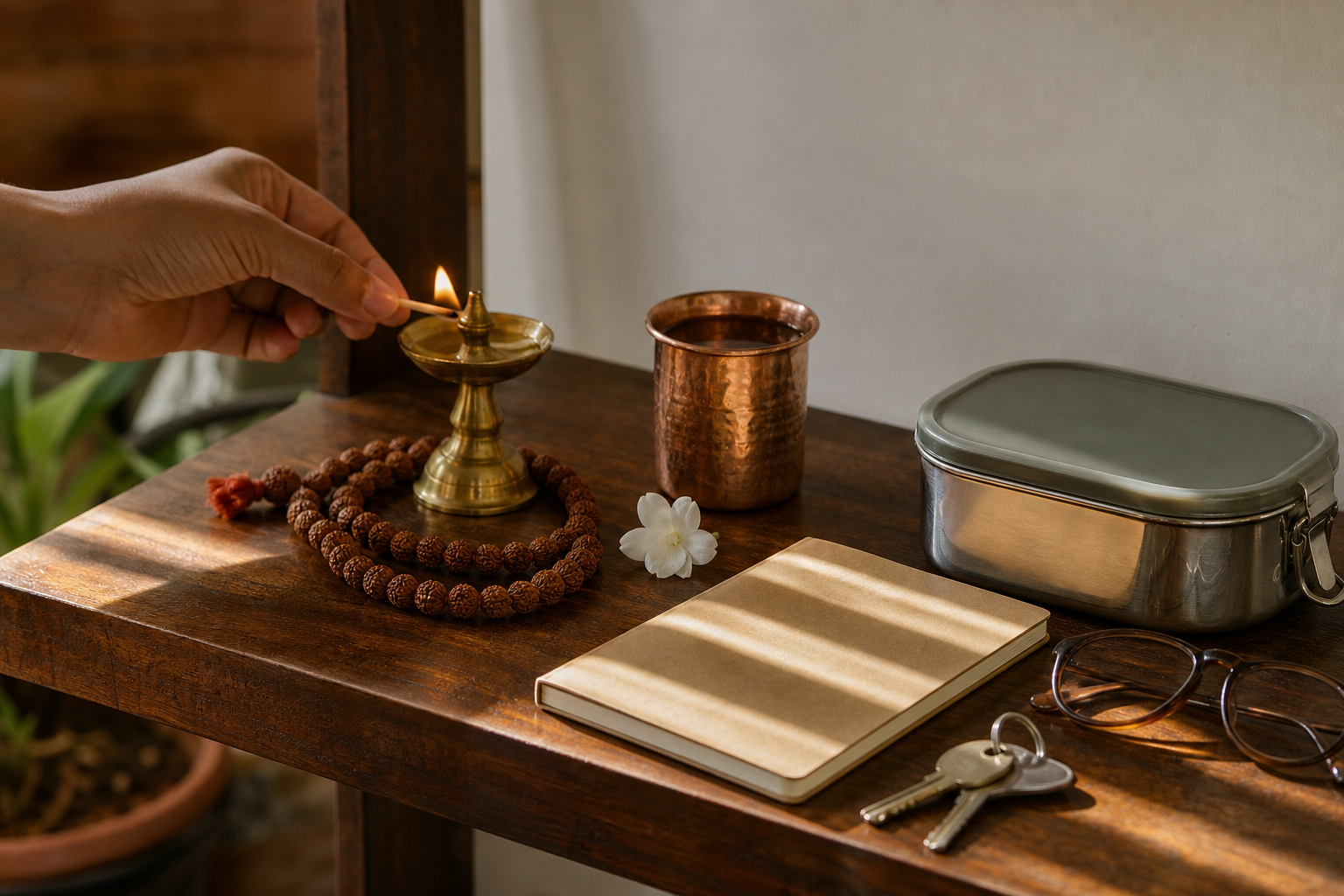
| Daily | Lamp or prayer, five to fifteen minutes of japa, simran, dhyana, or svadhyaya, with comfortable breath or movement practice | Use the same trigger each day, such as immediately after bathing or before the first meal |
| Weekly | One tradition-aligned observance connected with your ishta, kula practice, or chosen discipline | Choose one day and one practice rather than attempting a different remedy every day |
| Lunar rhythm | Ekadashi, Pradosha, Sankashti Chaturthi, Purnima, or Amavasya observance as appropriate | Record the relevant local dates after Panchanga Shravanam and decide in advance what the observance will include |
| Monthly | A finance review plus dana, annadana, mentoring, environmental work, or another completed act of seva | Place both on the calendar; an intention without a date is easy to postpone |
| Festival or seasonal | Longer worship, study, ethical audit, reconciliation, and renewal of the sankalpa | Use established festivals as checkpoints instead of waiting for a crisis to force reflection |
Match the traditional remedy to the weakness you can see
Navagraha practice becomes more intelligible when you connect its symbolism with conduct. The point is not to bargain with a planet. It is to train the quality whose absence is creating trouble.
- If your mornings lack direction, offer arghya to Surya at sunrise, recite Om Suryaya Namah or Aditya Hridayam, and establish a consistent start to the day.
- If evening overstimulation is disturbing reflection, use Monday for Shiva worship or Om Somaya Namah, reduce unnecessary input after sunset, and keep a brief journal instead of carrying every reaction into sleep.
- If anger and impulsiveness are the problem, use Tuesday for Hanuman worship, Hanuman Chalisa, disciplined physical work, or protective service. A donation of red lentils may accompany the practice.
- If study is fragmented or speech has become careless, use Wednesday for uninterrupted learning, Vishnu Sahasranama, mindful communication, or green-gram dana. Protect a full study period from digital interruption.
- If learning has become detached from generosity, use Thursday for svadhyaya, satsanga, mentoring, support for a child’s education, books, or yellow-gram and turmeric dana.
- If the home feels neglected or relationships are being taken for granted, use Friday for Lakshmi-Narayana worship, gratitude, dignified care of the household, and support for women’s welfare or arts education.
- If delay, broken promises, or resentment toward duty is recurring, use Saturday for Shani stotra, a sesame-oil lamp, service to elderly or physically challenged people, and the deliberate completion of an overdue commitment.
- If gossip, compulsive media use, or confused judgment is driving decisions, use Ganesha, Devi, or Skanda practice associated with Rahu and Ketu remedies. Stop forwarding unverified claims and end participation in gossip; that restraint is part of the upaya.
Temple-based Navagraha Shanti, Shiva or Vishnu abhishekam, archana, circumambulation, and quiet sitting after darshan can support this rhythm when they belong to your tradition and means. Expense does not determine efficacy. A modest rite followed by changed conduct is more coherent than an elaborate rite followed by the same negligence.
Vrata must remain compatible with health and duty. If fasting conflicts with your health needs, medication, or clinical advice, choose a non-food discipline such as simplified meals, reduced entertainment, silence, study, or additional seva. Breath and posture practices should remain comfortable and appropriate to your body. Neither ritual nor yoga is a substitute for necessary medical or psychological care.
Turn Aaya-Vyaya into a real household control system
Aaya-Vyaya is often heard as a verdict about income and expenditure. Its safer use is diagnostic. The annual indication belongs to an almanac’s broad orientation; your bank balance, debt, obligations, and earning stability belong to your actual household. Never use a generalized annual number in place of those facts.
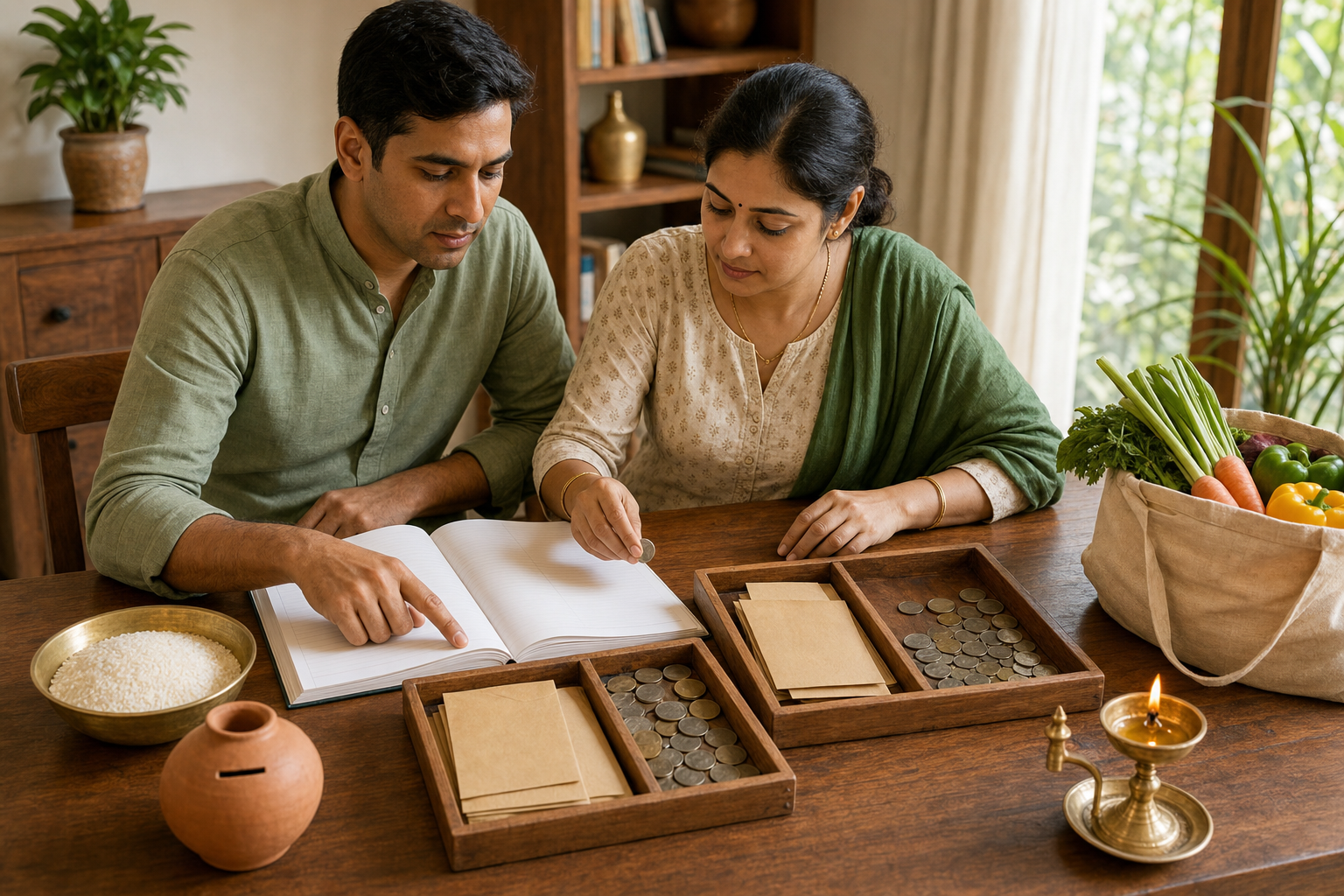
- Choose one finance day every month. Record money received, money spent, unpaid obligations, and expenses already committed for the next period. Reconcile records rather than relying on memory.
- Protect essential education and health needs before expanding discretionary commitments. If a necessary cost is approaching, name it in the budget now instead of treating it as a surprise later.
- Phase large purchases and capital expenditure when cash flow is uncertain. A delay in a reversible purchase is usually easier to repair than debt taken on under an optimistic assumption.
- List every debt, due date, and responsibility in one place. Where professional, tax, or legal consequences are involved, obtain qualified advice rather than improvising from astrological language.
- Create a sustainable dana line. Do not choose an amount for display or guilt. Choose an amount or form of service that can be honored regularly without neglecting dependents and binding obligations.
If you manage a business or institution, apply the same discipline at a larger scale. Document who owns each decision, strengthen working-capital visibility, use conservative assumptions for timelines and budgets, and inspect exposure to energy, logistics, regulatory bottlenecks, and concentrated trade routes. Timely tax compliance, fair wages, transparent bookkeeping, and clear approvals are not merely administrative tasks; they are civic expressions of satya and daya.
Traditional mundane practice treats the weeks around eclipse seasons as times for reflection, information hygiene, and restraint in high-stakes escalation. That symbolism is not a market-timing method. Do not buy or sell assets, assume debt, alter medical treatment, or enter a binding agreement solely because an eclipse or year-name has been labeled favorable or unfavorable. The downside is real, while the astrological indication remains interpretive.
Use Deepavali as a major reconciliation point. Review debt, recurring expenditure, unfinished commitments, and excess inventory or household accumulation. Aparigraha becomes practical when you remove what consumes money, space, or attention without serving a real duty.
Make adversity produce service instead of suspicion
Parabhava’s social danger is not limited to shortage or institutional error. Irritation spreads when careless speech, identity anxiety, and rumor become substitutes for patient verification. You can interrupt that process at household scale. Before forwarding a provocative claim, check its origin, date, and context. If you cannot verify it, do not circulate it. Before responding in anger, move the discussion away from a public thread and back toward the person and duty actually involved.
The Dharmic traditions preserve distinct paths, disciplines, and vocabularies, yet their practical responses to adversity often meet in compassion and restraint. Hindu japa, vrata, and annadana; Buddhist metta and dana; Jain samayik, pratikraman, ahimsa, and aparigraha; and Sikh simran, seva, and langar all turn inward discipline toward the welfare of living beings. These practices need not be flattened into one ritual. Their ethical convergence is enough to support cooperation.
- At home, hold a short weekly check-in about duties, expenses, unresolved friction, and the next act of service. Return difficult conversations to satya, ahimsa, and daya.
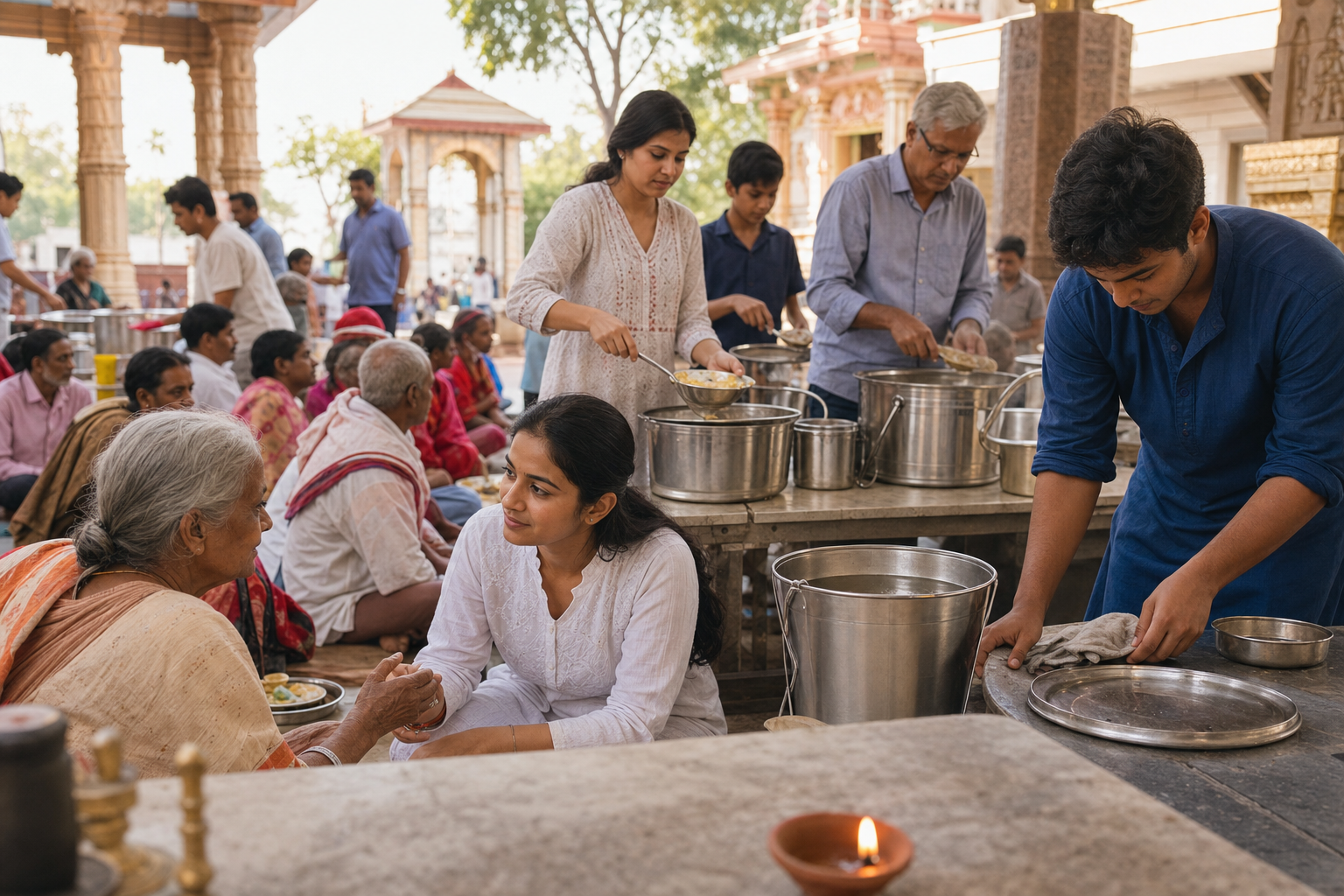
- In the community, support a meal, mentor a student, assist medical relief, contribute useful skills, or serve through a temple, vihara, Jain institution, gurdwara, or trusted local initiative.
- For the environment, connect worship with measurable care: plant suitable native trees, protect water bodies, reduce single-use plastic, or join a cleanliness effort. Purnima or Amavasya can provide the recurring calendar cue.
- In public life, resist the excitement of escalation. Ask what protects food, water, health, education, social trust, and the vulnerable before asking which faction gains from a dispute.
The festival year gives you natural points for correction. Chaitra Navratri can establish nine days of light vrata, japa, and kindness. Vesak can renew metta and dana. Guru Purnima can anchor one serious study commitment or an act of service to a teacher and lineage. The monsoon threshold can turn attention toward water stewardship. Shravan and Karthika can restore austerity and evening prayer. Sharad Navratri and Deepavali can host an ethical and financial audit. Holi or Dol Purnima in 2027 can close the cycle through forgiveness, gratitude, and release of a grievance you no longer intend to carry.
Before Ugadi ends, put four commitments where you will see them: the smallest daily sadhana you will preserve, the day of your monthly financial review, the recurring act of seva you will complete, and the festival checkpoint when you will reassess the sankalpa. When a difficult week arrives, keep the smallest version alive. That is how the prospect of Parabhava becomes training in steadiness rather than a reason for fear.
References
- DharmaRenaissance Blog – Parabhava 2026-2027: Powerful Remedies, Ugadi 2026 Guide, and Dharmic Harmony
- DharmaRenaissance Blog – Parabhava 2026-2027: Hidden Risks, Aaya-Vyaya Warnings, and Dharma-Centered Remedies
- DharmaRenaissance Blog – Parabhava 2026-2027 (Ugadi to Ugadi): Transform Obstacles into Opportunity with Vedic Insights