
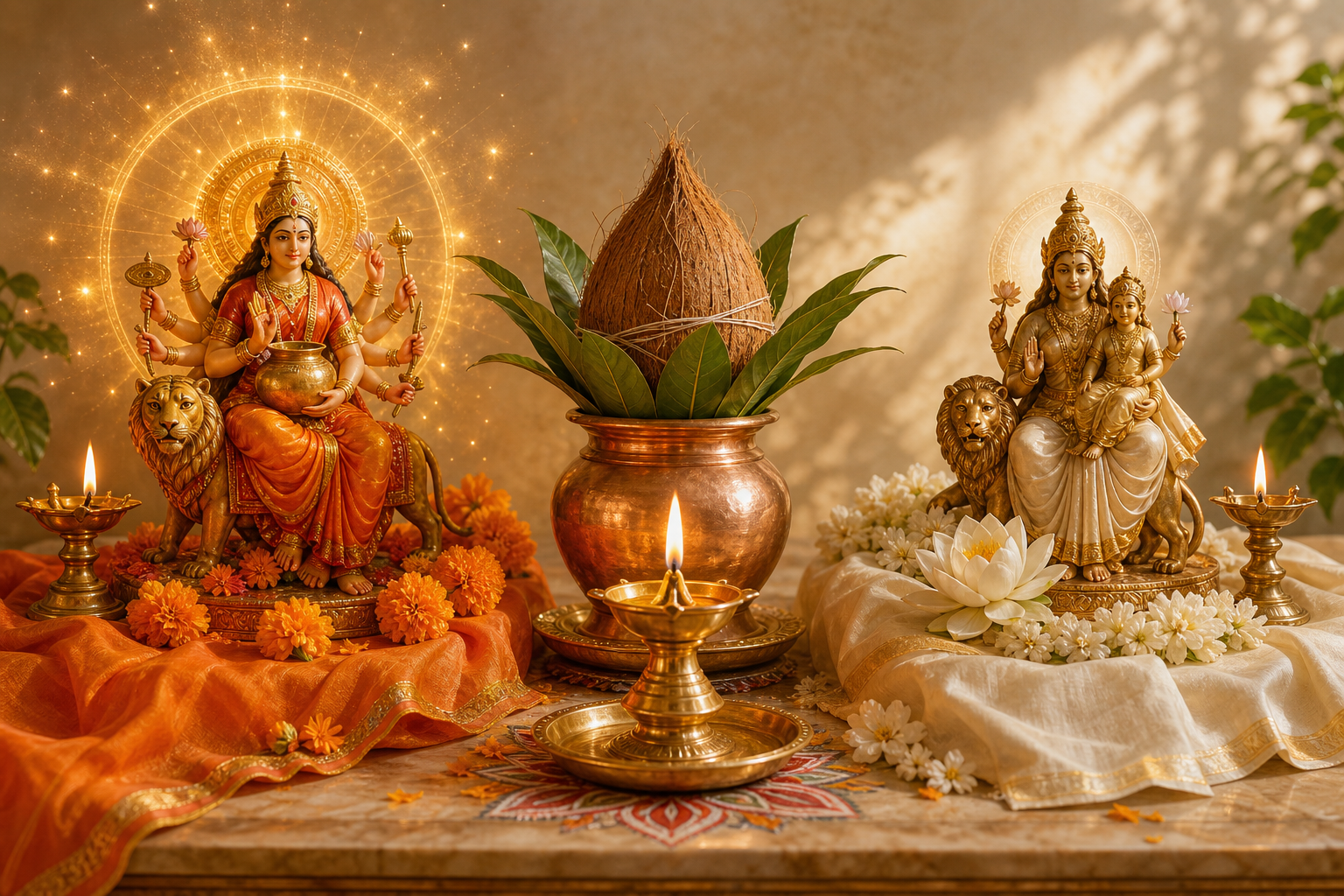
By the fourth morning of Navratri, an otherwise sincere household practice can start to feel mechanical: clean the altar, light the lamp, offer flowers, repeat. The way through that fatigue is not to make the ceremony more elaborate. It is to notice the change in direction. Kushmanda worship gathers radiance, vitality and constructive resolve; Skandamata worship turns that strength toward protective care, steady purpose and disciplined speech.
In 2026, Kushmanda is worshipped on Sunday, 22 March, during Chaitra Shukla Chaturthi. Skandamata follows on Monday, 23 March, during Panchami. These civil dates help you plan, but the tithi and suitable worship periods can vary by location. Check the panchang for your city before fixing the puja time.
Key takeaways for the two-day observance
- Day 4 belongs to Goddess Kushmanda. Centre the worship on light, vitality, orderly action and generosity.
- Day 5 belongs to Goddess Skandamata. Centre it on maternal grace, courageous protection, family welfare and truthful, gentle speech.
- You can retain the same altar and Navratri kalasha. Refresh the water, flowers, bhog and contemplative focus for each form of Devi.
- One mala of 108 repetitions is a practical japa discipline for each day, but a shorter, attentive observance is preferable to hurried ritual performed only to complete a count.
- Fasting must remain sattvic in both intention and effect. Hydrate, adapt the food discipline to health needs, and do not pressure children, older adults, expectant or nursing mothers, or anyone with a medical condition to fast.
Prepare one altar, then change the day’s emphasis
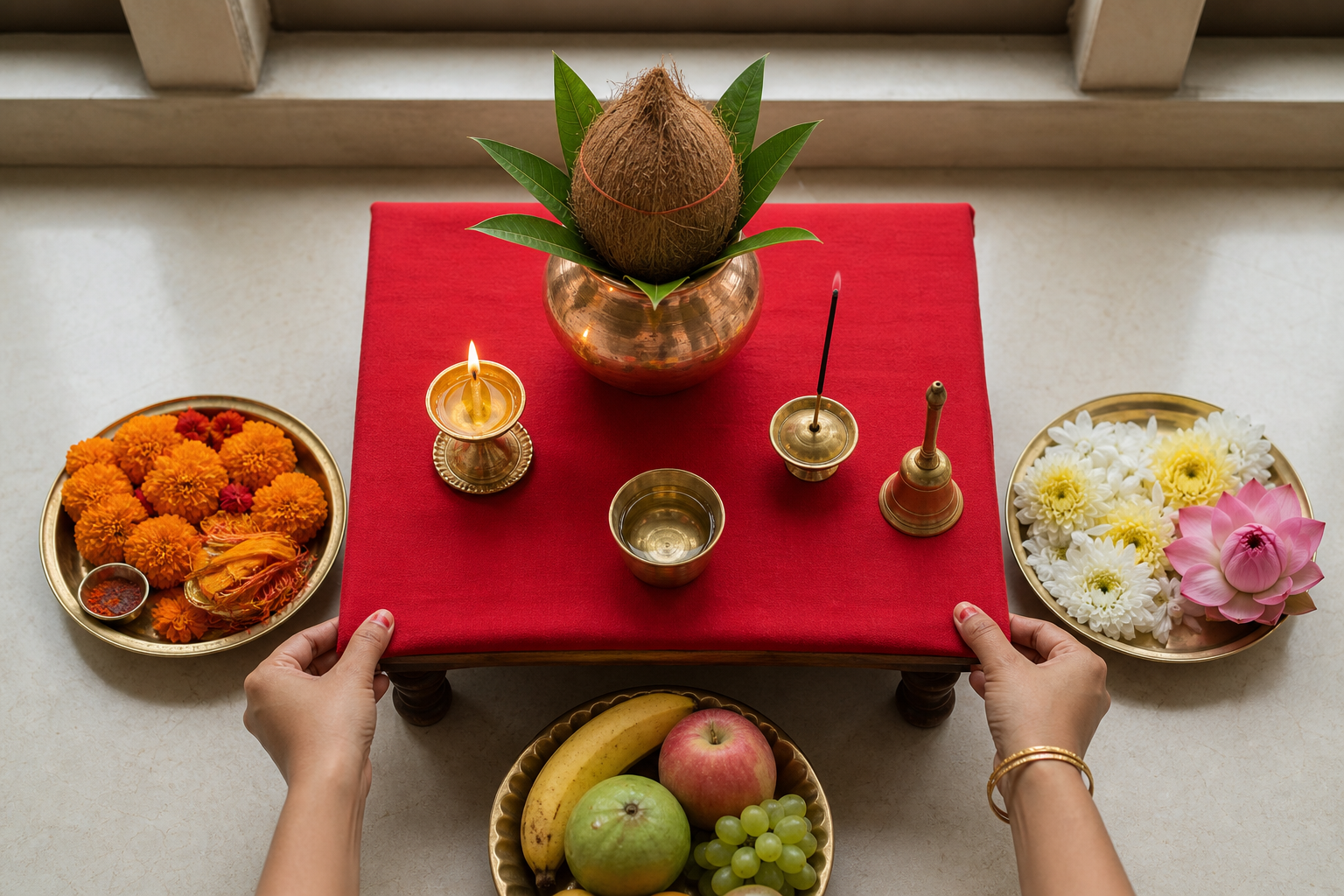
You do not need to rebuild the worship space between Chaturthi and Panchami. If a kalasha was established on Day 1, continue its worship. Otherwise, a clean cloth, a steady lamp and an image of the day’s Devi are sufficient foundations for a home observance.
Before Day 4, place the common puja materials together: water, a diya, incense, sandal paste, kumkum, akshata, fresh flowers, fruit and a clean vessel for naivedya. Put the lamp on a stable, heat-safe surface away from loose fabric and beyond the reach of children and animals. Natural flowers and reusable vessels reduce waste without changing the substance of the offering.
- For Kushmanda: keep an image of the radiant, eight-armed Devi if available. Prepare ash gourd or pumpkin, malpua, a honeyed sweet, fruit or another simple sattvic preparation accepted in your family tradition.
- For Skandamata: use an image showing the lotus-seated Devi with infant Skanda and the lion-vahana if available. Keep bananas ready; simple kheer and honey may accompany them.
- For clothing and flowers: orange or green is used for Kushmanda in some lineages, while yellow or golden-saffron is often associated with Skandamata. These are devotional aids, not universal rules. Follow your sampradaya or family custom when it differs.
Timing deserves the same restraint. For Day 4, a calm period after sunrise and before dusk is suitable, with Rahu Kaal avoided where that is customary. Day 5 may be observed during Brahma Muhurta, in the morning after sunrise, or around the Abhijit period near midday. Do not copy a muhurta published for another city: use your local panchang to confirm the tithi span and local intervals.
Day 4: worship Kushmanda as ordered, life-giving radiance
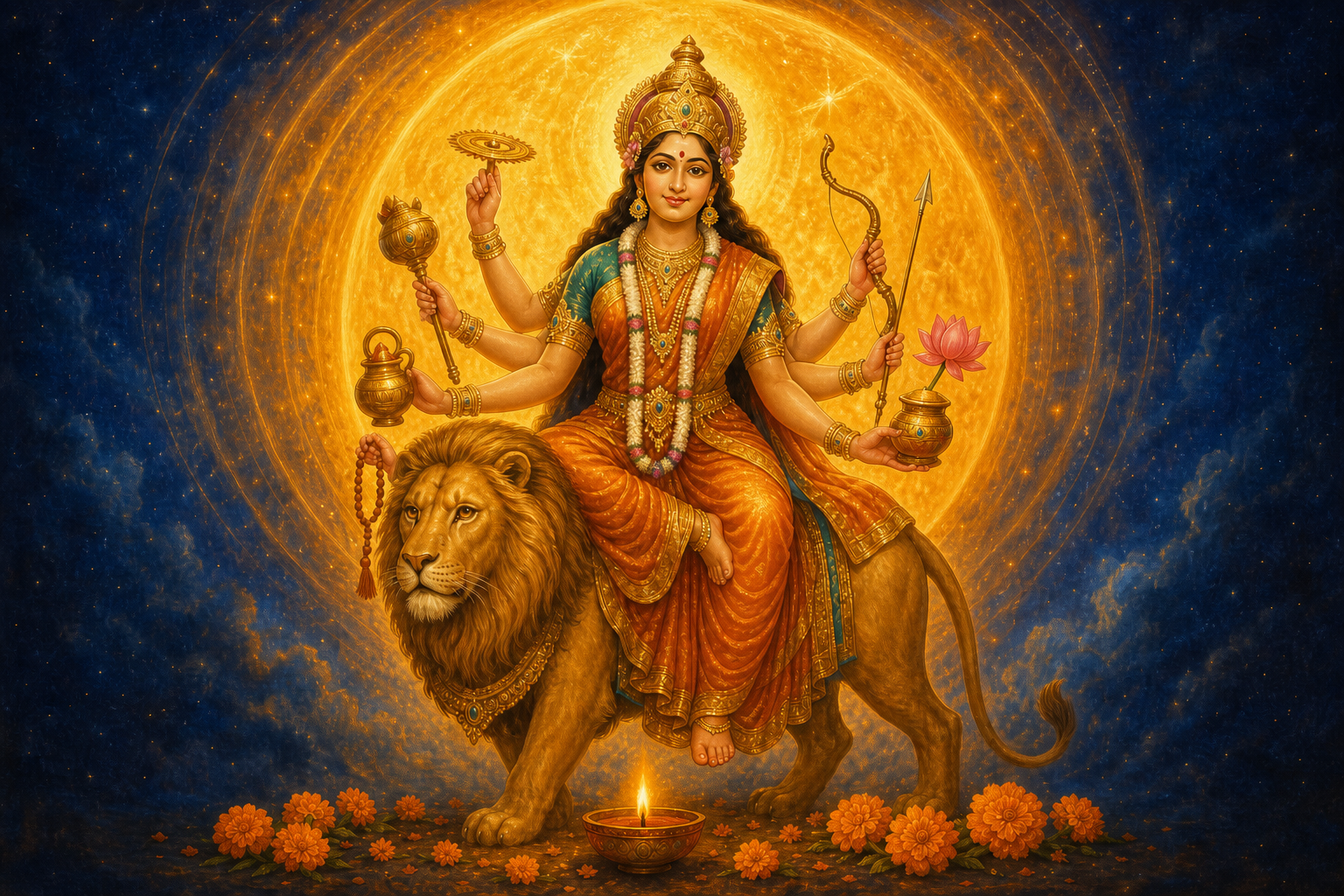
Kushmanda’s symbolism begins before the formal offerings. Her name is commonly understood through the imagery of subtle warmth bringing forth the brahmanda, or cosmic egg. Her solar brilliance, lion mount and eight-armed form turn that image into a practical discipline: energy should illuminate and sustain life, not spill into restlessness, anger or display.
Some lineages connect this day with manipura, the solar-plexus centre, and with the refinement of inner fire. Treat that association as a contemplative framework rather than a requirement. The question for you is concrete: where does your available energy need order, courage and a useful direction?
- Begin cleanly. Bathe, wear clean and simple clothing, settle your breathing, and light the diya and incense.
- Take sankalpa. State your name, gotra if this is customary and known, place, date and intention. Ask for clarity, health, constructive strength and the welfare of all beings.
- Perform dhyana and avahana. Contemplate a warm, sun-like radiance filling the altar and your awareness. Invoke Kushmanda without rushing into the offerings.
- Offer the upacharas. A Panchopachara puja may include gandha, pushpa, dhoop, deepa and naivedya. Perform Shodashopachara only if you know the sequence and have time to give each offering proper attention.
- Complete the core japa. Recite “Om Devi Kushmandayai Namah” (ॐ देवी कूष्माण्डायै नमः) 108 times, using a mala if available. Keep an even pace and return your attention to the mantra whenever it wanders.
- Add recitation according to your practice. A passage from the Devi Mahatmya may follow. The Navarna Mantra, “Om Aim Hrim Klim Chamundayai Vicche,” is also used in many traditions, but lineage guidance should govern practices for which your family or guru prescribes initiation or a particular method.
- Offer bhog. Present ash gourd or pumpkin, malpua, a honeyed sweet, fruit or a regional sattvic preparation. The point is nourishment offered without waste, not an expensive display.
- Honour the solar association. If customary, offer water to Surya. Gayatri japa or selected verses of Aditya Hridayam may be included. Gentle anulom-vilom can help settle attention, provided it suits your health.
- Close carefully. Perform aarti, offer pranam and make a quiet circumambulation if space permits. If you separately invoked the day’s form, perform a respectful visarjana while leaving the Navratri kalasha undisturbed.
If you cannot complete the full vidhi, do not abandon the day. Clean the space, light a safe lamp, offer water and a flower, make a sincere sankalpa, recite the Kushmanda mantra attentively and offer simple food. A compact observance with presence has more integrity than an elaborate sequence conducted in agitation.
Carry the day’s radiance into action. Complete one useful duty you have been postponing, and do it without creating heat for anyone else. For seva, offer food through annadana or support a community kitchen, women and children, or an educational cause. This converts the imagery of sustaining warmth into loka-sangraha, work for collective welfare.
Day 5: let strength mature into Skandamata’s protective care
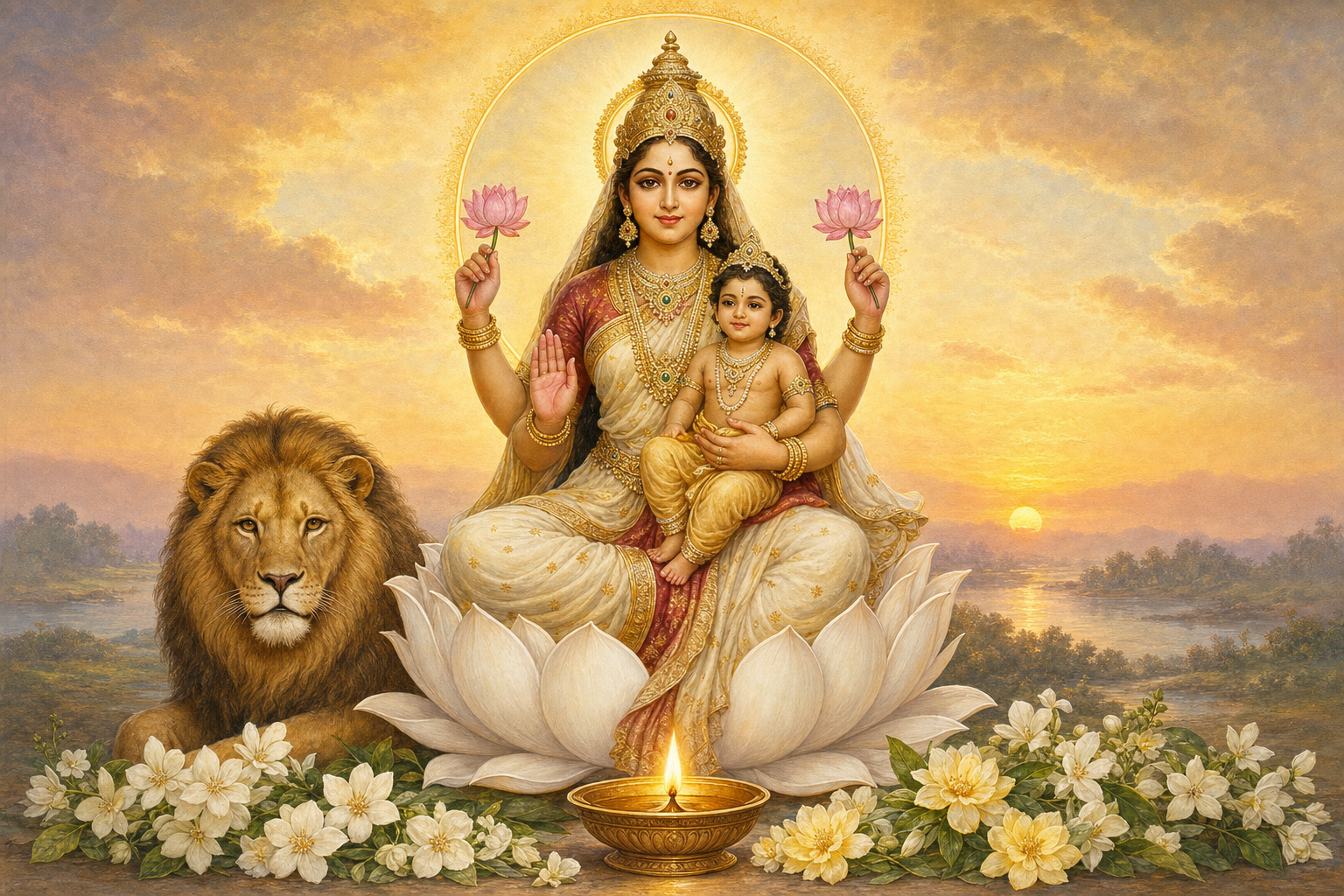
Skandamata is depicted with four arms, seated on a lotus, accompanied by a lion and holding the child Skanda, also known as Kartikeya. The lotus points to purity amid worldly duties. The lion conveys fearlessness. Skanda embodies disciplined valour. Their presence together prevents a common spiritual mistake: tenderness is not passivity, and courage does not need harshness.
The practical shift from Day 4 is therefore important. Do not discard the strength cultivated under Kushmanda. Place it under the guidance of care. Ask what in your family, community or character needs protection, and what kind of speech would protect it without sacrificing truth.
- Refresh the altar. Remove faded flowers and the previous day’s food respectfully. Add the Skandamata image if available, fresh flowers, bananas and the day’s naivedya. A peacock feather may be placed in remembrance of Skanda’s peacock symbolism.
- Frame the sankalpa ethically. Include ahimsa, satya and inner cleanliness. You may add a pledge concerning family harmony or the welfare of mothers and children so that the vow points beyond personal gain.
- Settle before invocation. Perform achamana and gentle pranayama according to your custom. Then undertake dhyana and avahana, contemplating Skandamata’s calm, protective presence.
- Make the offerings deliberately. Offer asana, padya, arghya and achamana where your vidhi includes them, followed by gandha, akshata, flowers, incense, flame and naivedya. Panchopachara remains sufficient when Shodashopachara is not practical.
- Recite the principal mantra. Chant “Om Devi Skandamatayai Namah” (ॐ देवी स्कन्दमातायै नमः) for one mala of 108 repetitions. Let the sound remain clear rather than trying to finish quickly.
- Use the family’s sacred repertoire. A section of the Devi Mahatmya, Lalita Sahasranama, a Subrahmanya hymn, or Devi and Murugan bhajans may follow. Choose one practice you can sustain attentively instead of assembling several recitations into a hurried programme.
- Offer and share the bhog. Bananas are a central offering for the day. Kheer and honey may accompany them. After naivedya, distribute the prasad among family, neighbours or guests rather than leaving excess food unused.
- Make speech part of the vrata. Certain traditions associate Panchami with refinement at the Vishuddha, or throat, centre. Visualize a gentle golden light there if this belongs to your practice. More importantly, keep your words truthful and restrained. When correction is necessary, lower the heat without weakening the truth.
- Conclude with protection and gratitude. Offer a raksha-prarthana for children, elders and the wider community. A raksha-sutra may be tied on the right wrist for men or the left wrist for women where customary. Finish with aarti, pushpanjali, pranam and a prayer for peace in every direction.
Day 5 seva should resemble maternal care in practical form. Donate bananas, milk or grain to a community kitchen or child-nutrition effort, or support maternal wellbeing where a reliable local initiative is available. Fruit or grain may also be set aside for birds and animals. The ethical thread is sarvabhuta-hita: strength used for the welfare of living beings.
If courage and disciplined action are central to your sankalpa, family traditions connected with Subrahmanya or Murugan may add an appropriate hymn, including Skanda Shashti Kavacham where customary. Such remedial worship should strengthen responsibility and character; it should not become a substitute for sound judgement or necessary action.
Fast in a way that preserves clarity and ahimsa
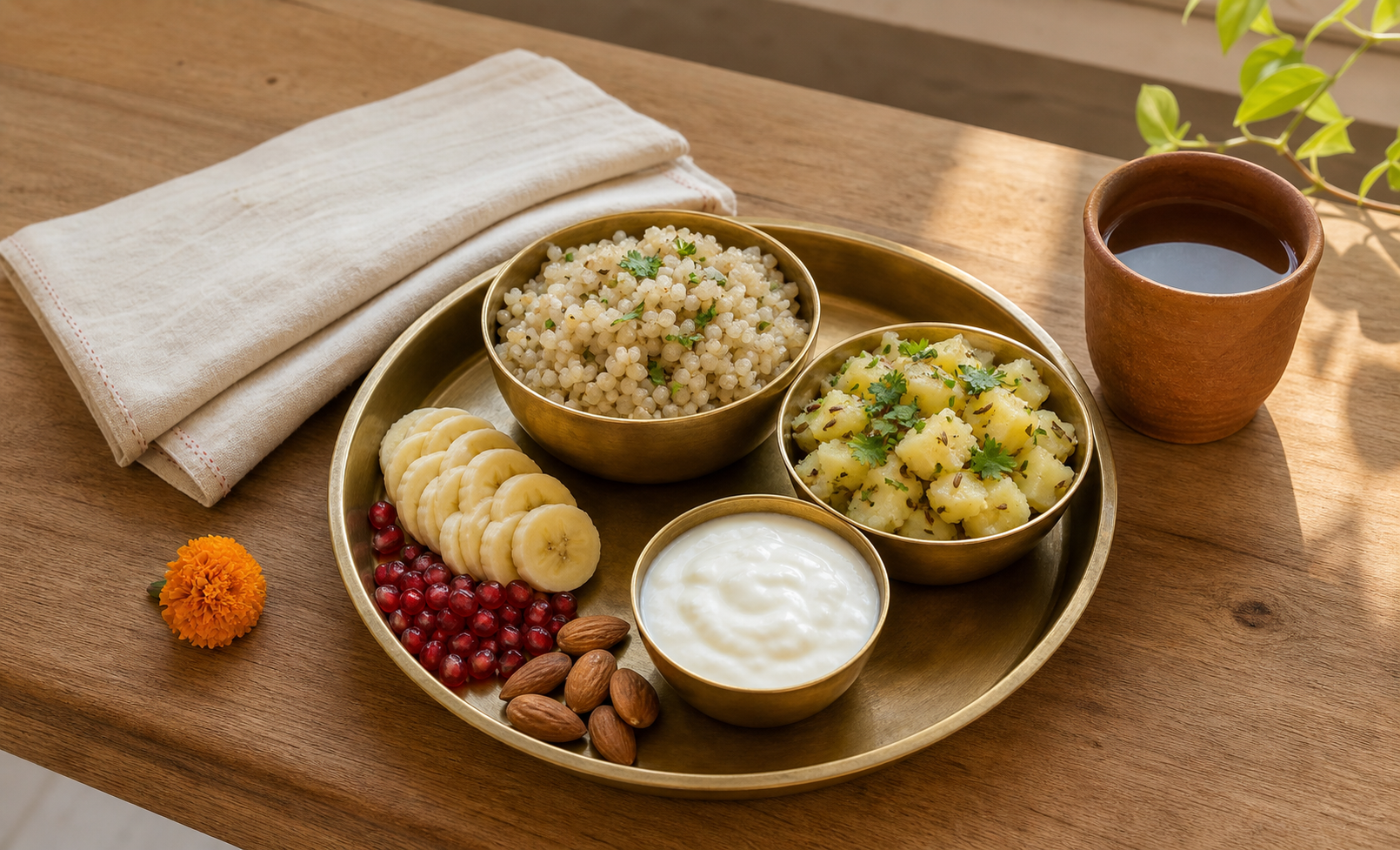
A vrata is not improved by dehydration, weakness or pressure placed on another person. For many devotees, phalahar means fruit, nuts, milk and other light sattvic foods. Regional preparations made with kuttu or singhada flour may also be used. Households commonly avoid onion and garlic, but the detailed food rules vary by lineage and region.
- Drink adequate water unless a qualified health professional has given you different instructions for a medical reason.
- If you have a medical condition, adapt the fast responsibly or refrain from it. Worship, mantra, restraint and seva remain available.
- Children, older adults, and expectant or nursing mothers should not be pressed into a demanding food restriction.
- Keep the evening meal simple. On Day 5, those following the described fasting rhythm may conclude after evening worship with prasad.
- Do not compensate for fasting with irritability, wasteful feasting or arguments about who observed the stricter rule. Those outcomes contradict the discipline the vrata is meant to cultivate.
The continuity between these two days is now yours to make visible. On Day 4, direct your energy toward one constructive duty and one act of nourishment. On Day 5, protect one person or responsibility through calm action and careful speech. Prepare the two mantras and bhog in advance, verify the local tithi, and let a clear sankalpa carry you from radiance into compassionate courage.
References
- DharmaRenaissance Blog — Navratri Day 4 (22 March 2026): Complete Kushmanda Puja Vidhi, Mantras, Fasting and Seva Guide
- DharmaRenaissance Blog — Navratri Day 5 (23 March 2026): Skandamata Puja Vidhi, Mantras, Color, Bhog and Key Rituals