
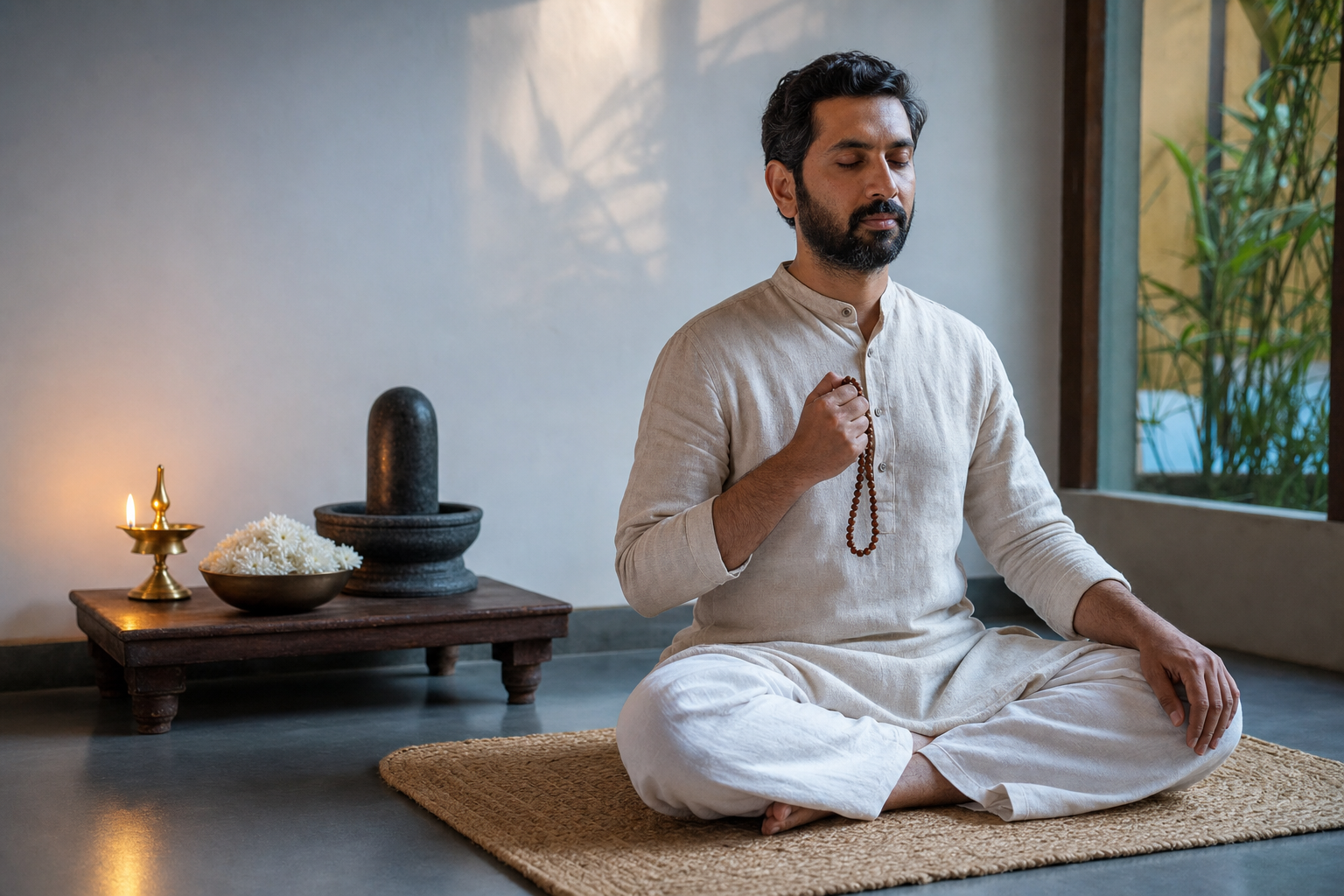
You know the mantra, but the practical questions remain: Should you chant aloud or silently? Do you need a mala? Must you practise at dawn? What should you do when the mind wanders halfway through?
Start with a routine simple enough to repeat. Om Namah Shivaya does not become fruitful because one session feels extraordinary. Its depth emerges as sound, attention, devotion, and conduct begin to support one another.
Let the meaning shape the way you recite

Om Namah Shivaya is commonly understood as a salutation to Shiva. Its parts also give you a practical orientation: Om evokes the primordial vibration, Namah expresses salutation and humility, and Shivaya directs reverence toward Shiva, associated here with auspiciousness, transformation, courage, and compassionate strength.
That meaning changes the practice. You are not firing a verbal command at the universe. Namah places the ego in a posture of reverence. The mantra becomes an offering of attention rather than a demand for a particular experience.
Before beginning, recall one quality you want the practice to clarify in your life. It might be courage for a difficult duty, restraint during conflict, compassion toward someone under your care, or willingness to release a resentment. Do not keep changing the intention during japa. Remember it once, then give your attention to the mantra.
If you approach Shiva devotionally, let the repetition be worship rather than a technique for producing a mood. If you are still learning how devotion speaks to you, begin with sincerity instead of pretending to feel something dramatic. Attention offered honestly is a sound beginning.
Repetitive disciplines appear throughout the Dharmic family, including Buddhist mantra recitation, Sikh simran, and Jain practices of recollection and ethical self-examination. The resonance is real, but the traditions are not interchangeable. Om Namah Shivaya remains distinctly rooted in Shaiva devotion even while it reflects a wider Dharmic confidence in remembrance, disciplined attention, and inner transformation.
Use a daily routine that removes unnecessary decisions

A sustainable session needs a clear beginning and endpoint. Decide beforehand whether you will stop when a timer sounds or after one complete circuit of your mala. Choose an amount that you can repeat on an ordinary day, not only when your schedule and mood are ideal.
- Sit in a stable, comfortable position. Keep the body upright enough to remain alert, but do not turn posture into a test of endurance.
- Let your hands rest and soften unnecessary tension in the face, jaw, shoulders, and abdomen.
- Notice the natural breath for a few cycles. There is no need to manufacture an unusually deep or slow breath.
- Recall the meaning of the mantra and the quality you intend to carry into your conduct.
- Begin repeating Om Namah Shivaya at a steady, unhurried pace. Give each part enough space to remain recognisable.
- When thought pulls you away, return at the next repetition. Do not restart the entire session or scold yourself for wandering.
- When you reach the endpoint, stop repeating and sit quietly for a short pause. Then identify one action through which the practice will enter the rest of your day.
Coordinate chanting with the breath gently. The breath should support the rhythm rather than become an obstacle. You do not have to squeeze a fixed number of repetitions into an inhalation or exhalation. If you become breathless, tighten the throat, or rush the final syllables, slow down and return to natural breathing.
Pranayama and breath awareness can complement mantra practice, but an elaborate breathing pattern is not required for basic japa. If you have received specific instructions from a guru or lineage, those instructions take precedence over this general routine.
Choose audible, quiet, or mental japa according to your mind
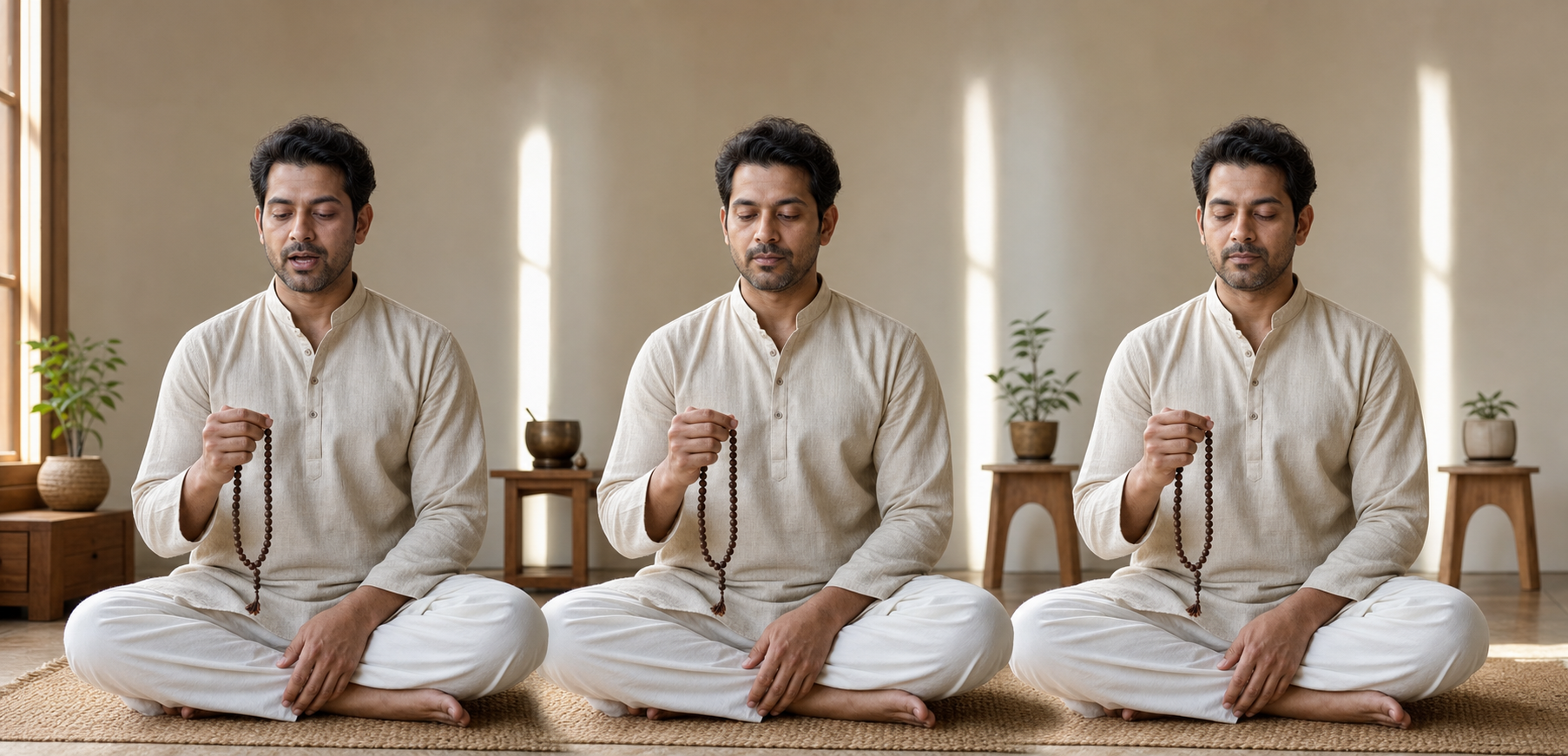
Audible and silent japa are both valid. They are not competing ranks, and silent repetition is not automatically more advanced. Choose the mode that helps you remain attentive in the conditions you actually have.
- Use audible japa when the mind is scattered, sleepy, or repeatedly losing the words. Hearing the mantra gives attention another point of contact.
- Use a quiet voice when you need less external sound but still benefit from feeling and hearing the recitation.
- Use mental japa when privacy is necessary or when attention is settled enough to retain the complete mantra without vocal support.
- If mental repetition dissolves into unrelated thought, return to a quiet or audible voice. That adjustment is skilful, not a failure.
A mala can give the session a physical boundary. Move one bead for each complete recitation and let the hand support attention. Do not race the beads or use the count as proof that your practice is better than someone else’s. If you lose your place, resume calmly; the purpose is remembrance, not a flawless performance record.
Dawn and dusk are traditional times for contemplation, but regularity matters more than an ideal hour you rarely keep. Attach the practice to a dependable event: after washing in the morning, before the household wakes, after returning from work, or before the evening meal. A stable cue reduces the daily negotiation over whether you feel ready.
If you miss a session, do not compensate with a punishing session or abandon the routine as broken. Resume at the next chosen time. Abhyasa is strengthened by returning.
Judge progress by attention and conduct, not unusual sensations
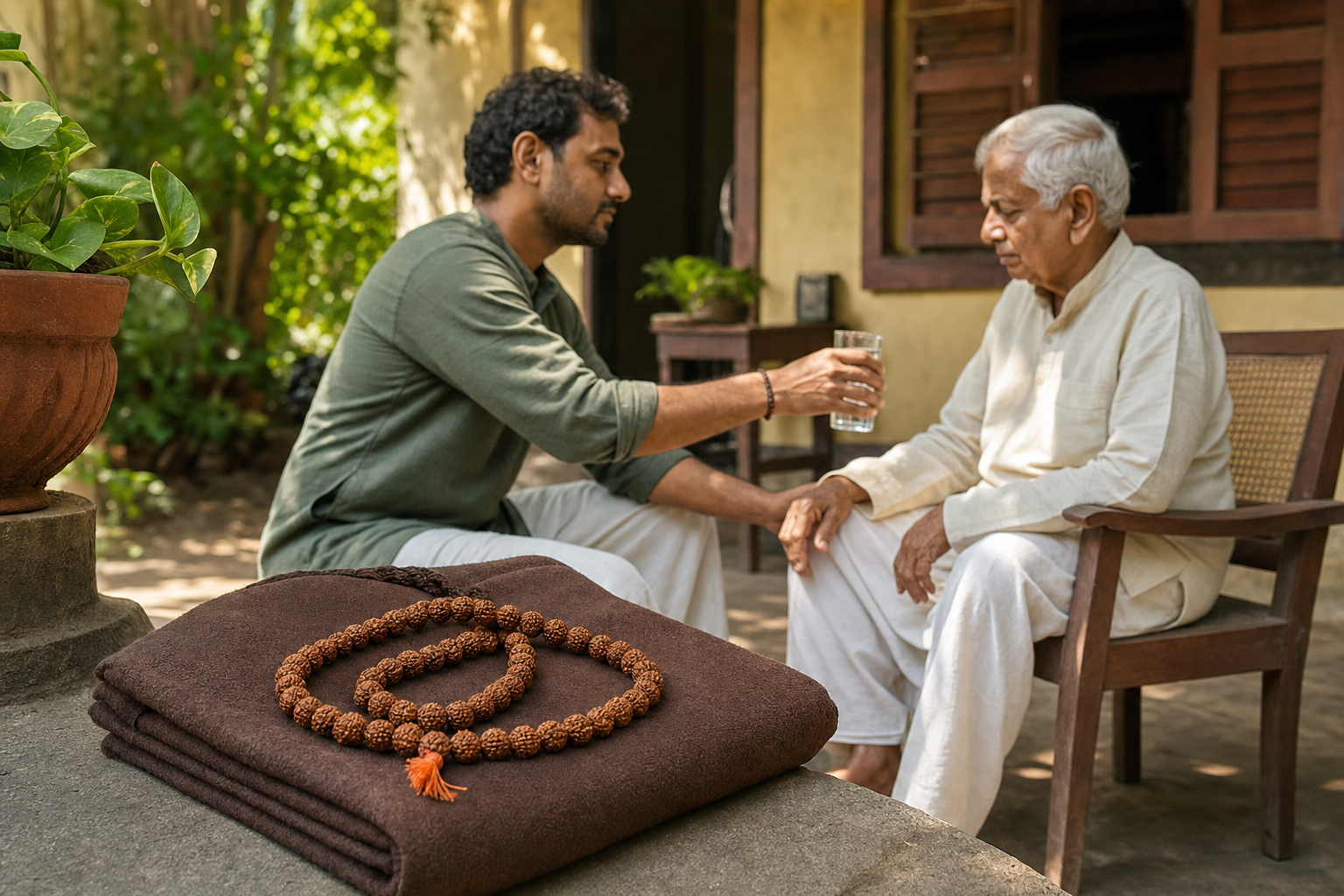
The immediate effect of a session will vary. Sometimes repetition feels peaceful; sometimes it reveals how restless the mind already was. Neither feeling, by itself, measures the worth of the practice.
Instead, examine what happens between sessions. Do you notice agitation before speaking? Can you pause before reacting? Are you becoming more willing to perform an uncomfortable duty? Can you release a grievance without denying that harm occurred? Is calm making you more responsible and compassionate rather than merely withdrawn?
These questions matter because Shiva’s qualities are not meant to remain private ideas. Courage without compassion becomes hardness. Calm without responsibility becomes avoidance. Letting go without discernment can become indifference. The mantra bears ethical fruit when steadiness improves the way you meet people, obligations, and difficult decisions.
Correct the obstacle you actually have
- If you become restless, make the recitation audible and slow enough to hear every part.
- If you become drowsy, sit more upright, open the eyes softly, and use a clearer voice.
- If repetition turns mechanical, pause briefly and recall Namah as humility or Shivaya as reverence. Then continue without adding a long intellectual commentary.
- If you keep checking the timer or remaining beads, choose a shorter endpoint at the next session. Consistency will teach more than impatient endurance.
- If one distraction makes you want to restart, return with the next full mantra. The act of returning is part of the training.
- If you are chasing visions, bliss, or immediate solutions, move attention back to sound, meaning, and conduct. Extraordinary experience is not the basic test of sincere japa.
Mantra meditation may support calm, attention, emotional regulation, and resilience, but these are possible benefits rather than guaranteed outcomes. Use the practice as spiritual support, not as a replacement for medical or psychological care. If distress is persistent, worsening, or interfering with ordinary life, seek help from a qualified professional while continuing any spiritual practice that safely supports you.
Key takeaways for a steady Om Namah Shivaya practice
- Begin with reverence: the mantra is an address to Shiva, not a device for forcing a result.
- Choose a clear endpoint before you sit, using either time or a complete mala circuit.
- Keep the breath natural and the pace slow enough to preserve the whole mantra.
- Use audible, quiet, or mental japa according to what best holds your attention.
- Prefer a modest routine you can maintain over an ambitious routine you repeatedly avoid.
- Measure progress through steadier attention, wiser responses, courage, compassion, responsibility, and the ability to let go.
Choose your daily cue and mode of recitation now. At the next occurrence of that cue, sit down, set a realistic endpoint, and begin. When the session closes, carry one quality of Shiva into one concrete action. That bridge from remembrance to conduct is where daily japa becomes a path.
References
