

If you care about Sridhama Mayapur, a polished progress update can produce two reactions at once: gratitude that important work is moving and uncertainty about what has actually been decided. You do not have to choose between supporting devotional service and asking how that service is governed.
The useful question is not simply whether Mayapur is developing. It is whether each development can be connected to a defined need, a responsible decision-maker, a visible milestone, and a result for pilgrims or residents. ISKCON’s 2026 governance agenda connected infrastructure, community services, pilgrimage facilitation, spiritual programming, and organizational accountability. Those concerns belong on one scorecard.
Mayapur development needs two scorecards
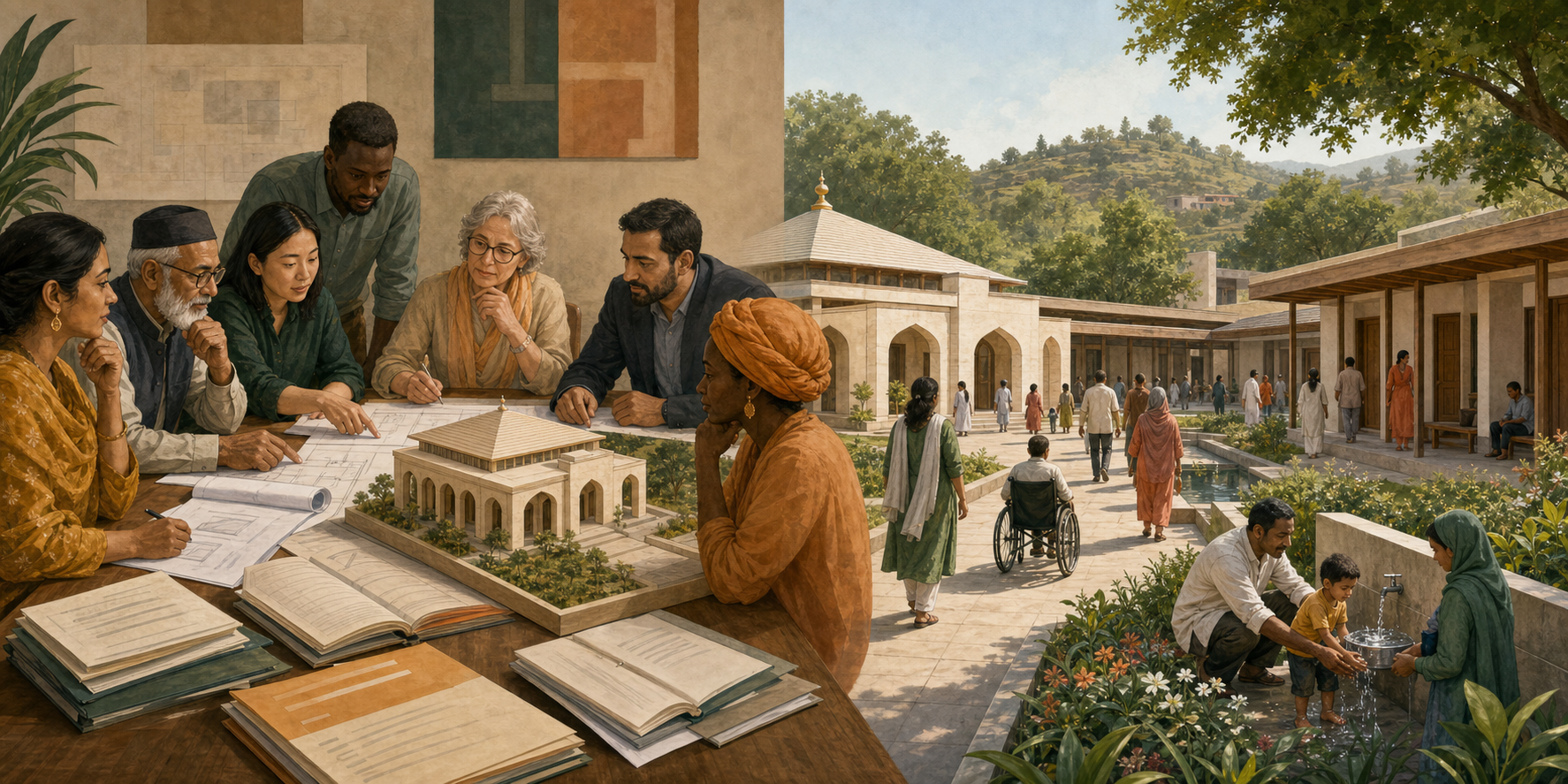
A sacred center is not just a collection of buildings. Its physical systems support worship, teaching, hospitality, residence, service, and the movement of pilgrims. A completed structure can therefore be a necessary achievement without being the final measure of success.
The first scorecard is physical delivery. It asks whether the promised facility, service, or program is being completed to an agreed scope. The second is institutional stewardship. It asks who authorized the work, who is responsible for it, how progress is checked, how changes are approved, and what happens after the opening.
Keep those scorecards separate before bringing them together. Otherwise, visible construction can conceal weak governance, while procedural language can conceal a lack of practical results. A project can be on schedule but poorly matched to community needs. A well-attended consultation can still fail to establish who owns the final decision.
You can also separate activity, output, and outcome:
- Activity: a meeting was held, funds were raised, work began, or a policy was drafted.
- Output: a facility opened, a service became available, or a governance rule entered operation.
- Outcome: pilgrims can use the service reliably, residents experience a concrete improvement, or leaders can detect and correct problems sooner.
These are not interchangeable. An update dominated by activities tells you that people are working. An update that defines outputs and outcomes lets you judge whether the work is serving its intended purpose.
Turn transparency into questions that can be answered
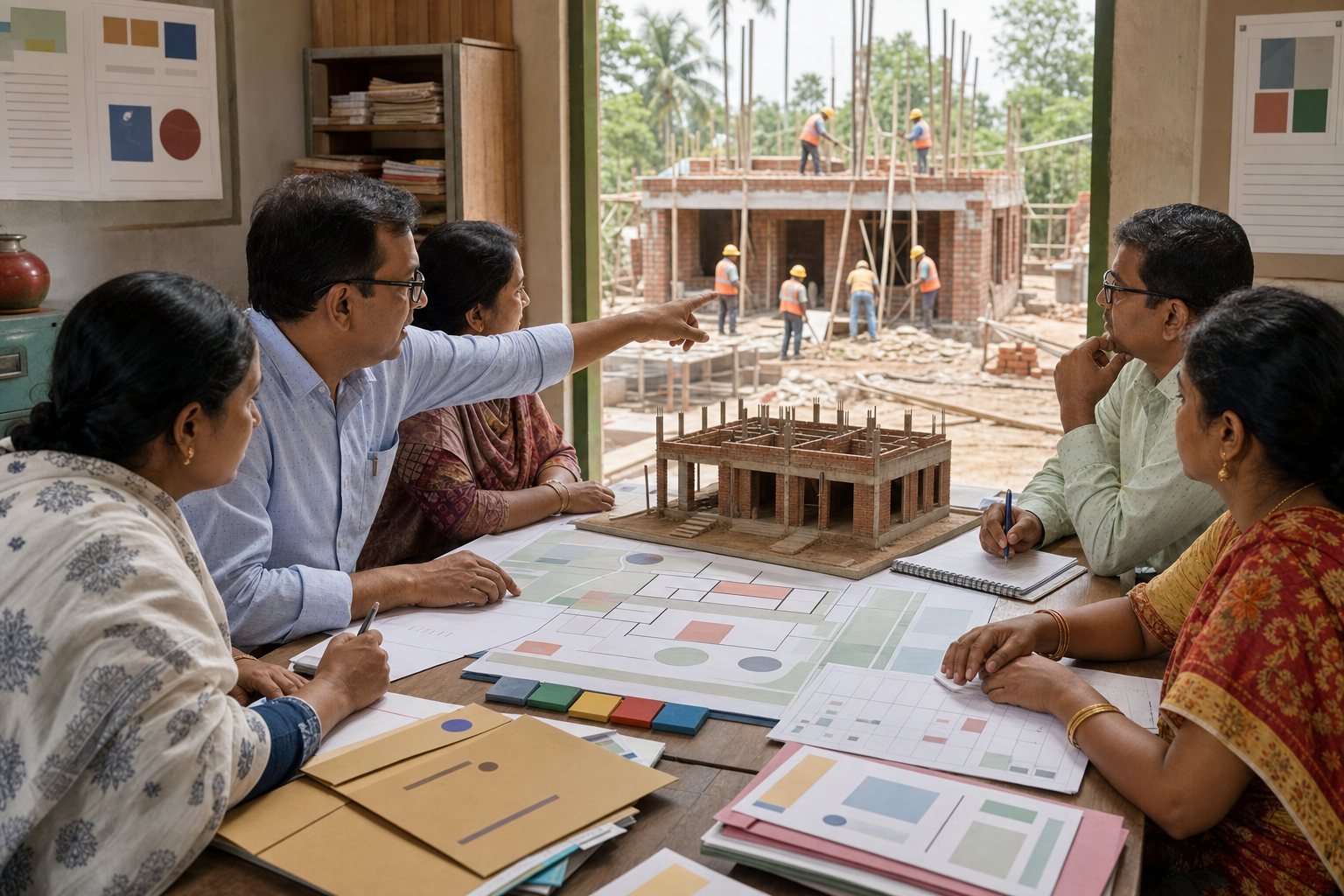
The Mayapur Executive Board’s 2026 presentation placed timelines, benchmarks, responsible stewardship, and continued monitoring near the center of the discussion. Those terms are valuable only when they are specific enough to survive a follow-up question.
A timeline without a dated milestone is an aspiration. A benchmark without a baseline cannot show movement. Responsibility shared so broadly that no person or board must answer for a missed commitment is not meaningful accountability.
For any major project or community service, look for five lines of information:
- Status: Is it proposed, approved, funded, in progress, operational, paused, or under review?
- Scope: What exactly is included, and what is outside the present commitment?
- Next milestone: What observable event should happen next, and by what stated date?
- Responsibility: Which board, office, or named role owns delivery and reports a variance?
- Effect: What will become different for pilgrims, residents, devotees, or local services when the work is complete?
This format also makes changes easier to understand. Development plans can change for legitimate reasons. The accountability test is whether the change is identified, the reason is stated, its effect on scope or timing is explained, and the revised decision has an owner.
Financial transparency needs the same precision. A number means little unless you know whether it is an approved budget, money already received, expenditure to date, a contractual commitment, or an estimate of what remains. A useful financial update should also distinguish the project from the entity administering it and explain how material variances will be reviewed.
If you are considering a donation, confirm the receiving entity, the stated purpose of the contribution, the reporting channel, and how a major change or cancellation would be handled before transferring funds. Do not assume that mentioning a project automatically designates your gift to that project. The practical risk is that your contribution may be administered differently from what you intended.
Collaborative decision-making deserves similar examination. Count more than attendance. Ask which communities were represented, which questions were genuinely open, how competing needs were considered, who made the final decision, and where that decision will be recorded. Consultation is useful, but it is not a substitute for clear authority.
Judge facilities by the sacred life they support

Mayapur’s significance makes ordinary development logic incomplete. More capacity is not automatically better service, and a modern facility is not automatically compatible with the character of a tirtha. The governing question is whether development helps people approach sacred life with greater order, dignity, attention, and access.
The 2026 deliberations explicitly joined heritage preservation with contemporary community and pilgrimage needs. That balance should be tested at the level of individual decisions, not left as a reassuring slogan.
Use four practical lenses when you hear about a proposed or completed development:
- The pilgrim lens: Which part of the pilgrimage experience becomes clearer, safer, more orderly, or more accessible? A claim of improved facilitation should identify the actual point of friction being addressed.
- The community lens: How does the decision affect residents, volunteers, staff, teachers, families, and people who maintain the service after visitors leave?
- The sacred-character lens: Does the location, scale, appearance, noise, traffic, or operating pattern preserve the devotional purpose of the place?
- The maintenance lens: Who operates the facility after completion, what recurring work does it require, and where will performance or service failures be reported?
The maintenance lens is often where a development update becomes real. An inauguration proves that construction ended. It does not prove that the service will remain clean, functional, adequately staffed, or responsive to changing pilgrim demand. Operations should therefore appear in the original project definition, not as an afterthought.
Spiritual programming belongs in this evaluation as well. A facility should not be treated as neutral space whose religious purpose can be added later. Ask which forms of worship, teaching, congregational participation, or devotional hospitality it is meant to support, and how its operating choices protect those purposes.
This approach also clarifies heritage questions. Preservation does not require freezing a living sacred center in time, while contemporary need does not justify treating inherited character as an obstacle. The decision record should state what is being preserved, what need requires change, and why the chosen design reconciles the two.
Affiliate oversight reveals whether governance travels

Mayapur may be ISKCON’s most visible development setting, but institutional trust is not created at one location. Whenever an affiliate uses a shared spiritual identity while operating in a distinct local context, the movement must protect unity of mission without pretending that every community is administratively identical.
The GBC’s affiliate deliberations focused on mission alignment, governance standards, ethical conduct, financial transparency, and community well-being. That is the right range of concerns. The next test is whether each concern has a working mechanism behind it.
For an affiliate, a credible governance framework should let a devotee determine:
- What formal relationship the affiliate has with ISKCON and what that relationship does not authorize.
- Which mission and conduct standards are non-negotiable across regions.
- Who receives financial and operational reports, and how exceptions are investigated.
- Where a community member can raise an ethical, welfare, or governance concern without being sent in circles.
- Which body can require corrective action and what happens if the affiliate does not comply.
- How local language, law, custom, and community conditions can shape implementation without weakening core safeguards.
A policy alone does not create consistent practice. The proposed combination of common guidelines, capacity-building, and peer learning points toward a fuller cycle: define the minimum standard, help local leaders meet it, compare experience across regions, review performance, and correct drift. If any link is missing, the framework can look unified on paper while remaining uneven in operation.
This is where Mayapur development and affiliate oversight meet. Both require a clear boundary between what is centrally governed, what is delegated, and what is adapted locally. Both also require escalation when the normal channel fails. A movement cannot sustain trust by making its central projects transparent while leaving its least visible edges difficult to question.
Key takeaways for devotees, donors, and community members
- Read every progress claim on two scorecards: physical delivery and institutional stewardship.
- Ask for a status, defined scope, next milestone, responsible authority, and intended effect.
- Distinguish meetings and construction activity from completed outputs and lived outcomes.
- Evaluate facilities through pilgrim service, community impact, sacred character, and long-term maintenance.
- Before donating, confirm who receives the funds, what purpose is stated, how progress is reported, and how major changes are handled.
- For affiliates, look beyond mission language to reporting, complaints, review, remediation, and enforceable minimum standards.
The right posture is neither automatic suspicion nor passive applause. Devotional service merits gratitude, and entrusted authority merits verification. Those principles reinforce each other when questions are precise and answers are recorded.
At the next Mayapur or GBC briefing, choose one project and one affiliate relationship. Write down the scope, next observable milestone, responsible authority, reporting date, and intended community result. If the update leaves any of those unclear, ask about that missing item directly. That small discipline turns institutional interest into constructive participation.
References
