
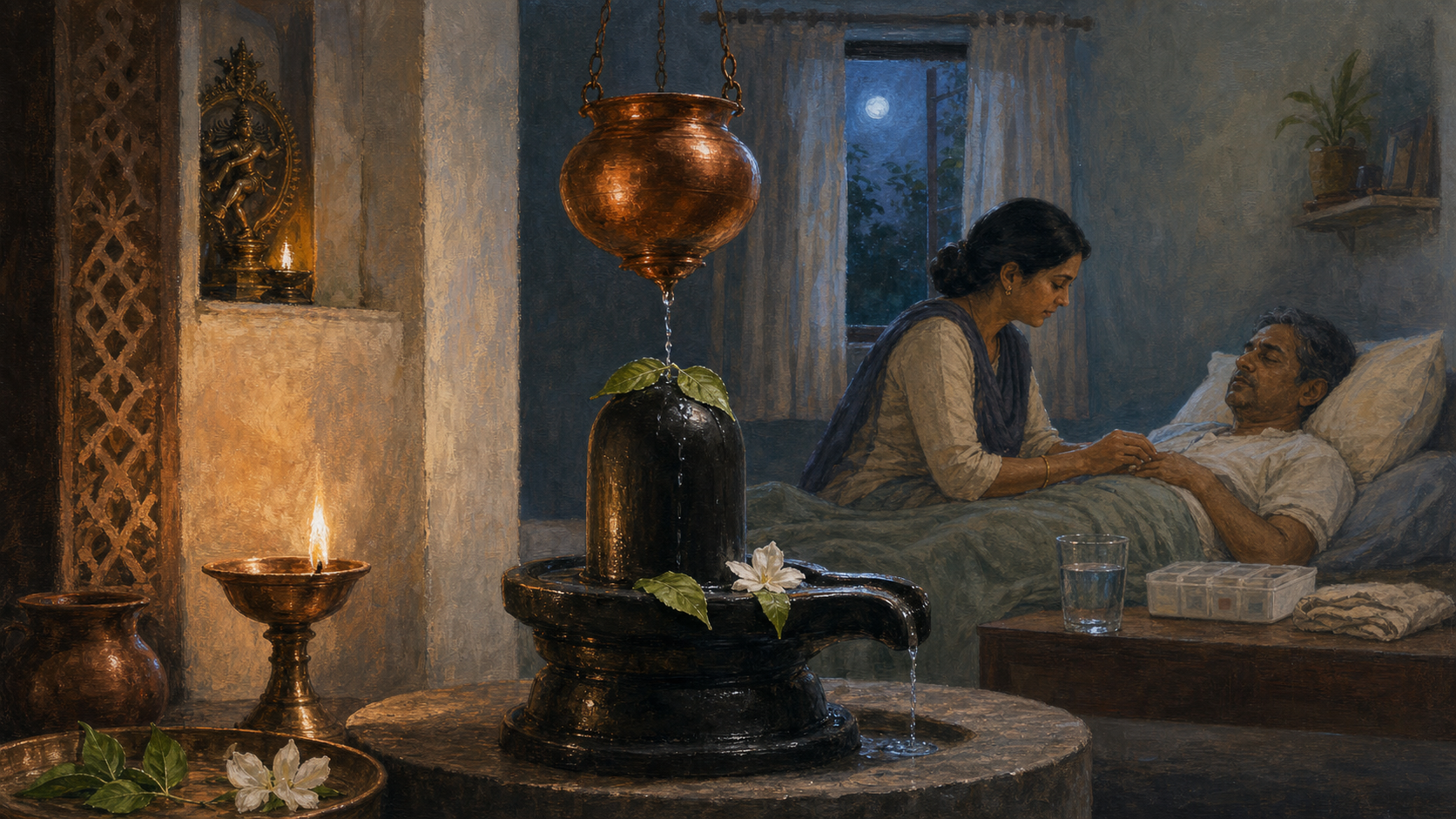
If someone you love is ill, you may be trying to pray without turning prayer into a bargain: cure this person, prove that the mantra works, make fear disappear. Kinnara Shiva offers a more mature discipline. You may ask plainly for recovery while allowing worship to steady the household, sharpen your duty and keep compassion larger than fear.
You can therefore take divine healing seriously without confusing ritual with treatment. Shiva’s fire represents the destruction of affliction and disorder; his cooling grace quiets what remains; your devotion must then become competent, practical care.
First, know which Shiva you are invoking
Kinnara Shiva is best understood as a living devotional name for Shiva in his compassionate, healing function. It is not consistently enumerated as a separate, pan-Indian murti-bheda in the major Shaiva Agamas or standard Puranic lists. That distinction matters. It keeps a beautiful household and regional devotion from being presented as a universally codified iconographic form.
Kinnara and Kinnari commonly name wondrous, liminal beings associated with celestial music in Hindu and Buddhist literature and art. Their presence carries associations of refined feeling, devotion and consolation through sound. When Kinnara is joined to Shiva as an honorific, the name emphasizes a Shiva who hears lamentation and responds with fierce compassion.
This also means that you do not need to find a supposedly unique Kinnara Shiva statue before you can pray. A Shiva linga or the Shiva image already honored in your family can carry this healing intention. If a priest or teacher says that Kinnara Shiva is not a standard Agamic form, that need not negate the devotion; it simply locates the name in vernacular, ishta-centered practice rather than a uniform iconographic catalogue.
The larger Shaiva tradition already supplies an unmistakable healing vocabulary. At Baidyanath in Deoghar, one of the twelve Jyotirlingas, Shiva is revered as Vaidyanatha, the Lord-Physician. Vaitheeswaran Koil in Tamil Nadu honors Vaidyanathaswami through practices associated with relief from disease, while Thirukkadaiyur preserves the Mrityunjaya account of Markandeya’s deliverance from death. These temples are different landmarks within the same theology of Shiva as healer, not evidence that every healing epithet must describe a separate deity.
Key takeaways
- Kinnara Shiva names Shiva’s compassionate healing function; it is not a uniformly codified, pan-Indian murti.
- The central symbolism follows a sequence: sacred fire confronts disorder, cooling grace restores balance, and sound steadies attention.
- Sri Rudram and the Maha Mrityunjaya mantra ground the devotion in an older Vedic understanding of Rudra as both formidable and healing.
- Prayer may ask for recovery, but it cannot guarantee a clinical outcome or replace qualified care.
- The worship reaches completion when mantra and abhishekam lead to seva for the ill, their caregivers and the wider community.
The healing theology follows a sequence: burn, cool, reorder

Rudra’s fearsome power and Shiva’s healing mercy are not competing identities. The force capable of dissolving the world is also capable of dissolving what binds, poisons and disfigures life. Divine destruction becomes medicinal when its object is not the vulnerable person but the disorder that causes suffering.
Sri Rudram, located in the Taittiriya Samhita 4.5–4.7 and also known as the Shatarudriya, approaches Rudra as both formidable and connected with bhaishajya, remedy or healing. The Maha Mrityunjaya mantra of Rigveda 7.59.12 asks for release from death’s binding force through the image of mature fruit separating from its stem. Together, these recitations provide the principal scriptural grammar for invoking Shiva during illness.
The first movement is fire. Shiva’s third eye represents a vision so penetrating that concealment cannot survive it. The flame associated with tapas and the fire held by Nataraja can therefore be contemplated as the destruction of inner toxicity, confusion and disordered attachment. This is a theological metaphor, not a claim that mantra literally burns a pathogen or that physical fever should be intensified. Its practical question is sharper: what must be destroyed so that care can proceed—panic, denial, negligence, stigma, isolation or the refusal to seek help?
The second movement is cooling. Ganga in Shiva’s matted locks, the crescent moon upon his head and the water of abhishekam all temper Rudra’s heat. Water poured over the linga makes the pattern visible: fierce power is invoked, then pacified and directed toward restoration. Milk, curd, honey and ghee may be used where family or temple custom permits panchamrita, but they remain ritual substances, not clinical agents. Greater quantity does not create greater healing.
The third movement is reordering. The damaru gives rhythm to breath and attention; steady japa gives a frightened mind a task it can actually perform. This need not be dressed up as a medical claim about frequencies. Its devotional value is already substantial: sound gathers scattered attention, gives caregivers a shared cadence and permits someone who feels helpless to remain lovingly present.
Vibhuti then places the entire practice before the truth of mortality. Sacred ash signifies purification, humility and the eventual dissolution of every embodied form. It saves healing worship from superstition. Shiva may be asked for cure, relief and long life, but ash prevents us from treating the Divine as a mechanism that must produce the outcome we demand.
The agni–soma polarity also resembles the Ayurvedic language of transformation and restoration: heat digests and changes, while cooling and nourishing currents rebuild. Treat that as a fruitful analogy, not as a diagnosis. An image of Shiva cannot determine someone’s dosha, identify a disease or justify changing a treatment plan.
Pray specifically, but do not turn faith into a cure claim
A responsible sankalpa does not hide what you want. You can name the ill person and pray directly for recovery. You can also ask for clear judgment among clinicians, steadiness among caregivers, relief from fear and protection for everyone facing similar suffering. A useful English intention is: May Shiva’s grace support this person’s recovery; may those caring for them act with clarity; may we not neglect any duty; may all who suffer receive help.
What you cannot responsibly claim is that a particular count of mantra guarantees cure. One hundred and eight repetitions are a devotional discipline, not a medical dosage. Improvement does not prove that one family prayed correctly, and deterioration does not prove deficient faith, bad character or inadequate surrender. Never place that burden on a sick person.
If an illness may require urgent attention, seek emergency help. For continuing illness, involve an appropriately qualified clinician and follow the agreed care plan. Do not delay an examination, stop prescribed treatment or substitute abhishekam water, ash, herbs or panchamrita for medical care. Prayer can support the emotional, ethical and communal conditions in which treatment occurs; it cannot establish a diagnosis or replace treatment.
This boundary does not make the worship less sacred. It clarifies its work. The Maha Mrityunjaya prayer can hold more than one sincere petition: may the disease be removed; may harmful fear loosen its grip; may caregivers be protected from exhaustion; may the person not be abandoned; may grace remain present even when the outcome cannot be controlled.
Before accepting any claim made in the name of divine healing, test it with four questions:
- Does it encourage timely, qualified care rather than delay it?
- Does it preserve the ill person’s dignity instead of blaming them?
- Does it acknowledge that physical outcomes remain uncertain?
- Does it produce a concrete act of protection, service or companionship?
If the answer to any of these is no, the claim has departed from the compassionate function the name Kinnara Shiva is meant to express.
A household practice that can coexist with real caregiving

The most sustainable observance is simple enough to continue without displacing sleep, appointments, medicines or the needs of the patient. If your family, sampradaya or temple has an established procedure, follow that guidance. Otherwise, the following sequence preserves the central ritual grammar of sankalpa, mantra, offering, action and grace.
- Protect the care plan first. Check the next clinician-agreed task before beginning: an appointment, medicine time, meal, rest period, transport arrangement or necessary call. If infection precautions apply, do not create a shared-contact ritual or crowded gathering that conflicts with professional guidance.
- Prepare a modest shrine. Use the Shiva linga or image already honored in your home, a small vessel of clean water and bilva leaves if they are available. If you have only a framed image, offer the water before it rather than pouring water over something that could be damaged.
- Make a precise sankalpa. Name the person and the help being sought. Include your own duty: that you will remain attentive, avoid negligence and support the treatment being given. This turns intention from wishful thinking into an ethical vow.
- Offer jala-abhishekam. Pour a small amount of clean water over the linga while contemplating the pacification of fear, inflammation and turmoil. Water, optional panchamrita and bilva archana belong to the established ritual pattern, but moderation is entirely consistent with reverence. Handle and dispose of offerings according to household hygiene, local custom and environmental good sense.
- Recite the Maha Mrityunjaya mantra steadily. A common discipline is 108 repetitions at dawn or dusk. If caregiving makes that count compete with sleep or essential duties, do not make the number supreme; follow the count accepted by your teacher or family tradition. Soft japa or mental recitation may be kinder when the person needs quiet.
- Add bilva archana where customary. Monday, Somavara, is a common day for this observance, while Pradosha offers a regular temple rhythm. Those trained in Vedic recitation may undertake Sri Rudram, Namakam–Chamakam or a Laghu Rudra observance; others can participate through a temple or listen respectfully rather than treating a complex recitation as a performance challenge.
- Convert prayer into the next act of care. When the japa ends, write down and complete one practical task the person actually needs. Make the call, arrange transport, prepare the clinician-approved meal, relieve a tired caregiver or sit quietly with the patient. Let that action be part of the prasad.
This sequence gives each ritual element a clear purpose. Sankalpa directs the will. Mantra steadies attention. Water embodies cooling grace. Bilva expresses devotion. Seva prevents worship from becoming an escape from responsibility.
It also protects the patient from having to perform spirituality for everyone else. Do not insist that an exhausted or frightened person chant, display optimism or explain their karma. You can recite quietly on their behalf, with their consent where they are able to give it, and keep the room centered on their actual needs.
Divine healing becomes complete when the shrine opens into seva
South Asian healing devotion has rarely been confined to one divine form. Shitala, Mariamman and Kerala’s Vasoorimala have been approached as protective deities in communities confronting illnesses such as smallpox, chickenpox and measles. These traditions can stand beside Kinnara Shiva without competition: Shiva is honored as cosmic physician while the village goddess guards communal well-being.
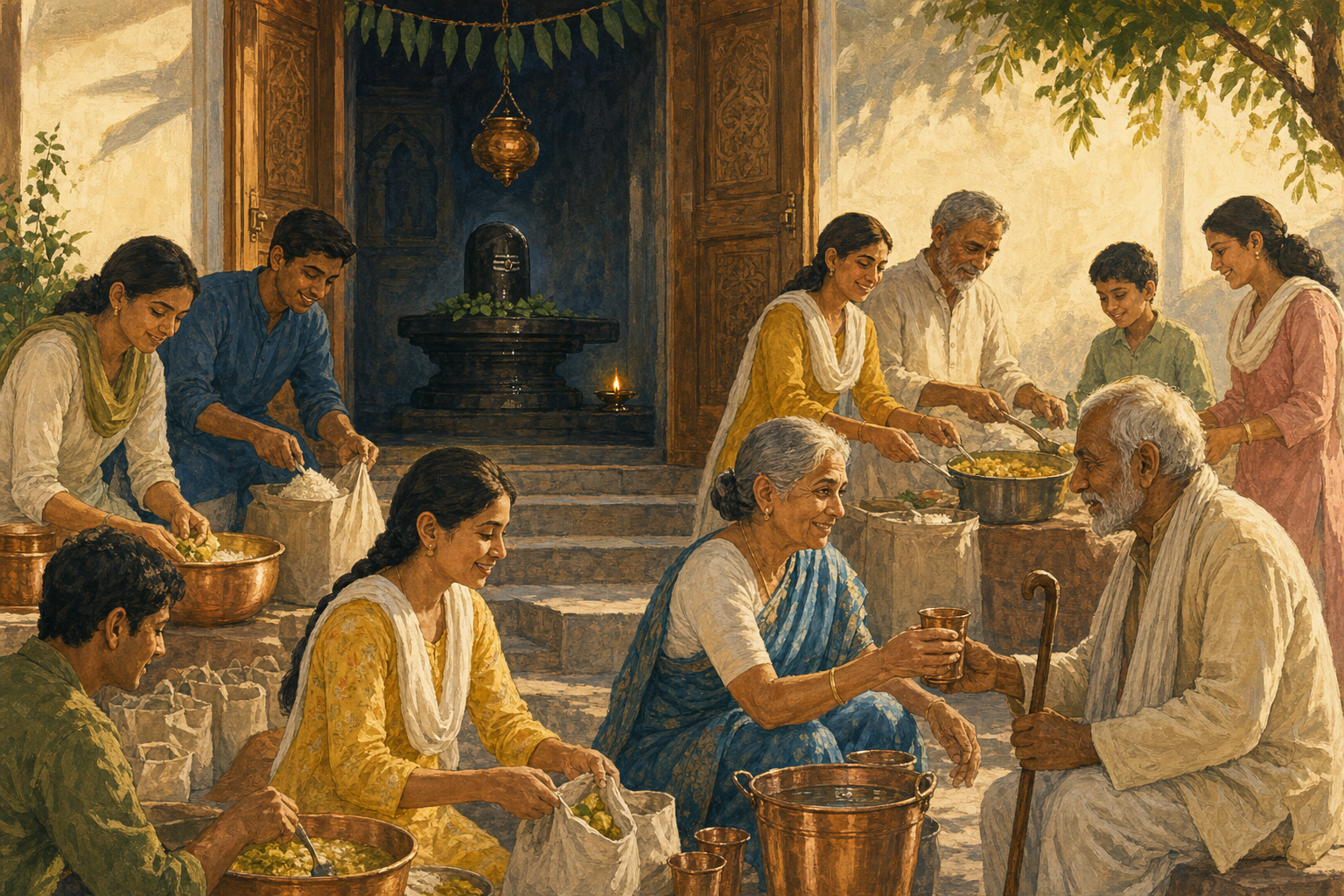
The pairing carries a useful lesson. Illness is personal, but protection is collective. A family may perform abhishekam while neighbors arrange meals. A temple may hold Rudra-parayana while qualified professionals provide practical health information. A congregation may sponsor a health camp, support convalescents or relieve caregivers who have had no rest. The liturgy and the logistics belong to the same covenant to protect life.
Other Dharmic paths express this duty in distinct vocabularies. Buddhist traditions honor Bhaishajyaguru, the Medicine Buddha, and depict Kinnaras as celestial musicians. Jain practice brings ahimsa and pratikramana to the work of ethical purification. Sikh practice draws resilience from naam-simran, ardas and chardi kala. These should not be flattened into interchangeable doctrines. They nevertheless converge on a civic demand: reduce suffering, protect the vulnerable and cultivate steadiness under conditions you cannot fully control.
For a family or temple group, that demand can be made concrete:
- Pair a prayer circle with accurate health information delivered or checked by qualified professionals.
- Organize annadana or meal support for patients and caregivers while respecting any dietary instructions they have received.
- Help with transport, appointments, household tasks and the practical needs of convalescence.
- Use small, remote or household observances when a crowded gathering could expose vulnerable people to infection.
- Support health camps only when appropriately qualified professionals are responsible for clinical decisions.
The name Kinnara adds one final note to this service: consolation is itself a duty. Music, mantra and quiet companionship cannot promise a cure, but they can keep suffering from becoming abandonment. The person before you is never merely a disease to be defeated; they are someone to be heard, protected and accompanied.
If you begin tonight, keep the order clear. Confirm the care plan, offer water, recite with attention, and then do one thing the ill person genuinely needs. Duty, worship and service in that sequence offer a sound way to honor Kinnara Shiva.