
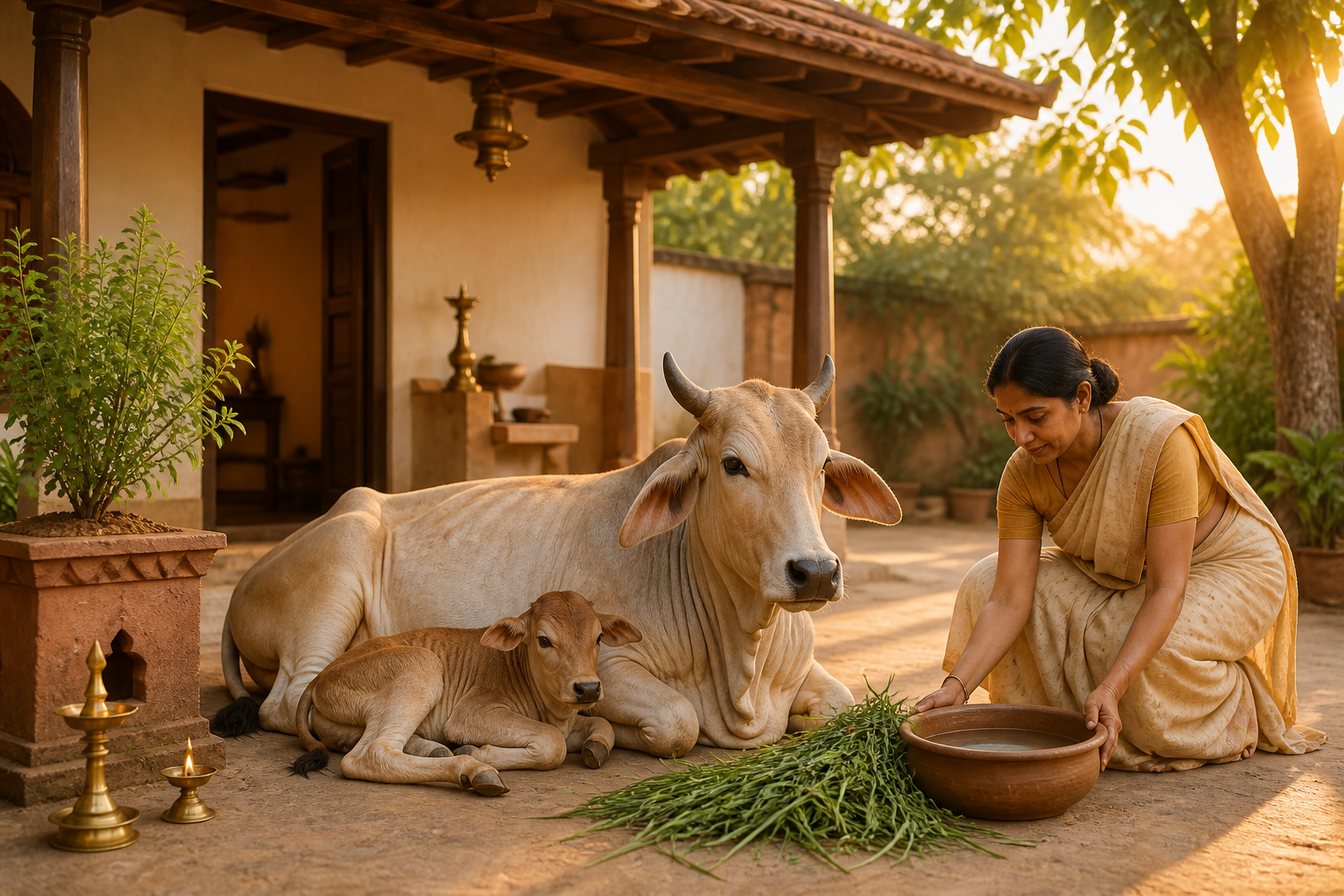
You may have been told that a peaceful cow removes Vastu dosha, or that keeping Gau Mata close brings divine protection to a home. The useful question is not whether you must choose between devotion and scepticism. It is how to honour the belief without reducing a living being to a household remedy.
A sound rule is simple: a Gau Mata practice should increase protection, gratitude, restraint, and responsible care. If it frightens, burdens, exploits, or neglects the cow, it contradicts the very symbolism it claims to honour.
Gau Mata represents a relationship, not a charm
Calling the cow Mata is a form of ethical grammar. It changes the question from what can we obtain from this animal to what do we owe a being associated with nourishment, patient service, agrarian life, and the abundance of nature.
That change of relationship carries four practical obligations:
- Gratitude without entitlement: receiving nourishment or agricultural benefit does not grant a right to neglect the being that provides it.
- Protection before consumption: reverence becomes credible when the cow’s water, food, shelter, health, and freedom from harsh handling matter more than ceremonial display.
- Interdependence rather than ownership alone: Gau Mata recalls a cyclical relationship among animals, households, farms, soil, and human labour.
- Ahimsa expressed through seva: non-harm is not merely the absence of violence. It includes the positive work of care.
The traditional expression that 33 koti devatas reside in Gau Mata is best approached as sacred symbolism. It presents the cow as a concentrated image of divine abundance and of life’s interconnected powers. It is not necessary to turn that image into an anatomical inventory or use it merely as a debating number. Its ethical force lies in what follows: contempt for a dependent creature is incompatible with claims of reverence for the divine.
This gives you a quick test for any ritual, image, donation, or public celebration. Ask what obligation follows after the devotional moment. If the answer is nothing, the symbol is in danger of becoming decoration. If it leads to sustained care, cleaner conduct, less waste, and greater concern for vulnerable beings, it is doing moral work.
Read the Vastu belief at the right level
A familiar Vastu belief holds that dosha is removed where Gau Mata stands peacefully, breathes at ease, and remains content. The word content is crucial. The image is not of a cow placed on a property for a brief appearance. It is of an animal so secure and well cared for that her calm presence expresses the quality of the place.
You can understand this belief through three compatible readings:
- Devotional: a protected cow is associated with sattvic presence, divine grace, and auspiciousness.
- Ethical: a place in which a dependent animal can rest without fear reveals order, patience, and non-violent conduct among the people responsible for it.
- Cultural and psychological: routines of feeding, cleaning, careful handling, and shared responsibility can cultivate attentiveness and cohesion in a household or community.
These readings allow the Vastu belief to guide conduct without pretending that it certifies a building as physically safe. A devotional practice cannot diagnose faulty wiring, structural cracks, damp, poor ventilation, unsafe water, or inadequate sanitation. If your concern is a material defect, use the appropriate builder, engineer, electrician, plumber, or other qualified professional. Performing Gau puja while leaving a known hazard unrepaired is neither good Vastu nor responsible household management.
Use the same distinction when the problem is relational. If a home feels unsettled because duties are ignored, tempers are uncontrolled, or one person carries all the care work, moving a sacred image will not resolve the mechanism producing the disorder. Keep the image if it helps orient the household, but let it prompt a concrete correction: assign duties clearly, clean neglected spaces, reduce harsh speech, and make time for regular seva.
Be cautious when a broad sacred association is converted into an exact rule about direction, colour, material, price, or guaranteed outcome. Do not accept such precision merely because it is spoken confidently. Ask which lineage, text, or named Vastu tradition supplies the rule, and whether following it would cause any harm. The belief in Gau Mata’s auspicious presence does not by itself establish a universal instruction to buy a particular object or place it in a particular corner.
Test every practice by the cow’s actual welfare
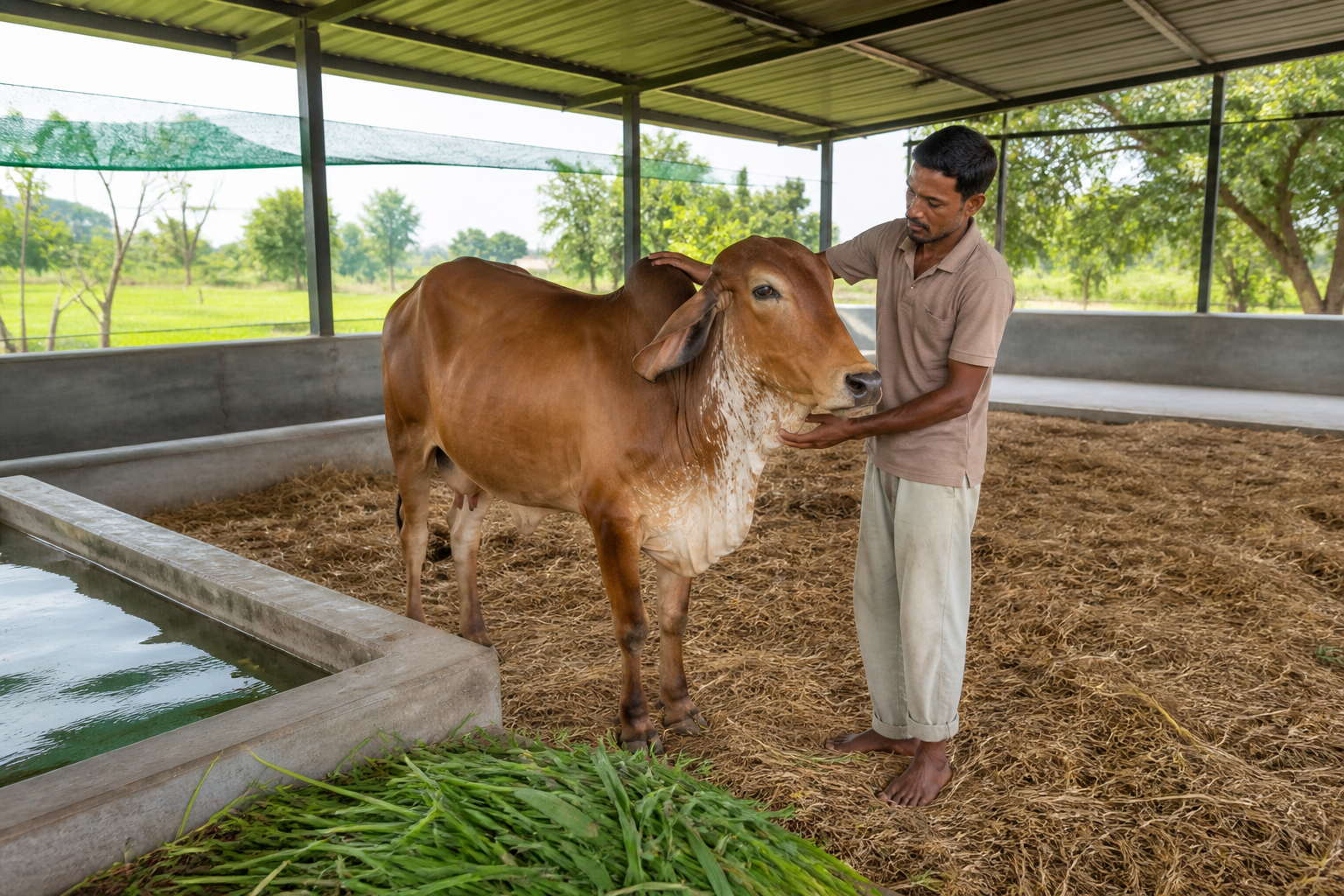
The most important distinction is between honouring Gau Mata and using a cow. The first accepts responsibility for another being. The second treats her presence, touch, image, or movement as a means of obtaining a desired result.
If you are considering a cow-related ceremony, donation, shelter visit, or the far larger decision to keep a cow, work through these steps:
- Name your intention. Decide whether you seek worship, service, education for children, support for animal care, or reassurance about Vastu. A clear intention prevents a symbolic concern from expanding into an impractical commitment.
- Put welfare before visibility. Water, suitable food, shade, clean resting space, calm handling, and veterinary access matter more than whether the cow appears in photographs or at the centre of a ceremony.
- Identify the long-term carer. Ask who remains responsible after the family or crowd leaves. Care for aged, ill, injured, or non-productive animals is an especially revealing test of whether reverence is conditional.
- Keep ritual handling gentle. Do not force an animal into noise, crowds, traffic, unfamiliar spaces, restrictive decoration, or repeated touching simply to complete a ceremony. A distressed cow is not an acceptable price for an auspicious image.
- Review the result. After the observance, check what actually improved for the cow. A recurring supply need met, medical care supported, or a reliable service commitment established is more meaningful than a momentary display.
Before supporting a gaushala
A donation is not automatically equivalent to effective go-seva. Before making a recurring commitment, verify the conditions as directly as reasonably possible. Look for accessible drinking water, protection from weather, clean resting areas, non-coercive handling, a plan for veterinary care, and evidence that old or unproductive cattle are not abandoned. Ask what the shelter needs regularly rather than assuming that a ceremonial gift is useful.
Do not feed unfamiliar cattle without guidance from the responsible carer. An unsuitable item, a sudden crowd, or feeding near moving traffic can create harm while appearing compassionate. When direct contact is impractical, supporting verified care can be the more responsible form of seva.
If you live in an urban home
You do not need to acquire a cow to make Gau Mata’s meaning present in your household. Keeping a live animal solely as a Vastu remedy is irresponsible unless you already have suitable space, competent daily care, reliable food and water, shelter, waste management, veterinary support, and compliance with local requirements. Devotion does not cancel logistics.
An urban household can instead build a modest, repeatable practice:
- Choose a verified cow-care institution and support one clearly identified recurring need.
- Include a short expression of gratitude during Gau puja rather than making promises of guaranteed material gain.
- Teach children that Mata implies responsibility. Give them an age-appropriate service task instead of only asking them to repeat a sacred claim.
- Mark Gopashtami or Govardhan Puja with both worship and a concrete act of care.
- Connect reverence with household stewardship by reducing waste and treating food, water, soil, animals, and labour as gifts rather than disposable inputs.
The recurring character of these actions matters. One grand observance followed by indifference trains the household in spectacle. A smaller commitment that continues through ordinary weeks trains it in dharma.
Dharmic unity rests on shared conduct, not identical theology
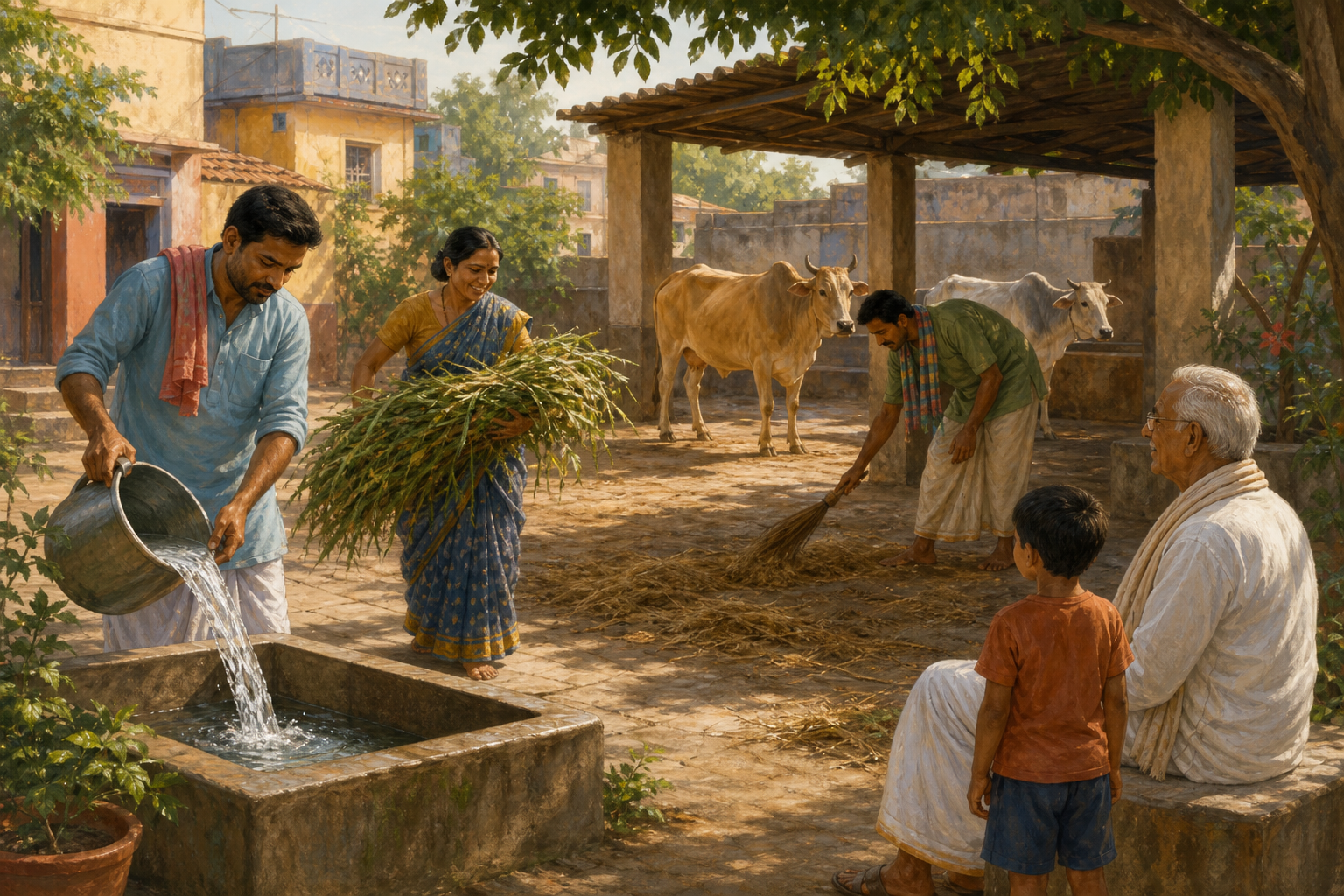
Gau Mata has a distinct place within Hindu devotion. Buddhism, Jainism, and Sikhism do not need to be described as holding an identical theology of the cow for meaningful ethical convergence to exist. Compassion, non-harm, service, and respect for living beings provide common ground while each tradition retains its own language and doctrinal boundaries.
This distinction is useful in families, schools, shelters, and community events. A Hindu can speak openly of Gau Mata’s sanctity without requiring every participant to affirm the same metaphysical claim. A Jain, Buddhist, Sikh, or person without a devotional commitment can participate in humane care through the principles meaningful to them. Unity becomes stronger when agreement about conduct is not purchased by erasing real differences.
For a mixed community programme, separate three layers clearly:
- Devotion: identify the Hindu ritual and allow people to participate knowingly and voluntarily.
- Animal welfare: make calm handling, suitable conditions, sanitation, and responsible supervision non-negotiable for everyone.
- Service: offer practical work or support that people from different traditions can undertake without being asked to adopt theology that is not theirs.
This approach avoids two opposite mistakes. It does not dilute the Hindu meaning of Gau Mata into a vague statement that animals are nice. It also does not turn that meaning into a test of another Dharmic community’s authenticity. The shared field is ethical action; the distinct traditions supply their own reasons for entering it.
Key takeaways
- Gau Mata is best understood as a sacred relationship that creates duties of gratitude, protection, restraint, and care.
- The image of 33 koti devatas expresses a fullness of divine qualities; its practical value lies in the conduct it asks of you.
- The Vastu belief centres on a cow being peaceful and content, so her welfare is part of the belief rather than an optional extra.
- Spiritual observance cannot replace repairs to structural, electrical, sanitation, ventilation, or water problems.
- Do not keep or transport a live cow merely as a Vastu device. Accept that responsibility only when lifelong daily care is realistically available.
- A verified recurring act of go-seva is generally more faithful to the symbolism than an impressive one-time display.
- Dharmic unity does not require identical beliefs about the cow; compassion, non-harm, and service provide a shared basis for action.
Your next step can be small and definite. Identify one cow-care organisation you can verify, ask what continuing need would materially improve the animals’ lives, and commit only to what you can sustain. Keep the image, puja, or Vastu observance that carries meaning for your family, but let the condition of the living cow remain the final test. That is where symbolism becomes dharma.
References
