

When worry is loud, the mind wants either a guarantee or an escape. Ramcharitmanas chanting offers something more durable: a disciplined place to stand, a verse you understand, a breath you do not force, and a dharmic next step you can actually take.
You can use chaupai japa before a difficult conversation, through a period of uncertainty, or as daily preparation before trouble arrives. Its practical value lies less in chasing a dramatic feeling than in returning to the qualities of Lord Rama until your attention, judgment, and conduct begin moving in the same direction.
Resilience is steadiness in dharma, not the absence of distress
Resilience does not mean that fear, grief, or uncertainty immediately disappears. It means that these experiences no longer have complete command over your next decision. You recover enough inner room to remember what matters, distinguish duty from impulse, and act without surrendering your values.
Chaupai japa supports that recovery through three connected movements. Repetition gathers attention that has scattered into imagined futures. A gentle cadence discourages hurried, shallow recitation. Meaning places the mind inside a dharmic frame rather than leaving it alone with fear. In devotional practice, rhythm, meaning, repetition, and remembrance work together; removing meaning and retaining only mechanical repetition weakens the practice.
The traditional conviction that great troubles can be overcome should be received in the language of bhakti, courage, and grace. It should not be converted into a contractual promise that a particular outcome must occur after a particular number of recitations. We do not control every consequence of illness, conflict, loss, or another person’s choices. We do control whether we meet those circumstances with panic, avoidance, bitterness, or a steadier commitment to dharma.
This distinction protects devotion from becoming superstition. Chanting is not a way to deny a problem. It is a way to stop the problem from occupying the whole field of consciousness. The practice is working when remembrance helps you face reality more truthfully, not when it gives you a reason to postpone reality.
The wider dharmic family recognizes related disciplines without making them identical. Buddhist paritta chanting, the Jain Navkar Mantra, and Sikh Gurbani paath and simran arise from distinct traditions, yet each expresses an understanding that sacred sound, disciplined remembrance, and ethical conduct can cultivate steadiness. Ramcharitmanas japa belongs fully within its own Rama-bhakti setting while participating in that broader dharmic respect for practice, self-command, and compassionate action.
Choose one chaupai you can understand and return to
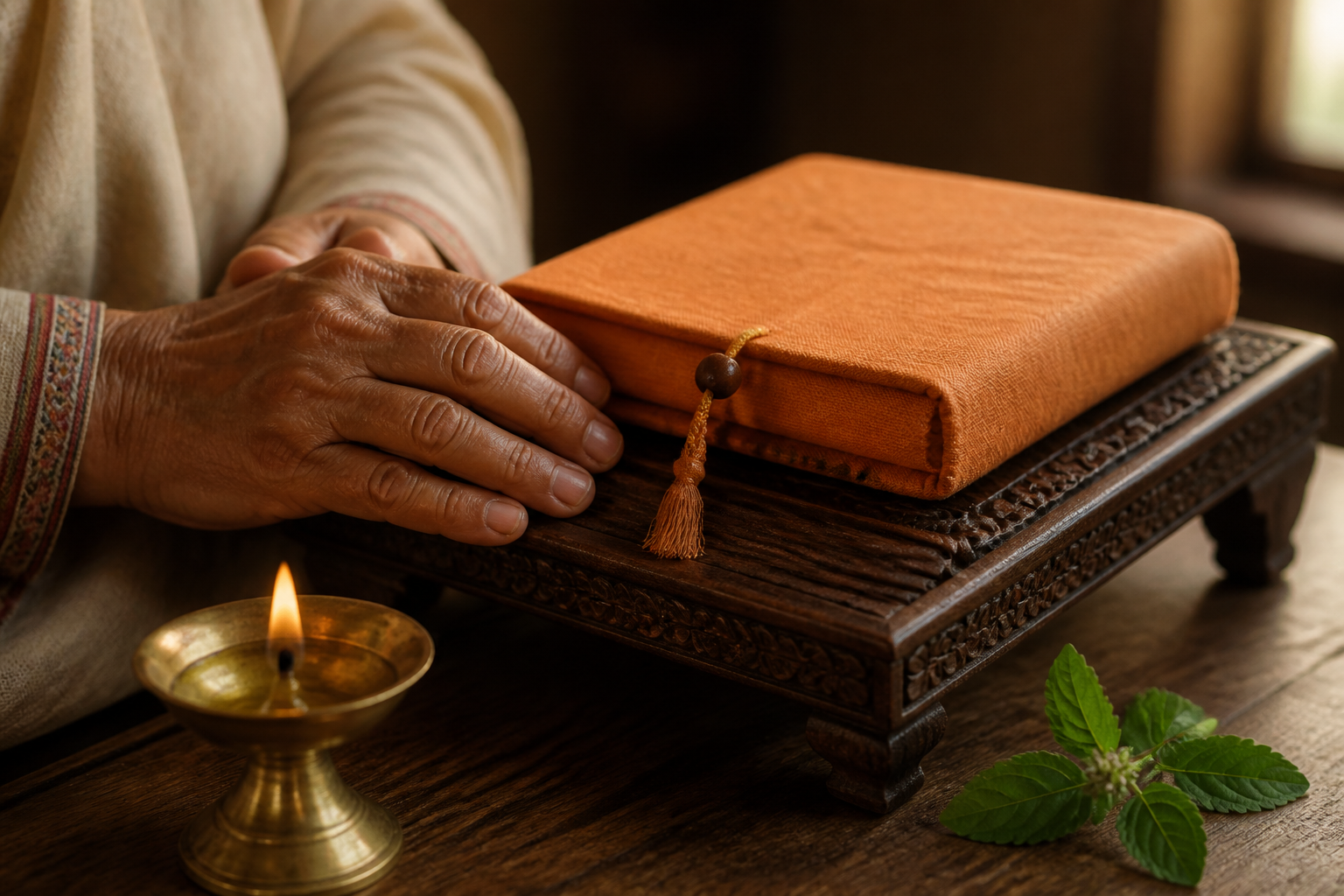
A common mistake is to collect many verses for many feared outcomes. That turns practice into anxious searching: every new difficulty produces a new formula, while no single chaupai becomes deeply familiar. For resilience, familiarity is an advantage. Under pressure, the words should be available without requiring another search.
Begin with one short selection from a trusted Ramcharitmanas text, family tradition, temple teacher, or reliable reciter. If your immediate need is courage in adversity, chaupais from Sundara Kanda are traditionally associated with courage and timely assistance. Verses praising Lord Rama or Hanuman are also used to strengthen devotion and resolve. If your guru or sampradaya has given you a particular passage, that instruction should guide your choice.
Use four tests before settling on a chaupai:
- You trust the wording. Keep it from a dependable text or teaching context rather than copying an unexplained fragment circulating online.
- You can state its meaning plainly. You do not need to produce a scholarly commentary, but you should know what quality, event, prayer, or relationship the words place before your mind.
- You can recite it without rushing. A passage that becomes hurried whenever time is short will not train steadiness.
- Its meaning leads toward dharma. It should deepen courage, devotion, truthfulness, service, surrender, or responsible effort rather than feed hostility, passivity, or fear of punishment.
Meaning is not an optional supplement. Before reciting, express the chaupai in your own words: What does it remember about Rama, Hanuman, devotion, protection, or right conduct? What quality does it ask you to embody? When the mind wanders during japa, return not only to the sound but also to that central meaning.
Pronunciation deserves care, but perfectionism can become another form of delay. Learn slowly from someone or something you trust, keep the written text nearby, and correct errors as you discover them. Do not race through syllables merely to complete a count. Clear, attentive recitation is more consistent with the purpose of resilience than a large total produced in agitation.
Turn recitation into a routine you can keep under pressure
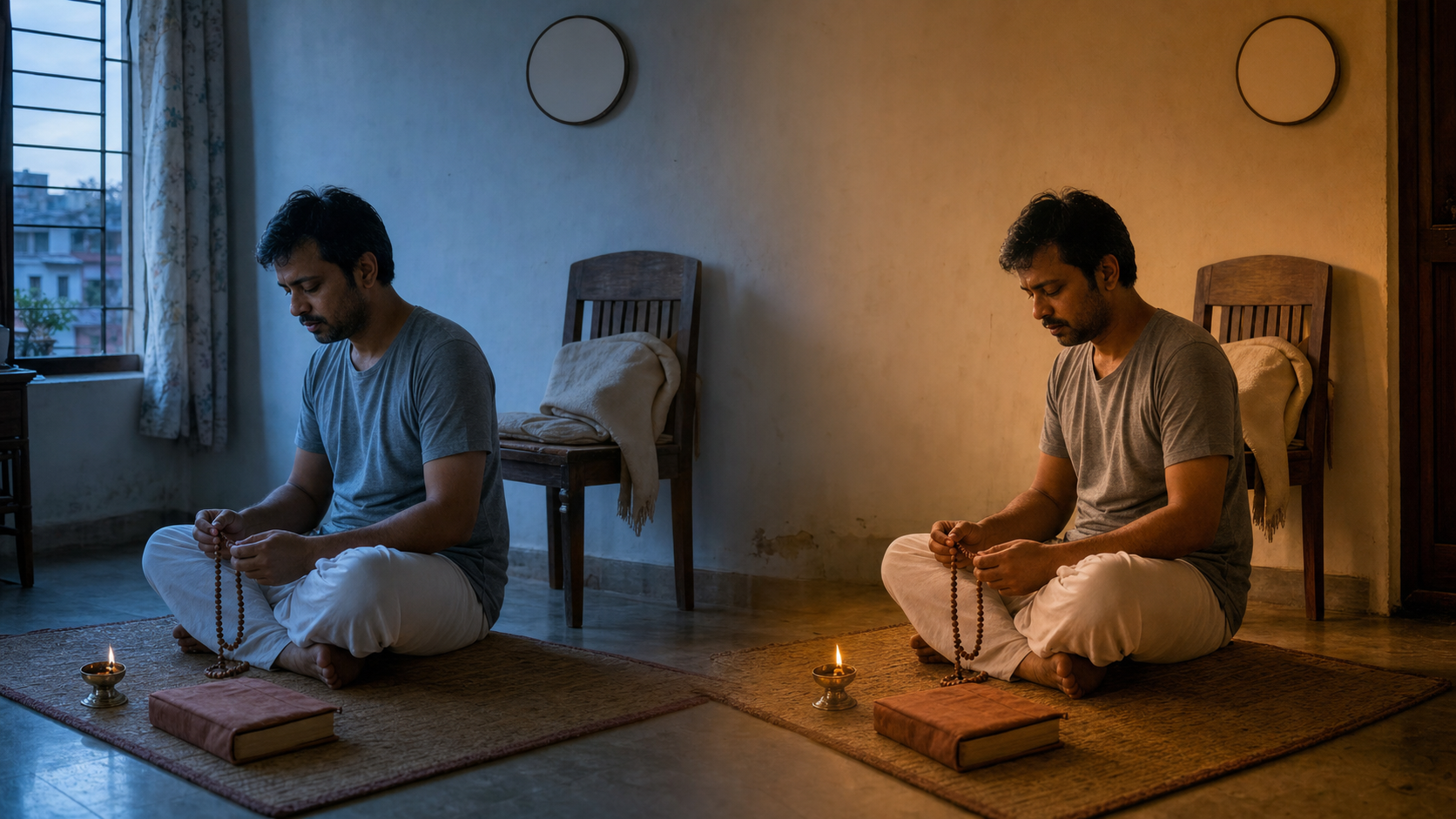
A resilience practice has to survive ordinary days. If japa appears only after a crisis begins, the mind must learn the verse at the same time it is trying to manage distress. Daily repetition makes the chaupai familiar before you urgently need its support.
A simple daily sequence
- Prepare the place. Keep the text, its meaning, and your mala together. Removing small decisions makes it easier to begin when your mind is unsettled.
- Name a clean intention. Use a sentence such as: May this practice steady me to meet this difficulty with courage and right action. An intention is not a demand that events obey you; it is a direction for your own participation.
- Read the meaning once. This prevents the sound from becoming detached from the teaching it carries.
- Recite at a gentle pace. Soft audible chanting lets you hear the cadence when circumstances permit. Silent japa is appropriate when privacy, health, travel, or a shared environment makes audible recitation impractical.
- Let the breath remain natural. Do not hold, strain, or stretch it to manufacture an experience. Allow the pace of the words to settle rather than force the body to match an artificial rhythm.
- Use the mala as an aid to attention. Move one bead after a complete recitation if that is how you practice. If your lineage has not prescribed a count, choose a manageable count you can maintain without rushing and keep it stable enough to build continuity.
- Close by naming the next duty. Decide what you will do after rising: make the call, prepare the document, apologize, ask for help, keep an appointment, or complete the work in front of you.
Dawn and dusk are customary times for recitation, and many practitioners use a mala to sustain one-pointed attention. These choices are supports, not tests of worthiness. If your household, work, caregiving responsibilities, or health make those times unreliable, select another repeatable time. A modest practice that actually happens is more useful than an elaborate schedule that repeatedly collapses.
Stay with the same selected chaupai rather than changing it whenever your emotional state changes. The aim is to build a stable path back to remembrance. Variety can enrich scriptural study, but constant switching can keep japa at the level of novelty.
Judge the practice by conduct, not unusual experiences
Do not make bodily sensations, visions, favorable coincidences, or immediate relief your scorecard. Such a scorecard encourages you to inspect yourself throughout the recitation, which scatters the very attention you are trying to gather.
Use more grounded questions. Can you return to the words after distraction without becoming angry with yourself? Can you name the next responsible action more clearly? Are you less likely to send the impulsive message, speak with unnecessary harshness, or abandon a duty because fear has surged? Can you ask for help without treating that need as a spiritual failure?
Practitioners often describe greater emotional balance, reduced anxiety during difficult periods, and clearer moral orientation through consistent chaupai japa. These are devotional experiences, not proof that recitation treats a clinical disorder. Their practical significance is that the person becomes more able to remain present and act wisely.
Let chanting shorten the distance between fear and action

When pressure rises during the day, use a shortened form of the same practice. Pause if the situation safely allows it. Feel the support beneath your body, let the breath move without force, and recite your chosen chaupai slowly enough to hear or mentally register each word. Then ask one question: What is the next dharmic action available to me?
That question keeps japa connected to life. In a conflict, the next action might be to lower your voice, state the truth without insult, or leave a conversation that is becoming unsafe. In uncertainty, it might be to gather the missing information instead of rehearsing every possible disaster. After a mistake, it might be to acknowledge harm and begin repair. In grief, it might simply be to complete the necessary duty without demanding that sorrow disappear first.
Urgency changes the order. If someone is in immediate danger, if medical attention is needed, or if a legal, safety, or financial deadline requires action, take the necessary practical step first. Do not delay a call, leave an unsafe situation late, skip prescribed care, or miss professional help in order to finish a recitation. Faith and effort support each other; avoidance disguised as surrender does not serve either.
The same boundary applies to mental health. Chaupai japa can accompany care and may offer spiritual reassurance, but it is not a substitute for a qualified mental-health or medical professional when anxiety is severe, persistent, or interfering with daily life. Seeking appropriate help can itself be the dharmic action that chanting gives you the courage to take.
It is also possible to misuse chanting as a demand for certainty: If I recite correctly, nothing unwanted will happen. That belief makes every setback look like failed devotion. A more resilient sankalpa is: Whatever comes, may remembrance help me respond without abandoning truth, courage, compassion, or duty. This leaves room for grace without pretending that human beings control every outcome.
Key takeaways
- Choose one trustworthy, meaningful chaupai instead of collecting a different formula for every fear.
- Learn what the verse means and recall that meaning before and during recitation.
- Use a gentle pace, natural breathing, and either soft audible or silent japa according to your circumstances.
- Make the routine sustainable. Dawn or dusk can provide a traditional rhythm, but consistency matters more than forcing an impractical schedule.
- Use a mala and a manageable count if they help attention; do not let speed or totals replace mindful engagement.
- End every session by naming the next responsible action, and seek professional help promptly when the situation requires it.
Place your selected chaupai and its meaning where you will see them at your next chosen time. Begin at a pace you can keep, return when the mind wanders, and then do the next right thing. When remembrance and responsible effort meet, chanting becomes more than relief for a difficult hour; it becomes abhyasa for a dharmic life.
References
