
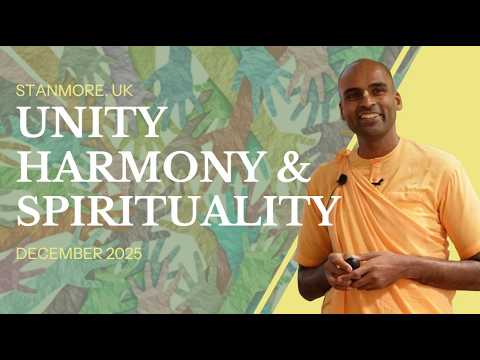
At a recent gathering in Stanmore, UK, HH SB Keshava Swami emphasized a principle that resonates across living spiritual traditions: leadership in a devotional community is not a pursuit of power or control, but a disciplined practice of service. The purpose of spiritual leadership is to help people grow, become happier, and move closer to Krishna, while cultivating communal harmony and a shared sense of purpose.
Within the Bhakti Tradition, this ethic of service (seva) reframes authority as responsibility. Effective spiritual leadership aspires for others to surpass the leader’s own abilities, transforming guidance into empowerment. In this view, leaders measure success not by followers amassed, but by the flourishing of individuals who become more compassionate, more capable, and more anchored in dharma. Such leadership is deeply rewarding because it channels devotion into tangible well-being and enduring unity.
Gaudiya Vaishnava thought often articulates this posture as becoming the servant of the servant (dasa-dasa-anudasa). Theologically, the leader functions as a conduitnot a destinationfacilitating practices that nourish devotion, including attentive kirtan, thoughtful study, and meaningful acts of service. The Guru-Shishya Relationship is then understood as a collaborative, ethically grounded path where guidance is inseparable from humility, accountability, and compassion.
Practically, spiritual leadership in a devotional community is characterized by four interlocking competencies: deep listening to understand lived realities; clarity of purpose to align activities with dharma; competence in organizing seva to translate inspiration into action; and reflective humility to learn from outcomes and adapt. These competencies transform intention into sustained cultureone where care is institutionalized, not improvised.
Programmatically, service-centered leadership develops structured pathways for growth. Typical elements include mentorship circles that nurture skills and character; study groups that ground devotion in scriptural insight; coordinated seva that addresses community needs; and regular feedback processes that ensure transparency and trust. When these elements cohere, the devotional community becomes a living ecosystem in which individuals experience both belonging and purpose.
Viewed through contemporary organizational lenses, this model aligns with established insights from servant leadership and human motivation: people thrive when they experience autonomy (freely choosing devotional practices), competence (growing in knowledge and service skills), and relatedness (feeling valued within the community). In a Krishna-centered community, these dimensions are harmonized by a shared telosspiritual progress expressed through compassion, integrity, and joy.
Importantly, the service ethic articulated by HH SB Keshava Swami converges with core values found across the dharmic family. In Sikh practice, seva and sarbat da bhala reinforce leadership as protection and upliftment of all. In the Buddhist sangha, the kalyana-mitta (spiritual friend) model emphasizes guidance through example and mindful care. In Jain traditions, ahimsa and aparigraha define leadership as stewardship with nonviolence and restraint. In Hindu spirituality, devotion, wisdom, and service are woven into an integrated path. Together, these streams affirm Unity in spiritual diversity and the Harmony of faiths, strengthening interfaith understanding within dharmic traditions.
Robust governance helps service-based leadership endure. Clear role definitions prevent over-centralization; mentorship networks distribute responsibility; and periodic reviews ensure alignment with scriptural principles and community well-being. Meaningful indicators can include participation and retention in seva programs, mentoring outcomes, learning progression in study groups, conflict resolution timeliness, and member well-being surveys. When made transparent, such measures cultivate trust and continuous improvement.
Ethically, service-centered leadership is anchored in voluntary participation, non-coercion, and respect for each person’s devotional inclination (Ishta). It rejects disparagement of other paths and affirms pluralism within dharmic norms. In practice this means honoring varied modes of worship and contemplation, enabling each person’s spiritual journey without compulsion, and using institutional authority solely to protect dignity, encourage growth, and safeguard the community’s spiritual integrity.
When communities internalize leadership as seva, several outcomes become visible: psychological safety that allows honest dialogue; shared joy (ananda) that arises from collective worship and service; and moral resilience rooted in dharma-driven habits. Over time, these outcomes translate into unity that is not imposed but chosenemerging organically from devotion, learning, and care.
The Stanmore message thus offers a precise, actionable insight: spiritual leadership is the craft of helping others approach Krishna through service that dignifies their agency and amplifies their potential. By aligning practices with this ethicand by recognizing parallel virtues across Hinduism, Buddhism, Jainism, and Sikhismdevotional communities can cultivate unity, harmony, and enduring spiritual health. In this spirit, every decision becomes a simple question of service: Will this help people grow, become happier, and move closer to the Divine?
Inspired by this post on Dandavats.
