

You may chant, attend aarti, read about the Divine, and still wonder why the language of ecstatic love feels so far from your own experience. Does a quiet heart mean your bhakti is weak? Should you try to produce tears, sweetness, or a sense of overwhelming presence?
No. You do not have to perform ecstasy to practise bhakti. Your immediate task is to make the relationship real through attention, remembrance, offering, and conduct. Whether your tradition understands ecstatic love as the ripening of practice, an act of divine grace, or both, it cannot be forced into existence. It can only be welcomed by a life prepared to receive it.
Begin with a relationship, not a spiritual mood
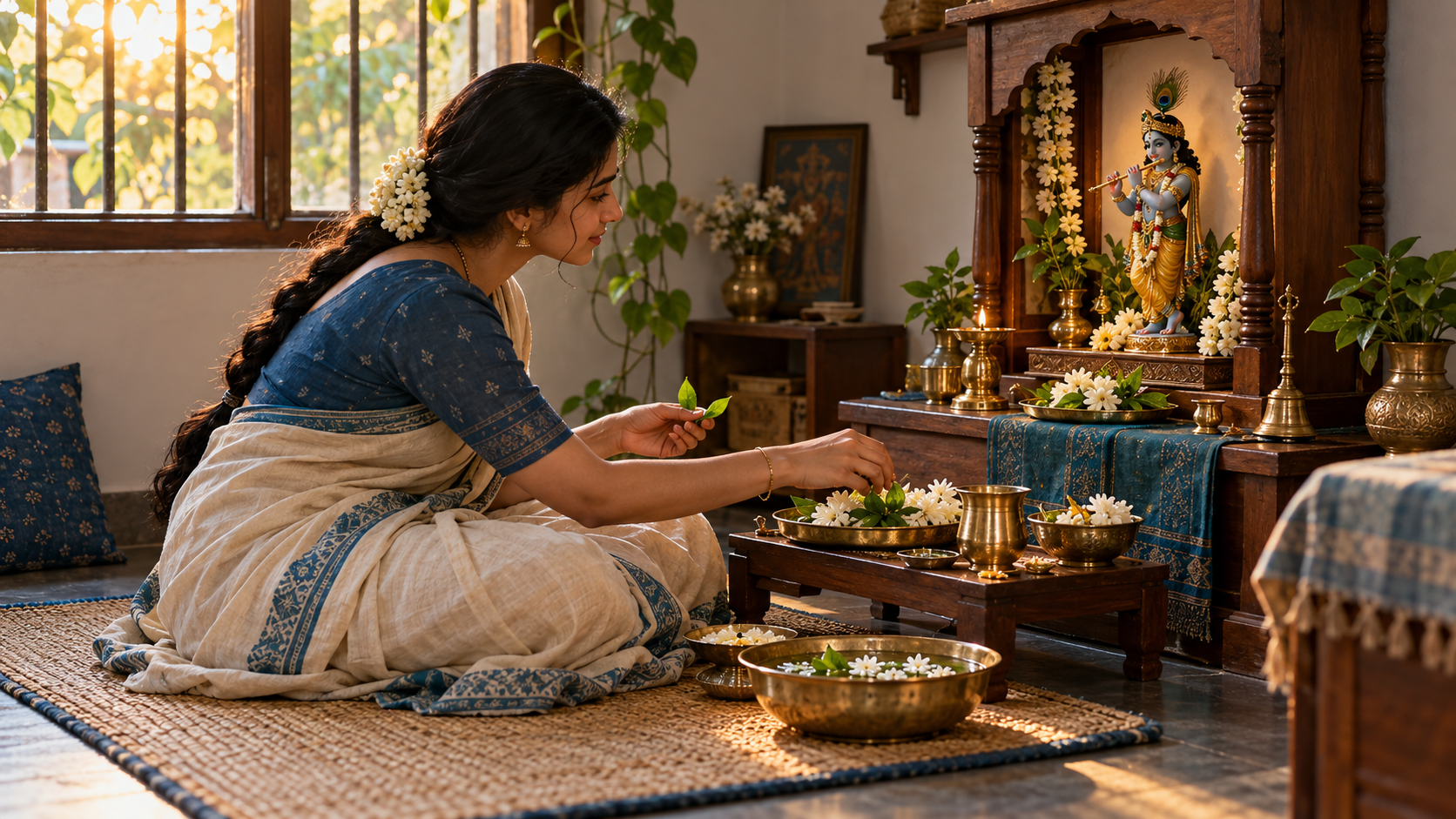
Bhakti is commonly translated as devotion, but that word can sound passive. In practice, bhakti is participatory love. You address the Divine, listen, remember, praise, serve, offer, and allow that relationship to influence what you do after the lamp has been extinguished and the chanting has ended.
This is why bhakti can be approached as practice, connection, and Bhakti Devi. Practice gives devotion a dependable form. Connection keeps the form from becoming empty routine. Contemplating Bhakti as a feminine presence prevents devotion from shrinking into a technique for producing desirable feelings. A presence is approached with reverence; a technique is merely operated.
Your emotions will change from day to day. The relationship need not change with them. Warmth, longing, boredom, resistance, gratitude, and distraction can all appear during practice. None of them, by itself, tells you whether the practice is genuine. The more useful question is whether you continue turning toward the Beloved truthfully.
Before adding more practices, clarify the relationship you are already trying to cultivate:
- Name the one you are addressing. Use the divine name or form given by your family, sampradaya, chosen path, or trusted teacher. If you are still exploring, choose a simple and reverent form of address rather than changing it whenever your mood changes.
- Name your dependable practice. It might be japa, kirtana, prayer, aarti, reading, silent remembrance, or seva. Let one practice become an anchor before collecting many others.
- Name what you are offering. A flower or lamp can carry devotion, but so can truthful speech, restrained anger, patient care, honest work, or a repaired relationship.
- Name what you are asking to become. Instead of asking only for a particular feeling, ask for steadiness, humility, remembrance, courage, or the ability to serve without demanding recognition.
This clarification matters because vague devotion is easily governed by mood. A named relationship gives you somewhere to return when enthusiasm fades.
Build a daily practice that survives ordinary life

A sustainable bhakti practice needs a recognizable shape. It should be reverent enough to gather your attention and simple enough to survive work, family duties, travel, fatigue, and emotional dryness. Use the ritual details of your own tradition, but keep the underlying movement clear.
- Arrive deliberately. Set aside competing activity. Place the phone beyond reach, settle your body, and turn toward the image, altar, sacred text, flame, or inwardly remembered form through which you worship.
- Establish the address. Speak the divine name and offer a salutation. This small act changes the moment from private reflection into relationship: you are no longer thinking vaguely about spirituality; you are addressing the Beloved.
- Receive before asking. Listen to the Name, read a brief passage accepted in your tradition, or sit with a familiar hymn. Bhakti is not an uninterrupted monologue about your own needs.
- Give your voice. Chant, sing, recite, or pray. When attention wanders, return to the next name or line without turning distraction into a drama about your spiritual worth.
- Make a real offering. Offer what your tradition permits, then connect the ritual to the day ahead. If you offer food, let gratitude shape how you consume. If you offer light, refuse a dishonest action that would darken another person’s life. If you offer a flower, bring some gentleness into your next encounter.
- Carry remembrance into a transition. Recall the Name while beginning work, entering your home, preparing a meal, or responding to a difficult message. A transition is especially useful because it links worship to action.
- Close without grading the session. Bow, give thanks, and place the results of your actions before the Divine. Do not finish by deciding whether the practice was emotionally impressive enough.
On a difficult day, preserve the skeleton of the practice: arrive, speak the Name, offer something sincere, bow, and carry remembrance into an action. Shorten the volume if necessary, but do not turn a shortened practice into an abandoned relationship.
On an expansive day, resist the opposite mistake. A surge of enthusiasm can tempt you into dramatic vows or an unsustainable routine. Let joy deepen the attention you bring to your established practice before it multiplies your commitments. Bhakti needs room to mature after inspiration has passed.
Approach ecstatic love without manufacturing it

Ecstatic divine love is not simply strong emotion with religious language attached. It points toward love so absorbing that the usual demand to protect, display, and reward the self loses its central place. Different lineages use words such as bhava and prema with their own theological precision, so you should learn their meanings within your tradition rather than flattening them into a universal ladder of spiritual achievement.
Devotional contemplation can become extraordinarily specific. In Radha-centered devotion, even the lips of Sri Radha may become an object of reverent remembrance. The specificity carries an important lesson: love attends to the Beloved as beloved, not merely as a device for changing the worshipper’s state of mind.
That does not mean every practitioner should adopt intimate forms of contemplation without preparation. If a mantra, meditation, or lila-smarana practice belongs to a particular lineage or depends on instruction, receive it through that discipline. Until then, simple remembrance of the divine Name, form, qualities, teaching, and acts is not an inferior substitute. Simplicity can protect reverence from fantasy and spiritual ambition.
Three habits commonly distort the search for devotional ecstasy:
- Manufacturing visible signs. Tears, a trembling voice, energetic singing, stillness, or bodily sensation may accompany an intense moment, but they are not certificates of spiritual rank. Do not imitate them, suppress them for appearance’s sake, or use them to measure yourself against another devotee.
- Collecting stimulation. Music, sacred imagery, talks, pilgrimage, and company can awaken remembrance. But continually hunting for a stronger stimulus can make the Divine seem present only when the atmosphere is emotionally charged. Let stimulation lead back to steady practice rather than becoming an end in itself.
- Mistaking intensity for authority. A powerful inner experience does not automatically qualify you to direct other people, disregard your duties, demand obedience, or declare your interpretation unquestionable. Genuine devotion does not need spiritual excitement to shield the ego from correction.
If strong emotion arises, let it arise without making a performance of it. Stay with the prayer or Name, allow the body to settle, and finish the practice gently. Avoid announcing an interpretation while you are still overwhelmed. If the experience repeats, confuses you, or seems to demand major decisions, discuss it with a trustworthy teacher who is both grounded in the tradition and willing to question flattering conclusions.
If an experience brings persistent fear, sleeplessness, disorientation, or loss of ordinary functioning, do not treat impairment as proof of attainment. Seek qualified health support as well as spiritual counsel. A devotional interpretation does not make appropriate care unnecessary.
Test your devotion in the life waiting outside worship
Use the after-effect test
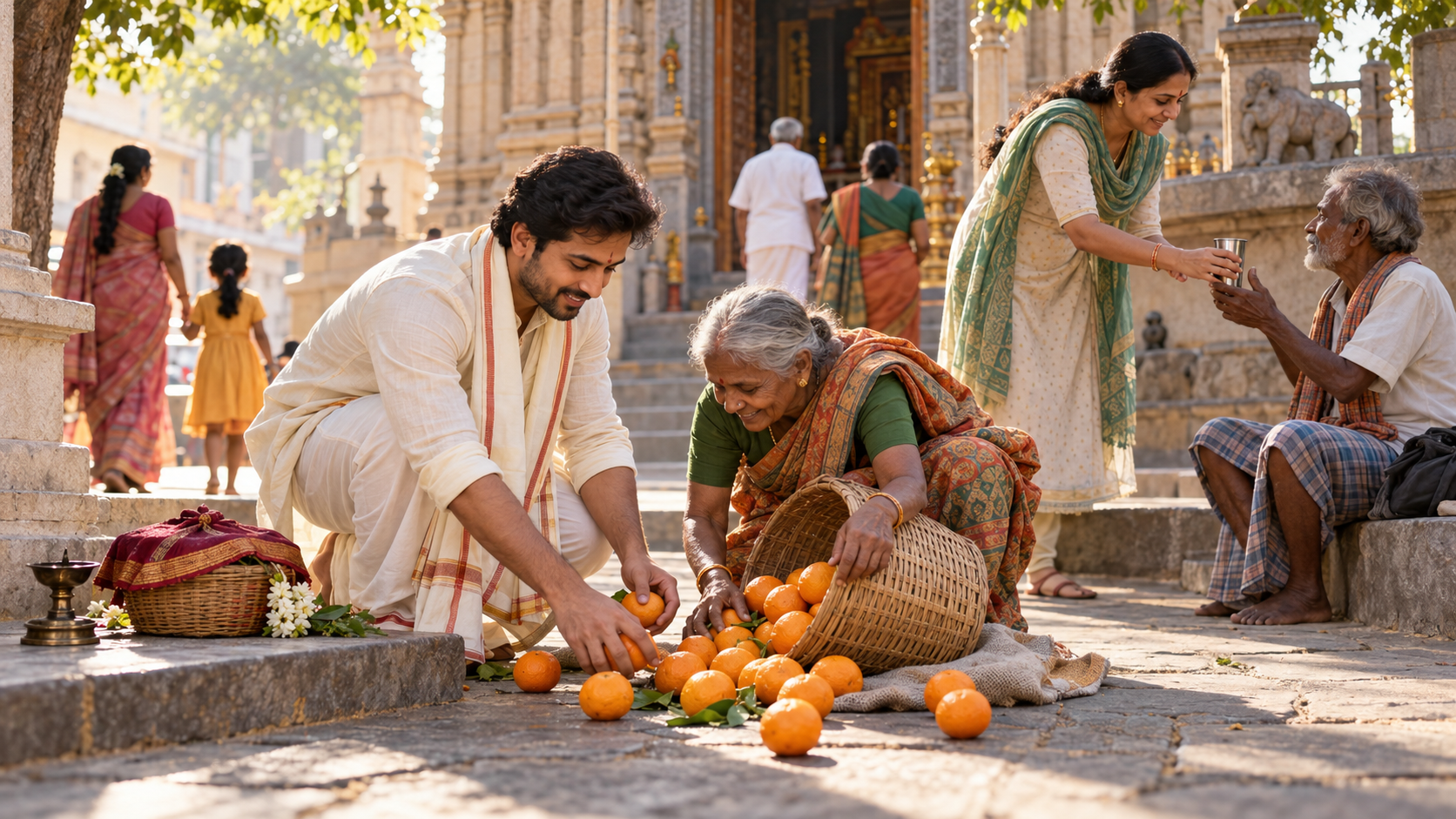
The safest place to assess bhakti is not the emotional peak of practice but its after-effect. Ask what happens to your speech, duties, appetite for recognition, and treatment of people who cannot benefit you. Ecstasy that leaves vanity untouched is not a reliable guide. Quiet remembrance that makes you more truthful, patient, and available for service may be doing much deeper work.
- If japa is followed by an impatient reply, bring the Name into the pause before your next response.
- If aarti is followed by neglect of someone dependent on you, make the needed act of care part of that day’s offering.
- If devotional identity makes you contemptuous of another sampradaya, distinguish fidelity to your path from the urge to diminish someone else’s.
- If prayer exposes a lie, broken promise, or avoidable injury, correct it where possible. Remorse becomes devotional only when it changes conduct.
- If seva produces resentment because nobody noticed it, offer the wish for recognition along with the work. Do not pretend the wish is absent; place it honestly before the Divine.
This is not a demand for instant moral perfection. It is a way to stop separating love of the Divine from the choices through which love becomes credible. Dharma gives bhakti a field of action; bhakti gives duty warmth, direction, and willing attention.
Correct the obstacle instead of condemning yourself
Dryness and distraction do not all have the same cause. Diagnose the obstruction before changing the practice.
- When the practice feels mechanically familiar, renew attention before seeking novelty. Pronounce the Name carefully, remember whom it addresses, or connect a familiar line of prayer to a specific decision facing you.
- When distraction comes from constant input, change the environment. Remove the phone, close unused material, and keep only the object needed for practice. This is a practical attention problem, not necessarily a spiritual crisis.
- When you feel resistant or angry, speak truthfully. Bhakti does not require counterfeit sweetness. A prayer such as “I do not want to be here, but I have come” is more relational than polished words hiding your actual state.
- When exhaustion is the problem, simplify with dignity. Use the shortest form that still feels like an offering, then meet the neglected bodily or practical need. Self-punishment is not proof of devotion.
- When doctrinal confusion multiplies, return to foundations. Stay with practices clearly accepted in your sampradaya and bring precise questions to a competent teacher. Do not build a private theology out of disconnected devotional fragments.
- When comparison enters, bless and return. Another person’s singing, learning, discipline, or visible emotion does not reveal the full state of their heart, and it does not define your relationship with the Divine.
The aim is not to make every session satisfying. It is to become available to divine love in truth. Sometimes that availability feels like sweetness. Sometimes it looks like returning without sweetness, refusing pretence, and doing the next act of dharma with the Name still present.
Key takeaways
- Bhakti begins with a real address: know whom you worship, how you return, and what you are offering.
- Keep a stable daily sequence that can be shortened without being abandoned when life becomes difficult.
- Do not manufacture tears, bodily signs, or emotional intensity. Receive strong feeling without turning it into a claim of spiritual status.
- Use devotional stimulation to strengthen remembrance, not to create dependence on increasingly dramatic experiences.
- Judge practice by its after-effects: greater truthfulness, humility, responsibility, patience, and capacity for service.
- Let the next ordinary action carry the devotion. That is where love stops being an idea and enters your life.
At your next practice, do not begin by asking whether your heart feels ecstatic. Ask whom you are remembering, what you can sincerely offer, and what you will do differently because the Beloved is real. Make the answer small enough to act on before the day ends. That is not a waiting room outside bhakti; it is bhakti taking root.
References
- Dandavats — Today’s Featured Video: Stimulation for Ecstatic Love Part 201 – Sri Radha’s Lips Part 2
- Dandavats — Nectar Talks. Bhakti Devi: The Practice, the Connection, the Woman

Leave a Reply
You must be logged in to post a comment.