
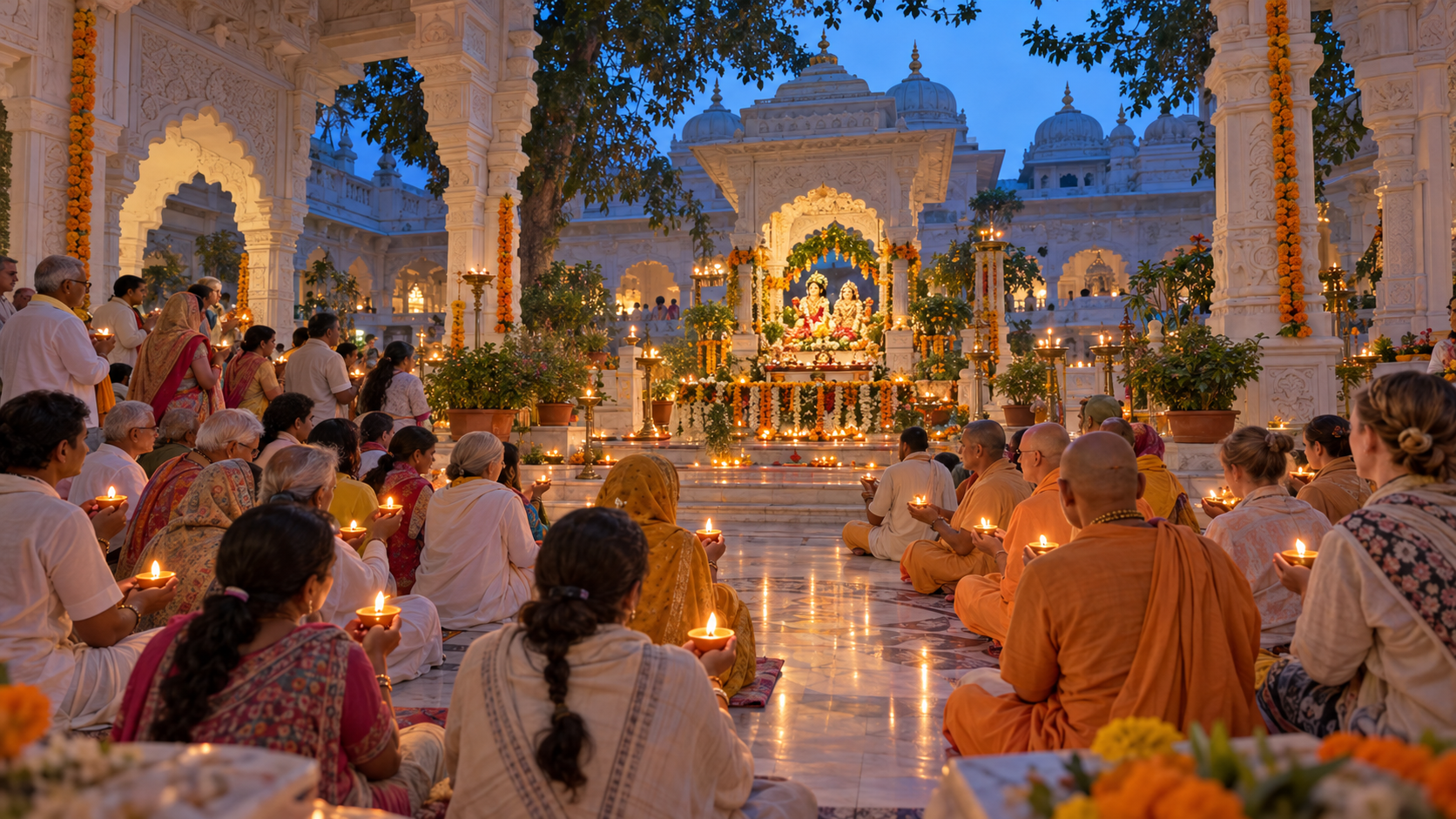
If you are deciding when to visit ISKCON Vrindavan for Kartik 2026, three dates determine the shape of your pilgrimage. The daily lamp-offering period begins before the broader Kartik Seva window, while the Shobha Yatra falls on a single day in the middle of the month. Missing that distinction can leave you arriving a day late for the practice you most wanted to join.
Your best plan is to decide first whether you want daily Damodara worship, a wider period of temple seva, or the congregational experience of the procession. You can then choose dates deliberately, confirm the local timetable and make one sustainable Kartik commitment of your own.
The three dates that should govern your plan
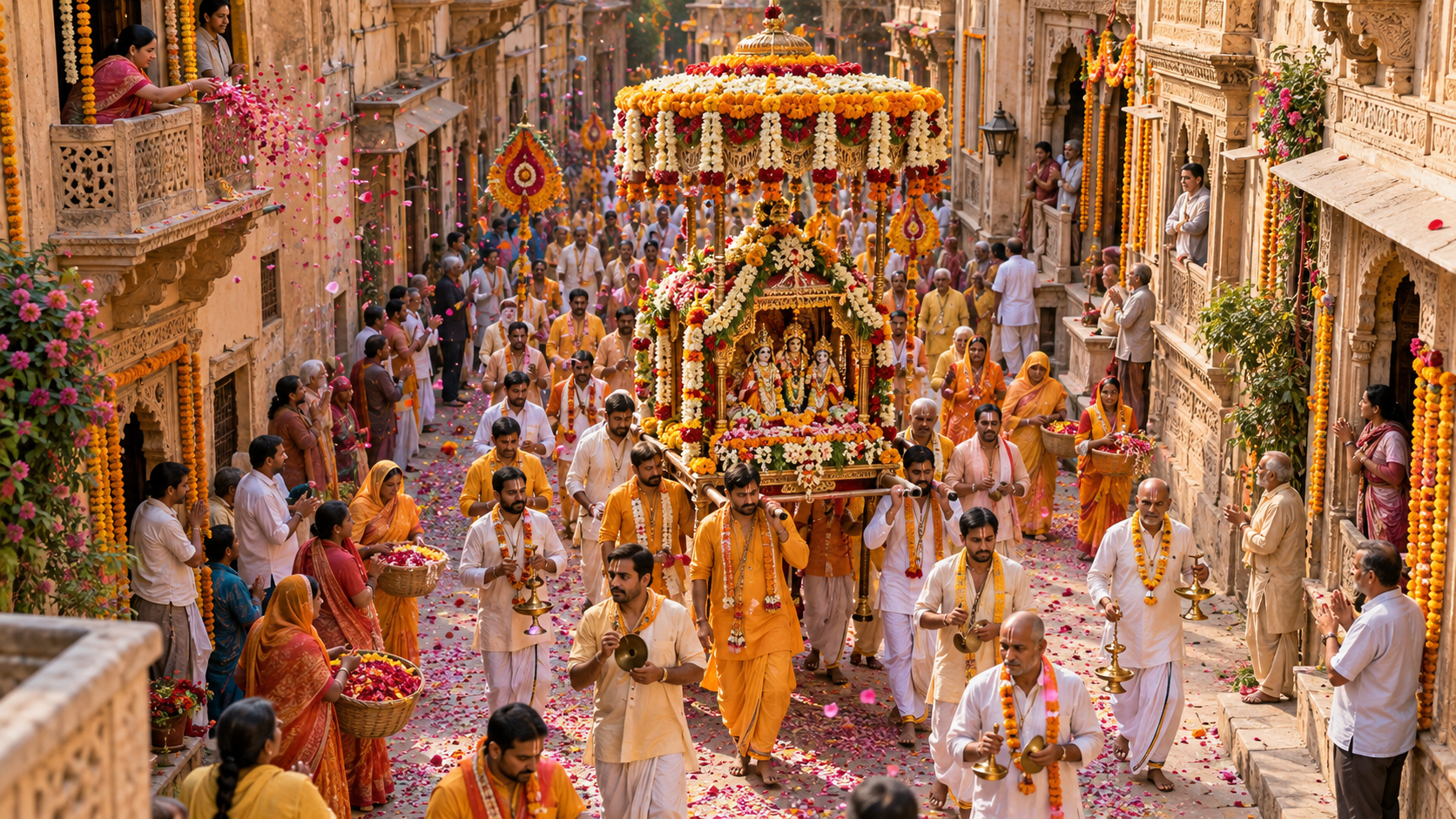
For 2026, Deep Daan Seva runs from 26 October through 24 November, Kartik Seva from 27 October through 24 November, and the Kartik Shobha Yatra is scheduled for 14 November. These are related observances, but they are not interchangeable.
| Observance | 2026 date | Plan around it when |
|---|---|---|
| Deep Daan Seva | 26 October-24 November | Your priority is offering a lamp to Lord Damodara and maintaining a daily Kartik practice. |
| Kartik Seva | 27 October-24 November | You want to take part in the temple’s broader month of chanting, hearing, darshan, devotee association and service. |
| Kartik Shobha Yatra | 14 November | You specifically want the public, congregational experience of the procession. |
The one-day difference at the beginning matters. Do not assume that 27 October is the first opportunity for Deep Daan merely because it is the first day of Kartik Seva. If the opening lamp offering is important to you, plan around 26 October.
Treat these dates as your planning frame, not as a complete timetable. Confirm the current aarti times, lamp-offering arrangements, procession assembly point, route and any entry instructions through ISKCON Vrindavan’s current channels or the temple noticeboard before setting out. Festival-day arrangements can be more specific than the month-long date range.
What the observances ask of you
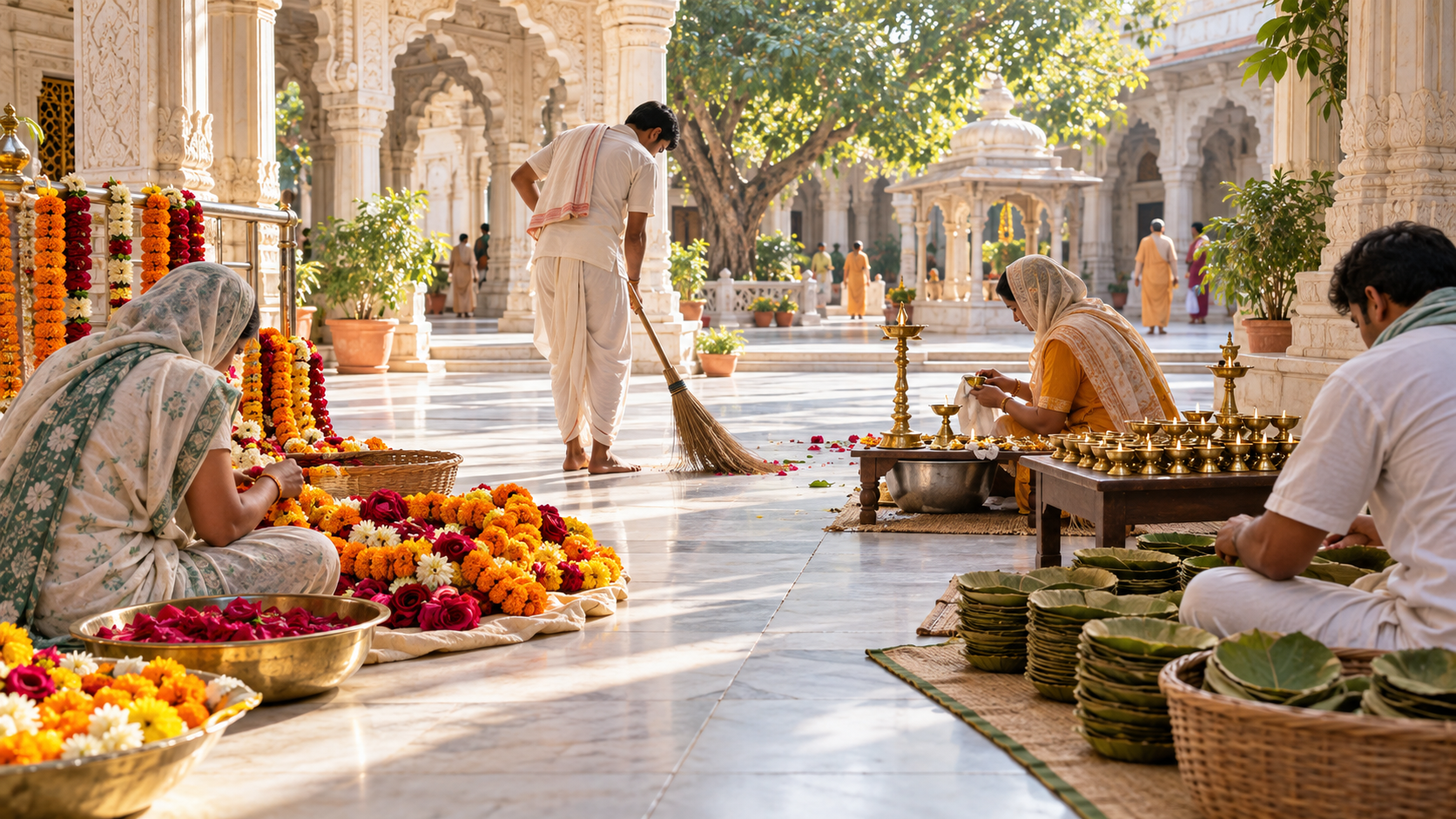
Deep Daan is a daily act of remembrance
The central Kartik practice at ISKCON Vrindavan is the offering of a lamp to Lord Damodara. Damodara is Krishna remembered in the childhood pastime in which Mother Yashoda binds Him with love. The lamp is therefore not just seasonal decoration. It is a personal offering made in a devotional mood, commonly accompanied by the singing or hearing of Damodarashtakam.
If you join the temple offering, follow the queue and the directions of the devotees managing the lamps. Do not bring or light your own flame inside a crowded worship area unless the temple explicitly permits it. A devotional intention does not remove the ordinary risks of hot ghee, loose clothing and an open flame.
Kartik Seva should become a rhythm, not a collection of events
The wider Kartik observance includes chanting the Hare Krishna maha-mantra, singing or hearing Damodarashtakam, reading Srila Prabhupada’s books, hearing Krishna-katha, taking darshan, associating with devotees and serving Vaishnavas. You do not need to treat that list as a competition. Choose a pattern you can repeat attentively.
A workable sankalpa might combine one inward practice and one outward service: attentive daily chanting together with practical help, hospitality, cleaning, prasadam service or another seva assigned by the temple. Ask where help is actually needed. Self-appointed activity can obstruct the devotees already responsible for a service.
The Shobha Yatra is a distinct congregational commitment
The Kartik Shobha Yatra on 14 November is the date to prioritise if you want to join devotion expressed collectively through procession, kirtan and public presence. It also requires more logistical care than an ordinary temple visit. Verify where participants assemble and where the procession ends; do not infer either point from the temple address.
If you are travelling with children, older relatives or anyone with limited mobility, check the expected walking conditions and identify an agreed meeting point before joining. Keep the group out of moving lanes, follow the organisers’ directions and carry only what you can manage without blocking others.
Build your Vrindavan visit around a clear purpose
- Name the practice you do not want to miss. Choose 26 October if the opening of Deep Daan is your priority, any suitable day within the announced windows for the daily observances, 14 November for the Shobha Yatra, or 24 November if you want to be present on the scheduled concluding date. Confirm what special programming, if any, is planned for the day you select.
- Check the live schedule close to departure. Look for the exact daily temple programme, not merely the month-long dates. Aarti, darshan, kirtan and special-event arrangements may have different reporting or entry times.
- Separate travel planning from spiritual planning. Temple dates do not by themselves settle accommodation, local transport or procession access. Arrange those independently and leave enough flexibility to reach the temple without turning worship into a race against the clock.
- Carry less. Keep your phone and valuables secure, avoid taking bulky bags into crowded areas, and bring devotional items only when you know they are accepted. Use the lamps and procedures supplied or approved by the temple.
- Set your sankalpa before you arrive. Decide what you will repeat each day of your chosen period: lamp offering, Damodarashtakam, a fixed chanting commitment, devotional reading or a defined seva. Vrindavan should deepen that practice, not replace the need to choose one.
- Respect the dham beyond the temple gate. Follow photography restrictions, do not interrupt worship for a better view, keep lanes and entrances clear, dispose of waste properly and respond courteously to residents, pilgrims and volunteers.
If you have only one day, do not try to compress the whole month into a frantic checklist. Attend the programme you deliberately chose, offer your lamp attentively, hear and chant, take darshan without pushing, and perform one useful service. A focused visit is more coherent than collecting many sacred locations while remaining mentally hurried.
You can keep Kartik meaningfully when travel is impossible
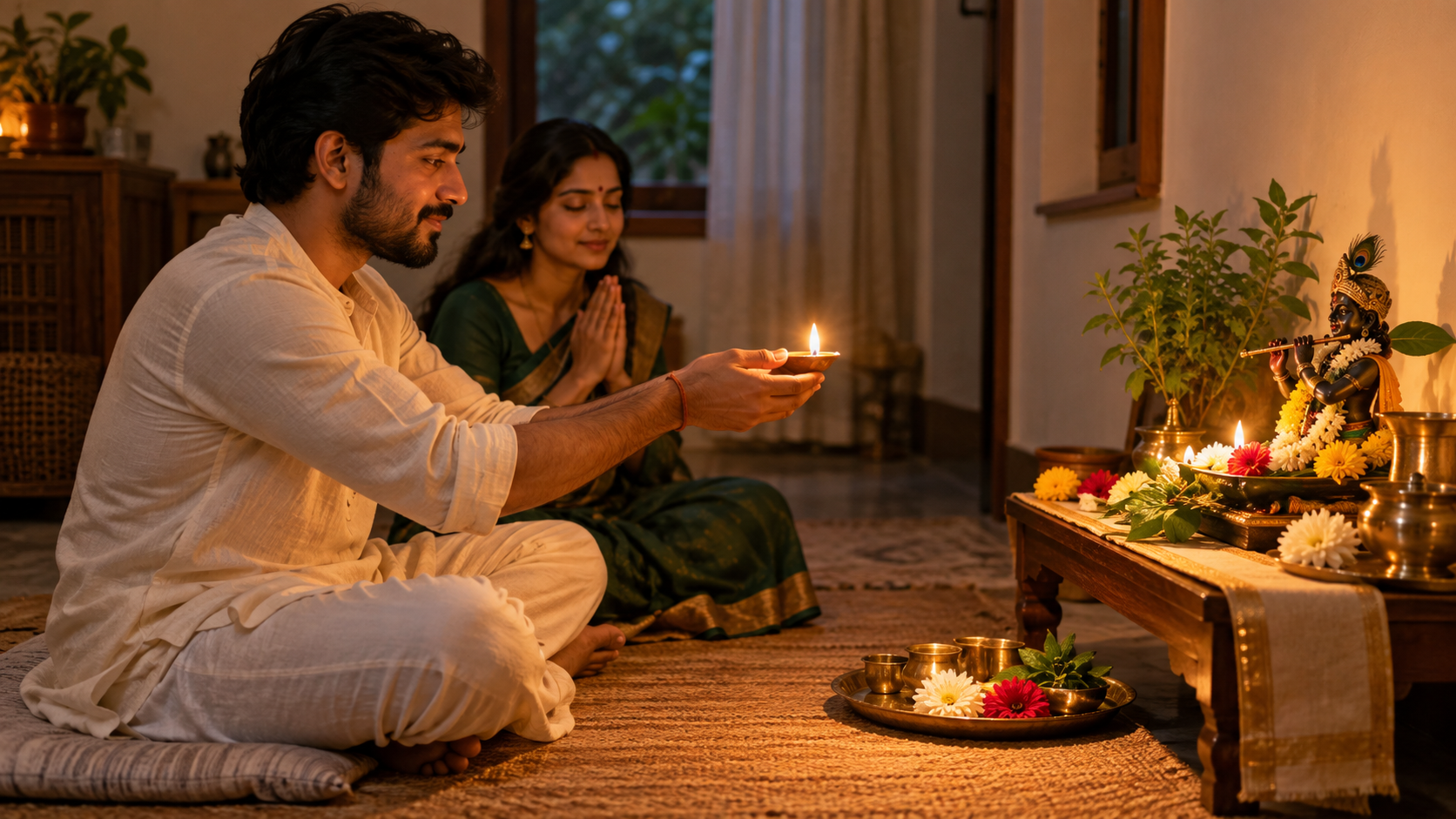
Being unable to reach Vrindavan does not prevent you from adopting the devotional pattern of Kartik. Create a simple home routine that you can keep rather than an elaborate one that collapses after a few days.
- Prepare a clean prayer space with an image of Krishna or Lord Damodara according to your established practice.
- Offer a lamp during your daily worship and sing or hear Damodarashtakam.
- Chant the Hare Krishna maha-mantra with a fixed, realistic commitment that you can maintain attentively.
- Read or hear from Srila Prabhupada’s books and pause long enough to identify one teaching you will apply that day.
- Choose a concrete form of seva: support a temple programme, help another devotee, share prasadam, care for a sacred space or perform another service appropriate to your circumstances.
Place any diya on a broad, stable, non-flammable surface away from curtains, paper, loose clothing and foot traffic. Keep it supervised, especially around children and animals, and extinguish it safely before leaving the room. If an open flame is unsafe where you live, ask your local temple or spiritual guide about an appropriate alternative rather than creating a hazard.
If you sponsor Deep Daan, anna-daan or another temple seva, keep that offering distinct from your personal sadhana. Financial support can enable service, but it does not perform your chanting, hearing or remembrance for you. Let generosity accompany practice rather than become a substitute for it.
Key takeaways
- Deep Daan Seva begins on 26 October 2026 and continues through 24 November.
- Kartik Seva runs from 27 October through 24 November, so its opening date is one day later than Deep Daan.
- The Kartik Shobha Yatra is scheduled for 14 November and should be planned as a separate procession day.
- Confirm exact times, entry arrangements and the procession route before travelling; the date range is not a full daily timetable.
- Whether you are in Vrindavan or at home, choose a repeatable combination of lamp offering, Damodarashtakam, chanting, reading and seva.
Choose your date now, then choose the practice you intend to carry beyond 24 November. The most useful preparation for Kartik is not a longer itinerary but a clear devotional commitment that the month can strengthen.
References

Leave a Reply
You must be logged in to post a comment.