

You may have seen a priest wear a small ring of dried grass, sit upon a grass seat, or place a few blades beside the materials for a homa or shraddha. If you wondered why such an ordinary-looking plant belongs in a sacred rite, the answer leads to Garuda’s quest for amrita.
The story does more than explain a ritual object. It shows you how Hindu tradition understands sacredness: something need not be costly or imposing to carry divine significance. Its place in a sacred event can transform how generations receive and use it.
The sacred origin begins with Garuda’s vow
Garuda did not seek amrita, the nectar of immortality, for personal gain. His purpose was to free his mother, Vinata, from servitude to Kadru and her serpent sons. The serpents had demanded amrita as the price of her release, so Garuda undertook the extraordinary task of obtaining it.
The episode is associated with Chapter 30 of the Astika Parva, within the Mahabharata’s Adi Parva. Garuda succeeds in carrying the vessel of amrita to the serpents. In the familiar telling, he places it upon darbha grass and tells them to purify themselves before drinking.
While the serpents are away, Indra removes the amrita. They return to find the vessel gone and lick the darbha in the hope that some trace of the nectar remains. The sharp blades cut their tongues, accounting within the sacred narrative for the serpents’ forked tongues. The grass that had supported the amrita was thereafter regarded as pure and holy.
Three elements therefore belong together: Garuda’s devotion to his mother, the presence of amrita, and the darbha upon which it rested. Leaving Garuda out reduces the story to accidental contact with nectar. His selfless purpose gives the episode its moral centre.
Why contact with amrita matters

Darbha does not become important because it dominates the scene. It becomes important because it serves as the resting place of amrita at a decisive moment. Its holiness is relational: the grass bears the presence of something divine and life-giving.
This distinction helps you understand many Hindu ritual objects. Their value is not measured by market price, visual grandeur, or physical strength. A blade of grass, a leaf, water, ash, or a thread can acquire a precise sacred role through its relationship to a deity, an act of dharma, or a remembered event.
That does not mean every piece of vegetation is interchangeable in worship. When a rite calls for darbha, the identity of the grass is part of the rite. Substituting an ornamental or lawn grass because it looks similar misses the very connection the ritual is preserving.
It is also unnecessary to invent a modern scientific claim to justify the practice. Darbha’s sacred status rests upon scriptural memory and ritual tradition. Respecting that religious explanation is more honest than attaching laboratory-sounding properties for which no evidence has been supplied.
How the origin story lives inside Hindu ritual
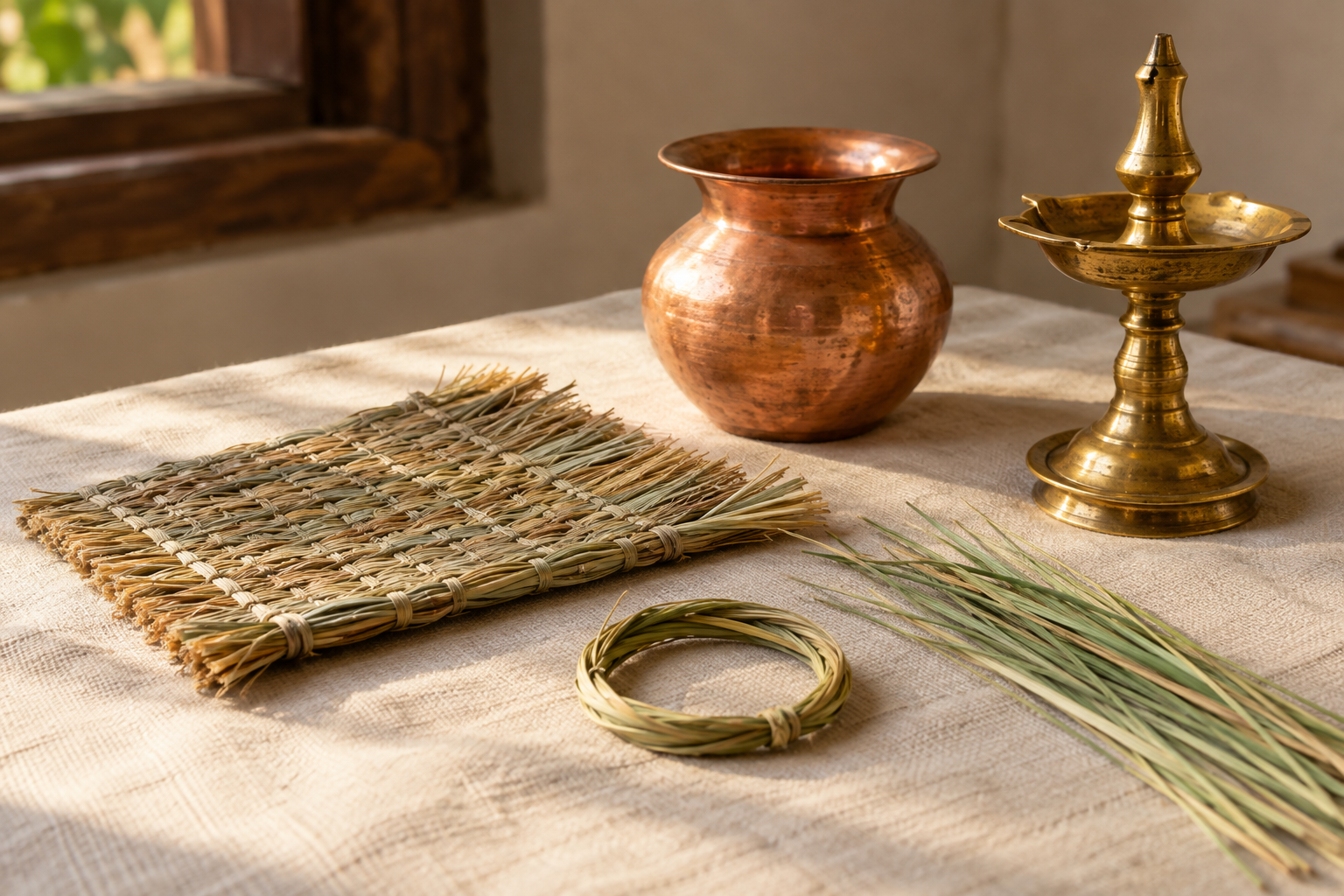
The story remains visible because darbha is used rather than merely remembered. Its forms vary with the ceremony, but each form marks a movement from ordinary activity into consecrated action.
- As a ring: A priest may wear a ring fashioned from darbha on a finger while performing ritual actions. The ring places the sacred grass directly at the hand engaged in worship.
- As a seat: A seat made from darbha may be used during puja. It gives the worshipper a deliberately prepared ritual base rather than an arbitrary place on the ground.
- In homa: Darbha may be kept among the materials of the fire ceremony, where its presence belongs to the rite’s discipline of purity.
- In shraddha: Its use in ceremonies concerning ancestors is especially solemn. Here it is not decoration; it participates in a carefully ordered sacred duty.
The exact number of blades, the way they are tied or placed, the finger on which a ring is worn, and the direction in which the grass is arranged can depend on the rite and the tradition conducting it. The origin story explains why darbha is sacred; it does not give you a universal do-it-yourself manual for every ceremony.
If you are preparing for a puja, homa, or shraddha, ask the officiating priest whether darbha is required and whether it will be provided. If you must obtain it yourself, confirm that you have ritual darbha rather than choosing an ordinary grass by appearance. Follow the procedure of the sampradaya and ceremony in front of you instead of combining instructions from unrelated rites.
Key takeaways
- Darbha is sacred because it supported the vessel of amrita during Garuda’s effort to free his mother.
- Garuda’s motive matters: the quest is rooted in filial devotion and liberation, not a desire for personal immortality.
- The serpents found the amrita gone and licked the grass; their cut tongues explain, within the narrative, why serpents have forked tongues.
- A darbha ring, seat, or ritual placement carries this sacred memory into living worship.
- The story establishes the grass’s sanctity, while the exact method of using it depends on the particular rite and tradition.
How to receive darbha as more than an object
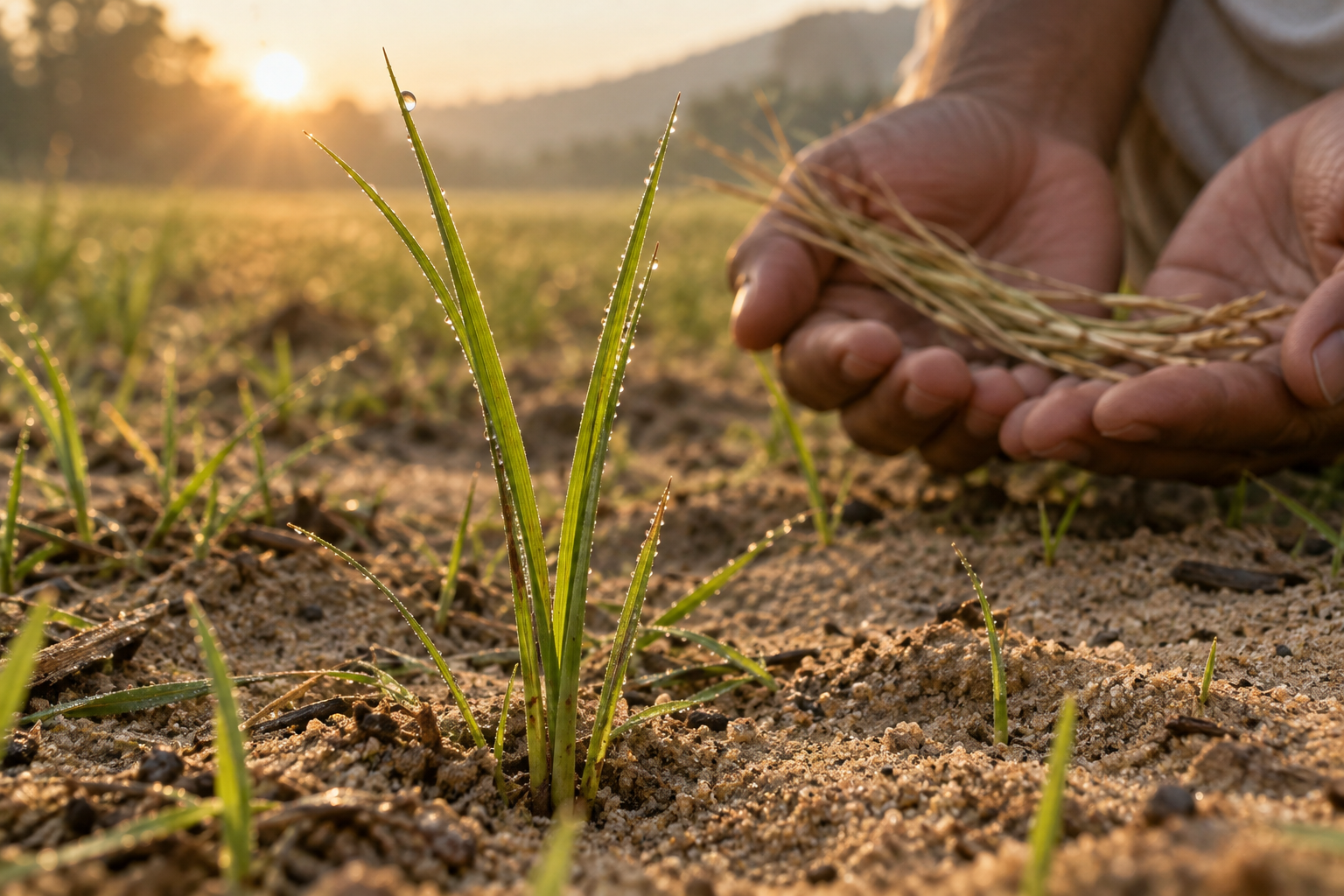
When darbha appears in a ceremony, notice where it has been placed and what ritual action it accompanies. That will usually tell you more than treating it as a generic emblem of nature. A ring relates it to the acting hand; a seat relates it to disciplined worship; its presence in homa or shraddha relates it to the purity and order of a solemn rite.
If you are explaining the practice to a child or a visitor, one clear sentence is enough: darbha is revered because Garuda placed the amrita upon it while seeking his mother’s freedom. You can then add that Hindus continue to use it in worship as a material link between the remembered sacred event and the ceremony being performed now.
The next time darbha is prepared for a rite, ask one precise question: what role does the grass perform in this ceremony? That question respects both sides of the tradition—the sacred origin that gives darbha its status and the living discipline that determines its proper use.
References

Leave a Reply
You must be logged in to post a comment.