

You may love your brother and still disagree with him about an inheritance, a parent’s care, a family business, or a decision that affects everyone. The difficult question is not whether you should be loyal. It is what loyalty should require when affection, justice, duty, and personal interest pull in different directions.
The Ramayana gives you a demanding answer: a good brother does not merely stand beside his kin. He helps his kin remain aligned with dharma. Sometimes that means sacrifice. Sometimes it means correction. In the hardest case, it means refusing to participate in a loved one’s adharma.
Brotherhood is judged by what it protects
Brotherhood can protect several different things: a brother’s comfort, his reputation, his power, his rightful interests, or his moral welfare. These are not always the same. If you protect his power while allowing him to act unjustly, you may preserve the relationship’s appearance while damaging both the family and the brother you claim to support.
The Ramayana places brotherhood rooted in love and dharma beside brotherhood fractured by ego and adharma. This contrast prevents an easy equation between kinship and righteousness. Blood creates a relationship and its duties, but it does not make every demand righteous.
That distinction is the key to reading the brothers of Ayodhya and Lanka. In Ayodhya, the brothers repeatedly limit their own claims so that another person’s rights, a father’s word, and the integrity of the kingdom are not sacrificed to ambition. In Lanka, Ravana expects brotherhood to validate his will. The difference is not that one family experiences conflict and the other does not. Both do. The difference is how each responds when truth becomes inconvenient.
When you face a family dispute, therefore, do not begin with, “Whose side am I on?” Begin with, “What would justice require if none of us stood to gain?” That question exposes whether loyalty is serving dharma or merely disguising attachment.
Rama and Bharata refuse to turn love into a contest
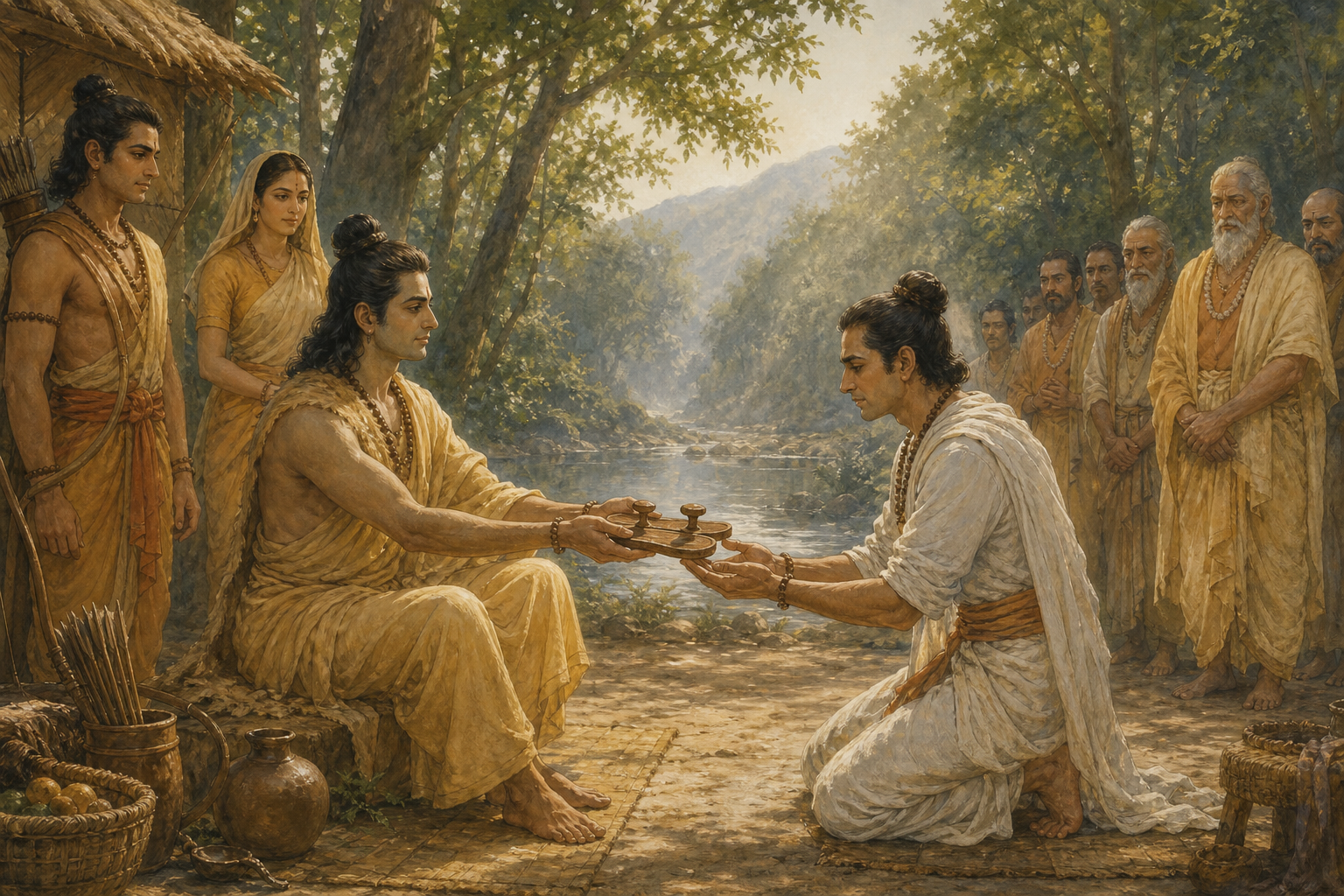
Bharata returns to find that Rama has been exiled and that the throne has come to him through Kaikeyi’s demands. He did not engineer the injustice, but he would benefit from it. That is precisely where his dharma is tested. A person can be innocent of creating a wrong while still becoming responsible for what he does with its benefits.
Bharata does not treat possession as proof of entitlement. He rejects the moral legitimacy of the advantage, approaches Rama, and asks him to return. Rama, however, will not preserve his own interest by breaking the commitment made in their father’s name. Neither brother uses the other’s love as leverage. Bharata does not say, “If you loved me, you would let me keep this.” Rama does not say, “If you loved me, you would help me escape my obligation.”
Their disagreement is real, but it is not a struggle for supremacy. Rama protects the vow; Bharata protects Rama’s rightful sovereignty. Bharata then governs as a custodian rather than converting temporary control into personal ownership. The familiar image of Rama’s sandals representing his authority makes that restraint visible: the office is being held in trust.
This gives you a concrete rule for any family benefit produced by questionable conduct. Do not ask only whether you caused the wrong. Ask whether accepting, hiding, or enlarging the benefit would complete it.
- If an asset, role, or opportunity reached you unfairly, name the unfairness before discussing what happens next.
- Identify the person whose legitimate claim was displaced and give that person a real chance to be heard.
- If you must hold responsibility temporarily, define yourself as a custodian: keep records, limit personal gain, and make the endpoint clear.
- Do not demand that the injured person erase a principle merely to restore a pleasant family atmosphere.
Bharata’s greatness lies not simply in renunciation, but in refusing to let another person’s wrongdoing define his character. You cannot always prevent a relative from acting unjustly. You can prevent that act from becoming the foundation of your own advantage.
Lakshmana shows that service needs discipline, not passivity

Lakshmana’s brotherhood takes a different form. He accompanies Rama into exile and shares the burden of a hardship that was not imposed on him. His loyalty is active: he gives up comfort, remains vigilant, and makes Rama’s duty easier to carry.
Yet Lakshmana is not emotionless. His fierce reactions show that devotion can contain anger, urgency, and protectiveness. Rama’s steadiness repeatedly gives that energy a dharmic direction. The relationship works because strong feeling is governed rather than worshipped.
This matters when you are the sibling who always helps. Service is not the same as saying yes to every request. A useful brother asks what burden truly needs to be shared, what principle must not be compromised, and whether his help is strengthening responsibility or helping someone avoid it.
Suppose a sibling is caring for an elderly parent. Dharmic support could mean taking defined shifts, paying an agreed share, handling appointments, or giving the principal caregiver regular relief. Vague promises of “anything you need” often leave the same person carrying the invisible work. Name the duty, divide it, and review the arrangement before resentment becomes the family’s main form of communication.
The same principle applies to a family enterprise. Helping during a crisis may be generous; indefinitely covering another person’s neglected responsibilities is enabling. State what you will do, how long you will do it, and what the responsible person must resume. Lakshmana-like service has an object and a discipline. It is not permanent self-erasure.
Shatrughna offers another useful form of brotherhood: supporting the brother who is carrying responsibility without competing for moral attention. Not every dharmic contribution is dramatic. Families also need the person who completes neglected work, steadies the household, and accepts a supporting role without treating visibility as the measure of value.
Ravana’s brothers reveal the limit of family loyalty
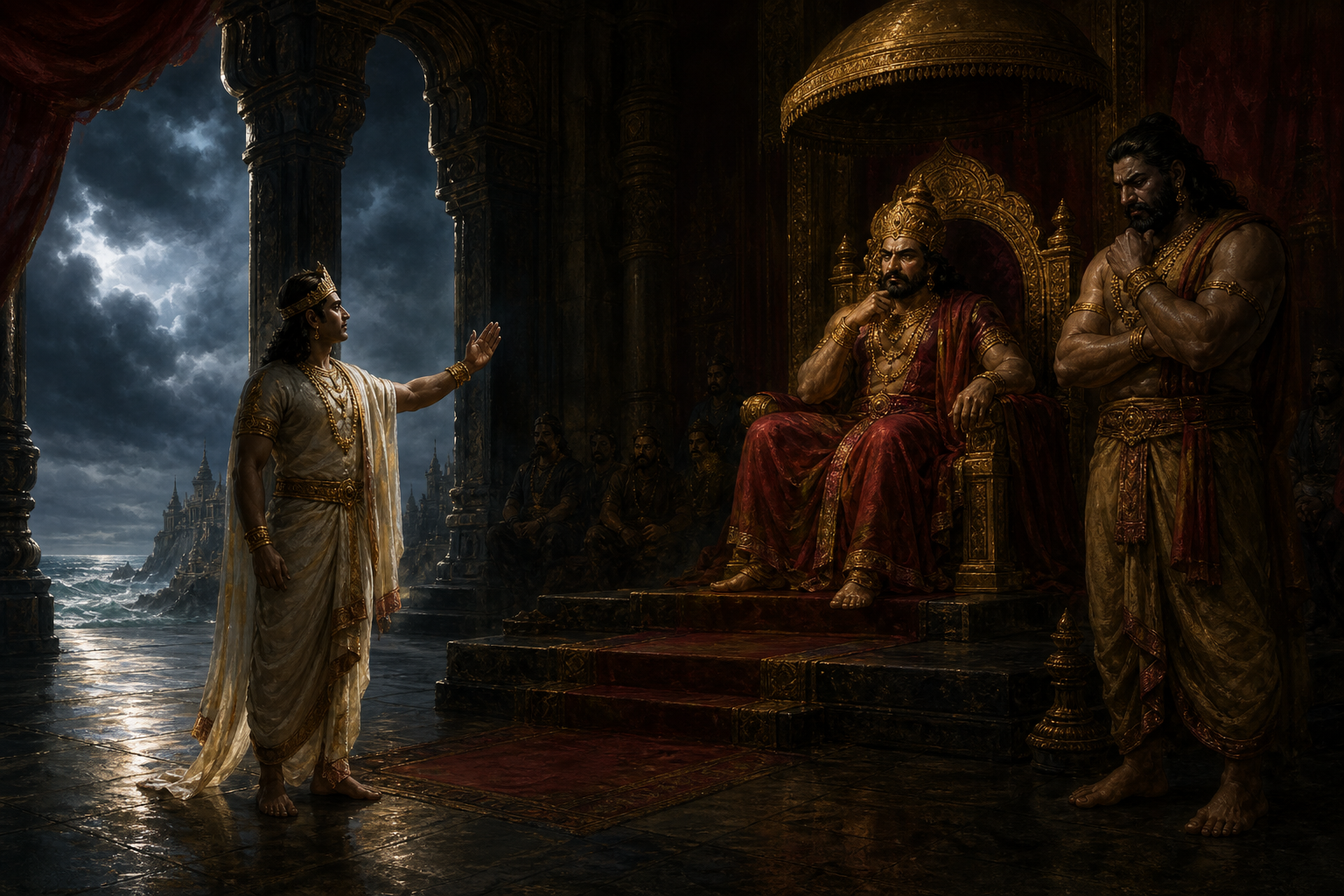
The brothers of Lanka make the moral problem sharper. Ravana does not merely want affection from his brothers. He wants their strength to serve his refusal to correct a grave wrong. Once power demands agreement, honest counsel begins to look like betrayal.
Vibhishana advises Ravana to return Sita and avert destruction. When Ravana rejects counsel and will not abandon adharma, Vibhishana leaves him and seeks refuge with Rama. His decision draws a boundary between abandoning a brother and refusing a brother’s wrongful command. Those acts are not identical.
Kumbhakarna presents a more tragic form of loyalty. He can recognize Ravana’s folly and speak against it, yet he ultimately fights for Ravana. His courage and affection do not make the cause righteous. Correct words cannot neutralize actions that continue to serve a wrong.
These brothers let you distinguish three common responses to family wrongdoing:
- Flattery: telling a relative that he is right because challenging him would be uncomfortable.
- Objection followed by enablement: criticizing the act but still supplying the money, influence, secrecy, or labour it requires.
- Dharmic refusal: speaking truth, withholding participation, and accepting that the relative may call the boundary disloyal.
The second response is especially deceptive because it feels morally serious. You voiced your objection, so your conscience feels clearer. But if your conduct still makes the wrongdoing possible, the warning has changed little. Kumbhakarna’s tragedy is not lack of insight; it is the failure to make conduct follow insight.
Vibhishana’s example does not turn every disagreement into a reason for rupture. Ordinary differences over personality, custom, money, or status do not automatically justify dramatic separation. The threshold is participation in clear adharma: deception, coercion, appropriation, humiliation, or harm that your assistance would materially enable. Begin with truthful counsel when it is safe and useful. If the demand remains wrongful, refuse the act without inventing unnecessary hatred for the person.
Use a dharmic test before your next family decision
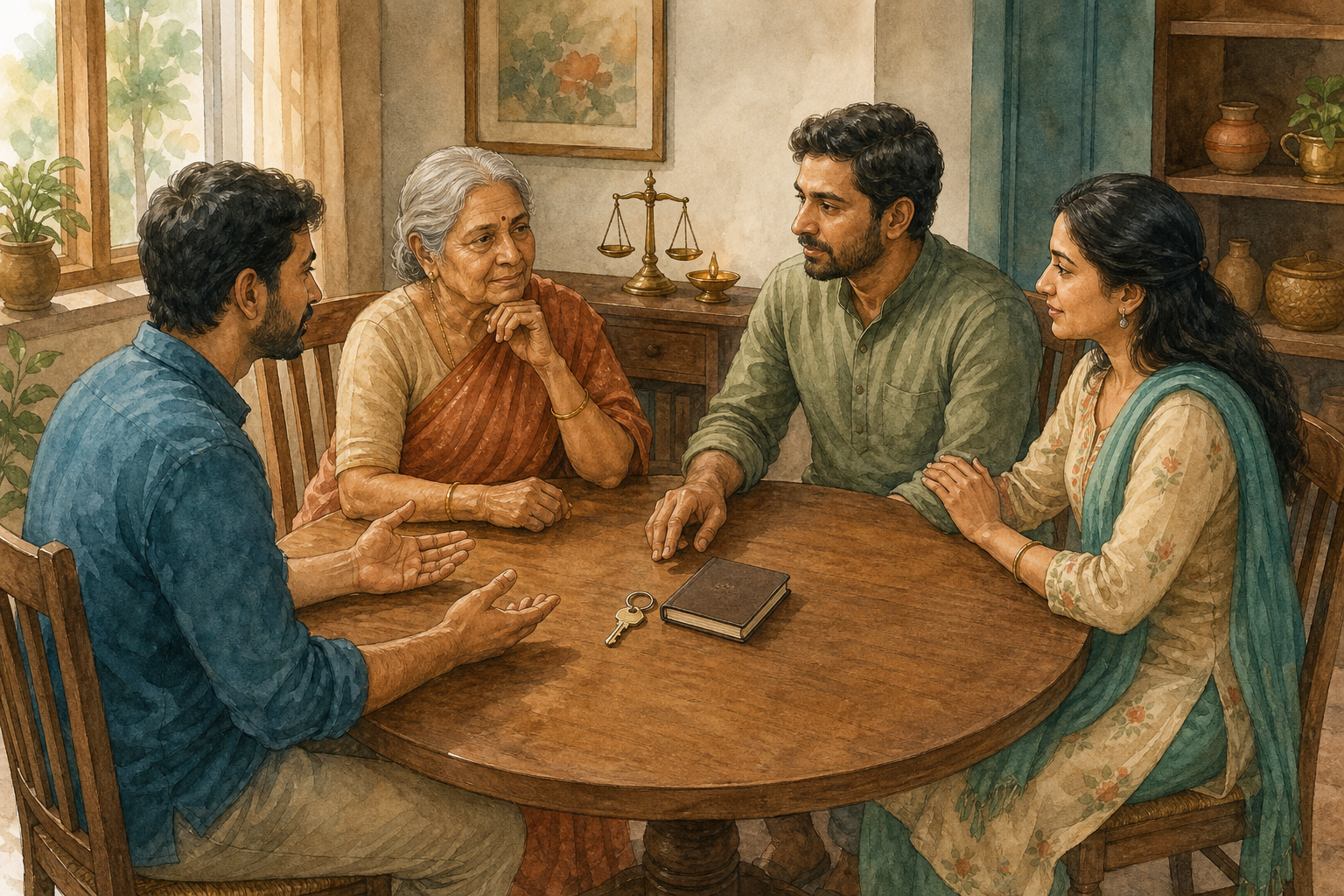
You do not need to settle every theological question before applying the Ramayana’s pattern. Before the next difficult conversation with a sibling, write down answers to these questions:
- What am I trying to protect? Separate the person’s genuine welfare from his pride, control, or public image.
- Who has the rightful claim? Imagine that the names and relationships were hidden. Ask what division of responsibility, authority, or property would then appear just.
- Am I benefiting from something I know was unfair? If so, pause before treating possession, convenience, or parental preference as moral entitlement.
- What will my help make possible? Assistance that supports duty differs from assistance that funds, conceals, or prolongs adharma.
- Can I refuse the wrongful act without rejecting the whole person? State the boundary precisely, keep insults out of it, and leave open any path that does not require complicity.
Then prepare four sentences. The first states the fact without exaggeration: “This responsibility was assigned without consulting everyone affected.” The second states your duty: “I will do my fair share.” The third states your refusal: “I will not sign, conceal, or support an arrangement I believe is unjust.” The fourth preserves a dharmic path forward: “I am willing to discuss a transparent division with everyone present.”
This structure keeps the conversation from collapsing into accusations about whether you are a good brother or sister. It moves the dispute toward conduct, duty, and remedy. A family may still disagree, but it will at least be disagreeing about the actual decision rather than testing affection through obedience.
Key takeaways
- Dharma asks you to seek a sibling’s moral welfare, not merely protect his comfort or power.
- If you benefit from an injustice you did not create, your responsibility begins with what you do after recognizing it.
- Service should carry a defined duty; help without limits can quietly become enablement.
- Truthful advice is incomplete when your later conduct still supports the wrong.
- A precise refusal can preserve deeper brotherhood better than obedient participation in adharma.
Before your next family conversation, decide which model you are about to follow: Bharata’s refusal of unfair advantage, Lakshmana’s disciplined service, Kumbhakarna’s objection without withdrawal, or Vibhishana’s refusal to serve adharma. Then make one concrete choice that brings your conduct into line with the answer.
References
