
You may be looking for one of two answers: the exact 2025 Tirumala schedule, or how a devotee was meant to approach the observance. Tirumala Tirupati Devasthanam scheduled the 16-day Sundarakanda Parayanam for November 28 through December 13, 2025, at Vasantha Mandapam in Tirumala.
The preparatory Ankurarpanam was scheduled separately for November 27 at Dharmagiri Veda Vignana Peetham. Because these dates have passed, treat them as the announced historical schedule, not as instructions for a current visit or evidence that a later edition will follow the same timetable.
Key takeaways
- The main Parayanam was announced for November 28 to December 13, 2025, at Vasantha Mandapam, Tirumala.
- Ankurarpanam was scheduled for November 27, from 7 PM to 8 PM, at Dharmagiri Veda Vignana Peetham.
- The daily recitation slot was listed as 8:30 to 9:30, but the available event details did not attach an AM or PM marker to that time.
- You could approach the session through attentive listening, chanting, or silent contemplation; participation need not be reduced to vocal recitation alone.
- The devotional center of the observance was Hanuman’s steadfastness, courage, and selfless service in the Sundara Kanda of the Valmiki Ramayana.
The announced 2025 schedule, without assumptions
| Observance | Date | Time | Venue | Purpose |
|---|---|---|---|---|
| Ankurarpanam | November 27, 2025 | 7 PM to 8 PM | Dharmagiri Veda Vignana Peetham | Sanctifying seed-sowing rite before the main programme |
| Shodasha Dina Sundarakanda Parayanam | November 28 to December 13, 2025 | Daily, 8:30 to 9:30; AM or PM not specified | Vasantha Mandapam, Tirumala | Recitation and contemplation of the Sundara Kanda |
The two venues matter. Ankurarpanam belonged to Dharmagiri Veda Vignana Peetham, while the ensuing Parayanam belonged to Vasantha Mandapam. Do not collapse them into one location when reading the schedule or preserving it for reference.
The time for Ankurarpanam was unambiguous: 7 PM to 8 PM. The daily Parayanam time was not. Do not infer morning or evening from 8:30 to 9:30 alone; no AM or PM marker accompanied that daily slot in the available 2025 details. Anyone using an archived schedule to reconstruct attendance plans should preserve that uncertainty rather than silently converting it into a morning session.
A date, time, and venue also do not establish an admission policy. They tell you when and where a programme was scheduled, but not whether registration, seating controls, or other access conditions applied. For any future TTD observance, confirm the newly issued timing and entry instructions before arranging travel. The 2025 pattern is useful context, not a standing rule.
Why Ankurarpanam comes before the recitation
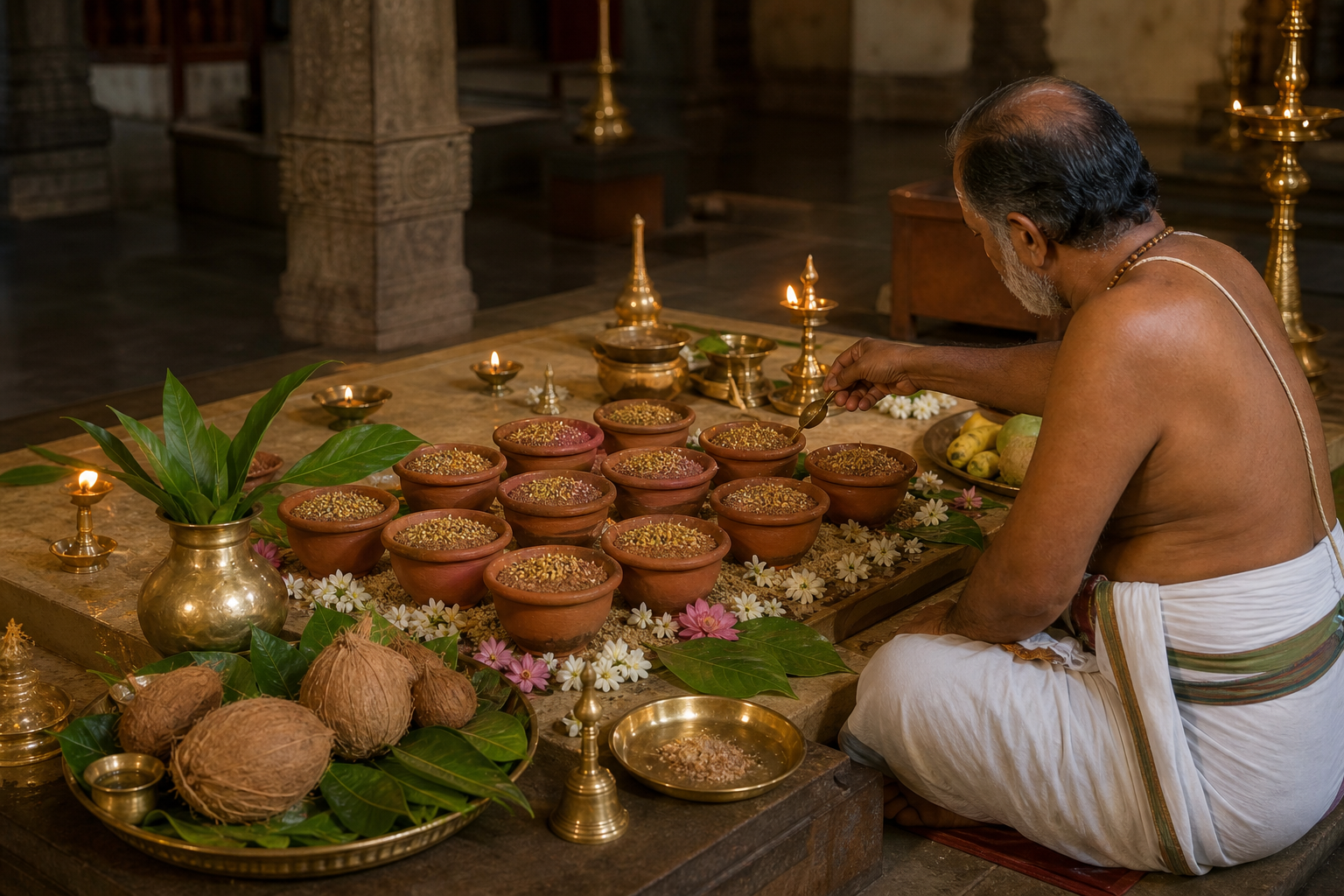
Ankurarpanam is a ritual beginning, not a decorative preview. Through the sowing of seeds, the observance invokes purity and auspicious growth before a major sacred undertaking. Its placement on the evening before the first Parayanam session gives the sequence a clear logic: intention is established first, and sustained scriptural discipline follows.
If you are trying to understand the programme as a devotee, that sequence offers a practical lesson. Preparation is already part of the vrata-like discipline. You do not wait for the first verse before becoming attentive. You settle the mind, reduce needless activity, and decide what quality you intend to cultivate through the recitation.
This is also why attending only for spectacle misses the structure of the observance. The ritual opening and the 16-day recitation belong to one devotional movement. The seed is planted before the reading begins; the following days give that intention continuity.
How to listen to Sundara Kanda as a discipline
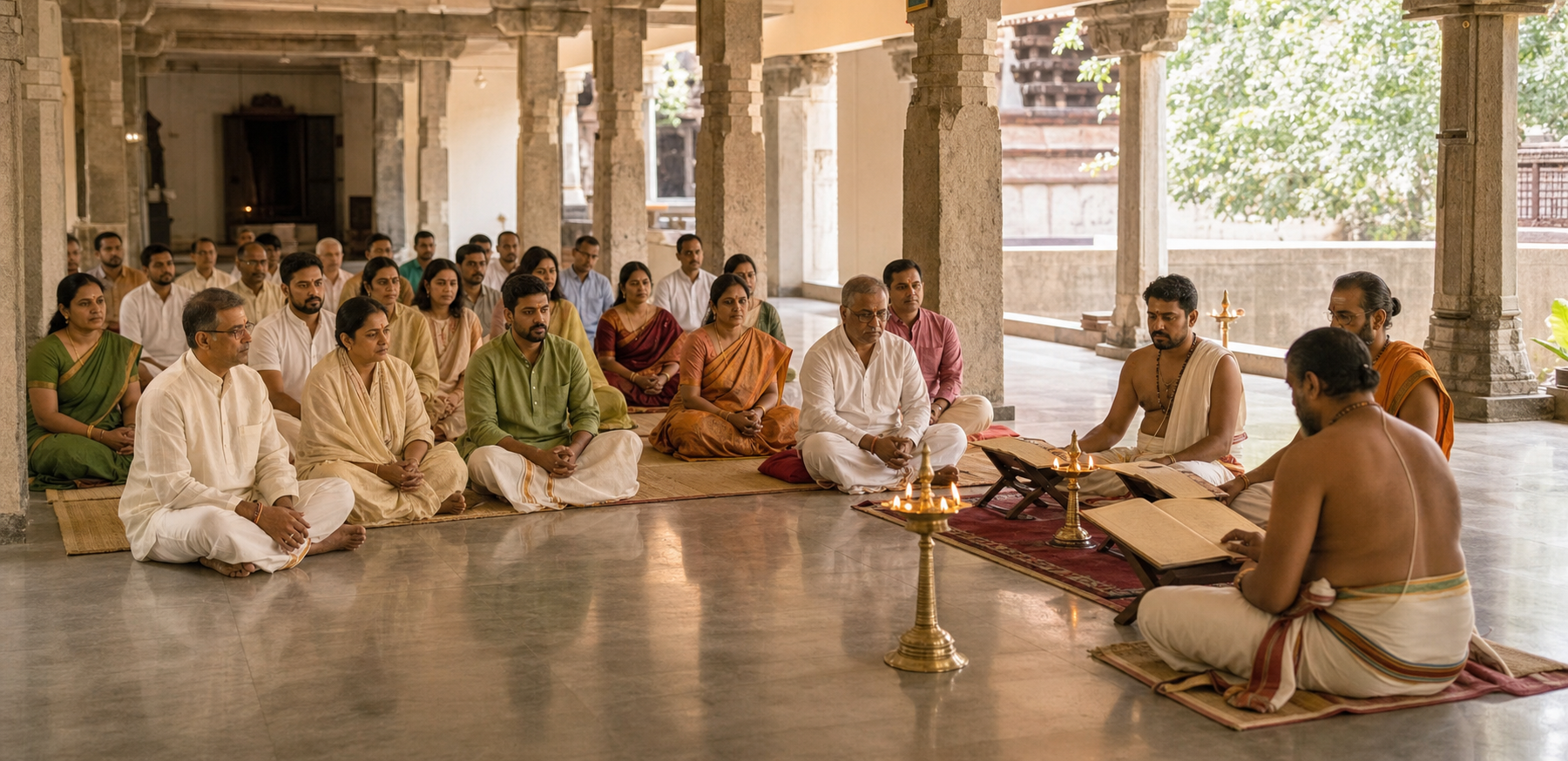
Parayanam is disciplined engagement with a sacred text. In this case, the text is the Sundara Kanda of the Valmiki Ramayana, and Hanuman provides the governing devotional example. His strength is not mere force. It is strength ordered by duty, courage directed toward a righteous purpose, and action offered as seva.
You can make those qualities concrete during a session by carrying three questions:
- Steadfastness: What duty have you allowed uncertainty or inconvenience to interrupt?
- Courage: What is the next right action, even if the entire path is not yet visible?
- Seva: Who is served by your effort, and has personal pride begun to replace that purpose?
These questions keep contemplation close to conduct. Sundara Kanda is not being reduced to a motivational slogan; your conduct is being measured against the virtues embodied in the narrative.
If you can follow the recitation confidently, chant with care and stay with its cadence. If you cannot, attentive listening is still a serious mode of participation. You may also follow the meaning silently or meditate on Hanuman’s resolve. The important distinction is between quiet attention and passive presence. Physical proximity to a recitation does not by itself create contemplation.
Textual fidelity matters here. Do not race through unfamiliar Sanskrit simply to keep pace or create the appearance of participation. Listen closely, use a dependable text you can follow, and preserve reverence for the words. Accuracy, attention, and humility belong together.
Collective recitation adds another dimension. Many people orient their attention toward the same text, at the same time, within a sacred setting. That common rhythm can make distraction easier to notice and devotional resolve easier to sustain. Your responsibility is to support that atmosphere: arrive early, minimize movement, silence your phone, and avoid conversation during the recitation.
The programme is distinctly rooted in the Ramayana and Hanuman bhakti. Its ethical resonance can still be understood across the wider dharmic family. Steadiness, disciplined conduct, compassionate resolve, and service are intelligible within Hindu, Buddhist, Jain, and Sikh moral worlds. Recognizing that affinity does not require pretending that their scriptures, rituals, or doctrines are interchangeable.
A practical participation plan for temple or home
If you attend a similar future observance at Tirumala, build your plan around confirmed information rather than memory of the 2025 event.
- Check the newly dated TTD announcement for the exact venue, daily time, and any entry instructions. Do not copy the 2025 dates into a later calendar.
- Distinguish the preparatory rite from the main recitation. They may occur on different dates and at different venues, as they did in the 2025 schedule.
- Reach the venue early enough to settle before the recitation begins. A rushed arrival carries the noise of travel directly into the practice.
- Choose your honest mode of participation: careful chanting, attentive listening, or silent contemplation. Do not treat audible recitation as the only meaningful option.
- Keep one ethical focus for the session. Steadfastness, courage, or seva is enough; trying to manufacture many insights usually scatters attention.
- Afterward, identify one action that expresses the chosen quality. A devotional impression becomes useful when it alters conduct.
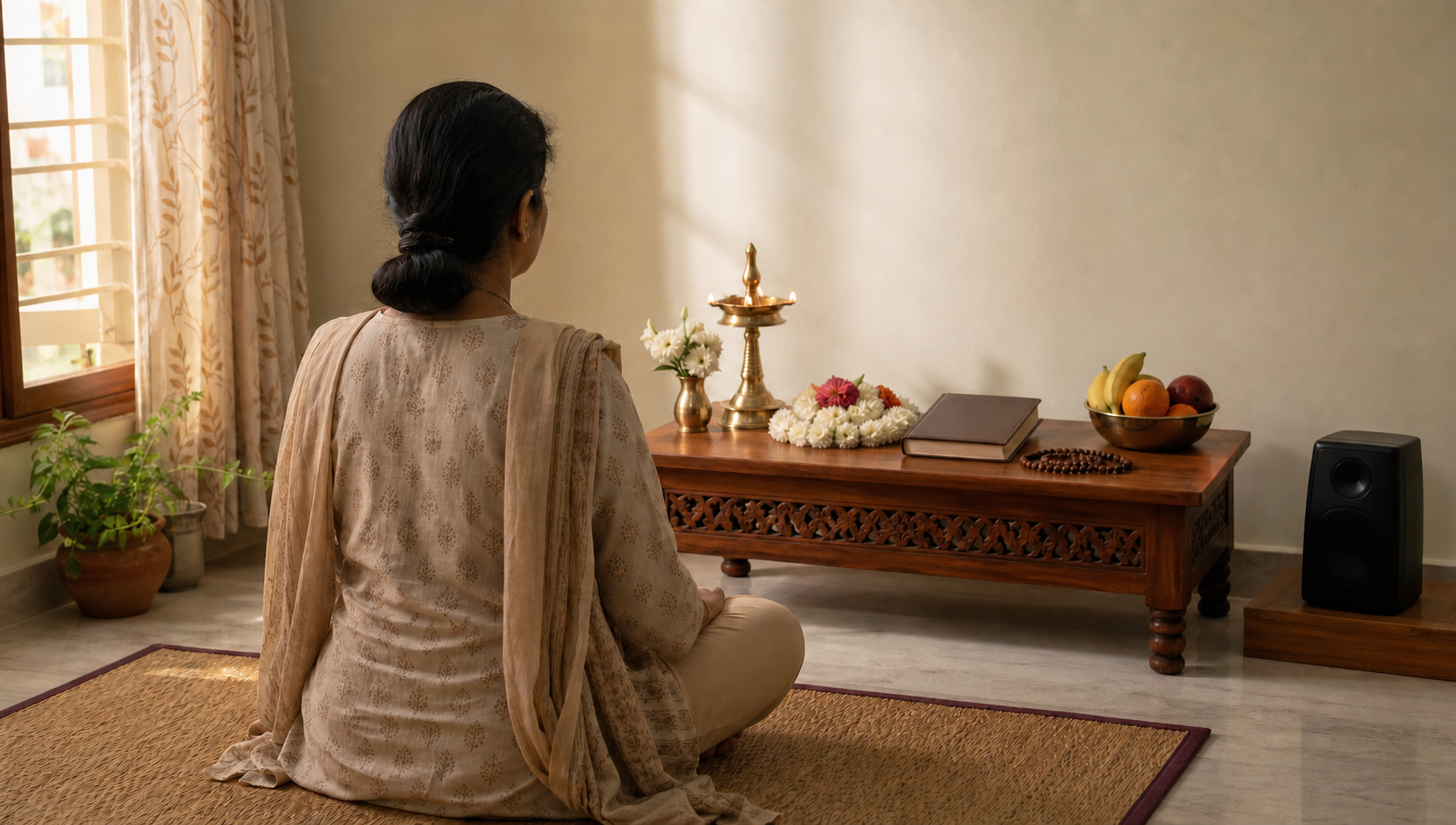
If you are observing from home, do not imply that a private reading is the same as formal participation in TTD’s temple programme. It can still be a sincere personal discipline. Set a fixed daily period, use a trustworthy edition or translation of the Valmiki Ramayana, and remove avoidable interruptions before you begin.
Do not invent a 16-part textual division from the dates alone. The 2025 information established the duration of the programme but did not provide a day-by-day canto allocation. Unless you possess an authorized recitation plan, read at a sustainable pace and keep the daily commitment consistent. Continuity is more valuable than an ambitious first day followed by abandonment.
For a later TTD edition, wait for a newly dated schedule and verify every practical detail afresh. For your own practice, you can begin more simply: choose a fixed period, open the Sundara Kanda, and let one quality of Hanuman govern the action you take after the reading ends.
References
