
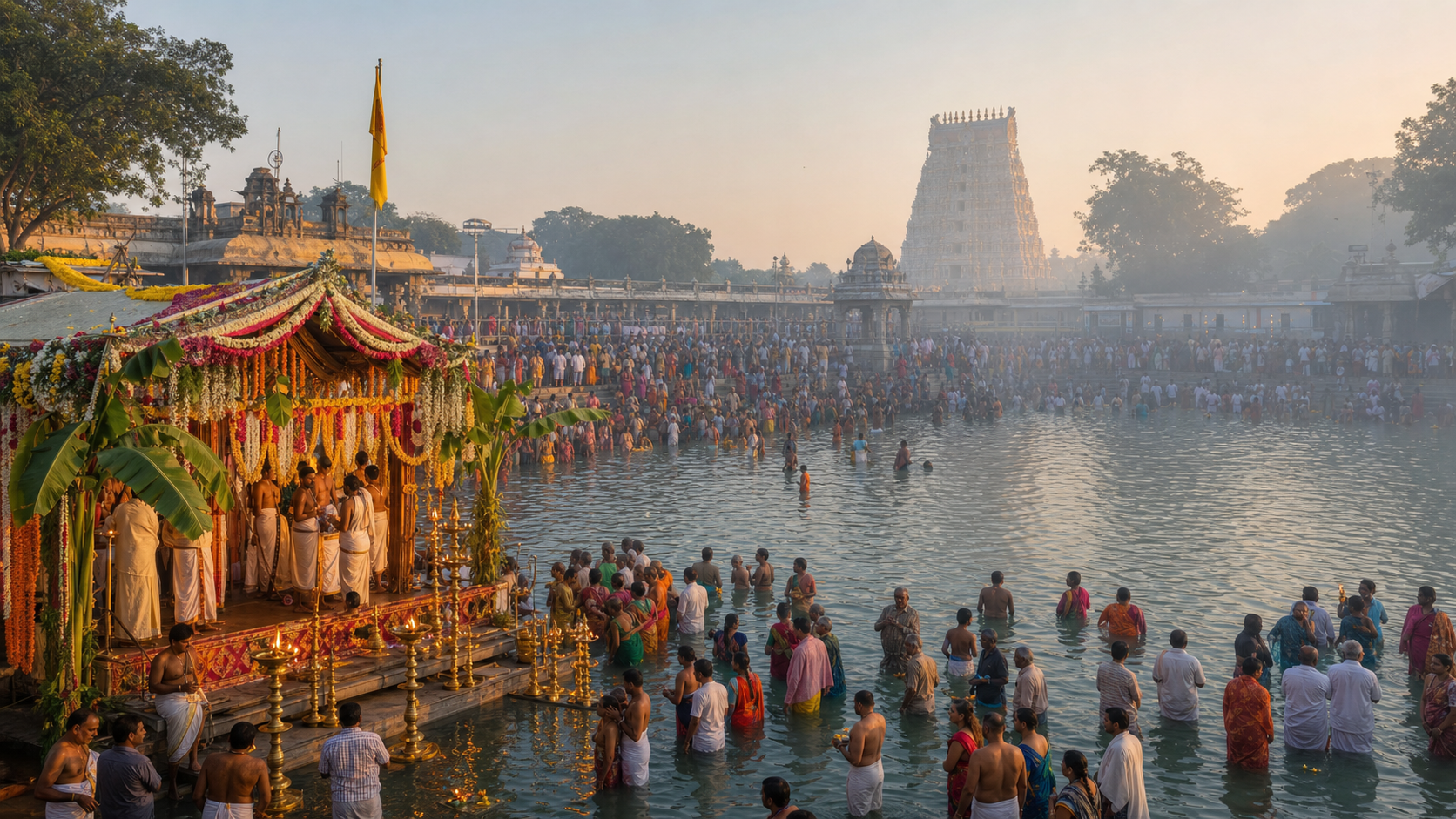
If you are deciding what to attend at Tiruchanur, three names can make one sacred festival seem like three unrelated events. The distinction is simple: Padmavathi Brahmotsavam is the annual festival, Panchami Tirtham is its sacred-water culmination, and Srivari Saare is the ceremonial gift that joins Tirumala to Tiruchanur.
Once you understand that relationship, you can plan around the right observance, explain its meaning to your family, and participate without turning a living temple tradition into a sightseeing exercise.
Key takeaways: the festival map in four lines
- Padmavathi Brahmotsavam is the wider annual celebration of Sri Padmavathi Ammavaru at Tiruchanur during Karthika masam.
- Panchami Tirtham is observed on Shukla Panchami of Karthika and centers on Padma Pushkarini, the temple tank associated with Ammavaru’s divine appearance.
- Srivari Saare, also written Sare, is the ceremonial offering sent from Sri Venkateswara Swamy at Tirumala to Sri Padmavathi at Tiruchanur. It traditionally includes a sari and sacred paraphernalia.
- Your practical rule is to use the current year’s TTD arrangements. A previous civil-calendar date should never be treated as the permanent festival date.
Panchami Tirtham is a crossing, not merely a crowded bath
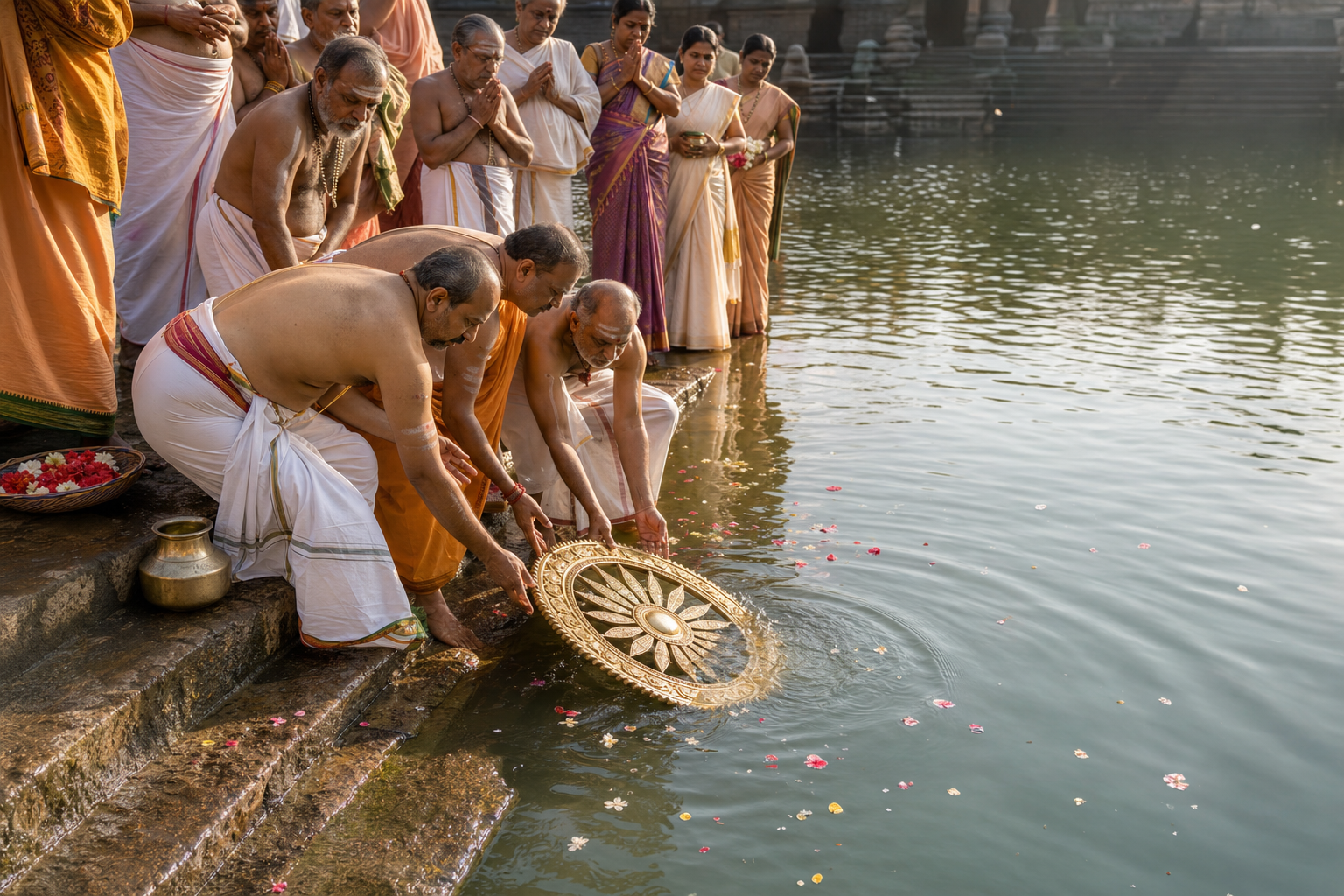
The center of Panchami Tirtham is a precise sacred memory: Sri Padmavathi Devi is commemorated as appearing on a thousand-petaled golden lotus in Padma Pushkarini. The lotus is therefore not incidental decoration. It tells you how to read the entire observance.
A lotus rises through water without surrendering its beauty to the mud beneath it. For a pilgrim, that image shifts the question from “What can I obtain here?” to “What can remain pure in me while I continue to live amid difficulty?” Before you enter the festival area, choose one quality you want to protect: truthfulness, steadiness, gratitude, restraint, or compassion. That one intention will give the waiting, chanting, procession, and water rite a common center.
As the observance reaches Padma Pushkarini, processional worship, Vedic recitation, and devotional singing gather around the tank before the holy bath. Tirtha carries the sense of a crossing from ordinary awareness toward the sacred. The physical immersion expresses purification and renewal, but its meaning is diminished if the pilgrim leaves with the same carelessness, anger, or disregard for others that accompanied the arrival.
You can prepare for that crossing even while standing in a queue. Keep one short nama or prayer rather than constantly checking how quickly the line is moving. Let an elder pass without resentment. Avoid adding litter, packaging, or unnecessary offerings to the water’s burden. These are small acts, but they align the outer pilgrimage with the inner one.
The lotus also provides a thoughtful way to discuss the festival with Buddhist, Jain, or Sikh friends. Lotus imagery carries resonances of awakening, virtue, detachment, and grace across several Dharmic traditions. That shared vocabulary should not erase the ritual’s particular identity. Begin with the local truth: this is the worship of Sri Padmavathi Ammavaru at her own tirtha. The wider civilizational resonance comes after that specificity, not in place of it.
Srivari Saare makes the Tirumala-Tiruchanur bond visible
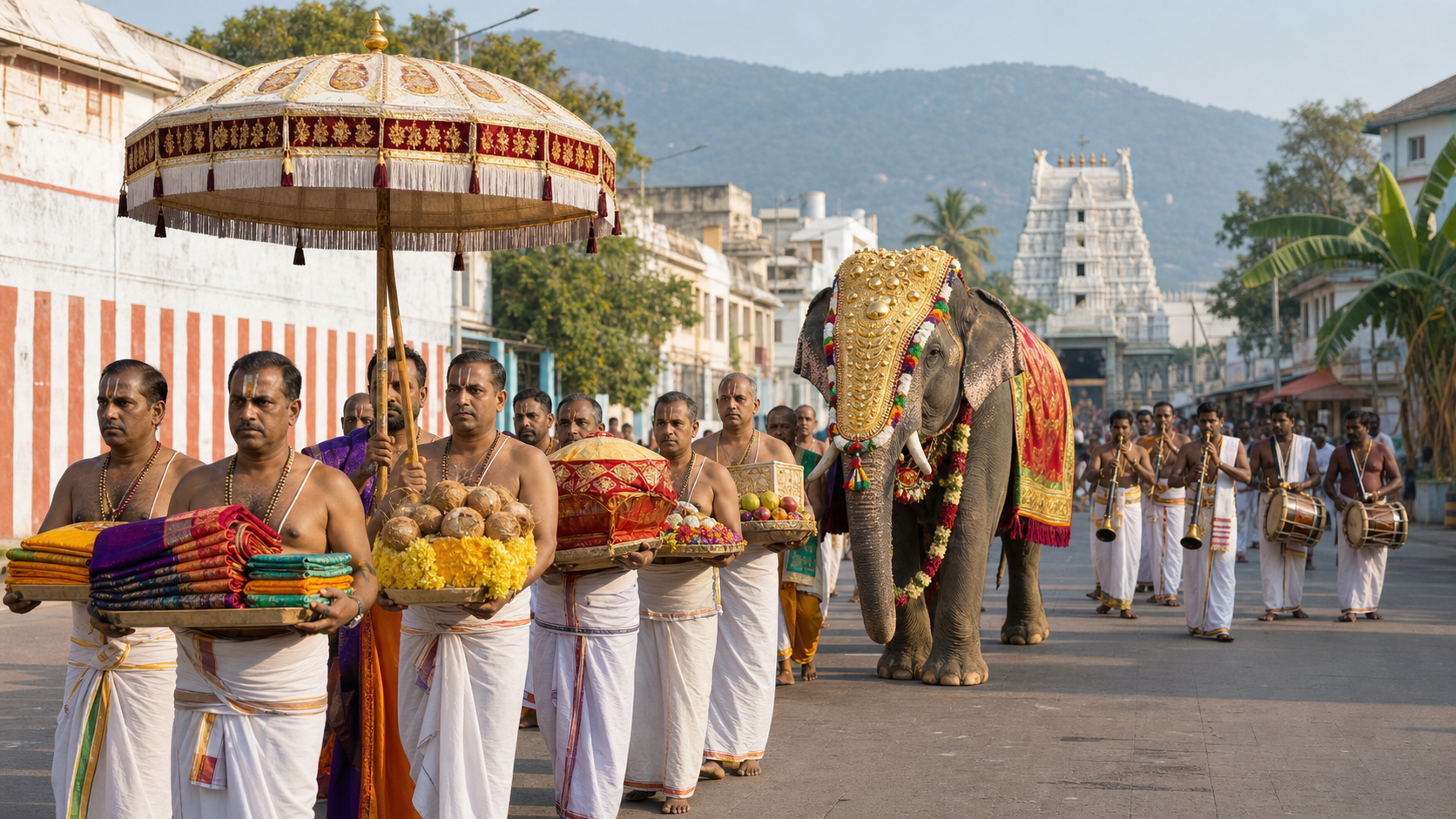
Srivari Saare is easy to misread as a decorative procession attached to the main festival. Its importance lies in the gift itself. A sari and sacred paraphernalia are carried from the Tirumala temple as an offering from Sri Venkateswara Swamy to Sri Padmavathi. The journey turns a theological relationship into something devotees can see moving through the world.
The Saare expresses the enduring bond of Sri Mahalakshmi and Sri Vishnu. It also brings two divine qualities into a single frame: compassion and protection. Grace is not presented as remote sentiment, and divine guardianship is not presented as force without tenderness. Each is understood through the other.
The procession also joins two sacred centers. Tirumala and Tiruchanur are geographically distinct pilgrimage spaces, but the offering demonstrates their ritual and devotional relationship. The route is therefore part of the meaning. The gift leaves one temple, passes through a community of devotees, and reaches another temple. Institution, landscape, family devotion, and theology meet in one public act.
If you are bringing children, give them this concrete interpretive key before you arrive: “We are going to watch a sacred gift being carried.” They can then notice the offering, the recitation, the music, and the care with which the procession is received. That is far more memorable than asking them to stand quietly without telling them what the movement means.
During the procession, receive darshan without treating proximity as a competition. Keep the route open, follow volunteers and security personnel, and make room for elders, families, and children. Silence during a key ritual moment is not passive behavior. It is one way the gathered community protects the dignity of the offering.
Plan by the Karthika tithi, not by last year’s date
The most common planning mistake is copying a previous year’s date into a new itinerary. In 2025, the Srivari Saare procession set out from Tirumala in the early hours of Tuesday, 25 November. That date belongs to that year’s arrangements. Panchami Tirtham is tied to Shukla Panchami in Karthika masam, so its civil-calendar date must be checked afresh.
Use this sequence when making your pilgrimage plan:
- Confirm the current programme. Check the exact date, time, permitted areas, procession arrangements, and tank-access instructions issued for that year’s Brahmotsavam. TTD administers the event, and directions on the ground take precedence over an old itinerary.
- Choose your devotional priority. If the Saare is central for you, plan around the early procession and its route. If Panchami Tirtham is central, plan around the Padma Pushkarini observance. If you hope to attend both, allow for controlled movement and waiting rather than assuming a quick transfer.
- Arrive well before dawn for an early Saare procession. Early arrival gives you time to settle without pushing toward the route at the last moment. Choose a respectful viewing place and remain there unless officials redirect you.
- Treat access to the water as managed access. A crowded sacred tank is not a place to infer permission from the movement of people around you. Wait for instructions, respect barriers, and accept that safety controls may affect how closely you can participate.
- Make a family regrouping plan. Select a clear meeting point outside the densest area before entering the crowd. Keep belongings minimal, keep children close, and do not depend on being able to move against the flow once a procession or water rite begins.
This preparation is not separate from devotion. Orderly conduct allows Vedic recitation, music, darshan, and the movement of sacred offerings to remain the center of the gathering. When each person insists on an unrestricted view or immediate access, the community itself becomes the obstruction.
Let the pilgrimage end in seva, not at the exit gate
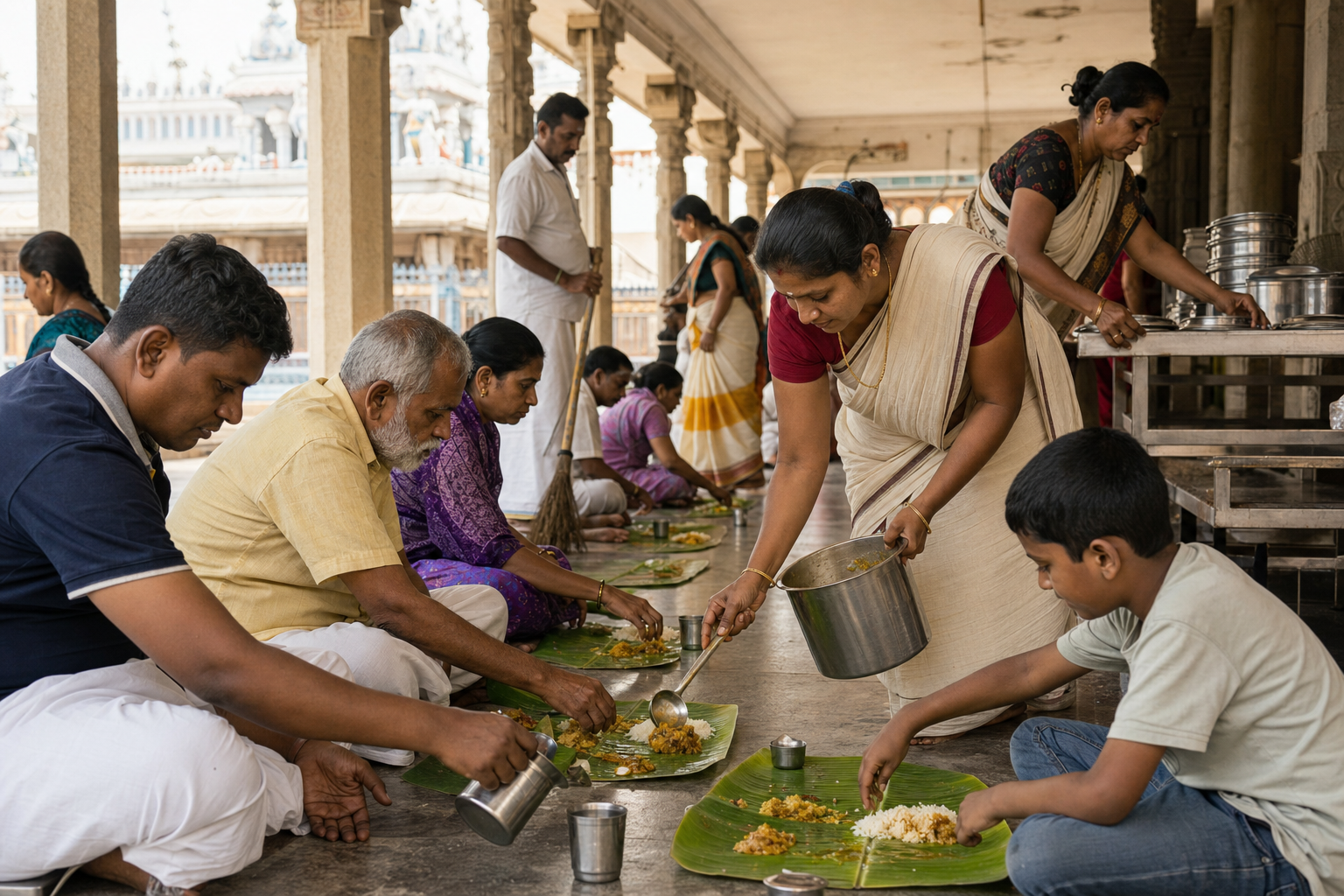
Panchami Tirtham and Srivari Saare place grace and responsibility beside each other. The lotus asks for inward purity. The sacred water asks for renewal. The Saare asks you to recognize a bond sustained through reverence and giving. The gathered devotees ask for patience, discipline, and mutual care.
Within a day of returning, write down two sentences: what did you receive from the pilgrimage, and what obligation follows from it? Then choose one visible act. Help an elder without seeking recognition. Teach a child the story of the lotus. Keep a local waterbody free of waste. Offer time to a temple or community task. Repair a strained family relationship with the same dignity represented by the sacred gift.
When you make your next plan for Tiruchanur, begin with the current tithi and TTD arrangements, arrive with one clear sankalpa, and leave with one act of seva already chosen. That is how a festival witnessed from the outside becomes a discipline carried home.
References
- DharmaRenaissance Blog – Sacred Gift to Padmavathi: Srivari Saare Procession from Tirumala on Nov 25, 2025
- DharmaRenaissance Blog – Panchami Tirtham at Padma Pushkarini: Sacred Lotus Vision and Devotional Unity
