
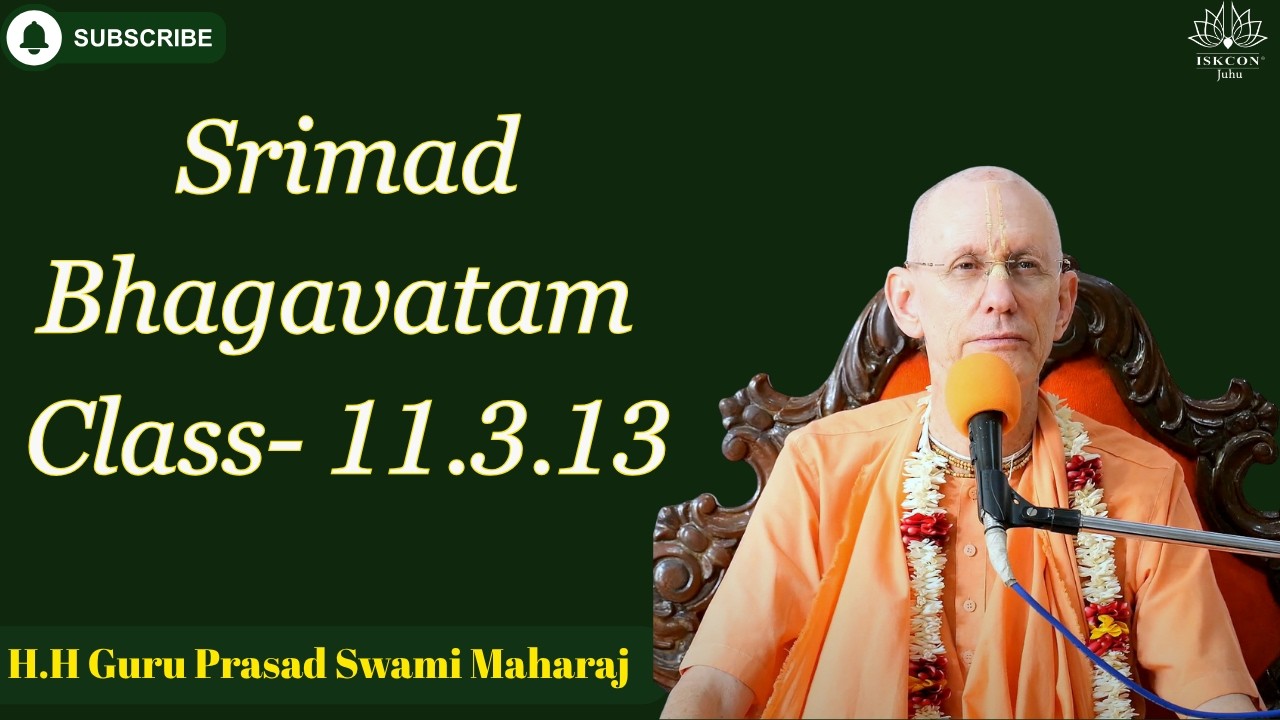
On 7 April 2026 at ISKCON Juhu, Mumbai, H.H Guru Prasad Swami presented a rigorous exposition on Srimad Bhagavatam (11.3.13), emphasizing a core ethic of Sanatan Dharma: all possessions are ultimately Krishna’s, and human beings function as trustees rather than proprietors. The lecture underscored the impermanence of human life and the reality that body, mind, relationships, and wealth are held on temporary loan. In this framework, meaningful living emerges when kāya–vāk–manas (body, speech, and mind) are aligned in seva (selfless service) to the Divine rather than directed toward svārtha-bhoga (self-centered enjoyment).
Located within Canto 11’s mature teachings, Srimad Bhagavatam 11.3.13 situates detachment (vairāgya) not as denial, but as lucid recognition of ontological dependence on the Supreme. The lecture clarified how this verse belongs to a larger pedagogical arc describing how devotion stabilizes through knowledge, detachment, and sustained practice, thereby transforming fleeting satisfaction into enduring inner peace.
The teaching advances an ethic best described as sacred stewardship. Apparent ownership, or the sense of “mine-ness,” was analyzed as a cognitive habit that obscures the truth that all energies originate in and return to Krishna. Reframing life as stewardship dissolves possessiveness without abandoning responsibility, urging practitioners to care for resources with excellence, humility, and gratitude.
In practical terms, the discourse mapped a threefold discipline: employ the body (kāya) in tangible service, purify speech (vāk) through truthfulness and praise of the Divine, and train the mind (manas) to contemplate Krishna with steadiness. When action, expression, and attention are harmonized, inner contradictions recede, and a coherent spiritual identity emerges within the Bhakti Tradition.
A technical frame linked these insights to the classical triad of sambandha (ontological relationship), abhidheya (prescribed practice), and prayojana (ultimate purpose). Recognizing Krishna as the supreme proprietor establishes sambandha; daily seva and remembrance embody abhidheya; and the flowering of unselfish lovefreedom from possessiveness and fearsignals prayojana. Within this Vedic philosophy, genuine detachment is not forced austerity but a by-product of deepening devotion.
The lecture also distinguished stewardship from ascetic withdrawal. To steward is to engage fullymanaging households, professions, and communitieswith the intention to serve. Offerings of time, talent, and resources become instruments of dharma rather than extensions of ego. This reframing translates spiritual ideals into durable habits that uplift personal character and social life.
Psychologically, the analysis addressed the instability of gratification based on acquisition. Attachment cycles resemble a hedonic treadmill, producing brief highs followed by restlessness. Bhakti-yoga practices such as nāma-japa and kīrtana help retrain attention, soften compulsive craving, and cultivate samatva (equanimity). Listeners frequently report that this attentional retrainingcoupled with gratitude and servicereduces anxiety while increasing clarity and contentment.
Speech purification (vāk-tapas) received careful attention. Speech aligned with truth (satya), compassion (dayā), and benefit (hita) protects relationships and stabilizes the mind. In a digital age of performative expression, consciously dedicating speech to uplift rather than to aggrandize self becomes a daily expression of aparigraha (non-possessiveness) and seva.
Ethically, the lecture connected stewardship to responsible consumption and generosity (dāna). Managing budgets with transparency, avoiding waste, and supporting community welfare manifest the insight that wealth is entrusted for service. Such choices also advance environmental responsibility, reflecting the Sanatan Dharma ideal that care for creation is inseparable from devotion to the Creator.
Within Gaudiya Vaishnavism, the doctrine of acintya-bhedābheda (inconceivable simultaneous oneness and difference) adds nuance: the individual is one with Krishna in being beloved and sustained by Divine energy, yet different as a servant. This paradox encourages humility and intimacy, making detachment a natural response to tasting a higher fulfillment in devotion.
The lecture’s message resonates widely across dharmic traditions, reinforcing unity rather than division. Buddhism illuminates impermanence (anicca) and non-ownership (anattā), clarifying why clinging generates suffering. Jainism enshrines aparigraha and ahiṁsā as ethical anchors that curtail excess and harm. Sikhism centers seva and simran, integrating service and remembrance into everyday life. These convergences demonstrate a shared civilizational wisdom: freedom grows as possessiveness wanes and service expands.
Several attendees related commonplace experiencesan heirloom lost, a sudden health scare, a career shiftthat exposed the fragility of ownership claims. Such moments often catalyze a transition from accumulation to contribution. By naming these transitions and providing a disciplined path for response, the discourse translated philosophical insight into lived transformation.
Practical applications included simple but potent routines: begin the day with nāma-japa to stabilize attention; offer food to Krishna and honor prasāda; schedule weekly seva; and close the day with brief introspection on how body, speech, and mind were used in service. Over time, many discover reduced impulse purchasing, greater patience, improved relationships, and a growing taste for kīrtana and study of scriptures.
Obstacles were treated with realism: social pressure to consume, digital distraction, and the ego’s subtle rationalizations. The remedy, it was explained, is progressive and communalseek guidance (guru), associate with practitioners (satsaṅga), adopt modest vows of aparigraha, and measure progress by inner peace and willingness to serve rather than by visible austerities alone.
Philosophically, the teaching aligned with the Upaniṣadic principle īśāvāsyam idaṁ sarvam, harmonizing Vedic metaphysics with the Bhagavata’s heart-centered devotion. Recognizing that every faculty is borrowed for a brief lifespan reframes decisions about work, family, and community as opportunities to express love through responsibility and restraint.
Socially, stewardship tempers competition with cooperation. When persons and institutions consider resources as sacred trusts, policies orient toward fairness and sustainability. Communities marked by seva culture tend to show lower polarization and higher resilience, because identity is defined more by shared service than by accumulation or status.
In closing, the discourse at ISKCON Juhu Mumbai offered a comprehensive pathway from possession to sacred stewardship. Srimad Bhagavatam 11.3.13 illuminates an ethic that is intellectually persuasive, emotionally healing, and practically actionable: live lightly, serve deeply, and remember constantly. Such alignment, the lecture affirmed, brings the quiet assurance that nothing essential can be lostbecause the purpose and possessor of all have been recognized.
Inspired by this post on Dandavats.
