
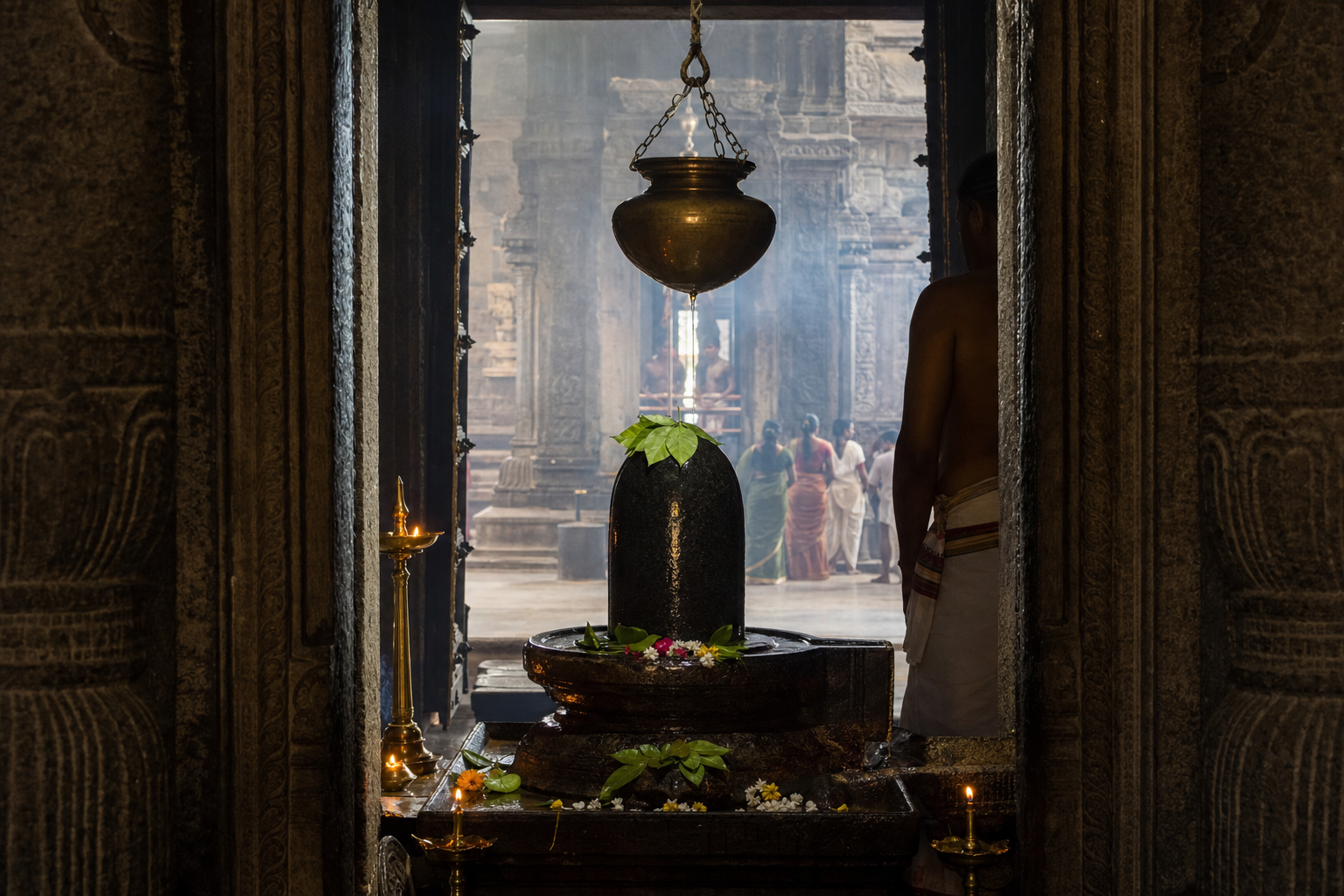
You may have encountered the name Pingalamata while reading about Linga worship, preparing for a temple consecration, or trying to understand what a kumbhabhisheka actually completes. The useful question is not merely what the name denotes. It is how a Shaiva shrine moves from stone and geometry to continuous worship.
The answer lies in a complete ritual ecology. Mantra, the worshipper’s body, the Linga, the temple plan, daily service and community participation must reinforce one another. Once you see those connections, ceremonies that can look like separate religious events become stages in the life of one sacred institution.
Why Linga worship cannot be separated from the temple
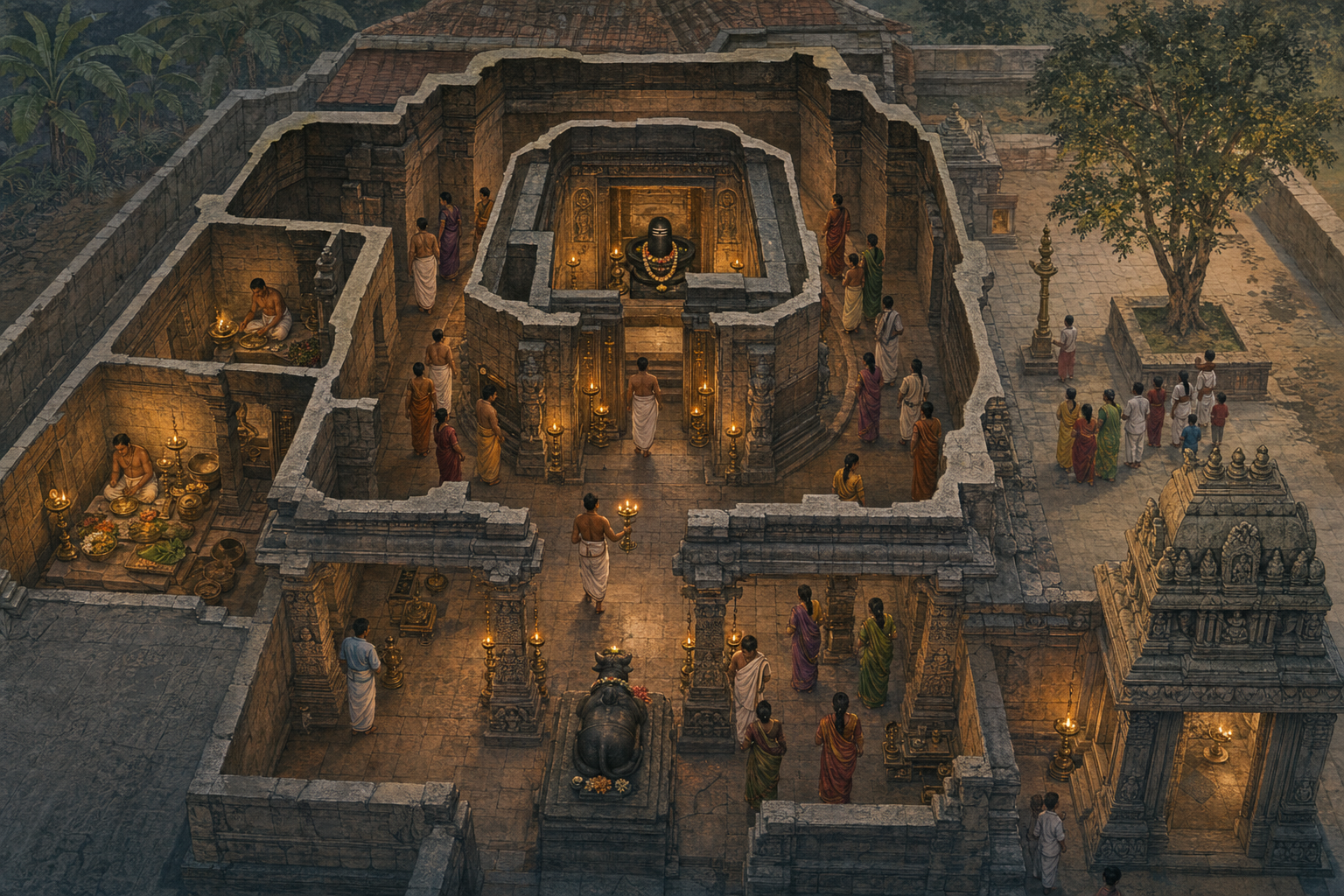
The ritual tradition associated with the Pingalamata belongs to the Bhairava stream of the Shaiva Agamas. It is generally situated in the early medieval period, approximately the seventh to tenth centuries CE, and stands close to the Brahmayamalatantra, also called the Picumata. Mantra systems, mandalas, yogini circuits and methods for establishing a protected ritual field connect this tradition with a larger Bhairava ritual world.
That historical location matters, but it does not tell you how to read the practice. The central insight is that the Linga, its pedestal, the sanctum and the acts performed before it form a single system. The Linga is an aniconic sign of Shiva, yet it is not treated as an empty abstraction. It gathers Shiva’s five activities—creation, sustenance, dissolution, concealment and grace—into a form that can be approached through sight, touch, sound, offering and disciplined attention.
The Linga therefore serves simultaneously as the center of worship and as a cosmological focus. Its yoni-pitha receives libations. Nandi faces it along the temple’s principal axis. The garbhagriha concentrates presence, while the threshold, mandapa, enclosure and processional path regulate how people move toward and away from that concentration. Architecture is already participating in worship before the first flower is offered.
This is why it is misleading to treat Agamic temple practice as decoration added to a building. Measurement, orientation, image placement, mantra and recurring service are mutually dependent. It is equally misleading to assume that every Shaiva temple follows one identical script. Manuscript traces and lineage transmission point to circulation across northern and southern India with regional adaptation. The recognizable ritual spine can remain intact even when local materials, recitations, calendars and procedural details differ.
Key takeaways
- Pingalamata ritual joins theology, bodily discipline, material installation and temple architecture; none is merely an accessory to the others.
- Prana-pratishtha establishes the deity’s installed presence, while kumbhabhisheka publicly crowns or renews the consecrated temple.
- Abhishekam can occur within daily or special worship; it is not automatically a new consecration.
- Consecration creates an obligation of continuing service. A temple is not ritually complete simply because its inauguration was elaborate.
- Regional variation is normal. Identify the governing Agama, paddhati and lineage before judging a temple by one isolated feature.
The consecration sequence creates a durable sacred relationship
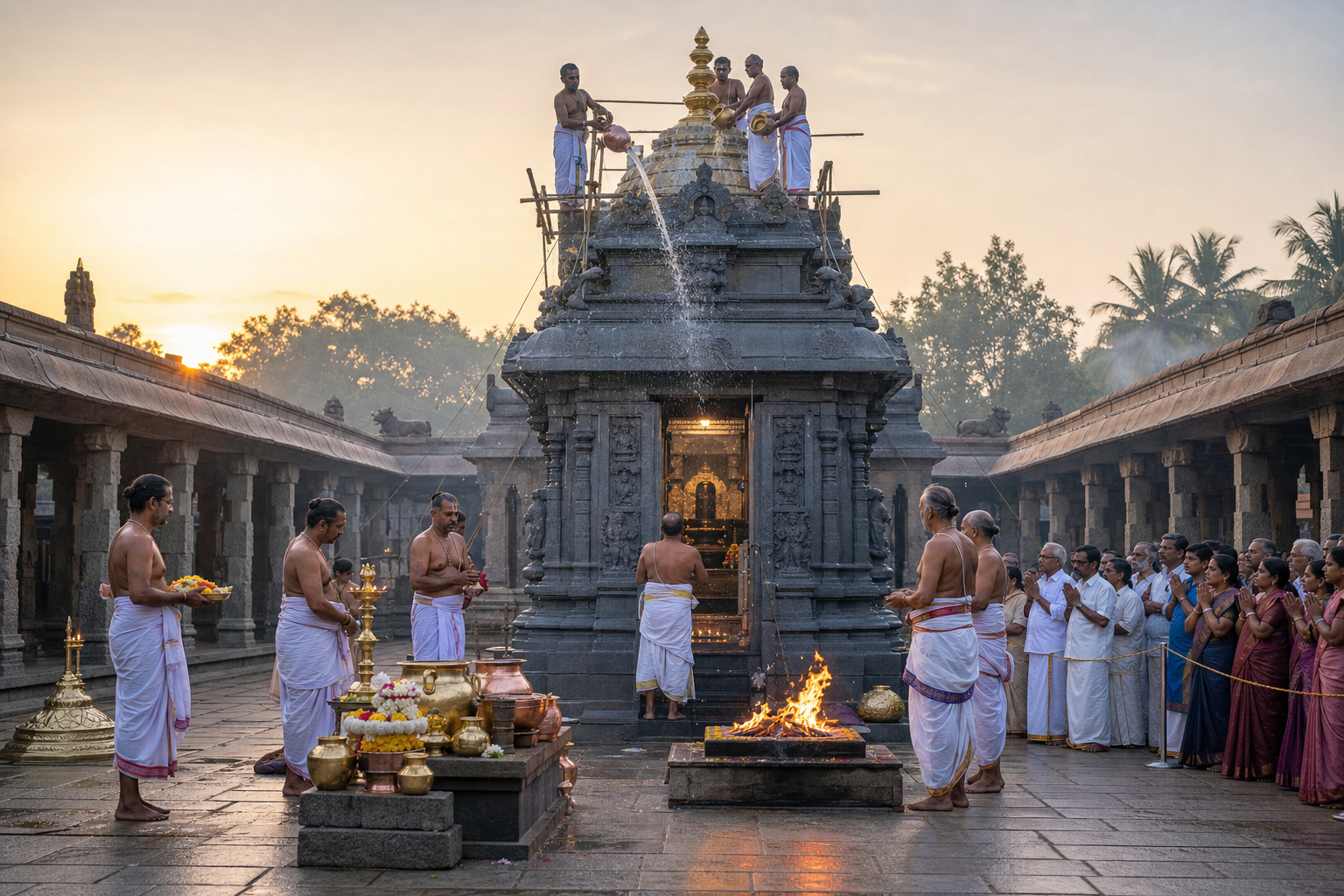
Prana-pratishtha is sometimes compressed into the idea that a priest puts life into an inert object. That shortcut obscures the Shaiva reasoning. Shiva is not manufactured by a ceremony. The rites prepare matter, space, officiants and community for an installed relationship that can be sustained through worship.
The sequence begins before the Linga reaches the sanctum. Site selection and vastu examination establish where the temple should stand and how its axis should be organized. Ground-breaking is followed by garbhanyasa, the placing of foundational deposits. Mantra-inscribed tablets, grains, herbs and metals may be arranged in relation to the vastu-purusha mandala. These deposits connect the ground beneath the shrine with the temple’s planned vertical and ritual order.
Installation then brings together the Linga, yoni-pitha, sanctum measurements and prescribed orientation. Astabandhana, a traditional binding compound, secures the installed form to its base. Its practical role is structural, but its ritual meaning is inseparable from that role: the installed presence is being given a stable seat. This is not a step to improvise after construction decisions have already become difficult to reverse.
Mantras, nyasa, mudras, visualization and protective sealing complete another layer of the work. Nyasa places sacred sound upon the officiant’s body. Mudras establish and seal ritual intention. Bhavana gives the act an interior form, while regulated breathing steadies attention. The officiant is not standing outside the process as a technician manipulating an object; body, sound and awareness are being ordered for the same purpose as the sanctum.
Kumbhabhisheka crowns the consecration. Water in kalashas is charged through mantra, carried in procession and poured over the temple’s finial, sanctum and installed forms. The movement from summit to shrine gives public expression to the temple’s completed sacred order. The dhvaja-stambha, bali-pitha, circuit offerings and participation of the gathered community extend the rite beyond the closed center of the garbhagriha.
The terms are easier to use correctly when you keep their distinct functions in view:
| Term | Ritual role | Useful distinction |
|---|---|---|
| Garbhanyasa | Places mantric and material deposits within the temple foundation. | It prepares the sacred ground; it is not the installation of the visible Linga. |
| Prana-pratishtha | Installs and ritually establishes the deity’s presence. | It is a consecratory process, not ordinary daily worship. |
| Astabandhana | Secures the installed form to its base. | Its structural and symbolic functions operate together. |
| Kumbhabhisheka | Completes or renews consecration through mantra-charged kalasha water. | It concerns the temple as a consecrated whole, not only one bathing offering. |
| Abhishekam | Bathes the Linga or another installed form during worship. | It can be daily, occasional or part of a larger consecration. |
| Nitya-puja | Maintains the temple through regular service. | It begins the enduring responsibility created by consecration. |
If you are involved in a new temple or a major restoration, do not turn this sequence into a do-it-yourself checklist. Bring the acharya and sthapati into the project before the axis, foundation, sanctum dimensions and image placement are fixed. A ritual correction cannot always compensate for an architectural decision that prevented the prescribed relationship among those elements.
Five systems must cooperate during worship
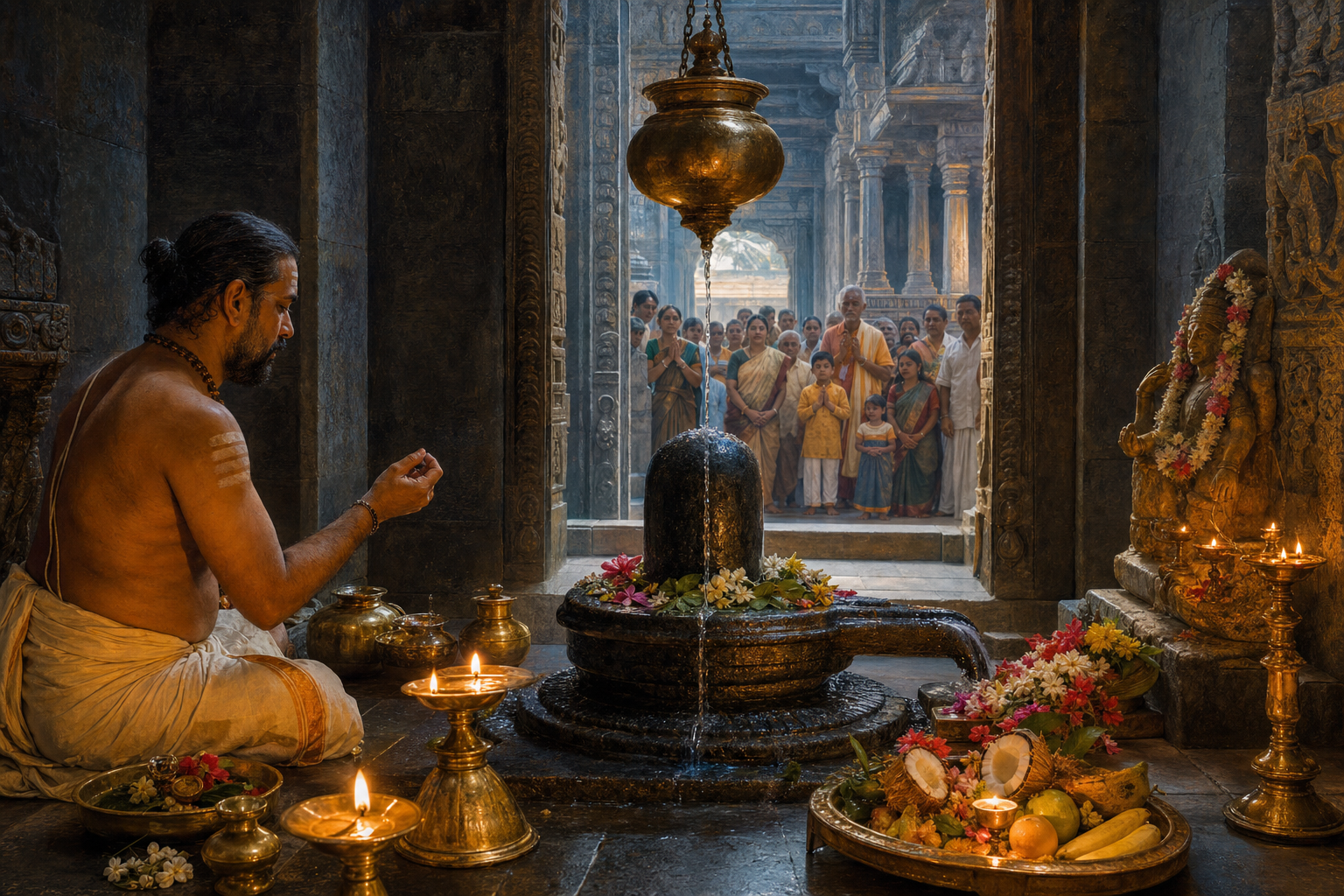
The visible offering is only one part of Linga worship. The Pingalamata tradition coordinates at least five systems, and each one gives you something specific to notice.
- Sacred sound: The Panchakshari, Namah Shivaya, works alongside Bhairava mantras and seed syllables. Japa, invocation and recitation are not background music; they organize the ritual field through sound.
- The disciplined body: Nyasa, mudra, posture and breath prepare the worshipper or officiant to participate. Gesture is meaningful because it corresponds to mantra and visualization, not because it is theatrical.
- Consecrated material: Stone, metal, crystal, wood and naturally occurring banalingas offer different ritual possibilities. The material, form, pedestal and method of installation must be considered together.
- Sacred space: The garbhagriha, antarala, mandapa and prakara create a progression between concentrated stillness and communal movement. Nandi, subsidiary shrines, the bali-pitha and the temple axis belong to this spatial grammar.
- Repeated service: Daily worship renews the installed relationship. Special festivals intensify that service, but they do not replace it.
A typical nitya-puja proceeds through purification, invocation and upacharas. Abhishekam may use water and the five substances of panchamrita—milk, curds, ghee, honey and another prescribed component within the local practice—before sandal paste, bilva leaves, incense, lamp and naivedya are offered. Deepa-aradhana, tirtha and prasada then carry the blessing outward. The sequence moves from preparation and concentration to distribution.
That last movement is easy to overlook. The ritual does not end when the sanctum doors close or the lamp is withdrawn. Tirtha and prasada connect the concentrated worship with the assembled devotees. Temple kitchens, wells, learning, music and community gatherings can extend the same movement into social life. Loka-sangraha—the holding together of society—becomes visible when sacred service radiates as shared care.
Special observances should be read against this daily foundation. Maha Shivaratri may bring extended japa, Rudrabhisheka, homa and a night-long vigil. Naimittika rites answer particular occasions, while kamya rites are undertaken for defined intentions. The greater intensity of these occasions makes sense because a stable daily rhythm already exists beneath them.
This distinction changes how you evaluate temple priorities. A crowded festival is highly visible, but it does not tell you whether the shrine’s ordinary obligations are being met. Ask about trained archakas, the daily schedule, the care of ritual materials and the continuity of service on unremarkable days. Those answers reveal more about the durability of a temple tradition than the scale of one celebration.
How to read a living Shaiva temple without overclaiming
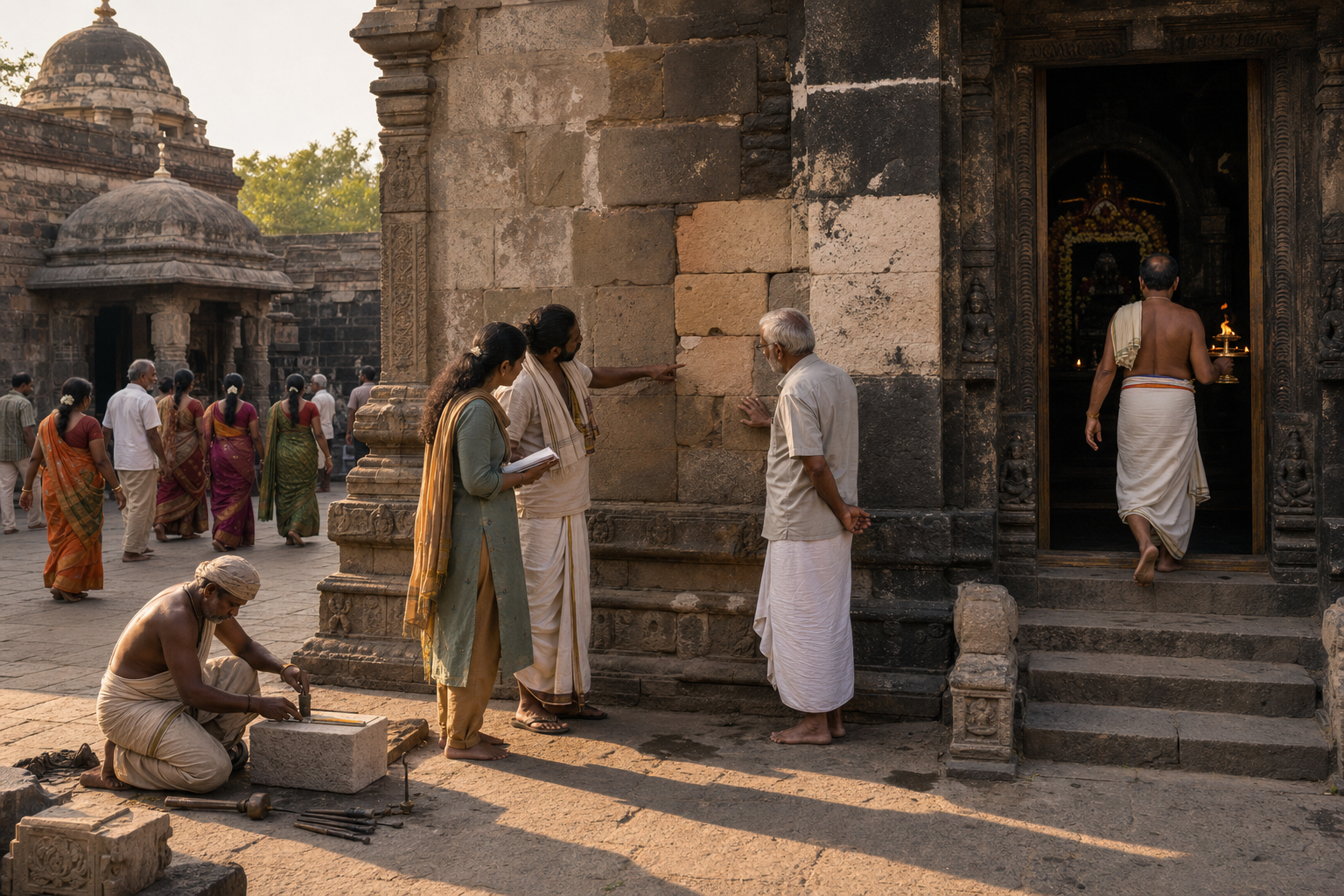
On your next temple visit, begin with the axis rather than with isolated ornament. Locate Nandi, the approach to the garbhagriha and the Linga’s position upon its pitha. Notice how the mandapa accommodates assembly and how the threshold narrows movement toward the sanctum. Then watch what happens after the central offering: the lamp turns toward the devotees, tirtha is shared and prasada leaves the concentrated ritual center.
You can also listen for coordination. Does mantra accompany the offering? Are gestures, substances and moments of revelation ordered rather than random? Does the ritual move through recognizable phases of purification, invocation, offering and distribution? These observations tell you more than searching for one supposedly decisive feature.
A missing or unfamiliar detail does not prove that a temple has abandoned Agamic practice. Regional lineages may preserve the same functional relationships with different liturgical wording, materials or architectural expression. The responsible question is, “Which Agama and paddhati govern this temple?” That is more precise than asking whether a local custom looks identical to a ceremony you saw elsewhere.
The same care is needed when comparing Dharmic traditions. Buddhist consecratory practice also uses mandala, mantra and abhisheka. Jain pratistha coordinates sacred images, architecture and precise ritual acts. Sikh practice orders sanctified space through reverent service to the Guru Granth Sahib, including prakash and sukhasan, with sacred sound at the center. These are meaningful resonances in ritual grammar, not evidence that the traditions teach the same theology.
The wide geographical influence of Agamic forms also calls for precision. Shaiva cosmological planning and consecratory practice reached across regions of Bharat and into Southeast Asia, where monumental complexes such as Angkor Wat display the far travel of Indian sacred architecture. Local adoption was creative rather than mechanical. When you recognize the shared grammar without erasing regional expression, Bharat’s influence becomes clearer, not weaker.
Questions to settle before you build, restore or sponsor
A temple committee can spend heavily on a consecration and still leave the harder questions unresolved. If you are responsible for a project, place these matters on the agenda before announcing the ceremonial date:
<!– wp:list {