
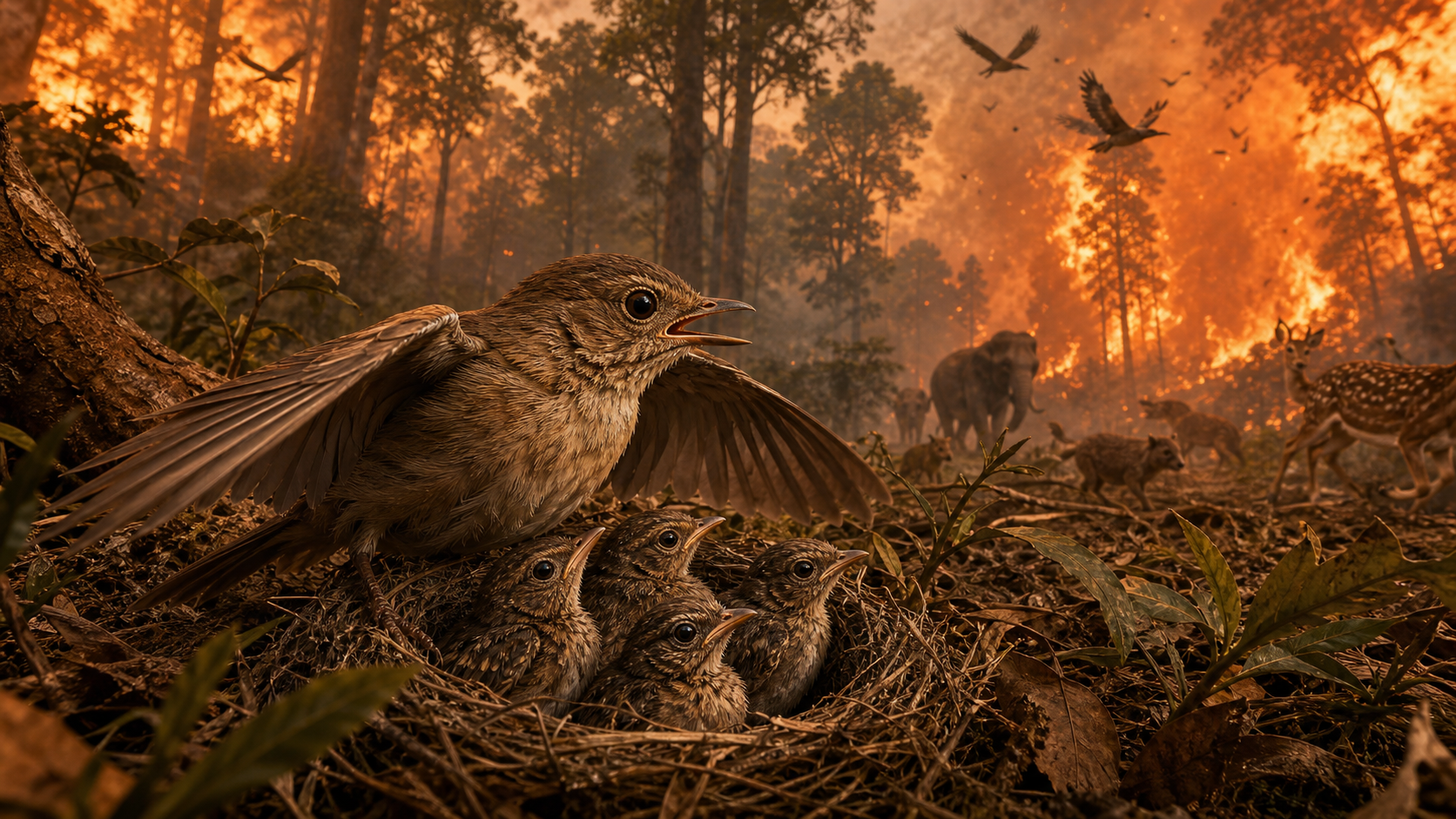
If you came to Jarita’s story wondering why the Mahabharata pauses amid the Khandava fire to notice a mother bird, the answer begins with scale. An epic event can look grand from a distance. From inside the forest, it is a crisis faced by particular living beings.
Jarita matters because she brings dharma down to the level where you actually have to practise it: fear is present, control is limited, someone vulnerable depends on you, and no available choice feels complete.
A small protagonist opens a large moral field
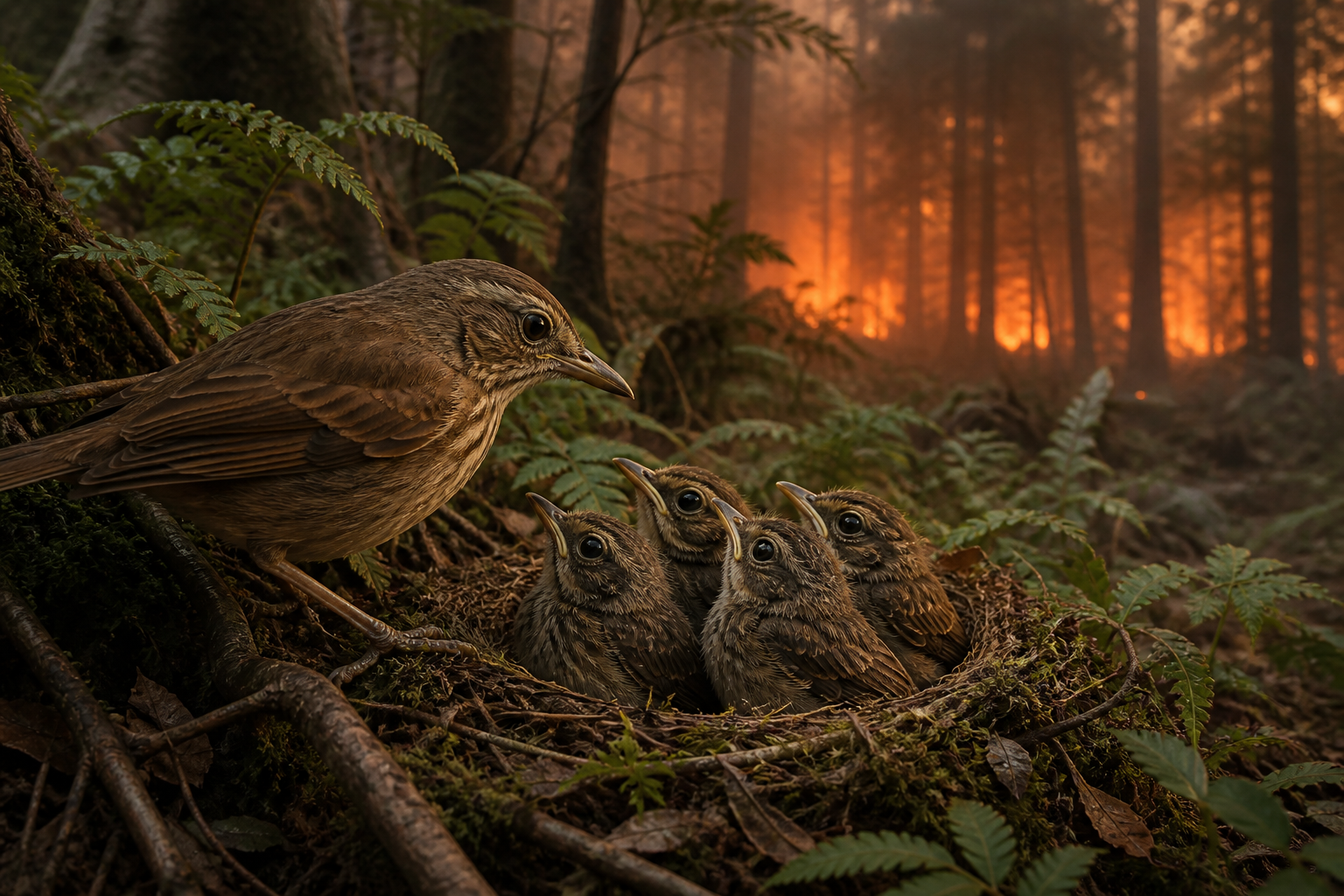
Jarita is a Saranga bird living in the vast Khandava Forest on the banks of the Yamuna. The forest is presented as a living world of trees, birds, animals, and many other forms of life. Jarita is not treated as mute scenery: Saranga birds are described as wise beings capable of thinking, speaking, and acting in human-like ways.
That choice changes how you read the fire. You are not being shown an anonymous creature whose suffering can be absorbed into the background of a larger event. You are being asked to recognise a mother as a moral agent. She can understand danger, care about what is entrusted to her, and confront the difference between what she wants to protect and what she can control.
Keep three levels in view as you read: Jarita herself, the lives bound to her by care, and the forest that sustains them all. If you see only individual bravery, you miss the threatened community. If you see only mass destruction, you lose the particular being who must decide what to do next. The episode gains its force by holding both perspectives together.
This is also why you should resist rushing immediately to allegory. First notice the literal moral fact: a living being’s home has become dangerous, and her responsibilities have not disappeared merely because her power is small. The symbolic meanings become clearer after that reality has been allowed to register.
Courage begins when the ideal option disappears
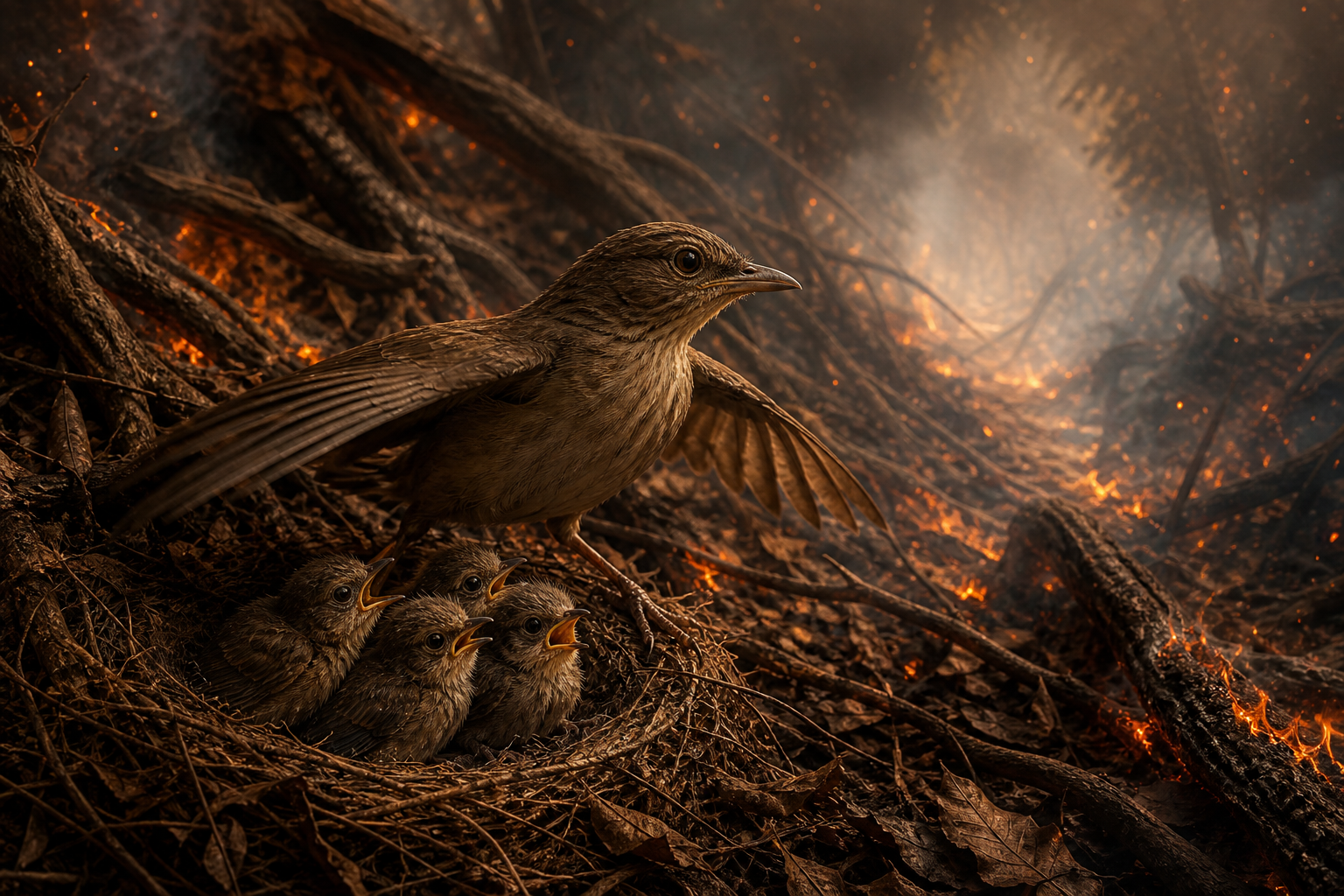
Courage is often misread as confidence, fearlessness, or the ability to dominate events. Jarita offers a more useful measure. Courage is the refusal to abandon discernment when fear has narrowed your choices.
A spreading fire destroys the fantasy that every value can be preserved without cost. Safety, attachment, responsibility, and survival may pull in different directions. In such conditions, dharmic judgment does not produce a magical option that removes every danger. It asks which duty is most immediate and which action most faithfully serves it.
When you face a decision under pressure, use four questions in this order:
- What is actually threatened right now, rather than merely imagined?
- Who depends on this decision but has the least ability to absorb a bad outcome?
- Which available action protects life or preserves future agency without creating needless additional harm?
- What change in circumstances would require the decision to be reconsidered?
The order matters. If you begin with the question, “What would make me look brave?” fear can disguise itself as heroism. If you begin by naming the threatened life and the vulnerable dependent, attention returns to duty. Courage then becomes answerability rather than performance.
This distinction is practical in family life, community leadership, and public responsibility. A dramatic gesture may satisfy the actor while worsening the position of those who rely on that person. Jarita’s moral importance lies in directing your attention away from the appearance of courage and toward the work courage must accomplish.
Maternal dharma is care, not a performance of suffering
Calling Jarita a mother is not sentimental decoration. Motherhood sharpens the problem because care creates an obligation toward lives that cannot simply be treated as extensions of the caregiver’s wishes.
A shallow reading turns maternal dharma into limitless self-erasure: the more a mother suffers, the purer her love must be. That is not a sound test of duty. Suffering may accompany a right action, but suffering does not make an action right. The better question is whether the action serves the dependent’s welfare, protects what can still be protected, and leaves room for the next responsible choice.
You can apply this distinction by separating responsibility from control. Responsibility means giving sustained attention, making the best available judgment, and remaining willing to revise it. Control would mean guaranteeing an outcome regardless of conditions. No parent, teacher, leader, or protector possesses that guarantee.
Confusing the two produces either guilt or domination. You may punish yourself because you could not command events, or try to command the people you care for because uncertainty feels unbearable. Jarita’s predicament exposes the limits of both responses. Dharmic care accepts that power is finite without using finitude as an excuse for indifference.
Before making a difficult choice for someone who depends on you, ask: “Does this protect the person entrusted to me, or does it protect my image of myself as the protector?” If the honest answer is the second, pause. The difference between those motives can determine whether care remains care or becomes possession.
The forest must remain a community, not a backdrop
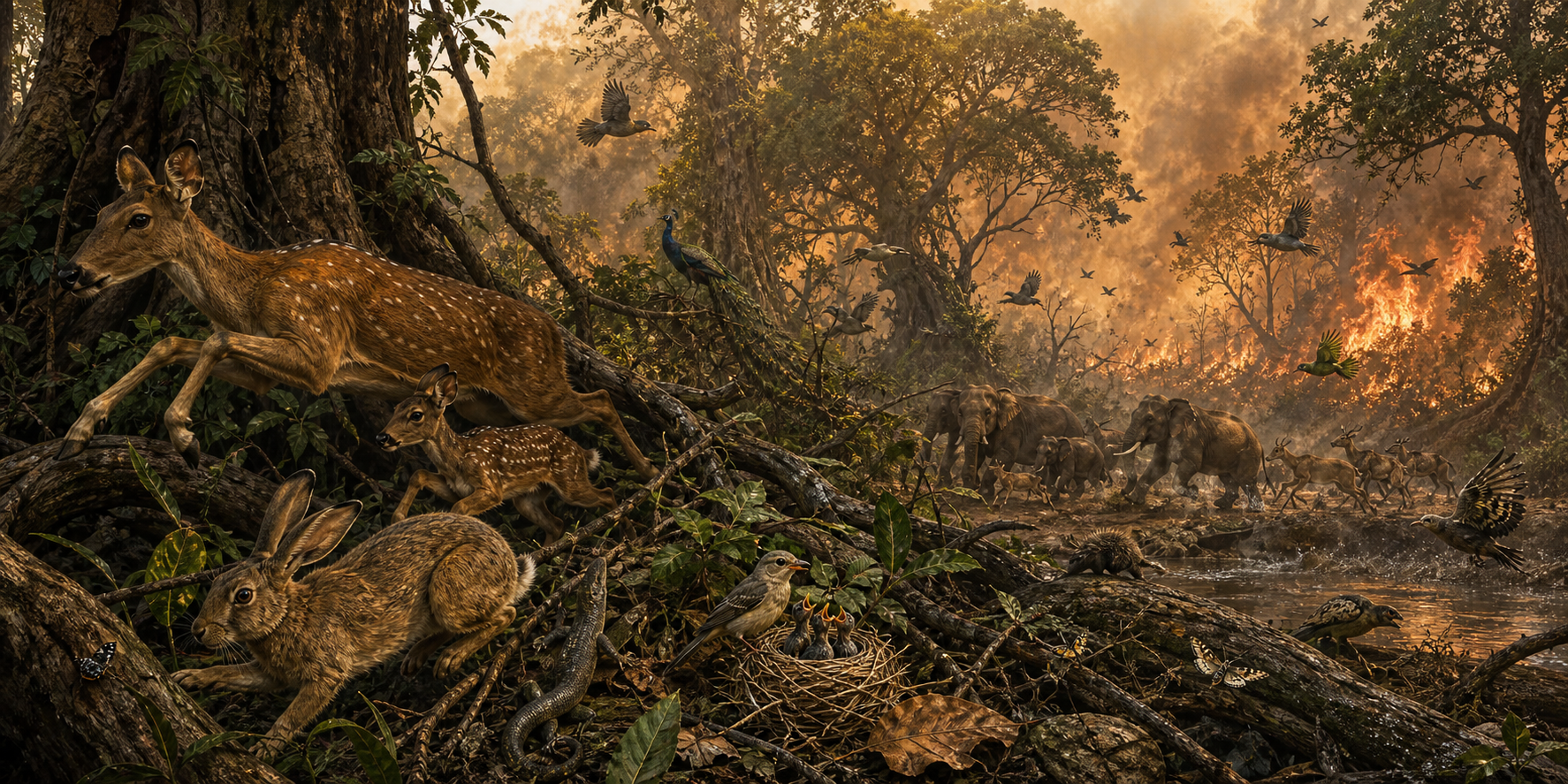
Khandava is significant because it is described as a magnificent wilderness filled with life. Once you notice that, the fire cannot be understood merely as something happening to a place. It is happening to inhabitants whose shelter, relationships, and conditions of survival are bound to that place.
This is a necessary discipline when reading any grand narrative. Political ambition, civilisational achievement, economic development, and military success are usually described from the viewpoint of visible decision-makers. Jarita trains you to look toward the edge of the frame, where consequences are experienced by beings who did not choose the event and may have no voice in its narration.
You do not need to flatten every difficult action into a simple verdict. You do need to keep an honest account of its effects. When judging a large undertaking, identify three parties: those who gain, those who carry the immediate burden, and those living beings whose losses are easiest to omit. If the third group is absent from the discussion, the moral picture is incomplete.
An ahimsa-sensitive reading begins here. It does not pretend that human action can always be free of conflict or harm. It refuses to make affected life invisible for the sake of a cleaner story. Jarita’s presence prevents scale from becoming an excuse for abstraction: one mother bird is enough to remind you that a forest is also a multitude of homes.
Key takeaways
- Read Jarita as a moral agent, not as decorative wildlife inside a heroic episode.
- Measure courage by the quality of judgment preserved under fear, not by dramatic appearance.
- Separate responsibility from control: dharma demands attentive action, not a guarantee of results.
- Judge protective choices by the welfare of the dependent, not by the caregiver’s desire to appear self-sacrificing.
- When evaluating a large event, account for the living community that bears its costs but lacks a powerful voice.
The next time a hard decision closes around you, write down three things before acting: what is genuinely threatened, who is most dependent on your judgment, and which available step preserves the greatest capacity to protect life as conditions change. Then decide when you will reassess. You will not reproduce Jarita’s ordeal, but you can practise the same discipline of keeping duty visible when certainty is gone.
References
