
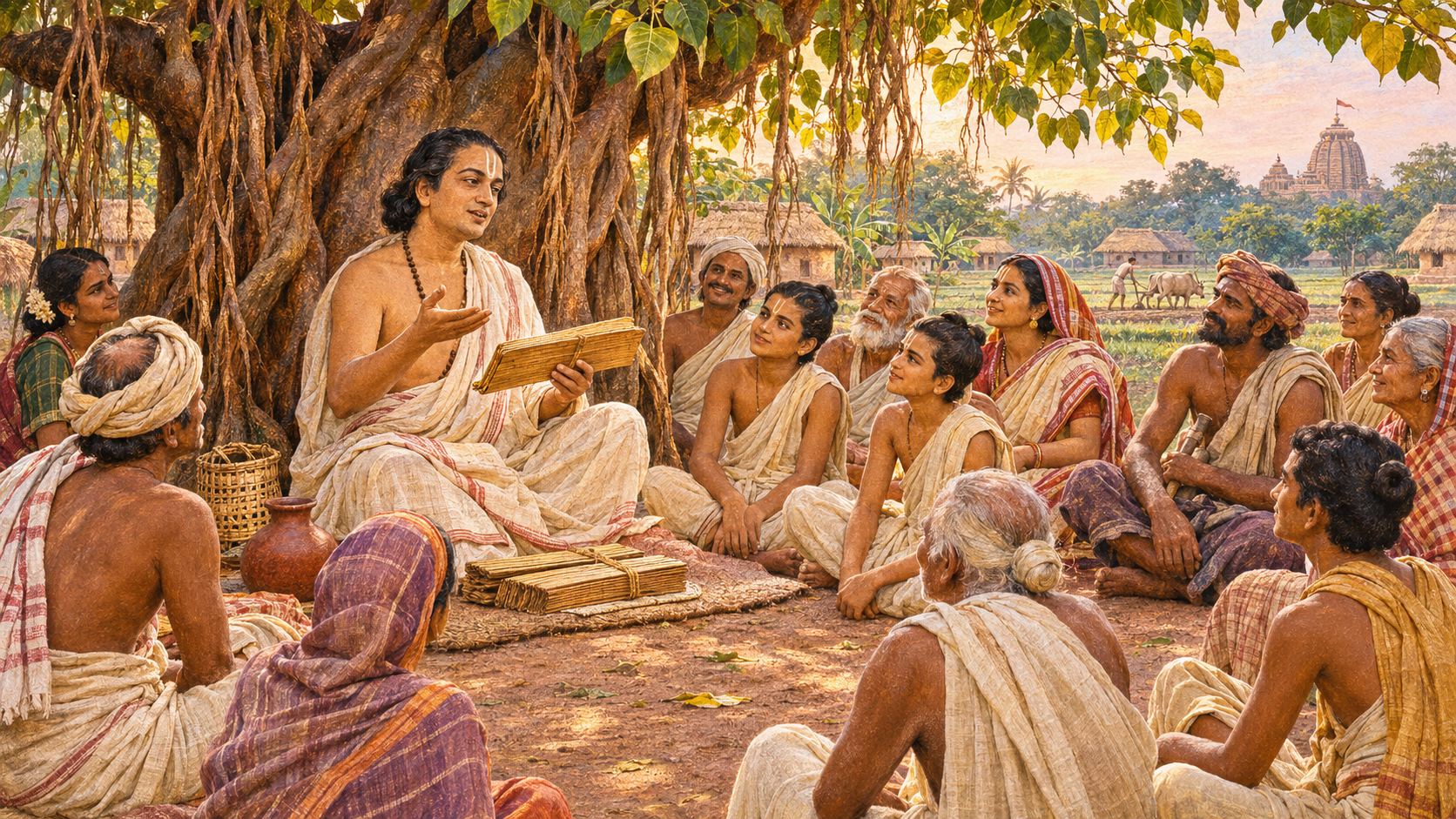
If you have encountered the Shudra Muni movement through a slogan about caste, you are probably trying to settle a more basic question: was it a revolt against Hindu Dharma, or a reform arising from within it?
The clearer reading is that Jagannatha Das and the Shudra Munis challenged the social custody of sacred knowledge, not the sacred tradition itself. Their importance lies in a question that still confronts every Dharmic institution: who may study, interpret and transmit spiritual wisdom?
The rebellion concerned authority, not the rejection of Dharma
The word rebellion can easily send you in the wrong direction. It does not, by itself, prove that the sixteenth-century awakening in Odisha was an armed uprising, a single organised campaign or a rejection of Hindu belief. Its deeper challenge was directed at the idea that spiritual authority could be permanently enclosed within one social group.
That distinction matters. Sanatana Dharma and the gatekeeping practised in its name are not identical. A community can defend Bhagavan, scripture and sadhana while opposing a human arrangement that prevents large sections of society from approaching them. In fact, reform can be profoundly Dharmic when it recalls the tradition to principles that its institutions have obscured.
Three common readings should therefore make you pause:
- If a retelling treats socially excluded people only as recipients of somebody else’s instruction, it misses the force of the word Muni. The disputed issue was not merely whether they could listen, but whether they could become recognised knowers.
- If it treats resistance to religious monopoly as resistance to Hinduism, it confuses an institution’s boundary with Dharma itself.
- If it claims that one devotional awakening immediately abolished social hierarchy, it promises more than the history can bear. Expanded spiritual access and complete social equality are not the same achievement.
This gives you a practical test for evaluating any account of the movement. Ask what was being challenged: Bhagavata Dharma, or an exclusive claim over who could understand and teach it? The answer determines whether you are looking at religious rejection or internal renewal.
Why the Odia Bhagavata changed the field of religious access
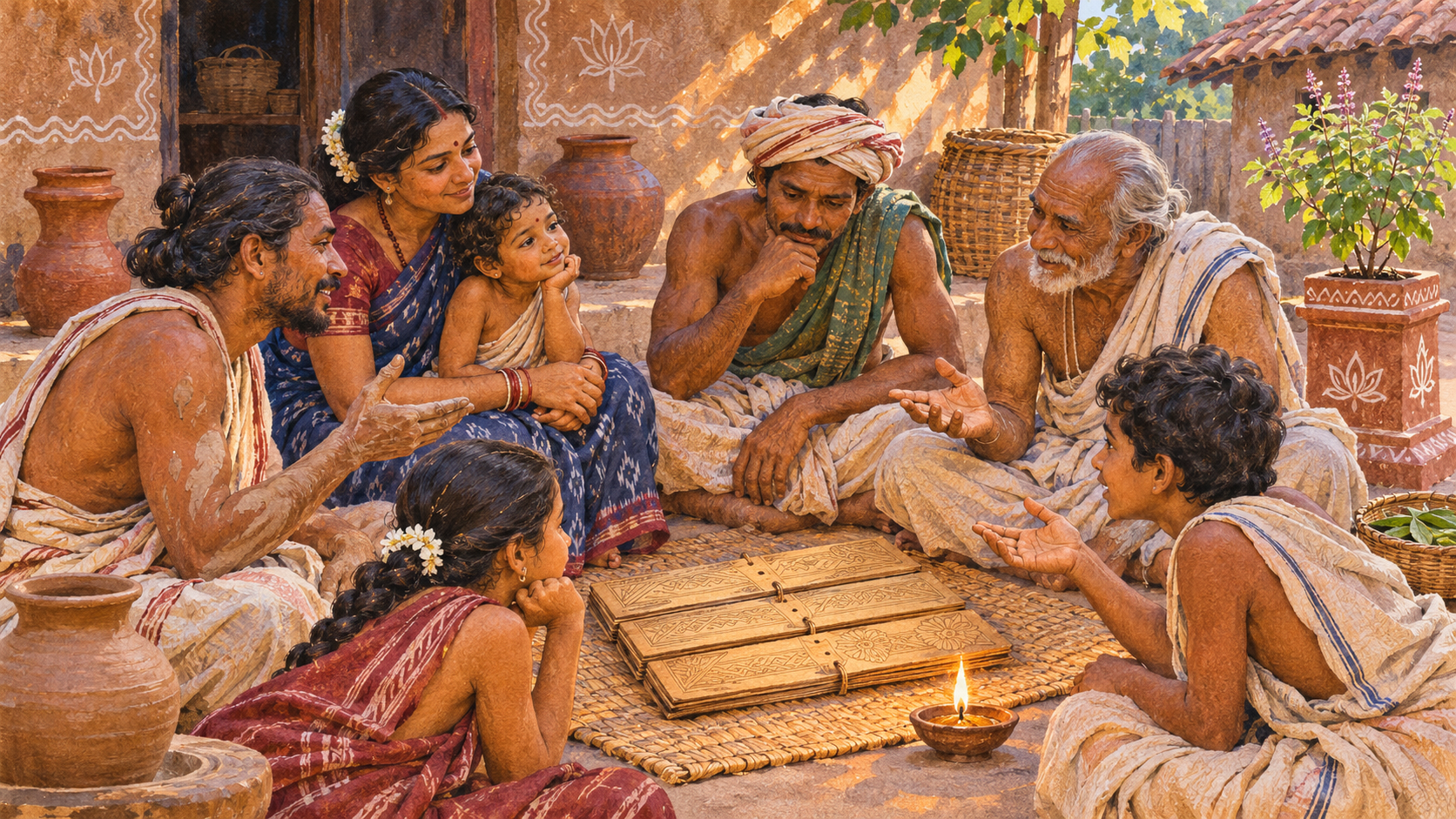
Jagannatha Das’s Bhagavata in Odisha matters not only as literature. Sacred teaching in a language understood by the surrounding community changes the conditions under which learning occurs.
A language barrier does more than make a text difficult. It makes access depend on a small class of intermediaries. When teaching becomes intelligible in the language of ordinary life, a listener can remember it, repeat it, discuss it and question an interpretation. The text begins to support a community of learning rather than a one-way delivery of authorised knowledge.
That transformation works through several linked mechanisms:
- Comprehension: a teaching heard in a familiar language can be considered directly rather than received as an unexplained formula.
- Memory: intelligible verses and narratives are easier to retain, repeat and carry into family and community life.
- Discussion: people who understand the teaching can compare interpretations instead of depending entirely on inherited status.
- Formation: repeated engagement can shape conduct and devotion, allowing spiritual authority to arise from disciplined practice as well as social recognition.
The polemical description Bhagavata of the Oil Presser captures the social stakes. A working community regarded as low in the hierarchy could no longer be dismissed as incapable of serious religious understanding merely because sacred teaching had entered its world. What looks like a dispute over language is therefore also a dispute over human capacity.
Vernacular access should not be confused with hostility to learning. Translation does not eliminate the need for careful teachers, linguistic study or disciplined interpretation. It changes who may begin that work. The sound principle is wider apprenticeship, not lower standards.
Shudra Muni is a claim about spiritual personhood
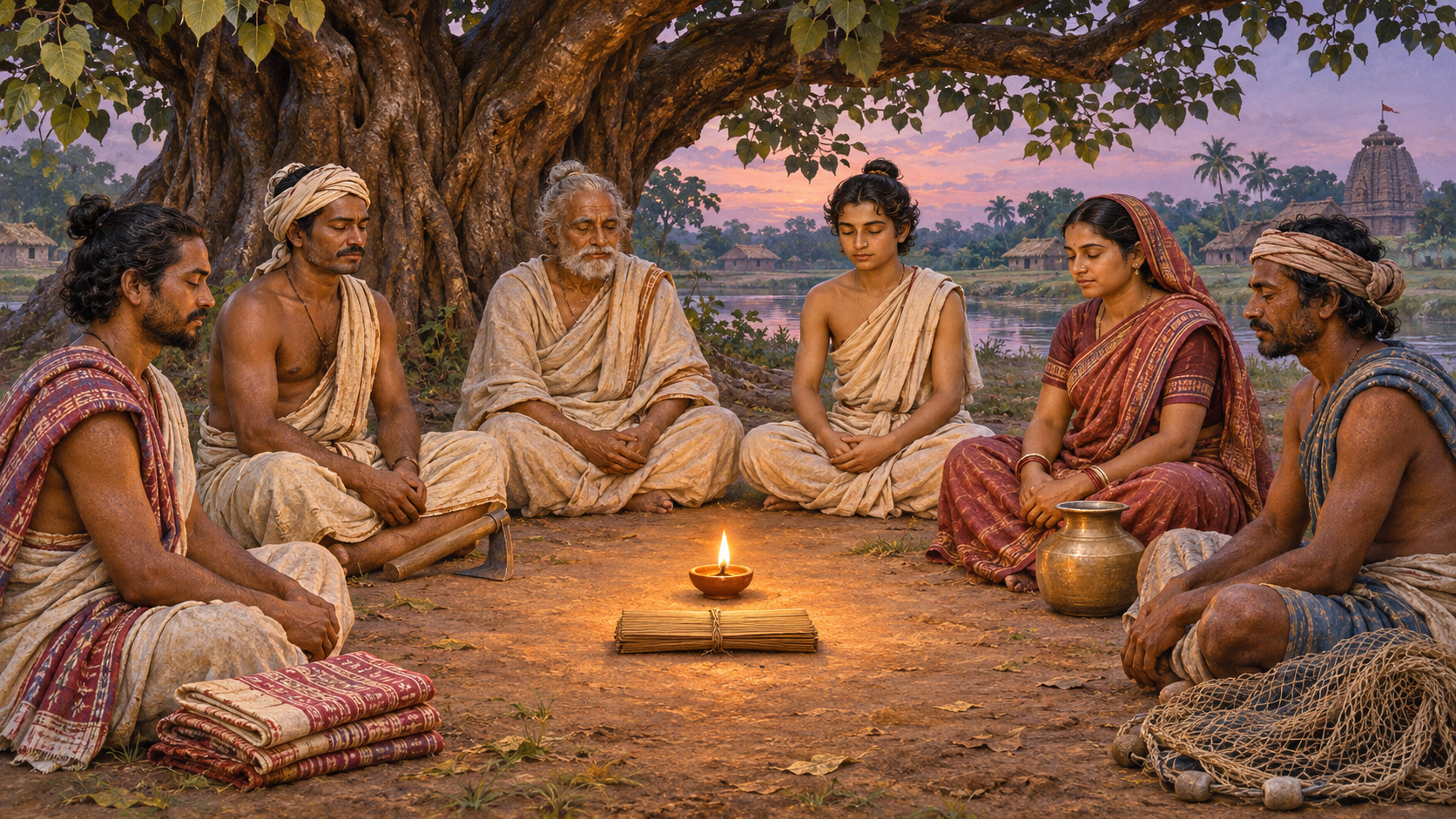
The name Shudra Muni holds together two descriptions that a rigid hierarchy would try to keep apart. Shudra marks an inherited social location. Muni evokes contemplation, discipline and the pursuit of truth. Joining the terms makes an argument: inherited rank cannot set the final boundary of spiritual competence.
This does not require pretending that social identity had ceased to matter. The force of the name comes precisely from the fact that exclusion was real enough to be confronted. It says that a person can stand within a disadvantaged social location without allowing that location to determine the limits of devotion, understanding or moral authority.
Be careful, however, when carrying the term into present-day debate. Shudra is a historical and religious category; it should not automatically be equated with any single modern administrative category. Contemporary designations and older social vocabularies overlap imperfectly. A serious reading preserves the historical term instead of forcing every community into a present-day political box.
The same care is needed with Muni. It should not be reduced to a decorative title meaning that everyone is automatically a sage. Its radical implication is that the path of disciplined spiritual formation is not closed by birth. Access becomes meaningful when it is followed by study, reflection, devotion and conduct.
Internal reform is one way Sanatana Dharma renews itself
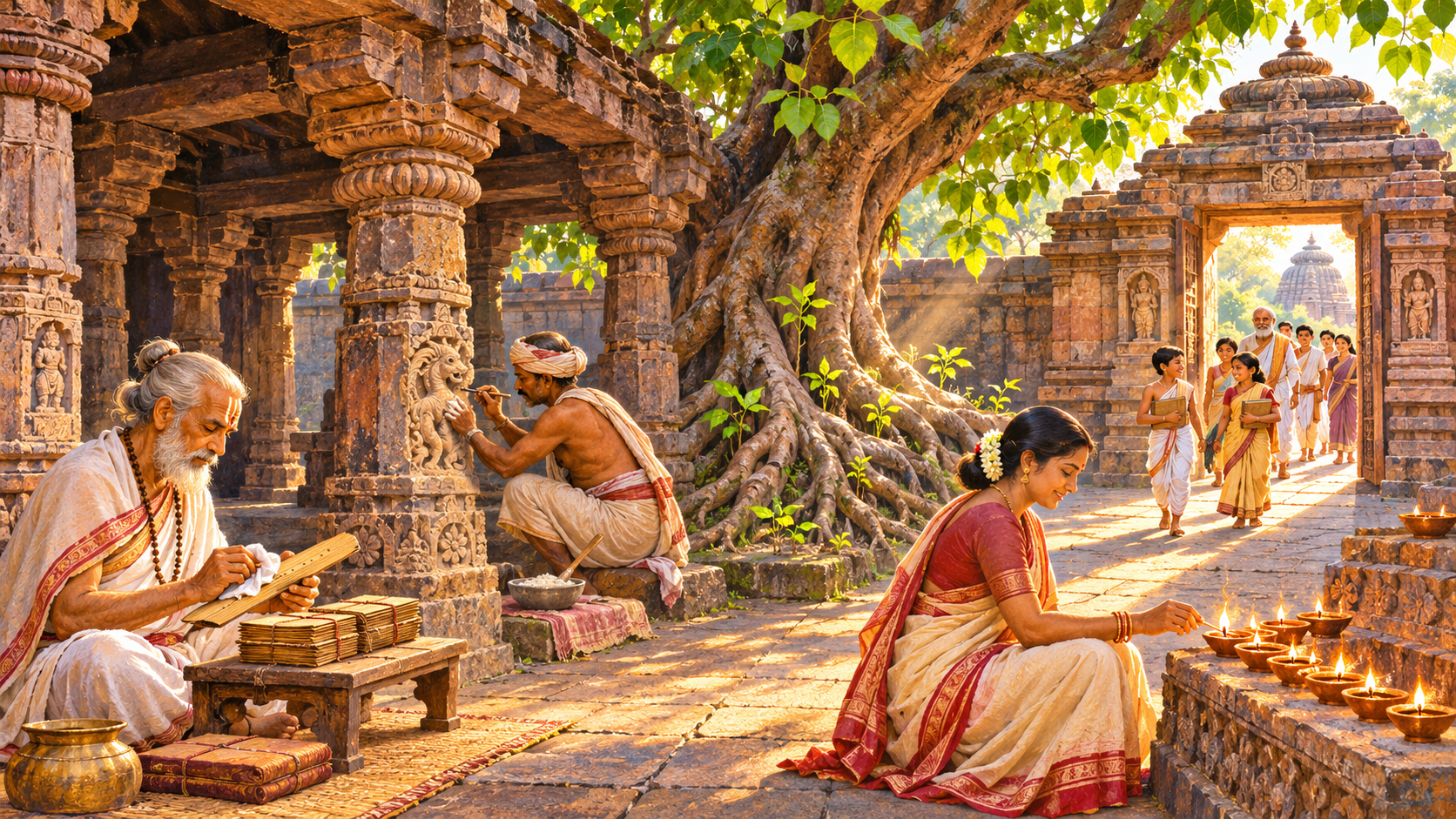
A tradition as old and internally diverse as Sanatana Dharma cannot be identified with every social restriction imposed during its history. Nor should injustice be denied merely because critics might use it against Hindu society. Both reactions make the same mistake: they assume that Dharma must either defend every inherited arrangement or surrender its legitimacy.
The Shudra Muni awakening points to a more confident response. A community can acknowledge exclusion, recover access to sacred teaching and remain rooted in Bhagavata-centred devotion. Reform need not begin with the declaration that the whole tradition is false. It can begin by denying that any group owns the route to Bhagavan.
You can recognise this kind of Dharmic correction by four features:
- It keeps sacred teaching at the centre instead of treating spirituality as irrelevant.
- It widens the circle of people permitted to hear, study and embody that teaching.
- It locates spiritual worth in devotion, understanding, discipline and conduct rather than birth alone.
- It corrects institutional failure without turning hereditary resentment into a new moral principle.
The last point is essential. Criticism of monopoly should not become hostility toward another birth group. Replacing one inherited judgement with its mirror image does not overcome caste thinking; it reproduces it. The durable lesson is that no community has hereditary ownership of wisdom, while every learner remains responsible for the discipline that wisdom demands.
Key takeaways
- The Shudra Muni movement is best understood first as a struggle over access to spiritual knowledge and recognition as a knower.
- Jagannatha Das’s Bhagavata mattered socially because intelligible sacred teaching could support memory, discussion and religious formation beyond a narrow class of intermediaries.
- The name Shudra Muni rejects birth as the final measure of spiritual capacity; it does not deny the historical reality of social exclusion.
- Expanded religious access did not necessarily produce immediate or complete social equality, so the movement should neither be minimised nor romanticised.
- Its legacy belongs within a Dharmic history of renewal: preserve the sacred centre, challenge monopoly and maintain standards through open paths of learning.
Use the legacy as a practice, not a slogan
If you are studying this history, keep three columns in your notes: the spiritual teaching, the means by which people gained access to it, and the social consequence of that access. This prevents devotional history from becoming only a caste argument, while also preventing spiritual language from hiding the social question.
If you help run a temple, satsang or study circle, ask equally concrete questions. Can newcomers hear an explanation in a language they understand? May they ask questions without embarrassment? Is there a path from listening to serious study, and from study to helping others learn? Are standards based on preparation and conduct, or on assumptions about family background?
Then make one visible change. Add a plain-language explanation to a recitation. Create a guided reading group. Teach key vocabulary instead of using it as a barrier. Invite questions from people who usually remain silent. The most faithful way to honour the Shudra Munis is to ensure that sacred knowledge remains demanding but never hereditary property.
References

Leave a Reply
You must be logged in to post a comment.