
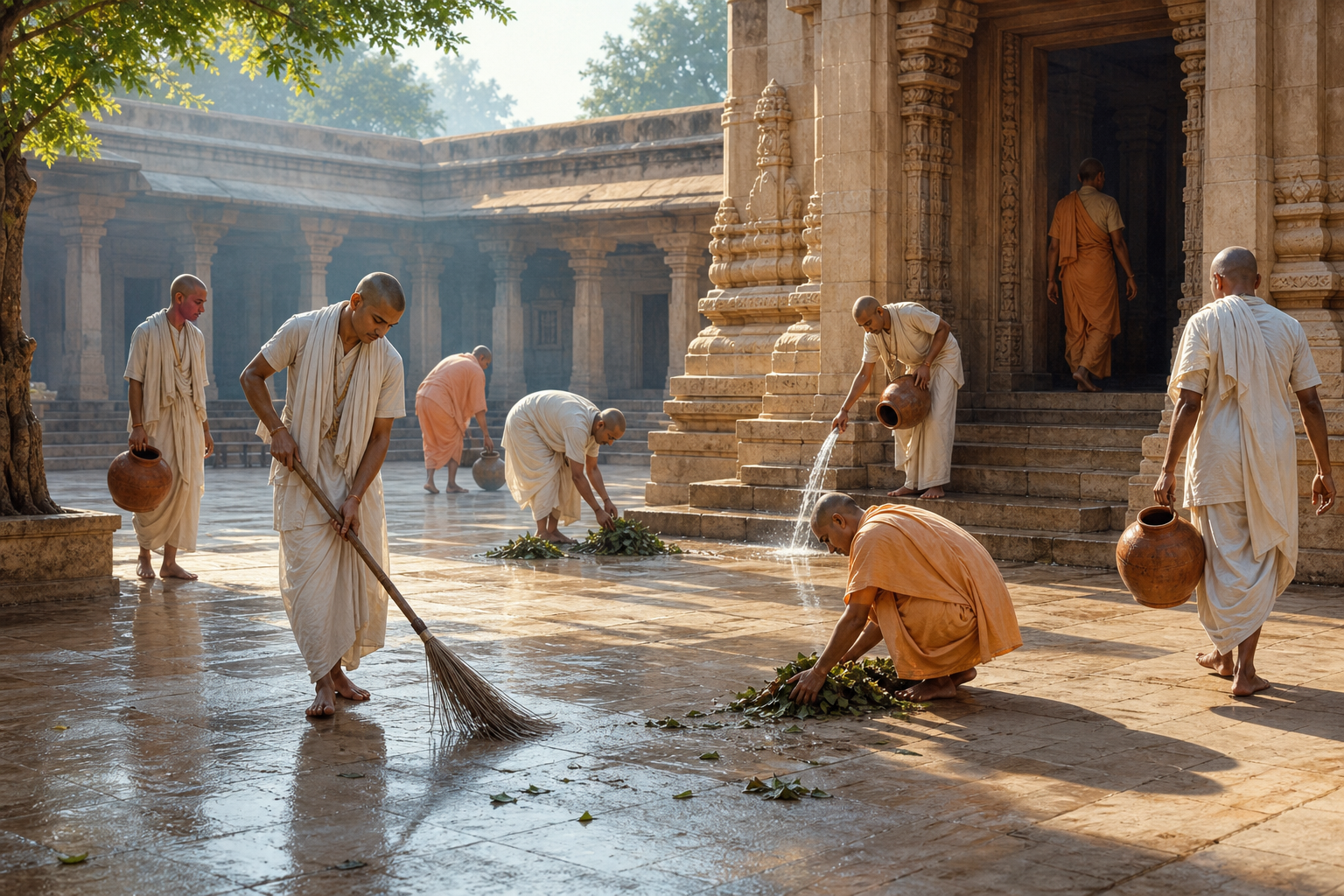
Dandavats identifies this presentation as a Guṇḍicā-mārjana katha by HH Mahavishnu Swami Maharaj, with “CC Madhya 12” given as its scriptural reference. The supplied source, however, contains only a title and thumbnail; it provides no transcript, synopsis, or quotations from the discourse.
That limitation makes a detailed account of the speaker’s message impossible. What can be explained responsibly is the established devotional context of Guṇḍicā-mārjana: cleansing a sacred space as seva, and understanding that outward service as an invitation to inward purification.
What the Dandavats listing establishes
The listing names Mahavishnu Swami Maharaj as the speaker and associates the presentation with the twelfth chapter of the Madhya section of the Caitanya Caritamrita. The word katha generally denotes a devotional narration or discourse, while marjana conveys cleaning or cleansing.
Nothing further about the speaker’s interpretations, examples, or instructions can be attributed to this source. Readers should therefore treat the item as a pointer to a teaching rather than as a complete written account of it.
Why cleansing becomes a form of spiritual practice
Within Hindu temple culture, cleaning can be an offering rather than a merely functional chore. It joins physical effort with attention, humility, and care for a place held in common. In Gaudiya Vaishnava reflection, Guṇḍicā-mārjana is widely approached through this double meaning: the temple is prepared through service, while the practitioner is reminded to examine what obstructs devotion within the mind and heart.
This symbolism should not be mistaken for a summary of Mahavishnu Swami Maharaj’s particular discourse. It is general interpretive context supplied to help readers understand why the subject carries significance beyond an account of physical cleaning.
Key takeaways
- The Dandavats item points to a katha on Guṇḍicā-mārjana connected with Caitanya Caritamrita, Madhya 12.
- No transcript or written summary is available in the supplied material, so detailed teachings cannot safely be assigned to the speaker.
- The established devotional theme joins temple seva with humility, attentiveness, and inner purification.
- Its emphasis on disciplined service resonates across the Dharmic family, including Hindu, Buddhist, Jain, and Sikh traditions, even as each preserves its own theology and practices.
Approaching the teaching without overclaiming
A careful reader can distinguish the textual theme from the undocumented contents of this specific presentation. The title supplies the subject and scriptural anchor; the broader tradition supplies general context; only the complete discourse could reveal the speaker’s precise exposition.
Guṇḍicā-mārjana ultimately directs attention toward a practical question: how can care for a sacred place cultivate a cleaner intention, steadier service, and deeper responsibility toward the wider spiritual community?
Inspired by this post on Dandavats.
