
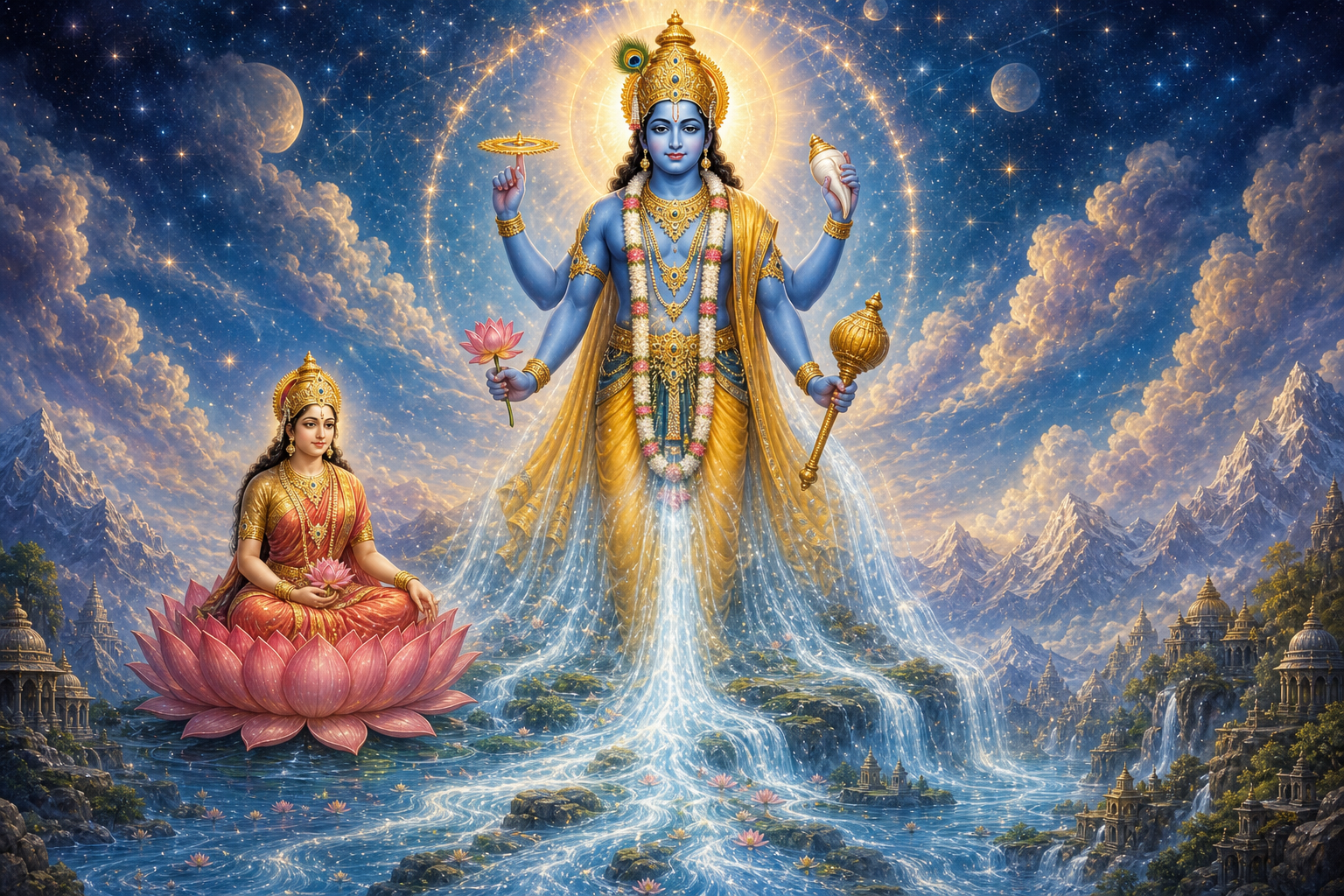
If you have heard several ways of speaking about Ganga and want to understand the Vaishnava account, begin with one precise point: her holiness is not added from outside. Ganga is not ordinary water that later receives a sacred label.
In the Ganga Mahatmya telling, Bhagavan Vishnu melts into water, and that divine water is Ganga. The claim is therefore stronger than saying Vishnu blessed a river. It presents sacred flow as Vishnu’s own presence made accessible. Once you see that distinction, the narrative becomes a guide to devotion, not merely an unusual account of origins.
Read the origin as theology, not hydrology

A physical river and a sacred identity answer different questions. Hydrology can describe channels, currents, rainfall, and terrain. A sacred origin tells you why a devotee approaches Ganga as a living divine presence. Confusing those purposes produces two equally weak readings: treating the narrative as a failed scientific explanation, or dismissing it as decorative poetry with no claim on your life.
The important word is melting. A fixed form becomes fluid. The symbolism does not suggest that Vishnu is destroyed or diminished. It points to divine presence becoming mobile, touchable, receivable, and near. Transcendence has not disappeared; distance has softened.
You can keep the meaning clear by reading the account through three distinct lenses:
- Origin: Ganga’s sanctity is rooted in Bhagavan Vishnu himself, not conferred by human opinion.
- Form: Water is not merely an object associated with the divine. It is the form in which divine presence flows.
- Response: If you receive that water as sacred presence, gratitude, restraint, and attentiveness should shape your conduct.
When you encounter a sacred narrative, first separate what happens in it from what it asks you to notice. Here, Vishnu becomes water and Ganga arises as that divine flow. The narrative then asks you to notice that the divine can become intimately available without ceasing to be divine. This method preserves the account’s theological force without forcing it into the category of laboratory description.
Why water carries the Vaishnava meaning so well
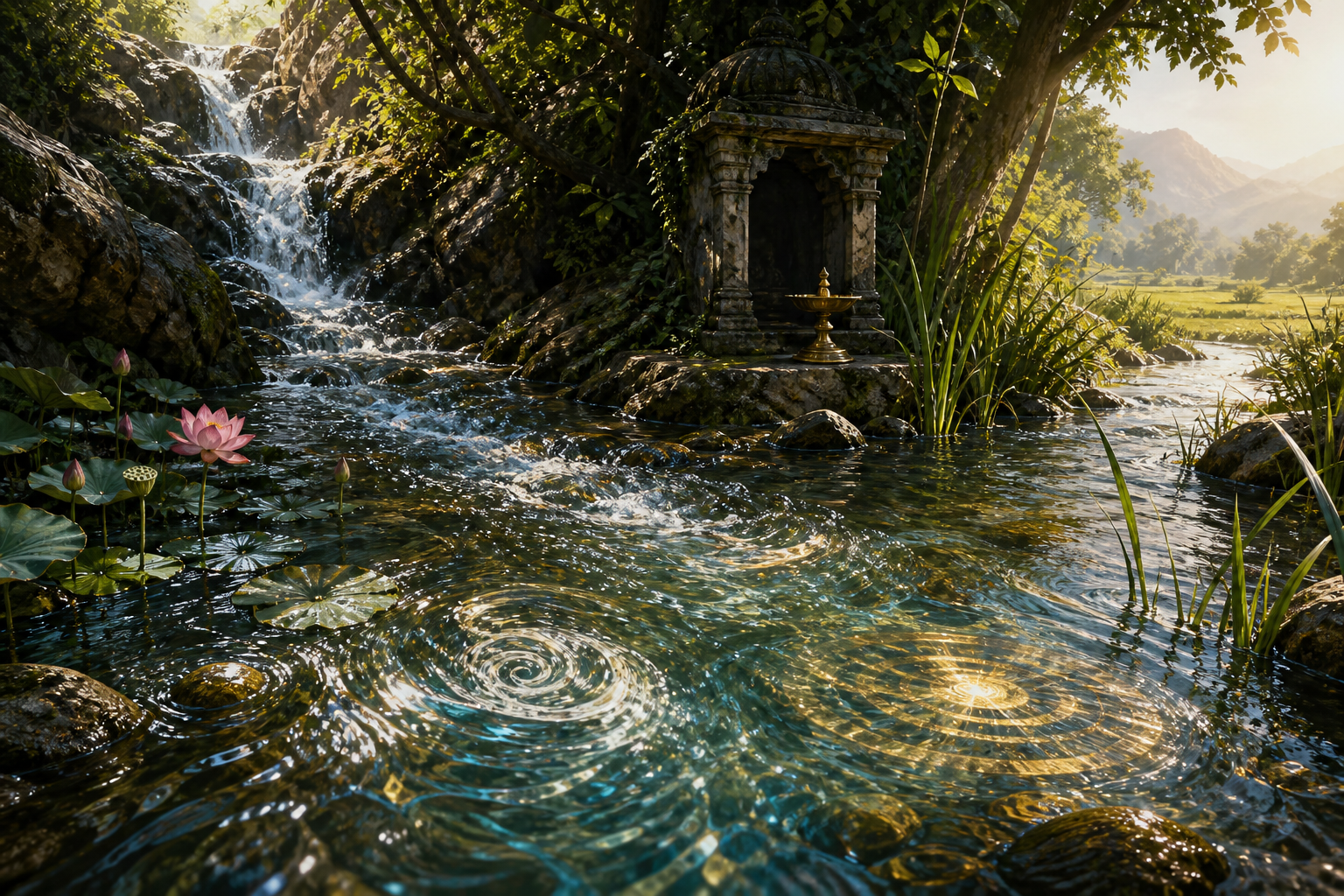
Water is familiar enough to be overlooked. Yet its ordinary qualities make the symbolism exact. It has no rigid shape of its own, but it does not lose its identity when a vessel gives it a temporary form. It moves from one place to another while remaining continuous with its flow. You can receive it in open hands, but the harder you clench, the less you retain.
Within this Vaishnava account, those qualities help you notice several dimensions of divine grace:
- Availability without reduction: Vishnu becomes accessible as water, but accessibility does not make the divine ordinary or disposable.
- Adaptability without loss: Water takes the form of the vessel while remaining water. Divine presence can meet embodied life without being exhausted by any one form.
- Movement rather than possession: Flow connects its source with every place it reaches. Grace is received through relationship; it cannot be turned into private property.
- Purity as renewed relationship: Water cleanses and sustains. Its sacred use therefore points beyond surface washing toward the restoration of right relationship with the divine, other beings, and the world you inhabit.
This does not mean that Ganga is merely a code for psychological improvement. In devotional life, a symbol need not be an unreal substitute for something else. Sacred form can disclose and carry the reality it signifies. If you translate Ganga entirely into an abstract lesson about flexibility, you have removed the goddess from her own narrative.
At the same time, the image of melting gives you a sharp test for your own devotion. Bhakti that makes you more rigid, possessive, or careless has moved against the story’s central motion. The divine form becomes fluid and available. Your response should soften ego into service, not harden identity into a weapon.
Vaishnava origin does not erase Ganga’s personhood
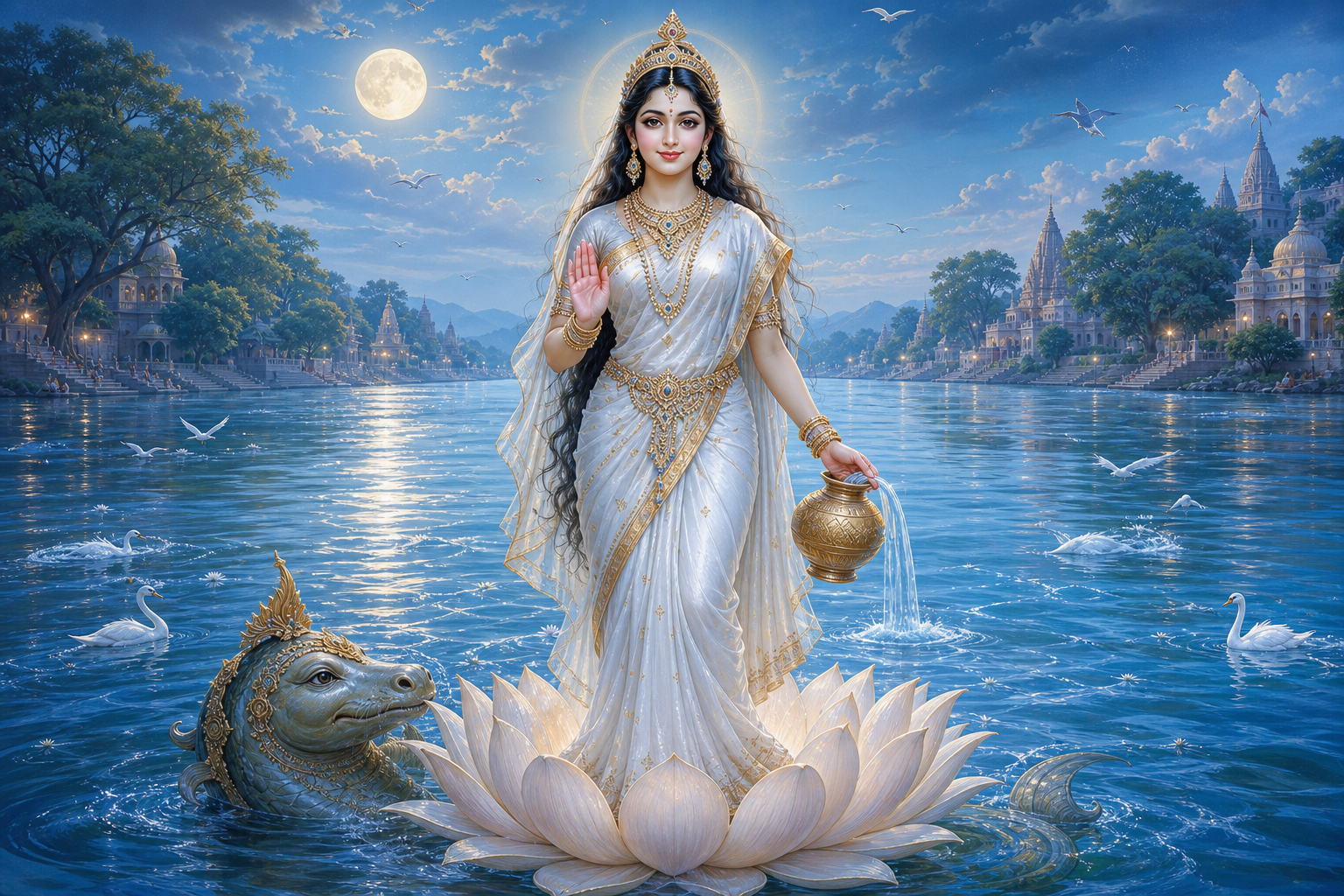
The statement that Vishnu becomes water identifies the sacred water with Vishnu. Calling that water Ganga allows the same divine flow to be approached, addressed, and loved as Ganga. These are not competing propositions. Identity answers what grounds her sanctity; divine personhood shapes how devotees relate to her.
Do not reduce Ganga to an impersonal substance
If Ganga were only a useful liquid, reverence would be optional sentiment. If she were only an abstract metaphor, physical conduct toward the river would have little spiritual importance. The Vaishnava account resists both reductions. Water matters precisely because divine presence has taken the form of water.
This changes the direction of worship. You are not trying to persuade an indifferent material object to become holy. You are learning to recognize and receive a holiness already grounded in Vishnu. The discipline is one of perception: approach first with humility, not with a demand for benefit.
Do not turn the origin into a sectarian boundary
Calling the account Vaishnava makes a positive theological claim: Ganga’s divine flow originates in Vishnu. It need not become a negative claim that every other devotional relationship with Ganga is invalid. The image itself runs against confinement. Vishnu does not become a wall, a badge, or a possession; he becomes water.
This also gives you a sound way to approach other sacred tellings without forcing them into a single modern timeline. Ask what relationship each telling illuminates. An origin narrative may explain sanctity, divine kinship, devotional access, or the form of grace. Its theological emphasis is more important than making every telling behave like a chapter in a technical chronology.
Carry the symbolism from worship into conduct
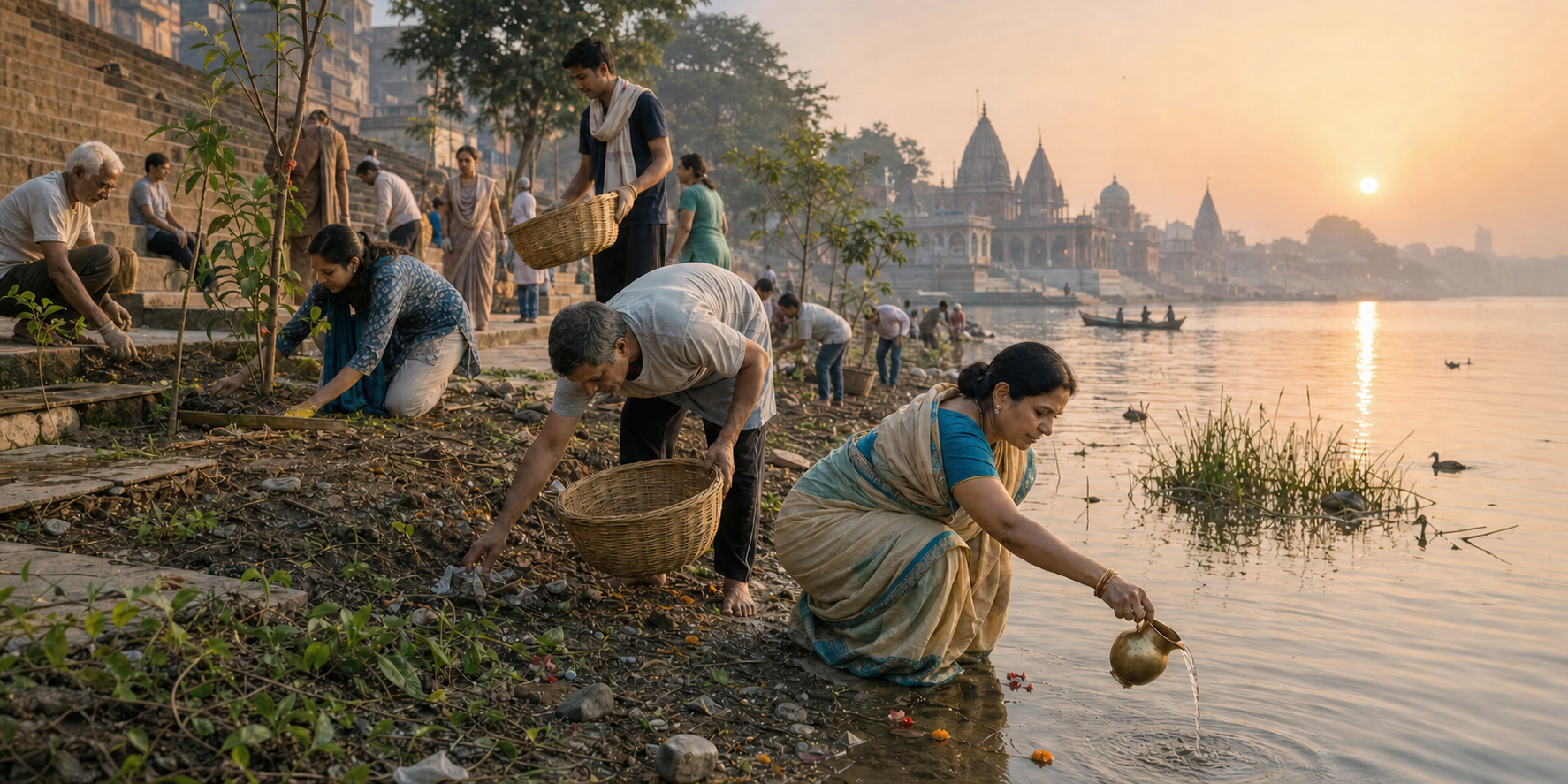
You do not need to invent a new ritual to act on this meaning. If your sampradaya, temple, or family gives you a prescribed mantra and procedure, follow that discipline. Use the following steps as a brief contemplation before or after worship, not as a replacement for an established practice.
- Begin with the exact remembrance. Recall that, in this Vaishnava telling, Ganga is the divine water of Vishnu. Keep the statement specific; vague appreciation of nature misses the relationship at the center of the narrative.
- Observe one quality of water. Watch it take the shape of a vessel, move when the vessel tilts, or slip through a clenched hand. Stay with one quality long enough to understand it rather than collecting several poetic comparisons.
- Turn that quality inward. Ask where you have become rigid, grasping, or unavailable. Then name one place where devotion could become service. This question is a contemplative application, not a quotation from scripture.
- Join reverence to restraint. Do not leave packaging or non-biodegradable material near sacred water. Use designated facilities for offerings where they exist, carry away what should not enter the water, and do not waste water at home while praising it as sacred.
- Choose one act that keeps the flow moving. Complete a neglected duty, speak without needless harshness, share what you have been hoarding, repair a relationship, or conserve water. Let the remembrance produce a visible change before the day ends.
The test comes after the gesture of reverence. If you honor Ganga during worship but treat water as an unlimited dumping ground outside it, practice and conduct have separated. Ecological restraint is not an optional political addition to this theology. It is a direct consequence of refusing to treat divine embodiment as disposable matter.
You can use the same distinction when teaching children. First tell them the relationship clearly: Vishnu becomes divine water, and that water is Ganga. Then attach one observable action to it, such as closing a running tap or carrying waste away from a riverbank. A child who connects reverence with conduct has understood more than one who can repeat the narrative but sees no consequence.
You also do not need to claim that every glass of water is ritually identical to Ganga. The practical point is to let Ganga retrain your attention wherever water enters your life. Formal distinctions can remain intact while care becomes more consistent.
Key takeaways
- Ganga’s holiness is intrinsic in this Vaishnava account because the divine water arises from Bhagavan Vishnu himself.
- Vishnu’s melting signifies accessibility and flowing presence, not divine destruction or loss.
- Ganga can be understood as Vishnu’s divine water while still being approached personally as Ganga.
- Calling the origin Vaishnava identifies its theological center; it does not require turning Ganga into sectarian property.
- A faithful reading joins worship to conduct through humility, reduced waste, care for water, and service in place of grasping.
The next time you offer, touch, see, or simply remember water, pause before asking what benefit it can give you. Ask what divine flow requires of you. Receive without grasping, honor without polluting, and let one rigid habit soften into service. That is how Ganga’s Vaishnava origin moves from sacred narrative into sadhana.
References
