

If your peace disappears whenever a plan fails, a relationship changes, or someone judges you, you may think you need better control over life. Hindu thought asks you to examine a more basic possibility: perhaps you have asked changing things to provide a kind of security they cannot provide.
Lasting happiness does not mean maintaining a pleasant mood without interruption. It means becoming less dependent on any mood, possession, result, or opinion for your inner footing. You still feel joy and sorrow. You simply stop treating either one as the final truth about you.
The demand for constant happiness creates its own suffering
Wanting happiness is natural. Requiring constant happiness is a different matter. It turns every ordinary fluctuation of the mind into evidence that something has gone wrong.
A pleasant experience depends on conditions: what happened, what you expected, how your body feels, how another person behaved, and what memory or fear is active in the mind. When those conditions change, the experience changes. No promotion, purchase, romance, retreat, ritual, or achievement can permanently freeze the arrangement in your favour.
Yet modern culture repeatedly offers the promise of a life protected from discomfort. When the promise fails, you are encouraged to buy another experience, adopt another identity, or blame yourself for not feeling grateful enough. The cycle survives because each temporary lift looks like proof that the next lift might finally last.
The useful correction is not pessimism. It is proportion. Enjoy what is pleasant without assigning it an impossible job. Meet what is painful without assuming it will define the rest of your life.
When distress arises, ask two separate questions: What has happened that calls for action? and What demand am I making of this moment? You may need to repair a mistake, oppose an injustice, grieve a loss, or protect a boundary. At the same time, you may be adding the demand that none of this should ever have happened. The first question reveals your dharma. The second reveals the mental bargain that is intensifying the pain.
Use three levels of reality instead of calling the world unreal
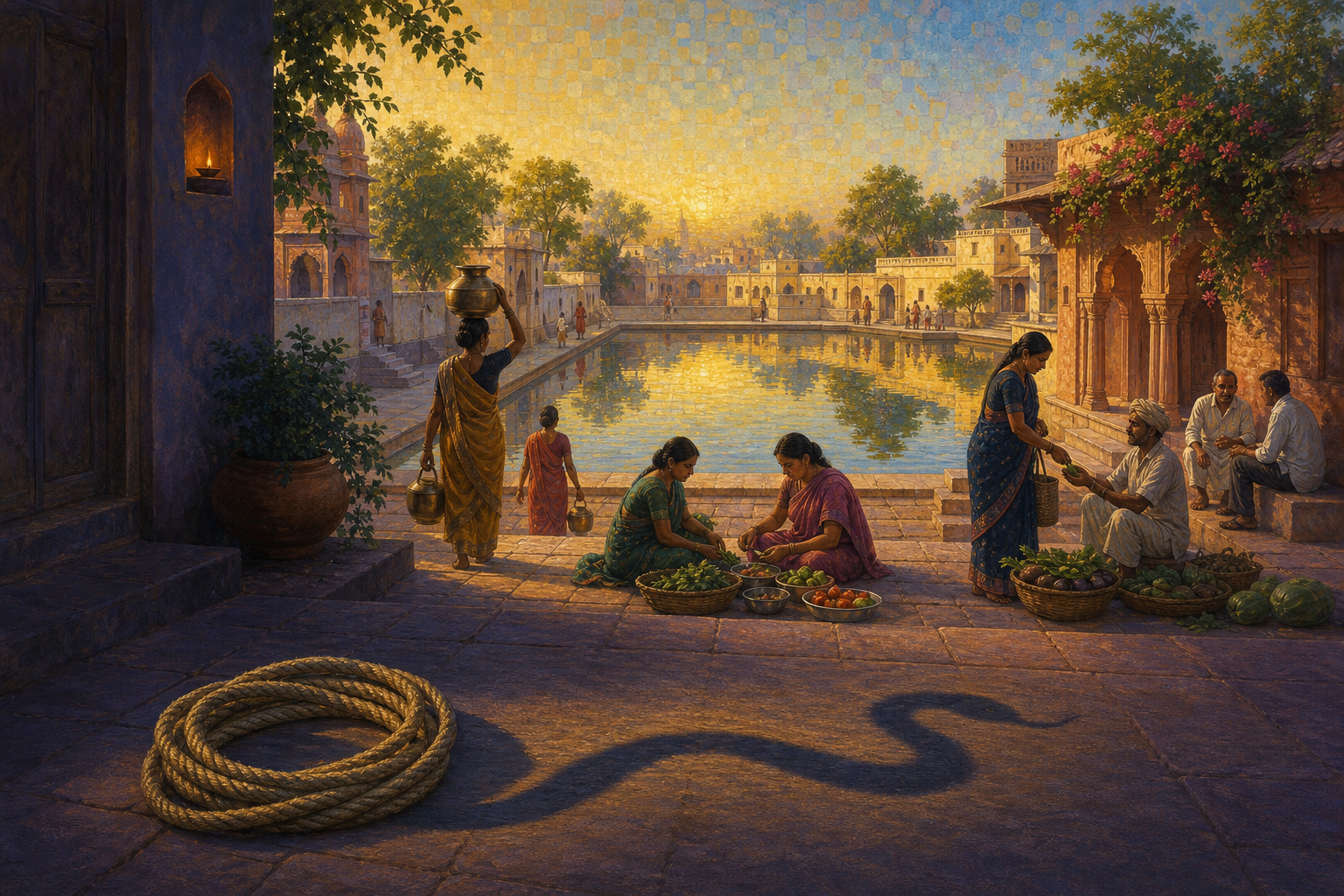
Hindu traditions do not all define ultimate reality in exactly the same way. A useful working map, however, is to distinguish three senses in which you might call something real:
- Experientially real: It is present in your experience. Fear, grief, delight, hunger, conflict, and affection must not be denied merely because they change.
- Conditionally real: It exists through causes, relationships, and circumstances. It can have serious consequences while remaining unstable.
- Ultimately real: It does not borrow its existence from temporary conditions or pass away when those conditions change. Hindu schools disagree about the most precise account of this reality, but the distinction between the transient and the enduring remains central to the inquiry.
This map prevents a common spiritual mistake. Calling a changing thing temporary does not mean calling it worthless, imaginary, or morally irrelevant. Your duties are not cancelled because circumstances are impermanent. Another person’s suffering does not become trivial because the body changes. A promise still matters. A harmful act still has consequences.
The point is narrower and more demanding: a thing can be real within ordinary life without being capable of giving you permanent fulfilment. Hindu inquiry therefore asks you to distinguish the fleeting from what is enduringly real, not to become indifferent to the world.
Apply that distinction to praise. Someone’s approval is a real event, and the relationship may deserve care. But the approval depends on another mind, and another mind can change. Receive the praise without turning it into proof of your worth. Apply the same test to criticism: examine whether it contains a truth you must act on, but do not let another person’s passing judgement become your identity.
You can use three questions whenever something seems capable of making or breaking you:
- Did this arise, and can it change or end?
- Which conditions must remain in place for it to satisfy me?
- Am I experiencing this event, thought, or feeling, or must I conclude that it is the whole of what I am?
These questions do not prove a metaphysical doctrine. They perform a practical task: they stop you from confusing an unstable experience with an unchangeable foundation.
Hindu paths differ, but none makes a passing mood the goal
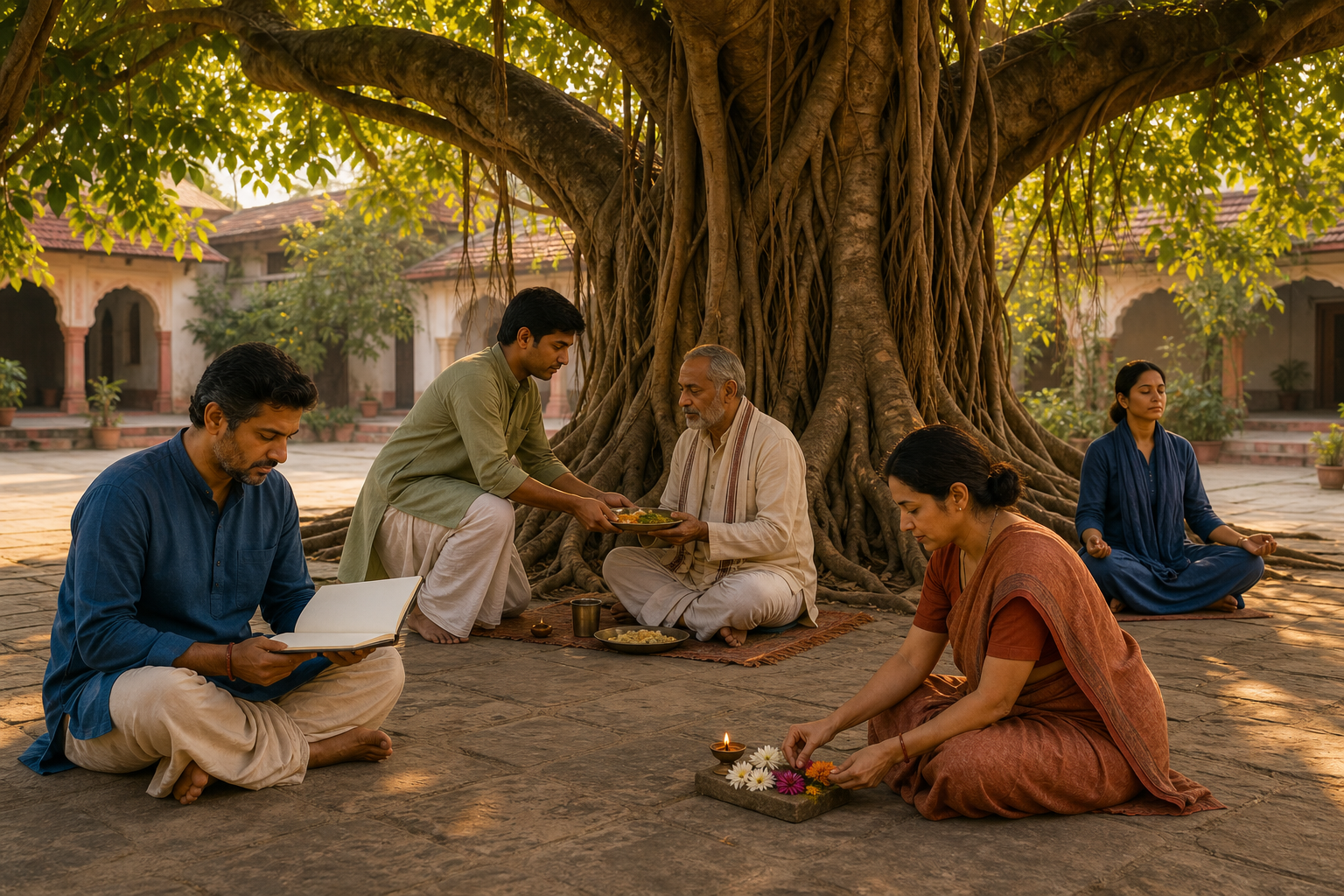
It is misleading to compress Hindu thought into the claim that everything is an illusion or that every school teaches an identical relation between the self and the Divine. Advaita Vedānta understands the deepest self as non-different from ultimate reality. Other Vedāntic and devotional traditions preserve a real distinction, dependence, or relationship between the individual self and the Divine. Yogic disciplines place particular emphasis on training attention and loosening the mind’s compulsive movements.
Those differences matter. If you belong to a sampradaya, let its texts, practices, and qualified teachers define its ultimate claims. Do not assemble a private philosophy by selecting whichever teaching excuses your preference in each moment.
There is nevertheless a practical convergence. Sensory pleasure changes. Social status changes. The body changes. Thoughts change. The ahankara, the tendency that constructs and defends a limited sense of “me,” tries to convert each result into a verdict: success means I am secure; rejection means I am diminished; control means I am safe.
A Hindu discipline of happiness weakens that conversion. A devotee may ground joy in loving relation with the Divine. A non-dual seeker may inquire into the awareness in which changing experiences appear. A practitioner of selfless action may perform duty without claiming ownership of every result. These approaches are not interchangeable theories, but each redirects attention away from the attempt to manufacture an endlessly agreeable mental state.
That gives you a better measure of spiritual progress. Do not ask only whether you felt peaceful during worship or meditation. Notice whether praise controls you less, whether disappointment produces less reckless action, whether you can admit a fault more readily, and whether you keep doing what is right when the expected reward does not arrive. A calm experience may be welcome. Character under changing conditions tells you more.
A daily practice for steadiness amid changing conditions
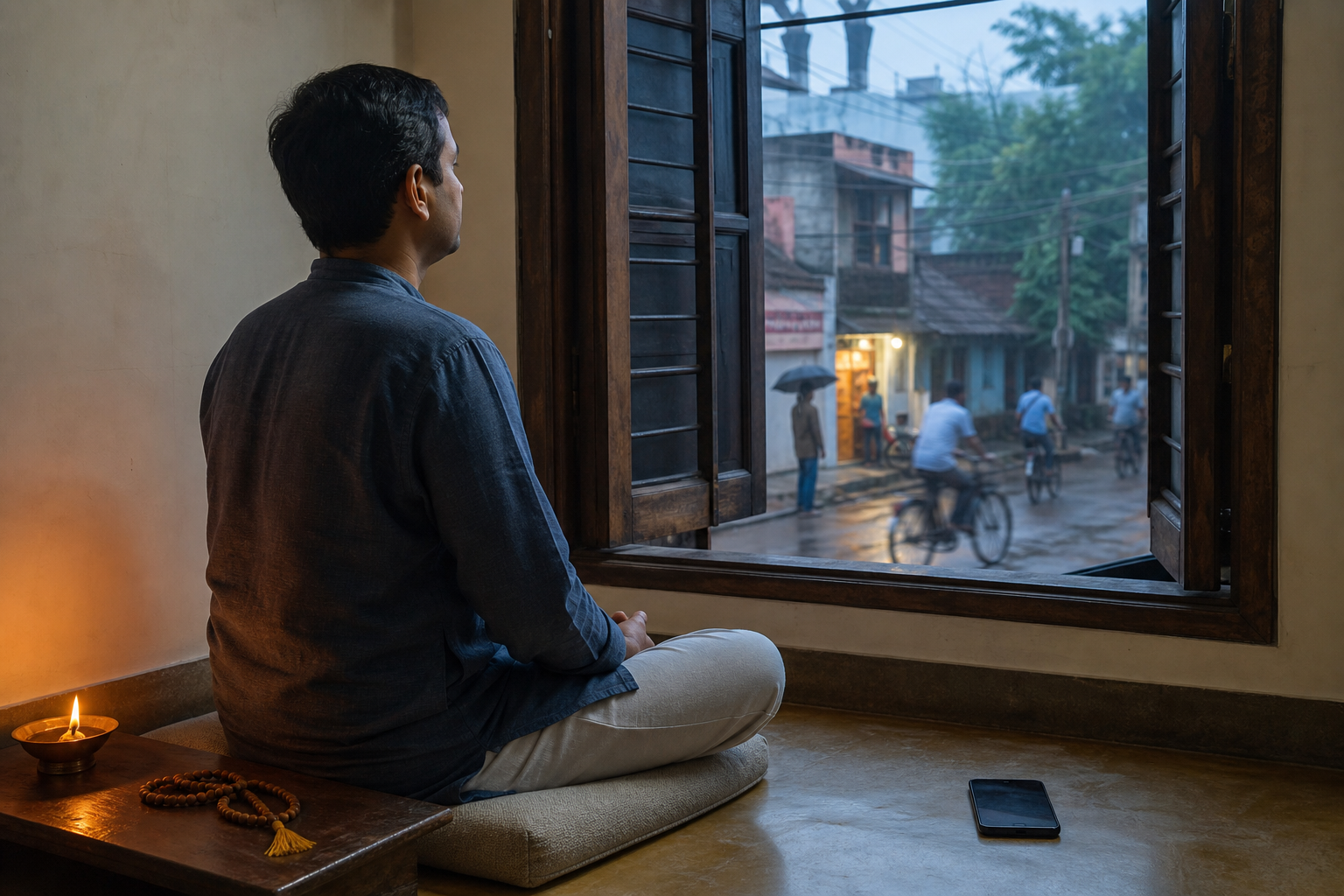
You do not need to solve the nature of ultimate reality before putting discernment to work. Use the following sequence when desire, fear, anger, or disappointment starts governing your next decision.
- State the event without a prophecy. Write or say what actually happened: “My application was rejected.” Do not merge it with the forecast, “Nothing will ever work for me.” The event may require a response; the prophecy is an additional construction.
- Name the movement in the mind. Identify sadness, fear, resentment, craving, embarrassment, or relief as precisely as you can. Naming a feeling lets you acknowledge it without granting it authority over every action.
- Separate change, duty, and result. The feeling is changing. Your duty is the action that remains yours to perform. The result includes factors you cannot command. Confusing these domains makes you neglect duty while trying to control outcomes.
- Choose the next dharmic action. Look for an action that is truthful, proportionate, non-cruel, and consistent with your legitimate responsibilities. It may be apologising, correcting work, refusing wrongdoing, keeping a promise, asking for help, or pausing before speaking.
- Release the hidden contract. Notice the thought, “Because I acted well, life must now give me the result I want.” Right action is not a purchase that forces reality to comply. Do the work fully, then allow the outcome to be an outcome rather than a judgement on your being.
- Review the pattern before sleep. Ask: What changed today? What action was actually mine? What temporary thing did I ask to make me permanently secure? This repeated return is abhyasa. Its strength comes from consistency, not drama.
Acceptance is not permission for adharma
Acceptance means recognising the fact presently in front of you. It does not mean approving of that fact. You can accept that an injustice has occurred and work firmly to correct it. Refusing to acknowledge reality usually weakens action because energy is spent arguing with what has already happened. Clear recognition lets you decide what must happen next.
Detachment is not emotional anaesthesia
Detachment does not require you to become cold, deny grief, or withdraw from loving relationships. It means caring without insisting that another person, possession, or outcome become the permanent foundation of your identity. Love can then include responsibility and tenderness without turning into ownership.
Spiritual reflection should also not be used to dismiss serious mental suffering. If distress is persistent, overwhelming, or places you at risk, seek qualified mental-health or medical help. A practice of discernment can accompany appropriate care; it is not a substitute for it.
Key takeaways
- Constant pleasure is an unstable goal because every pleasant state depends on changing conditions.
- Temporary does not mean worthless or nonexistent. It means the thing cannot bear the weight of permanent fulfilment.
- Hindu schools disagree about the precise nature of ultimate reality, so avoid reducing them all to one slogan.
- Judge practice by the quality of your action under changing conditions, not only by how peaceful you feel.
- When distress appears, separate the event, the mind’s reaction, your dharma, and the outcome you cannot control.
The next time your mood changes, do not ask whether happiness has abandoned you. State the fact, name the demand you placed on it, and take the next dharmic action. Repeated patiently, that shift teaches something an agreeable mood cannot: change may move through your experience without becoming the measure of what you are.
References
- Hindu Blog — Why Constant Happiness Is a Myth We Keep Buying – Hinduism Insights
- Hindu Blog — What Is Real In Hinduism?
