
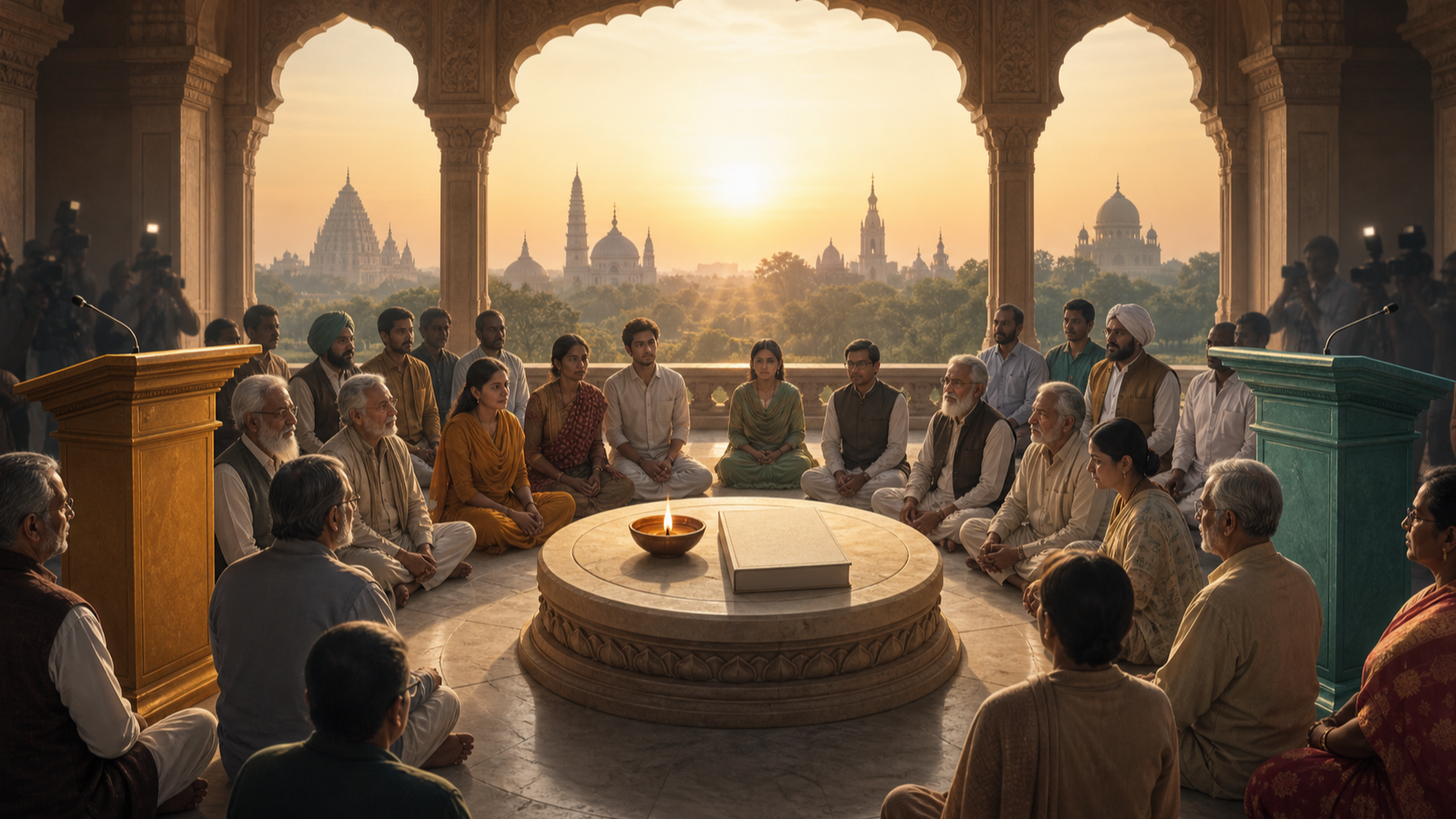
You may be trying to decide whether the recent Vande Mataram dispute was merely bad optics at a Congress event or evidence of a deeper civilisational divide. A short clip makes that decision feel easy: choose the party you already trust, infer a motive, and join the outrage.
That reflex gives the image more authority than the ideal. A better test asks what Vande Mataram demands of the person invoking it, whether criticism is directed at conduct rather than identity, and what either party does after the cameras move on. Those questions let you defend a Hindu civilisational symbol without reducing it to partisan possession.
Do not let a few seconds define a civilisational symbol
The controversy arose around a rendition of Vande Mataram at a Congress event. Critics of Sonia Gandhi interpreted the episode as a failure to understand the song’s emotional and spiritual place in Hindu society. BJP supporters saw an opening for Narendra Modi and his party. Others could reasonably interpret the same moment differently.
Three separate judgments are being compressed into one. The first concerns the visible act: what happened in the room? The second concerns intention: what did a participant believe or mean? The third concerns political philosophy: what does Congress, as an organisation, think India’s civilisational symbols should mean in public life? A camera may help with the first judgment. It cannot, by itself, settle the other two.
This distinction does not require you to ignore an insulting or revealing gesture. It requires you to identify the gesture precisely before enlarging it into a verdict on a person’s inner convictions or an entire party. Ask whether the explanation is consistent with the visible conduct, whether similar incidents form a pattern, and whether the response shows respect or merely manages publicity. If those facts are absent, hold the political conclusion open.
The same discipline applies to BJP messaging. Calling the incident a political “free hit” may describe the electoral opportunity, but it does not prove that BJP has earned Bankim Chandra Chattopadhyay’s inheritance. An opponent’s mistake creates an opening; it does not supply character, knowledge, or service to the party receiving it.
Bankim made love of country a discipline of service
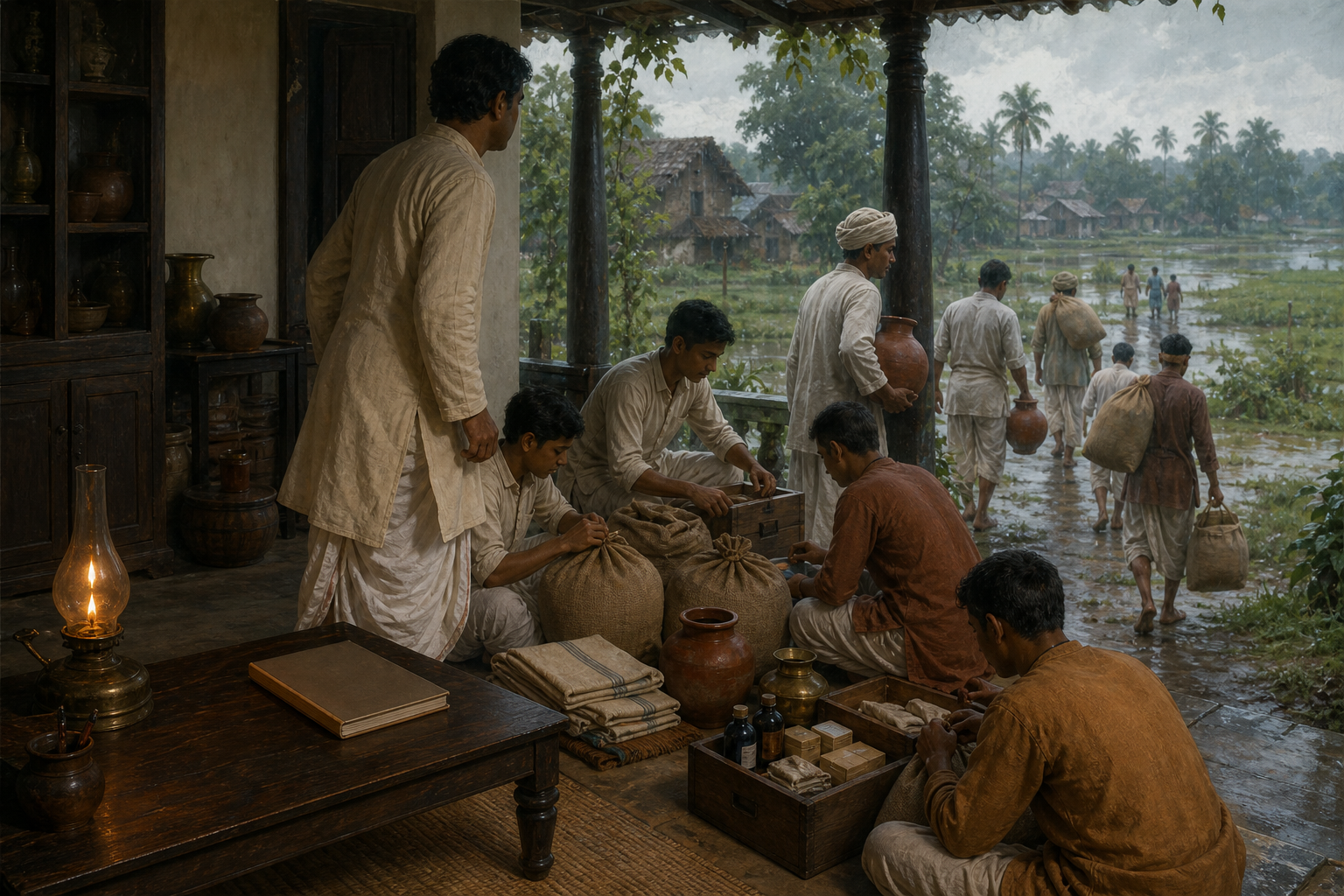
Bankim Chandra published Anandamath in 1882, before political independence had been achieved. Vande Mataram gave national feeling a sacred vocabulary: “I bow to thee, Mother.” The land was no longer presented as an administrative unit or a possession to be divided among competing interests. It became a living mother to whom the citizen owed devotion, protection, sacrifice, and work.
The verb “bow” is easy to overlook. It reverses the usual political hierarchy. The patriot is not the owner of Bharat; the patriot is accountable to her. Vande Mataram therefore cannot be exhausted by standing in a hall, posting a clip, or testing whether somebody else displays enough enthusiasm. The words first place a duty on the person who speaks them.
That gives you a direct way to judge public invocations of the song. Does the invocation produce greater responsibility, or only a demand that somebody else perform loyalty? Does it deepen knowledge of the civilisation, or use inherited emotion as a substitute for knowledge? Does it call people to serve the motherland, or merely give one faction a weapon against another?
The song’s history also explains why neither devotion nor disagreement can be dismissed as trivial. Its language inspired the freedom movement by joining national awakening to a spiritual imagination. The first two stanzas praise the motherland’s beauty and abundance. Later verses employ Hindu divine imagery, including imagery associated with Durga. For many Hindus, removing that spiritual register empties Bankim’s vision of its civilisational depth. For some citizens from other religious traditions, using those later verses as an official civic requirement raises a different concern.
You do not have to erase either fact. Read the words, distinguish the stanzas, identify the setting, and then form your judgment. That is more faithful to Bankim than treating all questions about the song as identical.
Brahma-tej must govern political courage
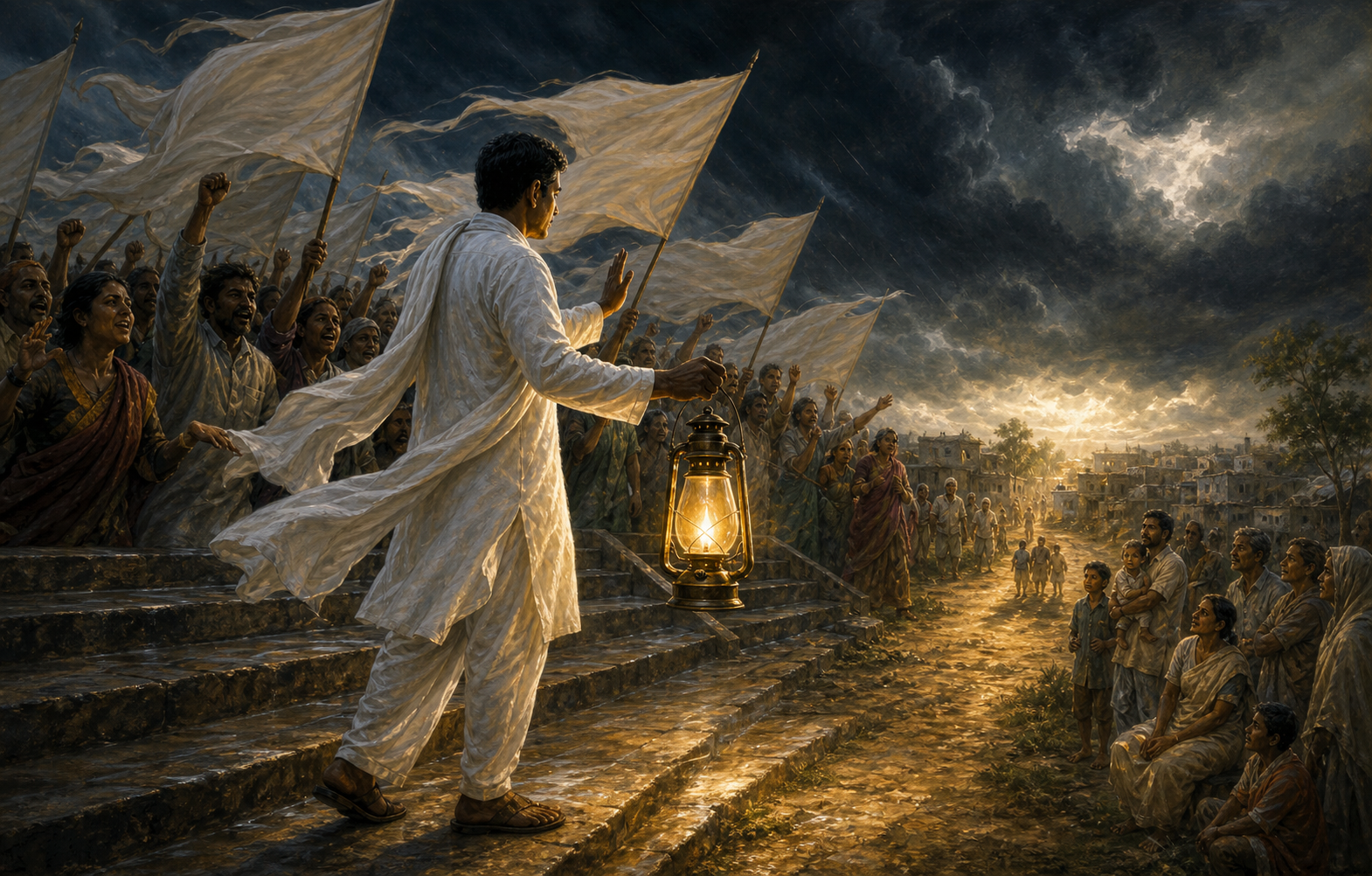
Brahma-tej is not ornamental piety or an air of spiritual superiority. In the Dharmic reading of Anandamath, it is the force of knowledge, wisdom, self-mastery, and disciplined spiritual purpose. Kshatra-tej is courage in action: the capacity to defend, resist injustice, accept sacrifice, and fulfil duty. Bankim’s sanyasi joins the two.
The order matters. The sanyasi first confronts fear, desire, and disorder within himself. Prayer is not an escape from action; it purifies the motive for action. Courage then serves something higher than anger or appetite. Spirituality without the ability to protect can become helpless. Force without wisdom can become destructive. A healthy civilisation needs disciplined knowledge and protective courage together.
This is where much political use of Vande Mataram fails. Loudness can imitate Kshatra-tej while bypassing Brahma-tej. A person may speak of civilisational defence while showing no command over anger, no care with facts, and no willingness to correct an ally. That is not strength shaped by dharma. It is partisan impulse wearing sacred language.
The classical category of the Atatayi sharpens the distinction. An Atatayi is identified by grave aggression: armed attack, arson, poisoning, violent seizure of land or wealth, and violation of another person’s safety or dignity. The defining criterion is conduct, not birth, faith, or community.
That principle sets a boundary for civilisational politics. You may condemn aggression firmly and support the lawful protection of innocent people. You should not turn a category of destructive conduct into a casual label for political disagreement or for a religious population. Doing so replaces dharmic discrimination with collective suspicion.
Before repeating a claim that someone is an enemy of the nation, ask for three things in ordinary language: the exact act, the evidence for it, and the proportionate lawful response. If the accusation names only an identity, or treats dissent as equivalent to aggression, it has already abandoned the conduct-based principle it claims to defend. Brahma-tej appears in the willingness to make that distinction even when your own side would benefit from blurring it.
The secularism dispute contains two different fears
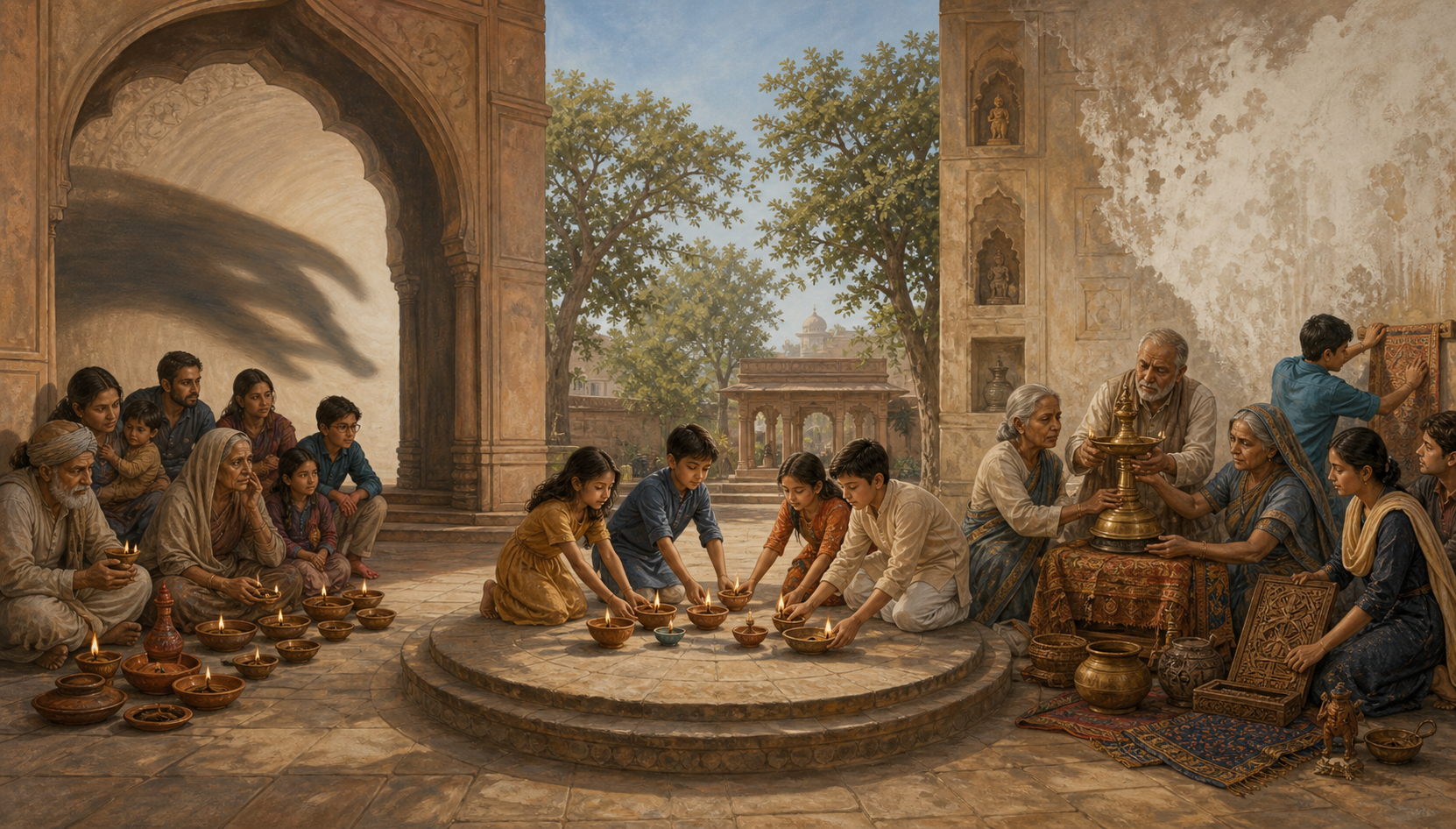
The dispute over Vande Mataram did not begin with the latest political event. In 1937, the Congress Working Committee chose the first two stanzas for official public occasions. Supporters regarded the decision as a way to preserve a shared national expression in a religiously diverse society. Critics saw it as an early dilution of Bankim’s cultural and spiritual vision.
Those positions arise from two different fears. One fears that a citizen will be asked to affirm religious imagery that is not part of his or her own worship. The other fears that India’s majority civilisation will be allowed into public life only after its recognisably Hindu features have been removed. Calling the first fear “anti-Hindu” without examining the setting is too easy. Calling the second fear “majoritarian” without confronting repeated civilisational erasure is equally evasive.
A useful distinction is between a common civic form and the full civilisational inheritance. The first two stanzas can serve as a shared public expression without making the later verses illegitimate, embarrassing, or disposable. The full composition can be taught and honoured in its literary, historical, and spiritual setting without converting every public occasion into a theological test for citizenship.
Context should therefore come before accusation. A government ceremony, a political-party event, a classroom discussion, and a cultural or devotional gathering are not the same setting. Ask which text is being used, who chose it, whether participation is voluntary, what the organisers say it signifies, and whether the rule is applied consistently. Precision protects both civilisational continuity and equal citizenship.
This balance does not require a neutralised India with no memory of its Hindu roots. Nor does it require ordinary citizens of another faith to be treated as adversaries. The stronger Dharmic position is confident enough to preserve the inheritance, explain it accurately, and distinguish disagreement from aggression.
BJP and Congress face different versions of the same test
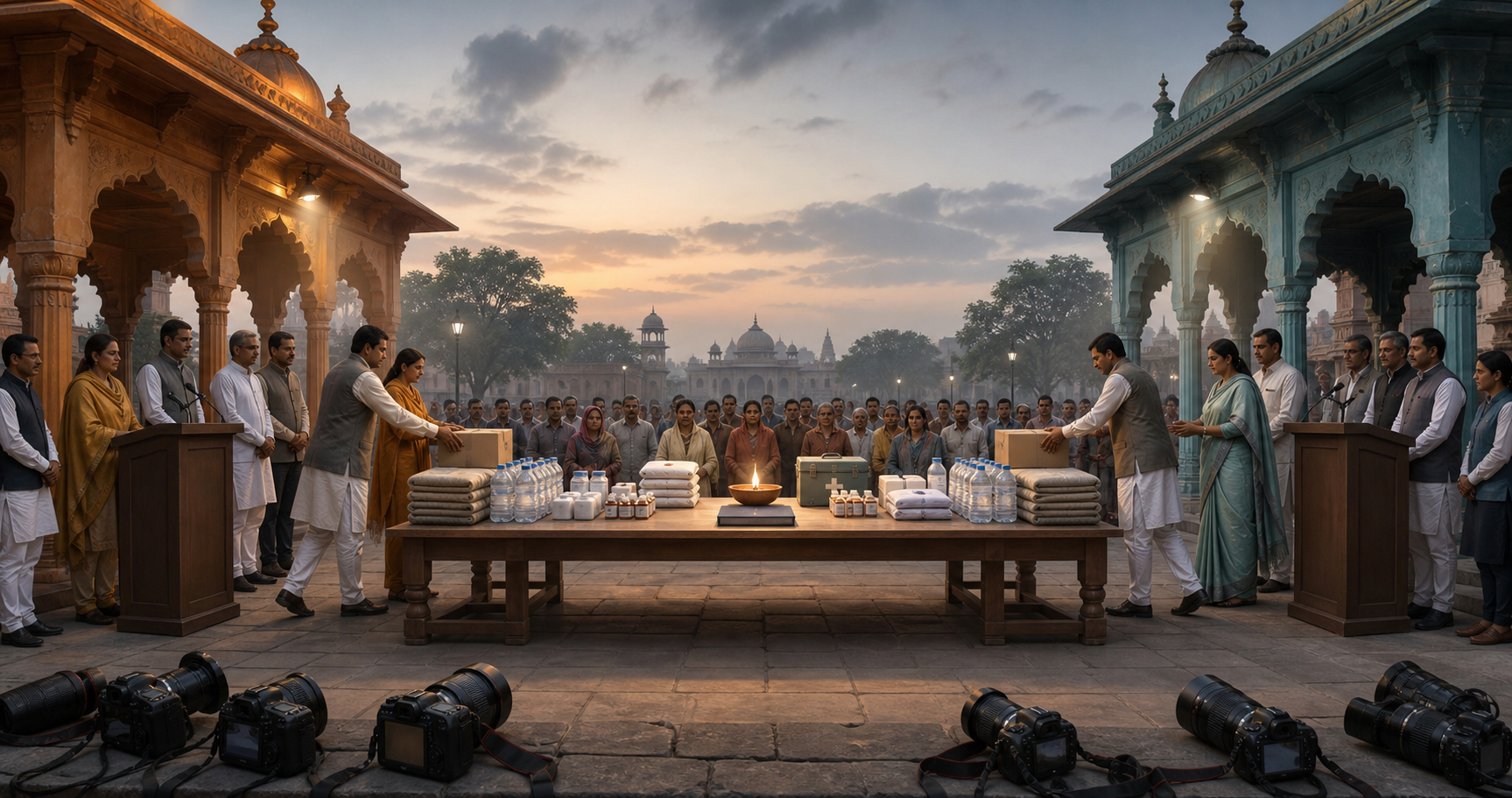
Congress faces a problem of civilisational trust. When its leaders appear uneasy around a symbol with deep meaning for millions of Hindus, procedural explanations may not answer the underlying concern. The party has to show, through consistent conduct, that inclusion does not mean treating Hindu memory as uniquely negotiable. It should be able to explain the first-two-stanza convention without suggesting that Bankim’s complete vision is a cultural liability.
BJP faces a problem of civilisational proof. It benefits politically when Congress seems detached from Hindu sentiment, but electoral advantage is the lowest standard available. If BJP claims Bankim’s legacy, it must unite cultural confidence with self-command, knowledge, public duty, and protection of innocents without regard to community. A party cannot credibly praise Brahma-tej while rewarding carelessness with facts, nor praise Kshatra-tej while directing anger at identities instead of aggressors.
For Narendra Modi, the opportunity is therefore larger than a successful attack line. Presenting the BJP as the political carrier of Bankim’s vision requires giving the symbol institutional and ethical substance. That means teaching the history, protecting the text from caricature, modelling discipline, and connecting patriotic devotion to competent service. A slogan becomes civilisational only when conduct continues after the applause ends.
As a voter or citizen, do not award either party the moral value of Vande Mataram in advance. Congress does not prove inclusion merely by limiting a public rendition. BJP does not prove devotion merely by defending the song. Look for the decisions each side makes when there is no viral advantage: whether it educates, protects, serves, corrects its supporters, and applies its principles consistently.
Key takeaways for the next Vande Mataram controversy
- Identify the text. Ask which stanzas were used and whether the disagreement concerns their wording, their setting, or a participant’s conduct.
- Separate observation from inferred motive. Describe what is visible before claiming to know what a person believes.
- Name conduct, not communities. A Dharmic defence responds to specific aggression or disrespect; it does not assign guilt by birth or faith.
- Test both parties by the same principles. Congress must show that inclusion is not selective erasure. BJP must show that assertion is governed by knowledge and self-discipline.
- Look for follow-through. Education, service, lawful protection, equal regard, and the correction of one’s own allies reveal more than ceremonial enthusiasm.
When the next clip appears, pause before accepting the party caption attached to it. Read the relevant words, establish the setting, identify the exact conduct, and watch what follows. If you say Vande Mataram, let the bow become visible in how you serve the Mother and how carefully you treat her people.
References
