
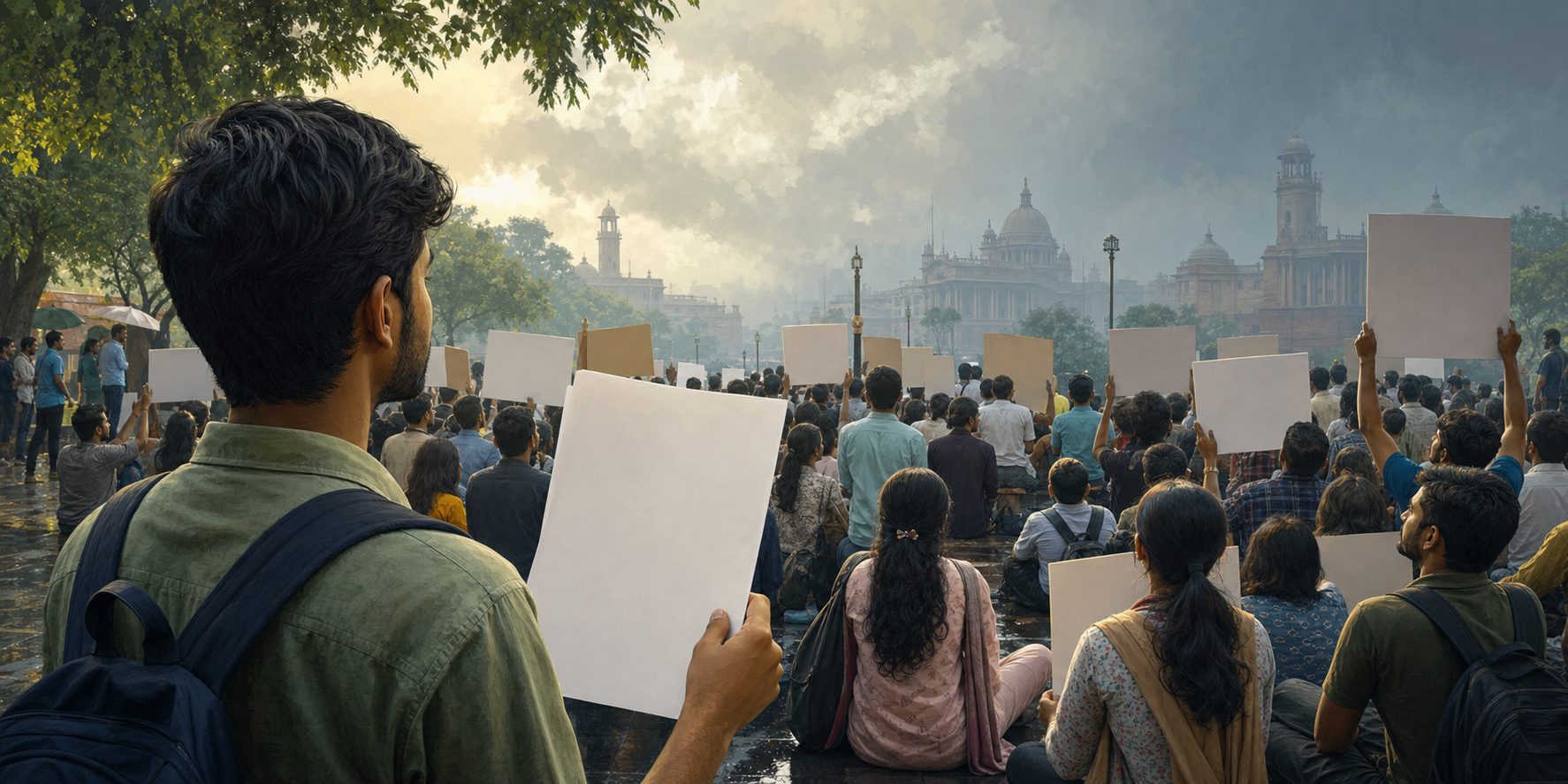
The Jantar Mantar agitation began with a concrete grievance: candidates should not bear the consequences of failures in a high-stakes national examination. According to the supplied source article, however, the campaign had become a broader political test by July 8, 2026, as youth organisers, student activists, Sonam Wangchuk and public figures converged around overlapping but not identical concerns.
Understanding the dispute requires separating examination relief from institutional reform, criminal investigation from political responsibility, and support for a demand from endorsement of everyone associated with it. Those distinctions explain both the protest’s staying power and the fault lines that emerged as its coalition widened.
A re-examination addressed fairness, but not the whole failure
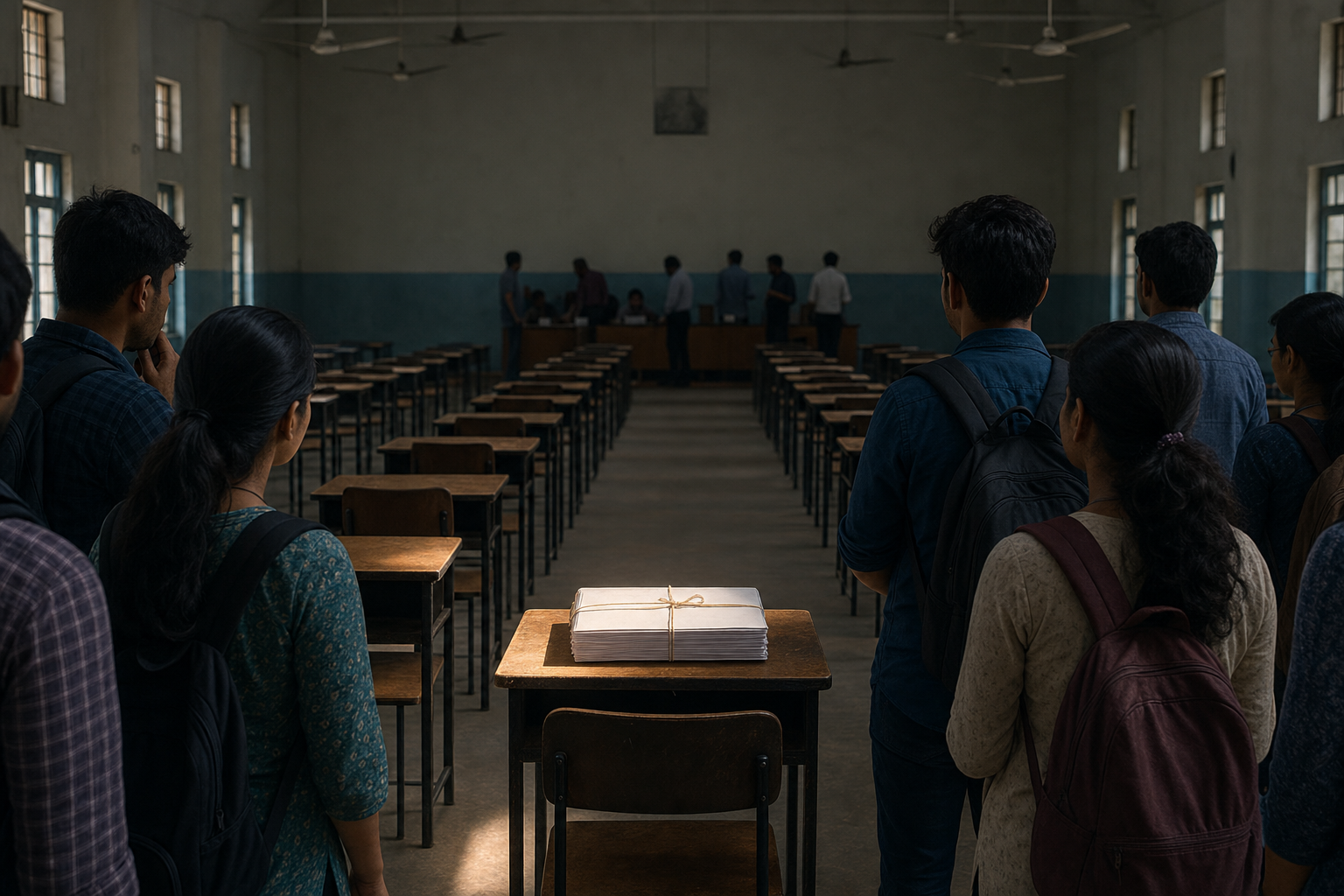
The source article reports that NEET-UG 2026 was initially conducted on May 3. After law-enforcement inputs raised concerns about the process, the National Testing Agency cancelled that sitting, arranged refunds and scheduled a nationwide re-examination for June 21. It also reports that the Central Bureau of Investigation registered a case on May 12 following a Department of Higher Education complaint and later announced arrests in the alleged paper-leak investigation.
These reported actions addressed two immediate needs. The re-examination sought to restore a common competitive baseline, while the investigation sought evidence about possible offences. Neither action, by itself, settled the larger questions raised by protesters: where the examination system failed, whether the vulnerability remained, who carried administrative responsibility and what public consequence should follow.
The scale magnified those questions. Citing the NTA, the article says that more than 20 lakh candidates took the June 21 examination at 5,440 centres in India and 14 abroad, supported by approximately seven lakh officials. Behind those aggregate figures were individual investments in preparation, coaching, travel and family finances. A compromised examination therefore creates more than scheduling inconvenience. It casts doubt on equal opportunity and transfers the cost of an institutional failure to candidates who did not cause it.
National paper-based testing also involves many connected controls, including question preparation, printing, transport, secure storage, centre-level opening, identity checks, answer-sheet handling and result processing. A re-test can replace a disputed outcome, but durable confidence depends on identifying the failed control and demonstrating that it has been repaired.
The protest joined three different forms of accountability

The Cockroach Janta Party, or CJP, emerged in May as a satirical, youth-oriented movement. The source describes its cockroach symbol as a reversal of disparaging language directed at young critics and unemployed people. Humour and memes made participation more accessible, while concerns about education, employment and political responsiveness supplied the movement with substantive targets.
According to the reported chronology, CJP held a major demonstration at Jantar Mantar on June 6, encouraging participants to bring books and the national flag, remain peaceful and report disruptive behaviour. It returned on June 20 for a permitted protest. Participants reportedly used steel plates and spoons as protest instruments, and the demonstration continued beyond the authorised hours. Delhi Police described that continuation as a breach of the permission conditions, while the organisers treated the action as indefinite.
The campaign’s principal demands combined three distinct theories of accountability. Calling for the education minister’s resignation concerned political responsibility for failures under a ministry’s supervision. Seeking the abolition or fundamental restructuring of the NTA concerned institutional design and operational capacity. The CBI case concerned individual conduct that could be established through evidence and legal process.
These remedies may reinforce one another, but they are not substitutes. An arrest does not establish that an agency is institutionally sound. Replacing an agency does not determine criminal guilt. A ministerial resignation can express democratic responsibility, but it cannot reveal the technical route of a leak. The protest’s central contribution was to keep all three questions in view after the re-examination had addressed only the most immediate problem.
A wider coalition brought visibility and issue overlap

The movement changed significantly when Sonam Wangchuk began an indefinite hunger strike at Jantar Mantar on June 28. The source reports that his stated concerns encompassed both accountability for the NEET controversy and environmental, cultural and constitutional demands relating to Ladakh. Six members of the All India Students’ Association were reportedly fasting on a separate stage. The protest space was therefore no longer organised around a single demand or constituency.
Wangchuk’s fast added moral urgency, national recognition and a serious health dimension. The article attributes reports of low blood glucose and blood pressure, as well as estimates of weight loss, to news coverage, organisers or doctors at the site. Because those measurements were reported on different dates and were not drawn from one publicly released clinical record, they should not be treated as perfectly comparable. They nevertheless indicated a need for continuous, independent medical supervision.
His previous Ladakh activism also shaped reactions. The source reports that a September 2025 statehood agitation in Leh ended in clashes in which four people died and dozens were injured. It says the Union government blamed provocative speeches for contributing to the disorder, while Wangchuk appealed for calm and ended his fast after the violence. The article further reports that he was detained under the National Security Act on September 26 and that the Ministry of Home Affairs revoked the detention on March 14, 2026. That contested history helps explain why his presence attracted sharply different political interpretations; it does not, without further evidence, settle responsibility for the violence or define the position of every NEET protester.
Television personality Raghu Ram’s reported visit on July 8 created another visible moment. Such appearances can carry a protest beyond its original online audience, but they can also shift public discussion from the grievance to the biography and politics of the visitor. The coalition’s growth thus produced a genuine trade-off: greater reach accompanied a greater risk that NEET accountability would become only one element of a more diffuse opposition platform.
The deepest divide concerns what counts as political evidence

Responsibility versus remediation
One political fault line separates those who regard cancellation, refunds, a re-test and a criminal investigation as a substantial institutional response from those who argue that these steps do not answer the democratic demand for responsibility at the top. Both positions address real dimensions of the controversy, but they use different standards of resolution. One asks whether candidates received a replacement examination; the other asks whether repeated failures should carry political consequences.
Solidarity versus shared ownership
A second divide concerns coalition politics. A person’s appearance at a demonstration establishes presence and may demonstrate support for a stated cause. It does not automatically establish agreement with every organiser, slogan, participant or unrelated campaign represented at the venue. The same evidentiary rule should apply regardless of whether the visitor is admired or opposed. Otherwise, association becomes a shortcut for argument.
Allegation versus finding
A third divide arises when political commentary collapses unlike categories. A police statement about permit conditions is not a judgment on the merits of the NEET demands. An opponent’s accusation is not an administrative or judicial finding. An announced arrest is not a conviction. Conversely, the absence of a final finding does not make reported examination disruption irrelevant. A credible account must identify who made each claim and what kind of evidence supports it.
Key takeaways
- The reported re-examination restored a competitive opportunity but did not explain how the original process was compromised.
- Political responsibility, institutional redesign and criminal liability are related questions requiring different evidence and remedies.
- CJP’s satirical identity helped convert online youth frustration into organised street politics.
- Wangchuk, student activists and public figures expanded the protest’s reach while increasing the possibility of issue drift.
- Attendance, stated support, allegations and formal findings must remain separate evidentiary categories.
The movement’s future significance will depend less on celebrity visits than on documentary answers: what failed in the examination chain, what the investigation ultimately establishes, what safeguards are changed and how the government addresses the demand for political responsibility. Clear demands and consistent standards of evidence will determine whether the coalition strengthens accountability or allows the original grievance to disappear inside a larger partisan contest.