

If you want Bharat to recover its civilizational confidence but refuse to make your neighbor’s conscience depend on demographic numbers, you face a question that slogans often conceal: must Hindu Rashtra mean theocracy, or can it describe a constitutional order shaped by dharma?
There is a coherent answer. Hindu Rashtra can be defended as a civilizational and constitutional ideal, but only when equal citizenship, freedom of conscience, and equal protection of law are binding limits rather than tactical concessions. That distinction gives you a practical way to judge speeches, manifestos, laws, and cultural campaigns without choosing between civilizational amnesia and majoritarian power.
Make the speaker define Hindu Rashtra before debating it
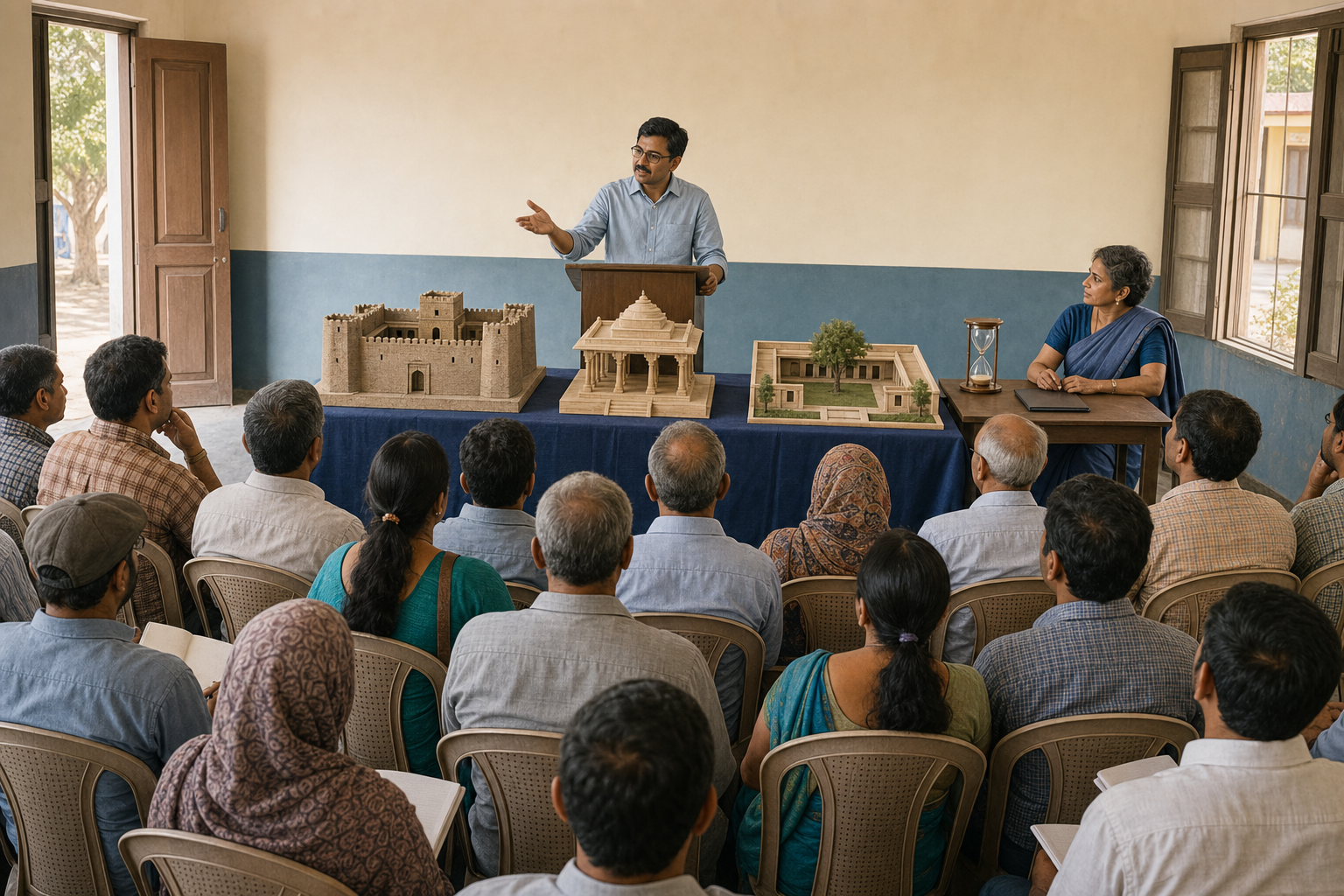
The phrase Hindu Rashtra currently carries several different expectations at once. One person hears cultural self-respect. Another means institutional reform. A third fears that the state will rank citizens by religious identity. Those meanings are not interchangeable, and no serious debate can proceed while they remain bundled together.
Before agreeing or objecting, ask three questions. What makes the proposed order Hindu: its civilizational memory, its ethical orientation, its public institutions, or legal preference for a community? What power would the state gain or use differently? Which rights, duties, and protections would remain identical for every citizen?
A constitutionally defensible definition would be this: Hindu Rashtra is a civic order that recognizes Bharat’s dharmic civilizational character, draws ethical guidance from Hindu and related dharmic traditions, and protects the same citizenship and freedom of conscience for everyone. It is not government by priests, compulsory acceptance of doctrine, a religious test for public standing, or permission to enforce laws selectively.
This definition also keeps three expressions from collapsing into one another. Bharat names a nation and civilization. Hindutva concerns the public and cultural significance of Hindu identity. Hindu Rashtra makes a claim about the character of the polity. A person may connect all three, but a proposed law still needs its own constitutional justification. Invoking one term cannot settle the meaning of the others.
Key takeaways
- A defensible Hindu Rashtra is a constitutional, rights-affirming, duty-conscious civic order, not a theocratic state.
- Bharat can acknowledge its dharmic inheritance in education, heritage, public ethics, and cultural diplomacy without reducing anyone’s citizenship.
- You should judge every proposal by its written rules, legal route, administrative plan, and effect on the least powerful citizen.
- Success should be measured through social trust, equal enforcement, sound institutions, and shared service, not merely through declarations or electoral victories.
Constitutional dharma sets both a floor and a discipline

Dharma is more demanding than religious branding. In public life, it asks whether power is restrained, justice is even-handed, duties are performed, and the vulnerable are protected. The Constitution gives those concerns an institutional form through freedom of conscience, equality before law, and duties of citizenship.
Freedom of conscience means the state cannot claim ownership of a person’s inner conviction. Equality before law means a citizen’s public standing cannot rise or fall with community identity. Civic duties mean that citizenship is not merely a demand for benefits; it also requires restraint, service, truthfulness, and responsibility toward the common good.
Rights without a culture of duty can produce legal minimalism: people ask only what they can get away with. Duties without enforceable rights can become a demand for obedience: the powerful decide what everyone else owes. Constitutional dharma needs both. Rights establish the floor below which the state cannot push a person. Dharma asks citizens and institutions to rise above that floor.
This is where theocracy and civilizational statecraft separate. A theocratic impulse treats doctrine as a source of coercive public rank. A dharmic constitutional order treats ethical self-restraint as a limit on coercion. The first asks who is entitled to dominate. The second asks whether power is being exercised justly.
Pluralism therefore does not require Bharat to become culturally blank. Public education can accurately teach Hindu, Buddhist, Jain, and Sikh contributions. Sacred places can receive serious conservation. Yoga, Ayurveda, Buddhist pilgrimage, and Sikh traditions of seva can be represented abroad. Public institutions can acknowledge that Bharat’s civilization was deeply formed by dharmic thought.
The boundary appears when recognition turns into compulsion or unequal civil standing. A cultural programme may invite citizens to understand an inheritance; it should not require them to profess belief in it. A heritage policy may correct neglect; it should not use correction as a pretext for arbitrary treatment. A security policy may punish violence; it fails the constitutional-dharma test if identity determines whose violence matters.
This boundary protects Hindus as well as minorities. Once the state acquires authority to decide which beliefs are sufficiently pure, acceptable, or national, disagreements within Hindu society can also become targets of power. A genuinely Hindu confidence does not need a government office to settle every philosophical difference. Bharat’s own traditions contain multiple schools, sects, practices, and forms of worship; state-enforced uniformity would diminish that inheritance rather than defend it.
Build civilizational confidence through capable institutions

A declaration cannot do the work of a school, court, heritage board, local administration, or service organization. If Hindu Rashtra is meant to improve public life, its advocates must specify which institutions change, who is responsible, how decisions can be challenged, and what result the citizen should see.
Teach civic dharma without turning the classroom into a pulpit
Curricula can give sustained attention to dharmic philosophy, ethics, science, art, literature, and social institutions. The correction of historical omission is legitimate. Replacing one distortion with another is not.
Use four checks when evaluating a curriculum proposal:
- Accuracy: Are claims supported by appropriate historical and academic methods, or merely repeated because they are flattering?
- Breadth: Does the material show the range of Hindu traditions and the distinct contributions of Buddhist, Jain, and Sikh communities without erasing their identities?
- Purpose: Are students being asked to understand ideas and history, or to declare assent to religious claims?
- Critical capacity: Can students examine evidence, disagreement, reform, and historical failure as well as achievement?
A useful rule is simple. Education may require a student to learn what a tradition teaches and how it shaped Bharat; it should not require the student to believe the teaching. That line allows serious civilizational education without indoctrination.
Give inter-tradition cooperation an operating mandate
Bharat already possesses a rich vocabulary for principled coexistence: Ashoka’s encouragement of respectful pluralism, Jain anekantavada, Buddhist karuna, and Sikh seva and defense of justice. These inheritances should produce more than ceremonial photographs.
Standing Hindu, Buddhist, Jain, and Sikh councils can focus on three practical responsibilities: protecting shared and community-specific heritage, identifying local risks to social harmony, and running service projects together. Each council should publish its mandate, decisions, finances, and completed work. Without those outputs, a council can easily become another stage for speeches.
Shared work matters because trust grows differently through service than through debate. A joint food programme, health initiative, educational effort, or disaster response requires communities to solve concrete problems together. The ethical resources are already present in langar, dana, seva, ahimsa, and karuna. Institutions should make cooperation regular rather than waiting for a crisis.
Judge heritage governance by stewardship, not symbolism
Temples, viharas, basadis, and gurdwaras require community participation, legal compliance, professional conservation, sound financial administration, and reasonable accessibility. Civilizational renewal becomes credible when a sacred place is protected for the next generation, its funds are handled transparently, and decisions have an intelligible process.
When you encounter a heritage reform proposal, ask who appoints the governing body, who controls revenue, which conservation standards apply, what records are public, and where a community can appeal an improper decision. A grand announcement that answers none of these questions is cultural theatre, not governance.
Put social justice and equal enforcement at the center
A dharmic polity cannot treat deprivation as a side issue. Education, health, and livelihoods for vulnerable people across communities are part of civilizational renewal because dharma is tested by responsibility toward those with less power. Cultural confidence that leaves preventable suffering untouched is morally thin.
The same standard applies to public order. Laws against violence, coercion, and hate speech must be enforced consistently, regardless of the accused person’s or victim’s identity. Equal enforcement does not mean pretending that every situation is identical. It means using the same legal standards, evidentiary discipline, due process, and institutional urgency.
Justice need not become vengeance. Accountability protects the public; compassion limits cruelty; due process restrains rumor and collective punishment. Ahimsa does not require passivity toward aggression, while defense of society does not authorize indiscriminate retaliation. Constitutional dharma holds those duties together.
Use seven questions to test any Hindu Rashtra proposal
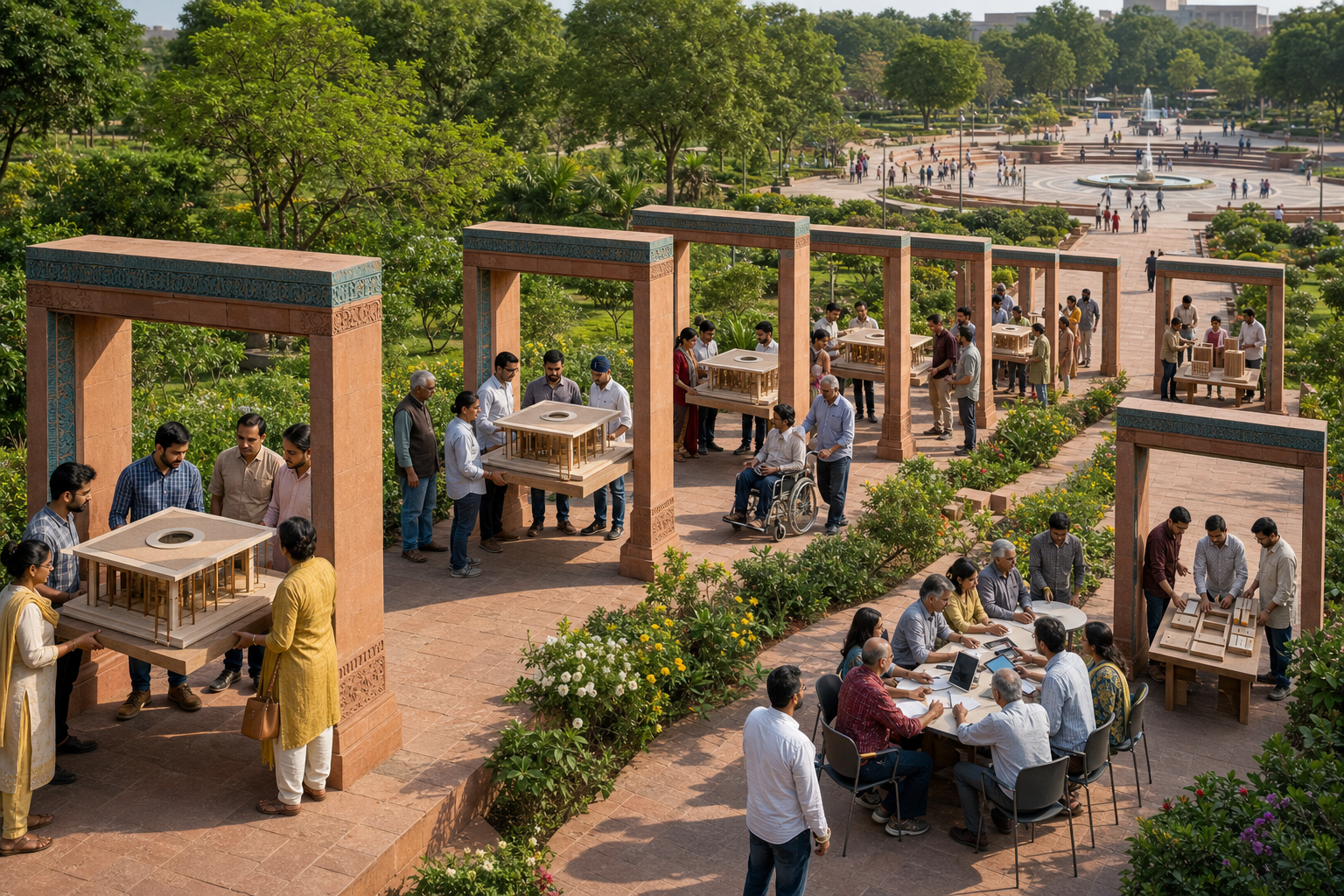
Apply the following test whenever a politician, organization, commentator, or policy advocate invokes Hindu Rashtra. Do not ask only whether you sympathize with the stated goal. Ask whether the proposal could be entrusted to people you oppose as well as people you support.
- What exactly is being proposed? Demand a plain definition, the institution affected, and the decision that would change. Cultural recognition, curriculum reform, heritage administration, criminal enforcement, and constitutional amendment are different kinds of action. A slogan cannot substitute for identifying which one is intended.
- Does every citizen retain equal public standing? Check eligibility for office, public services, legal remedies, education, property, and institutional protection. If religious identity changes a citizen’s basic legal status, the proposal fails the constitutional-dharma test.
- Is freedom of conscience intact? Distinguish learning from profession of belief, voluntary observance from compulsion, and persuasion from coercion. Public respect for dharmic traditions does not require the state to supervise private conviction.
- Is there a lawful route? Federalism distributes authority, judicial review tests constitutional fidelity, and administrative bodies possess limited powers. Before backing a concrete legal change, identify which level of government can act, which law authorizes it, and how courts or other review bodies may examine it. Political desire does not create legal competence.
- Can the institution actually carry it out? Look for a written policy, responsible office, budget, timeline, public consultation, implementation stages, and independent evaluation. Rhetoric often moves faster than administrative capacity. When no one can name the responsible institution or completion test, expectations are being created without a delivery mechanism.
- Who bears the risk if implementation goes wrong? Examine the effect on vulnerable Hindus, dharmic minorities, non-dharmic communities, dissenters, and people with little access to legal or political influence. Dharma is not demonstrated by benefits to the already powerful; it is revealed by how authority treats the person least able to resist it.
- What outcome can the public measure? Choose an indicator connected to the stated purpose: educational accuracy, conservation quality, publication of finances, consistent enforcement, inter-community trust, fewer communal incidents, or completed joint service. If success is defined only as passage, declaration, or symbolic visibility, the proposal has no serious accountability.
Consider a hypothetical demand to restore civilizational content in schools. The first question identifies the actual curriculum and age group rather than accepting a general slogan. The second and third protect equal treatment and prevent compelled belief. The fourth identifies the competent education authority. The fifth asks who will select material, train teachers, hear objections, and review accuracy. The sixth checks whether any child will be stigmatized. The seventh requires an educational outcome rather than applause at the launch.
The same sequence works for heritage management or public-order reform. It turns an identity argument into a governance examination. Supporters gain a clearer route from aspiration to implementation. Skeptics gain specific protections they can inspect. Everyone has to move beyond projecting either hope or fear onto an undefined phrase.
Measure Hindu Rashtra by public conduct, not proclamation
A state can change a label quickly. A society cannot acquire dharmic conduct by announcement. The more serious measure is whether institutions become fairer, communities more secure, heritage better protected, education more truthful, and public power more accountable.
The year 2030 offers a practical checkpoint for turning the aspiration into publicly assessable work. A government or civil-society coalition using that horizon should establish a baseline, publish annual progress, and explain setbacks rather than moving the goal whenever results disappoint.
A useful public scorecard would examine:
- Communal security: Are incidents of communal violence declining, and are authorities applying consistent procedures when incidents occur?
- Inter-community trust: Do repeated surveys show that citizens feel safer, better represented, and more willing to cooperate across community lines?
- Joint service: Are Hindu, Buddhist, Jain, and Sikh institutions completing shared projects with visible beneficiaries, published responsibilities, and continuing local participation?
- Heritage stewardship: Are governing records, finances, conservation plans, and access arrangements becoming clearer and more professional?
- Civic education: Are students receiving accurate, broad, critically teachable material on Bharat’s dharmic traditions and their contributions?
- Policy execution: Are promised reforms reaching their published milestones, receiving independent evaluation, and being corrected when evidence shows failure?
Each indicator needs context. Counting council meetings says little if no decision is implemented. Recording the number of lessons says little if the material is inaccurate. Celebrating fewer reported incidents is dangerous if victims have simply stopped reporting. Measurement should expose institutional performance, not manufacture a flattering number.
Global soft power should face the same test. Yoga, Ayurveda, Buddhist pilgrimage, and Sikh seva can deepen Bharat’s goodwill, but international visibility cannot compensate for unequal conduct at home. The strongest civilizational message is consistency between what Bharat presents to the world and how its institutions treat citizens.
Your next demand should be a written constitutional charter
The next time someone asks you to support or reject Hindu Rashtra, ask for one page of precision. It should state the civilizational meaning being affirmed, the rights that remain non-negotiable, the duties expected from citizens and officials, the institutions to be changed, the lawful route for changing them, and the outcomes by which the effort will be judged.
If those commitments cannot be written down, do not lend an ambiguous slogan the certainty of your support or opposition. If they can be written, apply the seven questions and debate the actual proposal. Constitutional dharma begins before any declaration: it begins when citizens demand truthfulness, restraint, competence, and equal justice from every use of power.
References
