
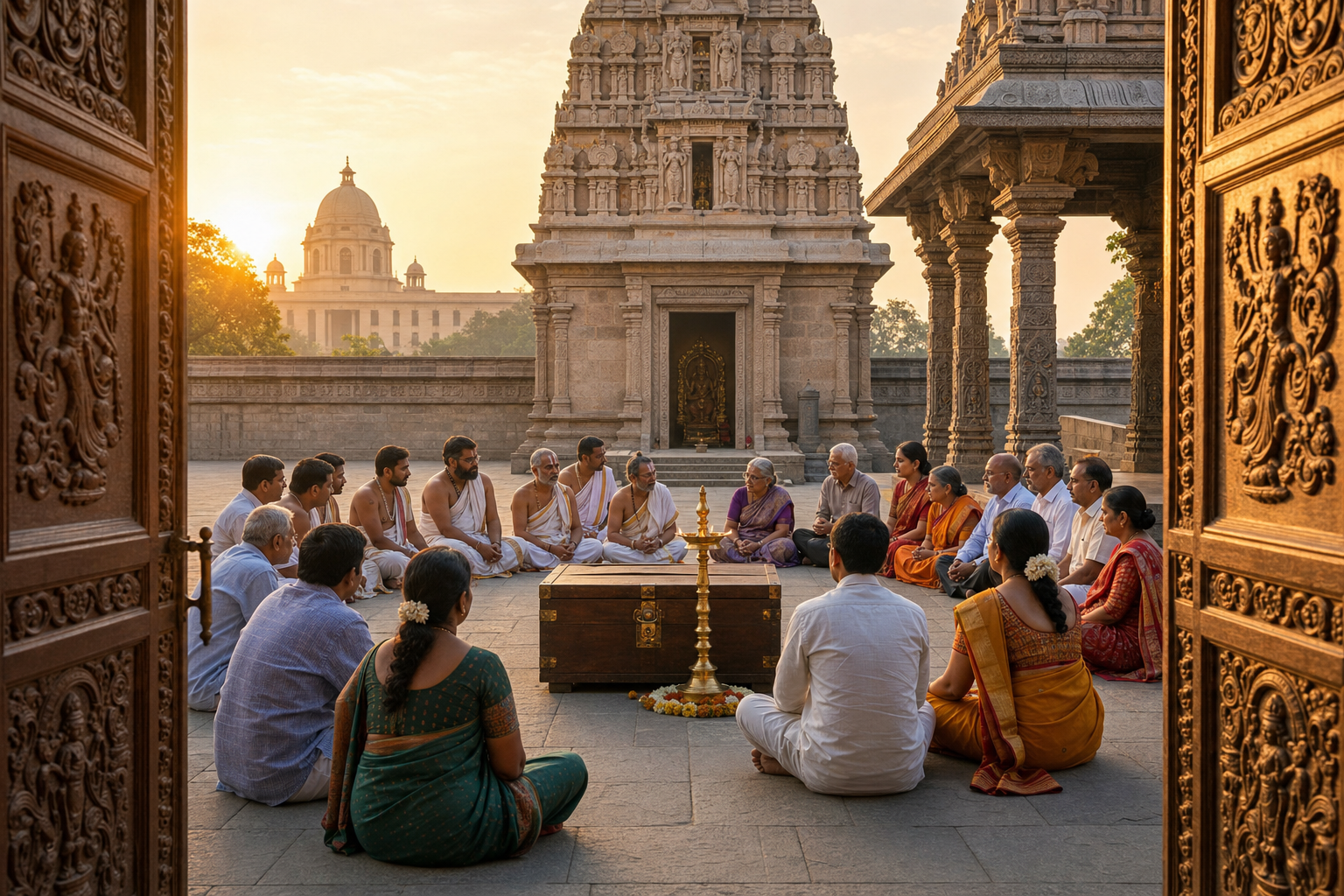
If a favourable election result has left you wondering why Hindu temples still seem dependent on officials, the answer is uncomfortable but useful: political influence and institutional autonomy are not the same achievement. A sympathetic government may offer access or temporary protection. It does not automatically return decision-making authority to a temple, matha or devotee community.
You can judge any promise of institutional freedom by asking a practical question: who will control worship, appointments, money, assets, records and disputes after the present officeholders are gone? If the answer still depends on political goodwill, the institution has acquired a patron, not autonomy.
Political support is not the same as institutional autonomy
Three kinds of power are often collapsed into one:
- Political access means that devotees can reach ministers, legislators or senior officials and receive a hearing.
- Administrative protection means that a government can pause an intervention, correct an abuse or direct officials to follow a fairer process.
- Institutional autonomy means that the religious community possesses recognised, durable authority to govern its internal life under clear rules, with proportionate accountability and an effective route of appeal.
Access can produce real relief, and relief should not be dismissed. But a minister’s intervention is reversible. A transfer, election defeat or change of priorities can end it. Durable autonomy instead resides in governing documents, recognised procedures, competent bodies, reliable records and enforceable limits on outside intervention.
India’s colonial experience makes the distinction stark. The East India Company did not prevail because Bharat lacked spiritual depth. It combined maritime power, artillery, financial networks, revenue extraction, supply chains and increasingly centralised administration, while fragmented polities struggled to coordinate. The broader lesson is not that every religious institution should imitate a state. It is that spiritual capital cannot compensate indefinitely for weak organisation, uncertain authority or missing records.
This also explains why the choice is not simply between state control and disorder. A capable state can protect property, prevent violence, enforce lawful obligations and provide remedies against fraud. The real question is whether intervention is limited, transparent and reviewable, and whether those who sustain the sacred institution retain meaningful authority over its religious and charitable purposes.
Key takeaways
- An election victory may improve access without changing who legally or practically controls an institution.
- Test autonomy across worship, appointments, finances, assets, records and dispute resolution.
- Devotee stewardship becomes credible when it includes published accounts, conflict safeguards and orderly succession.
- Use political power to establish fair rules and durable procedures, not permanent dependence on a party or officeholder.
- Dharmic solidarity should protect the autonomy of distinct traditions, not force them into administrative uniformity.
Audit where power actually sits before demanding reform
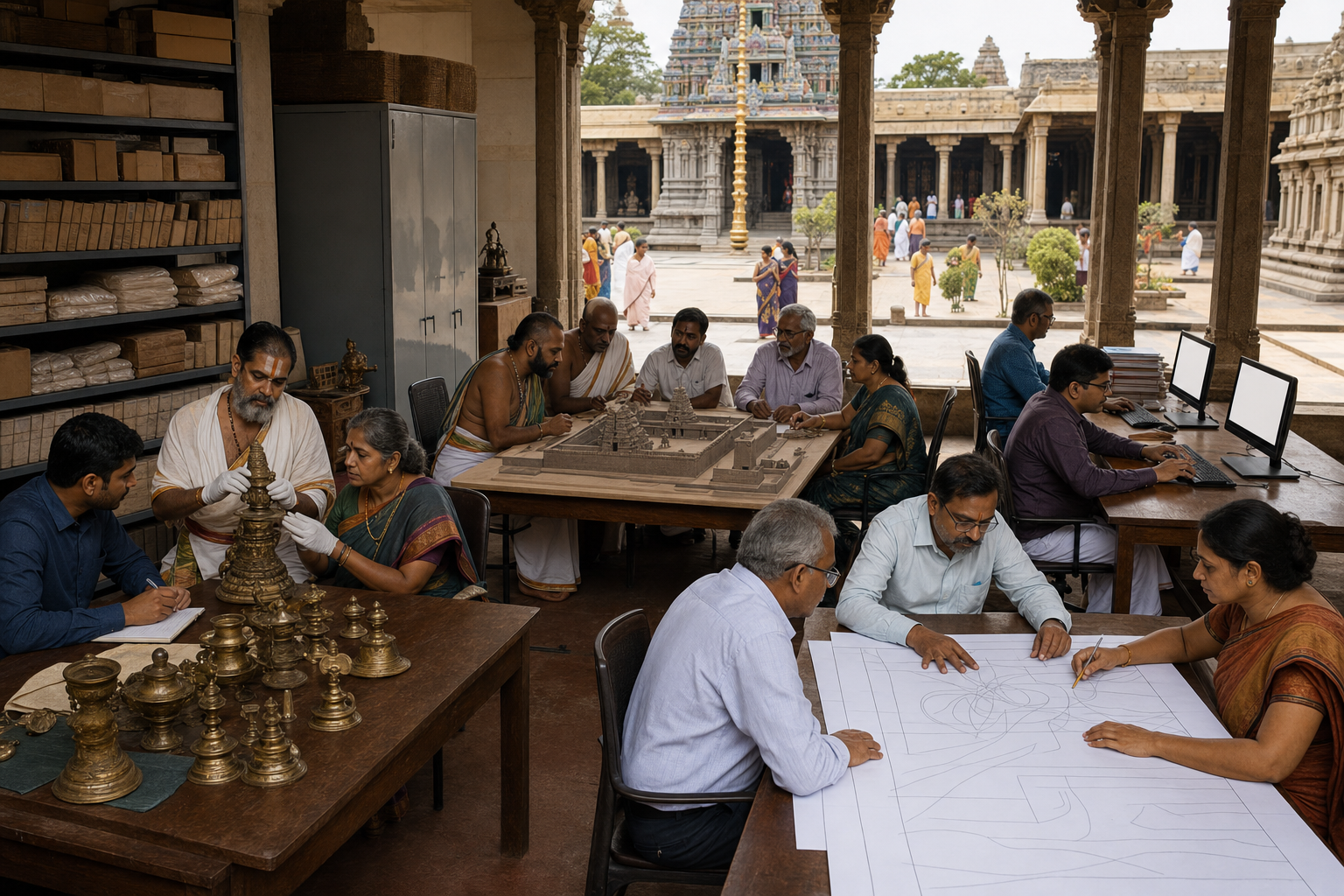
Calls to “free temples” remain too abstract until you identify a decision, the authority claiming the right to make it and the procedure available to challenge it. Begin with one institution. Make a one-page autonomy map covering the following six domains.
- Worship and tradition: Who can alter the ritual calendar, festival route, customary honours, timings, Agamic observance or use of sacred space? Who is consulted, and whose consent is required?
- Appointments: Who selects trustees, managers, archakas or other religious functionaries? What qualifications, terms, removal grounds and conflict rules apply?
- Money: Who approves budgets, operates accounts, authorises major expenditure and chooses auditors? Can devotees see income, expenditure, restricted donations and project costs in a usable form?
- Land and other assets: Who maintains the asset register, negotiates leases, approves construction and acts when property is encroached upon or neglected?
- Records: Who holds deeds, endowment instruments, court or administrative orders, minutes, donor restrictions, inventories and the evidence of customary practice? Are copies secure and accessible to authorised custodians?
- Disputes: Where can a devotee, functionary or trustee raise a grievance? Who must answer, is the decision written, and can it be independently reviewed?
For every domain, record four things: the formal authority, the person exercising practical control, the document supporting that control and the available remedy. These answers may not point to the same person. Someone may possess nominal authority while another person controls signatures, information or administrative delay.
Mark each domain green, amber or red. Use green when authority and procedure are both clear; amber when control depends mainly on convention, personal relationships or inaccessible documents; and red when an outside actor can make a consequential decision without reasons, consultation or meaningful review. This is a diagnostic tool, not a legal conclusion.
Do not treat oral memory as worthless. It can preserve details that formal files omit. But do not make it carry the entire case. Record the names and roles of knowledgeable custodians, gather photographs and festival records where relevant, and connect customary practice to whatever deeds, minutes, orders or accounts exist. If litigation or an adverse administrative proceeding has begun, ask a lawyer familiar with the applicable state framework what must be preserved and filed. Missing a procedural requirement can damage a sound substantive claim.
Devotee stewardship must be accountable to remain credible
Institutional autonomy cannot mean that a small local circle acquires unchecked control. Devotees are right to resist distant or opaque administration, but government control is not the only form of institutional failure. Local capture, hereditary entitlement without responsibility, conflicts of interest, poor accounts and undocumented succession can also weaken a temple.
A community seeking greater authority should therefore prepare a governance pack before, or at least alongside, its political campaign:
- A governing charter: Define the institution’s religious purpose, the powers of each body, eligibility rules, terms, removal procedures and the decisions requiring broader consent.
- A ritual-protection protocol: Identify the competent religious custodians, describe how customary or Agamic questions are decided, and separate those questions from ordinary maintenance or procurement.
- Financial disclosure: Publish comprehensible summaries of receipts, expenditure, designated donations and major works. Use an independent audit where the scale or risk warrants it.
- Conflict safeguards: Require disclosure and recusal when a trustee, manager or relative could benefit from a contract, lease, appointment or transaction.
- An asset register: Keep descriptions, title material, current use, tenancy or lease information, condition records and responsible custodians together. Restrict sensitive access without allowing the information to disappear into one person’s possession.
- A grievance process: Provide a named channel, acknowledgement of complaints, written outcomes and escalation for unresolved matters.
- Succession and continuity: Record handover duties, maintain duplicate authorised copies of essential records and prevent a change of committee from interrupting puja, festivals, staff payment or seva.
The importance of joining autonomy to process became visible during the 2025 standoff at Pachaivazhi Amman Temple in Abatharanapuram near Vadalur. Villagers and Hindu Munnai members peacefully opposed a proposed Tamil Nadu HR&CE takeover, raised concerns about worship, finances and village custom, and indicated that they would pursue dialogue, petitions and due process. The episode does not settle every dispute over temple administration. It does show why a public mobilisation needs to mature into documented concerns, representative engagement and a precise remedy.
Before alleging diversion, corruption or hostility, obtain the records you can and distinguish a verified fact from a suspicion. Unsupported accusations can distract from the institutional issue and create legal exposure. A stronger representation states the decision being challenged, the authority involved, the tradition or asset affected, the evidence available and the corrective action requested.
Use political power without making sacred institutions partisan
Political power is necessary when statutes, departments or administrative habits shape religious institutions. Yet a temple becomes fragile when its freedom is tied to one leader, party faction or election cycle. The aim should be to convert temporary political opportunity into procedures that even a less sympathetic government must respect.
Ask elected representatives and officials for commitments that can be written, published and evaluated:
- Advance notice and meaningful consultation before a consequential administrative change.
- A written statement of the legal basis, purpose, scope and expected duration of an intervention.
- Local devotee and tradition-bearing representation, with qualifications and conflict rules rather than token nomination.
- Regular disclosure of finances, maintenance works and major asset decisions by whoever exercises control.
- A clear grievance channel, written decisions and time-bound responses.
- Independent review of contested decisions and periodic reconsideration of any exceptional control arrangement.
Send the same questions to every serious political formation. Keep replies, meeting notes and promised dates. This moves the campaign away from declarations of cultural sympathy and toward commitments that can be checked. It also gives future officeholders less room to pretend that the issue began with their immediate opponent.
Political volunteers can help organise meetings, gather records and draw public attention. They should not automatically become trustees, ritual authorities or vendors. Keep the institution’s decision-making body distinct from the party organisation. Otherwise, a campaign against bureaucratic capture can end by replacing it with partisan capture.
Dharmic unity requires a similar discipline. Hindu, Buddhist, Jain and Sikh traditions share civilisational resources such as seva, dana, ahimsa and karuna, and their institutions have long sustained service, learning and cultural continuity during political and economic stress. That shared ground can support a coalition for fair treatment, heritage protection and community responsibility. It does not justify administering a temple, matha, vihara, Jain institution and gurdwara as though their internal authorities and practices were interchangeable.
Build coalitions around governing principles: religious competence, transparent stewardship, local participation, lawful remedies and limited external intervention. Let each tradition define its sacred functions through its own legitimate custodians.
A practical sequence for your next temple campaign
If your community faces an appointment dispute, proposed takeover, financial question or threat to customary practice, use the following sequence before expanding the campaign.
- Define one decision. Replace a broad complaint with a precise statement: what has happened or been proposed, who is acting, which institutional function is affected and what immediate consequence may follow.
- Identify the procedural stage. Determine whether you are responding to a proposal, notice, interim direction or final decision. Do not assume that a public meeting, departmental representation and legal filing have the same requirements.
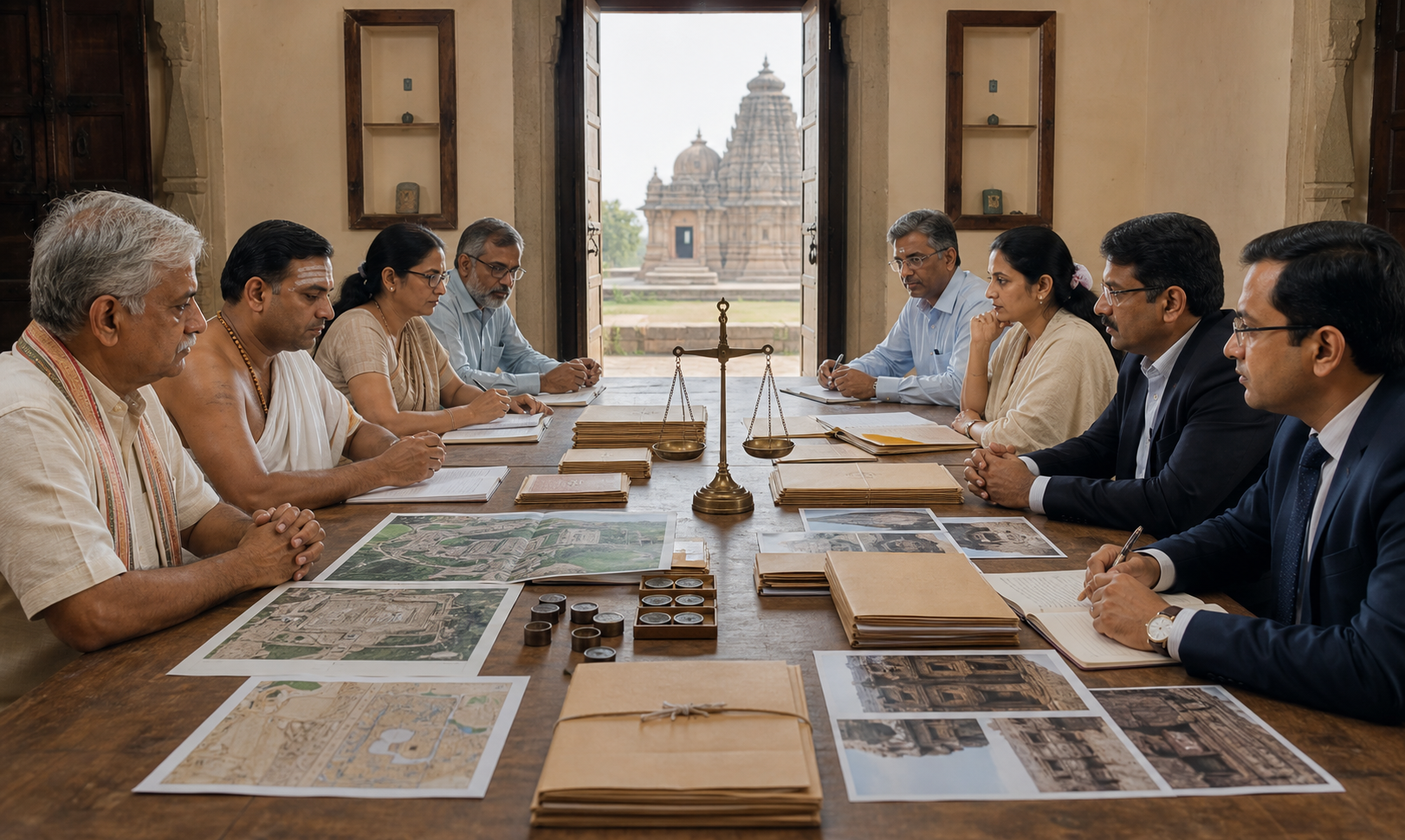
- Assemble an evidence bundle. Gather the governing instrument, relevant orders, minutes, accounts, asset material, correspondence and evidence of the practice at issue. Create an index and keep secure copies rather than handing away the only originals.
- Establish representation. Record who authorised the community delegation and whom it represents. Include the people responsible for religious continuity, administration and devotee service. Disclose conflicts before an opponent discovers them.
- Repair your own governance gaps. If accounts are late, records are scattered or committee authority is disputed, address those weaknesses openly. Autonomy is easier to defend when the proposed custodian can demonstrate competence.
- Request a narrow, reviewable remedy. A useful representation can follow this structure: on a stated date, a named authority proposed a defined action; it would affect specified rites, assets or responsibilities; the community requests identified records, a consultation, any necessary interim protection and a written determination.
- Escalate proportionately. Begin with a documented request and meeting where circumstances permit, then use petitions, administrative review, peaceful advocacy or legal proceedings as appropriate. Before signing a filing or making serious allegations about named people, obtain qualified legal advice.
- Protect daily continuity. Keep worship, festivals, charitable service, essential maintenance and lawful staff obligations functioning wherever possible. The institution’s living purpose should not disappear behind the campaign conducted in its name.
Measure the result by authority, not applause. Did the community receive the relevant records? Was consultation made mandatory rather than discretionary? Did qualified representatives gain a formal role? Were ritual protections written down? Is there an appeal? Has dependence on a particular politician been reduced?
Start with one institution and one contested decision. Map the real control, make your own governance credible, and submit a remedy precise enough to be granted and checked. If the arrangement can survive the next transfer of political power, autonomy has grown. If everything still depends on a patron answering the telephone, only access has improved.

References
- Hindu Pad — Spiritually Rich, Politically Vulnerable: Why India Fell to British Rule and Rose United
- Struggle for Hindu Existence — Tamil Nadu Temple Governance Standoff: Devotees Challenge HR&CE at Pachaivazhi Amman near Vadalur
