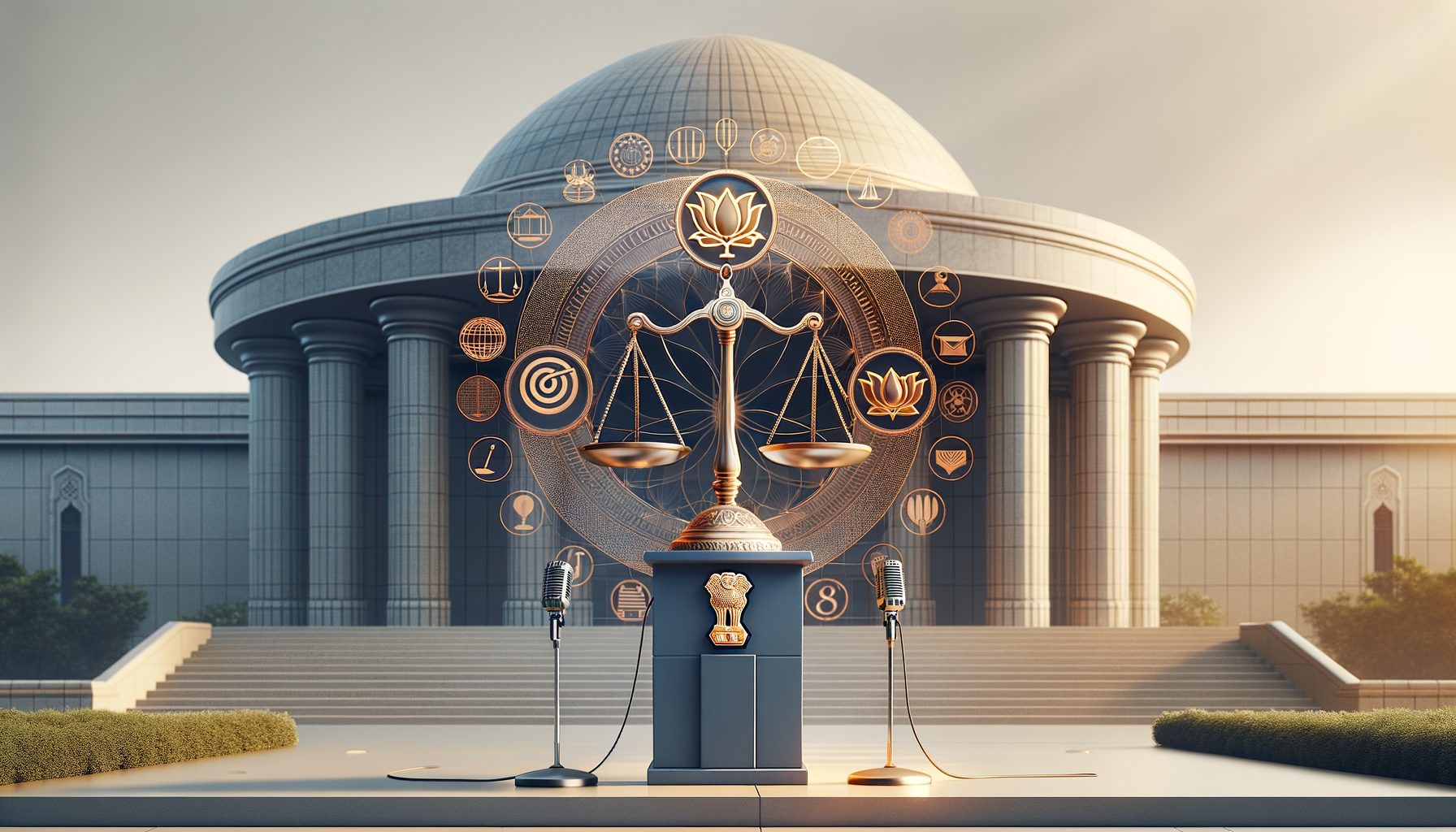
The Attorney General’s consent to prosecute Adv Rakesh Kishore on 16 October 2025 has catalyzed a charged public debate across India. The decision, widely discussed through the phrase “Shoe to CJI” on social media, has been interpreted by many as a stress test for free speech, judicial accountability, and community trust in the Justice System. Within the Hindu Communityand across allied dharmic traditions of Buddhism, Jainism, and Sikhismthe moment has sparked reflection on how dissent can remain principled, lawful, and non-violent while preserving respect for institutions.
In legal terms, the Attorney General’s consent does not determine guilt; it authorizes initiation of proceedings, allowing courts to assess the merits under due process. This distinction matters for democracy and the Indian polity: consent signals that a matter deserves adjudication, not that a verdict is preordained. Such procedural clarity helps anchor public discourse in facts and safeguards both institutional dignity and the right to critique.
The public reaction has featured strong emotions, with many expressing concern that prosecution may chill speech, while others emphasize the principle that advocacyespecially by officers of the courtmust meet standards of civility and responsibility. These concerns are not mutually exclusive. Democracies require robust criticism and equally robust adherence to lawful conduct. Harmonizing these imperatives is essential to maintain confidence in the Judicial System.
Community voices from dharmic traditions have articulated a unifying perspective: disagreement with judgments or administrative decisions should be expressed without demeaning individuals or institutions. Across Hindu, Buddhist, Jain, and Sikh platforms, leaders and civil society members have urged that language and tactics remain within the bounds of ahimsa and samvadanon-violence and dialogueso that public advocacy strengthens, rather than weakens, India’s constitutional culture.
Contextualizing the online phrase “Shoe to CJI” is critical. While it reflects frustration among segments of the public, respected community elders and legal professionals have cautioned that symbolism perceived as humiliating can polarize society and detract from substantive critique. Constructive engagementthrough petitions, reasoned commentary, and legal remedieskeeps the focus on issues, evidence, and solutions.
Historically, India’s civilizational ethos has balanced shastrartha (reasoned debate) with maryada (norms and restraint). Applying this ethos today, a principled path forward centers on three pillars: first, clarity about the legal threshold for contempt or related offences; second, proportionality in response to alleged misconduct; and third, open channels for citizens to voice concerns without fear, within the framework of law and dignity.
For dharmic communities seeking unity, the episode offers an opportunity to reaffirm shared values. Advocacy can be assertive without being incendiary, critical without being contemptuous. Interfaith Dialogue among dharmic traditions can amplify best practices for public communicationencouraging educational workshops on due process, judiciary–citizen relations, and civility in public discourse. Such initiatives reduce misinformation, elevate standards, and protect the space for legitimate dissent.
From a governance perspective, transparent communication by institutions helps lower the temperature. When state actors clearly explain the basis for consent decisions and the path of adjudication, citizens can track developments with confidence. Similarly, legal professionals and community leaders can model evidence-based commentary, reducing speculation and centering facts.
The present case also underscores the importance of media literacy. Rapid amplification of sharp slogans can overshadow the nuances of the Legal System. Encouraging citizens to consult primary legal provisions, verified court documents, and authoritative commentary strengthens democratic participation and dampens the risks of polarization.
Ultimately, the Attorney General’s nod to prosecute Adv Rakesh Kishore should be viewed as an institutional mechanism, not an ideological verdict. Courts will test evidence and arguments; society can, in parallel, champion peaceful engagement. By upholding due process and civility, dharmic communities demonstrate that unity and principled dissent are not opposing goals but complementary duties in a constitutional democracy.
In this moment of heightened scrutiny, reaffirming shared commitmentsto justice, restraint, and respectful disagreementcan transform a flashpoint into a constructive milestone. If navigated with clarity and compassion, the episode can strengthen trust in institutions, protect free speech, and deepen the culture of dialogue that has long defined the subcontinent’s spiritual and civic traditions.
Inspired by this post on Struggle for Hindu Existence.