

If you are choosing the words for a sankalpa, deciding when a vrata falls, or coordinating a temple visit, the civil date alone is not enough. September 2 contains an early change of tithi, and overlooking that boundary can put the wrong tithi on your family calendar.
Keep two questions separate: which tithi is running at a given clock time, and which rule your tradition uses to assign an observance. The timing below answers the first question. Your local Panchang and parampara must answer the second.
Key takeaways for September 2, 2026
- The civil day is Wednesday, September 2, 2026.
- The date falls in Krishna Paksha, the waning phase of the lunar month.
- Krishna Paksha Panchami continues until 5:39 AM, after which Krishna Paksha Sashti begins.
- The stated pattern applies in most regions, but you should verify the transition against a Panchang calculated for your city before fixing a vrata or ceremony.
- The change at 5:39 AM identifies a tithi boundary. It is not, by itself, an auspicious muhurta.
The 5:39 AM boundary is the planning hinge
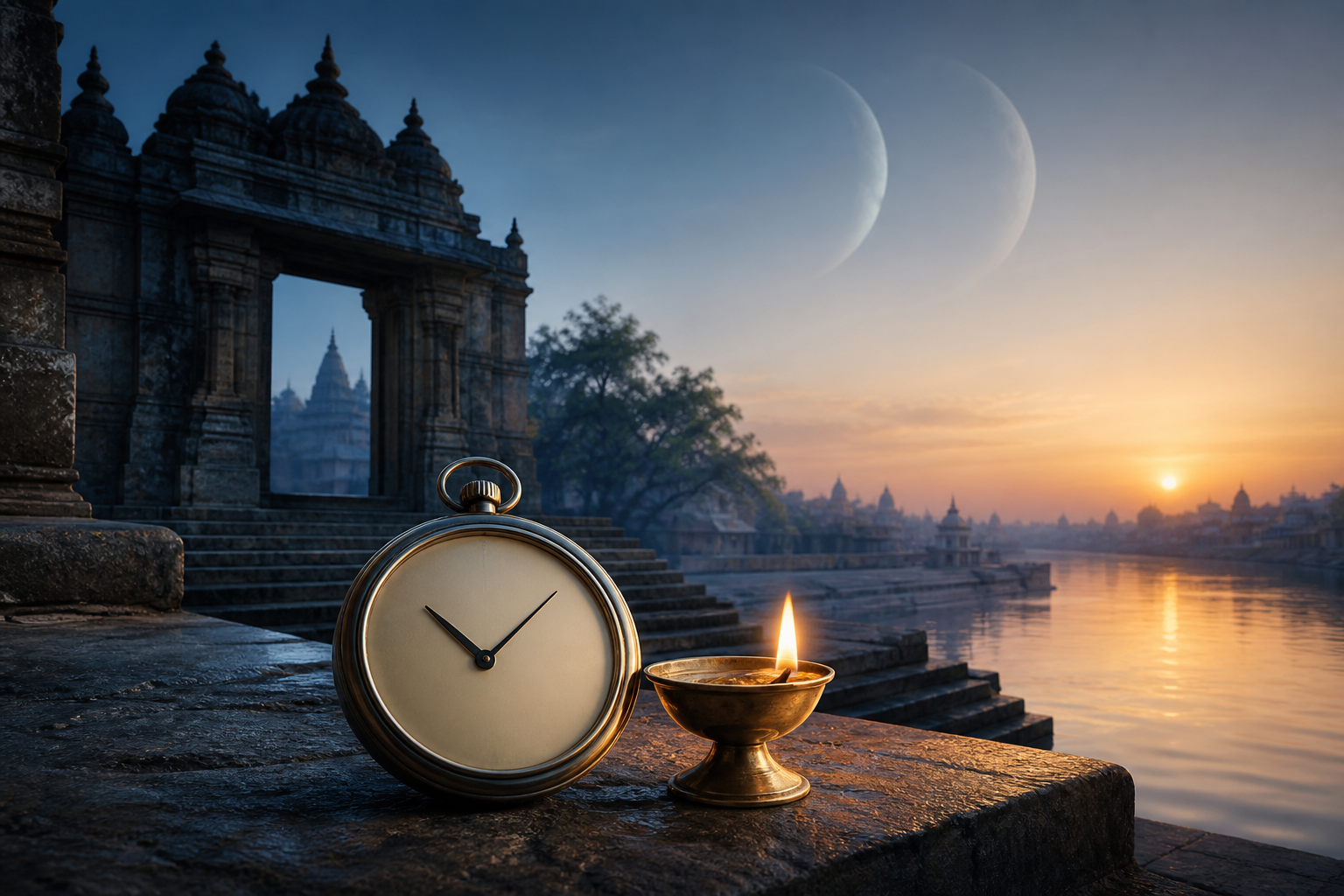
A tithi does not have to begin or end at midnight. That is why calling all of September 2 simply “Panchami” or simply “Sashti” loses information. Under the stated timing, an act performed before 5:39 AM belongs to the Panchami interval; an act performed after that boundary belongs to the Sashti interval.
That distinction is enough when you merely want to record the tithi in force at the time of a personal practice. It is not always enough to decide the official date of a vrata. A tradition may assign an observance by the tithi present at sunrise, by its presence during a prescribed worship period, or by another rule specific to that vrata. Different sampradayas and regional calendars may therefore require more than a clock-time comparison.
The early hour makes location especially important. Depending on where you live, 5:39 AM may fall before, after, or close to local sunrise. Do not move this time manually by adding or subtracting a time-zone offset unless you know the location and time basis used for the calculation. The safer method is to open a Panchang configured for your city and compare its local tithi transition with local sunrise.
A tithi is not a complete muhurta
Panchami and Sashti tell you which lunar day is operating. They do not tell you that every hour within that tithi is equally suitable for every purpose. Wednesday supplies the weekday, or vara, but a full Panchang also distinguishes such factors as nakshatra, yoga, and karana. Rashi is likewise not something you can infer from the tithi alone.
Three common conclusions do not follow from the September 2 tithi information:
- That the entire civil day is universally auspicious or inauspicious.
- That 5:39 AM is a favorable starting time merely because the tithi changes then.
- That Sashti alone settles a muhurta for marriage, griha pravesh, travel, a major purchase, or another purpose-specific undertaking.
Use the tithi boundary for the question it actually answers. If you need a muhurta, obtain a location-specific and purpose-specific evaluation rather than turning the name of the lunar day into a general verdict.
A reliable three-step check before fixing an observance
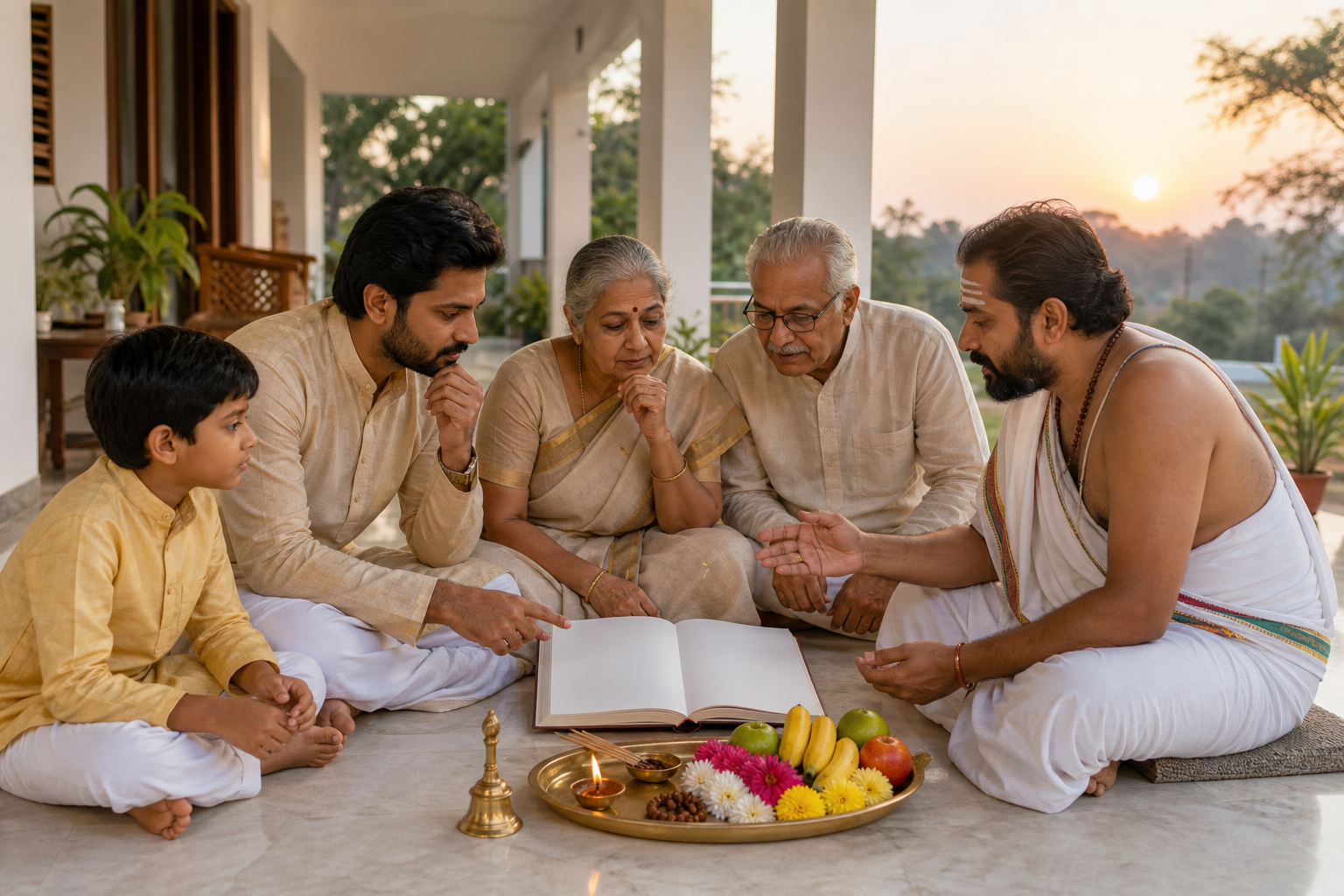
- Define the decision. Are you noting the tithi for daily worship, choosing the date of a vrata, preparing a sankalpa, or selecting a muhurta? These are not interchangeable questions.
- Set the location. Check the tithi transition and sunrise for the city where the worship will occur. If a family is coordinating across countries, use the place of observance rather than the location of the person sending the invitation.
- Apply the correct parampara rule. Ask whether your vrata is governed by the tithi at sunrise, by a prescribed worship interval, or by another sectarian or regional convention. For a muhurta, ask for the other required Panchang factors as well.
For a neutral household reminder, write: ‘Wednesday, September 2, 2026 – Krishna Paksha Panchami until 5:39 AM; Sashti afterward. Confirm locally for observance.’ That wording preserves the useful timing without pretending that one generalized entry settles every ritual question.
If a temple or purohit will guide the observance, send the date, your city, and the 5:39 AM transition together. Then ask which local sunrise and tradition-specific rule govern the vrata. You will get a clearer answer than you would by asking only, ‘Is September 2 Sashti?’
References
