
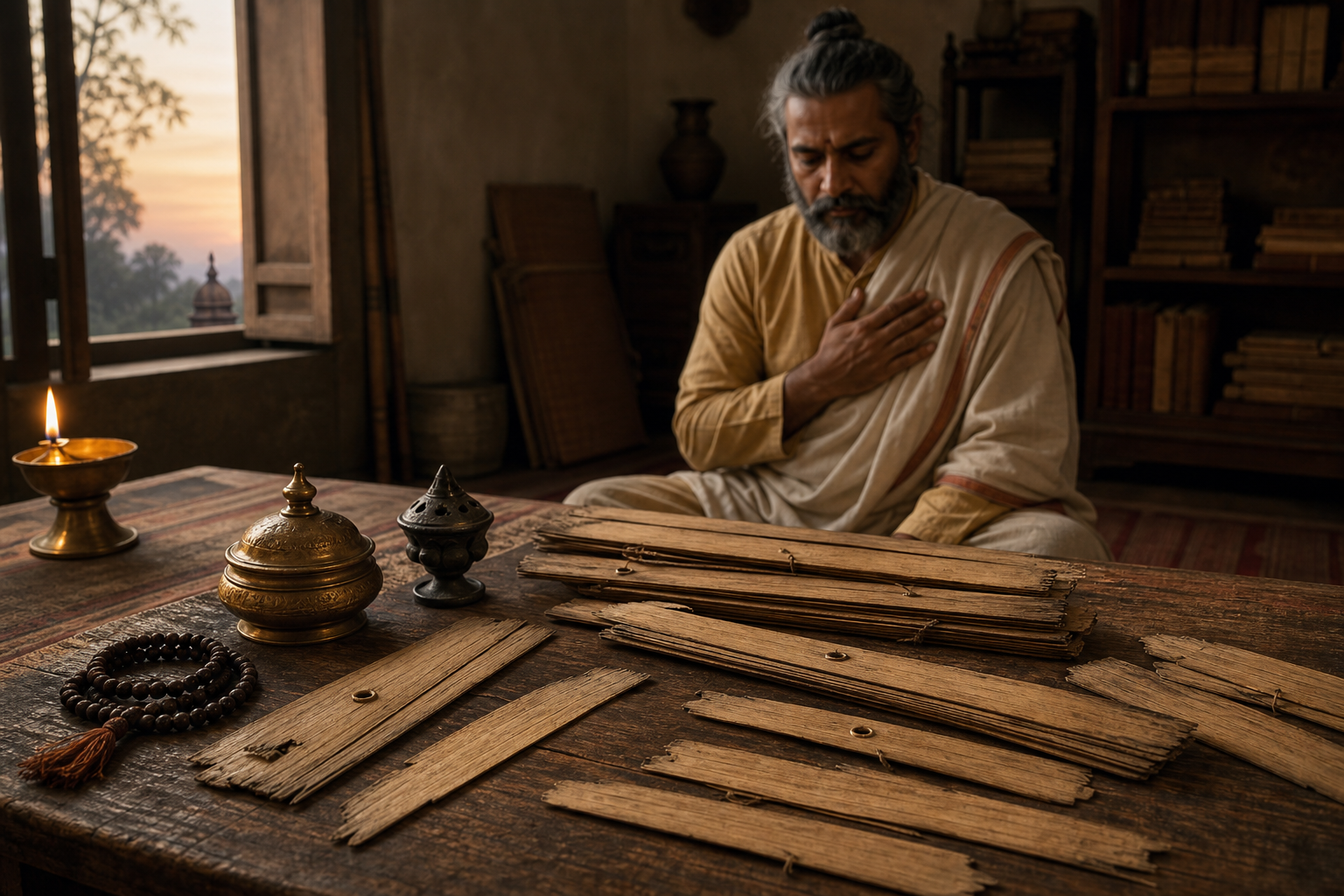
Uchhatana is a specialized and ethically difficult concept associated with Tantra. The surviving source material is only a short excerpt, so a careful account must separate what Hindu Pad actually reports from broader interpretation.
This guide explains the term, identifies the limits of the available description, and considers how it may be approached through a dharmic ethic of restraint, responsibility, and inner discipline.
What the available source says about Uchhatana
According to Hindu Pad, Uchhatana (उच्चाटन) is the fifth action in the Tantric Shatkarma framework. The source renders the word as “rooting out,” “displacing,” or “driving away.” It associates the category with esoteric practices, mantras, and rituals intended to unsettle an adversary mentally, producing confusion, dissatisfaction, or restlessness so that the person leaves a location.
Those points define the concept as presented by the source; they do not verify the effectiveness of such practices or provide an ethical justification for using them. The excerpt is also visibly incomplete. It supplies no textual citations, ritual instructions, historical development, lineage-specific interpretation, or conditions under which the category might have been discussed.
Why a classification is not an endorsement
A traditional vocabulary can describe an action without advising every reader to perform it. This distinction is especially important when a reported practice concerns coercion or psychological harm. Learning that a term occupies a place in a ritual classification does not establish that it is universally accepted, morally appropriate, or suitable for unsupervised experimentation.
Tantric traditions are diverse rather than interchangeable. General labels can conceal differences in teaching, symbolism, discipline, and authority. Because the supplied material does not identify a particular scripture or sampradaya, its brief description should not be projected onto every Hindu Tantric school. Nor should it be treated as a complete account of Shatkarma.
The ethical question is central, not secondary
As reported, Uchhatana seeks to disturb another person’s mental state. That immediately raises questions about intention, harm, accountability, and the difference between legitimate protection and personal coercion. A dharmic evaluation cannot rest solely on whether an act appears in an esoteric taxonomy; it must also consider the character of the motive and the consequences for living beings.
This concern offers a point of moral conversation across the dharmic family. Hindu, Buddhist, Jain, and Sikh traditions remain distinct in doctrine and practice, yet each gives serious weight to some combination of self-restraint, compassion, truthful conduct, disciplined intention, and responsibility for action. Their shared civilizational wisdom encourages mastery of destructive impulses before any attempt to exercise power over others.
Key takeaways
- Hindu Pad identifies Uchhatana as the fifth action within the Tantric Shatkarma framework.
- The term is presented as carrying the senses of uprooting, displacement, or driving away.
- The source links it with practices intended to unsettle an adversary and induce departure.
- The supplied excerpt contains no procedure, supporting scripture, lineage context, or evidence of efficacy.
A constructive way to understand “rooting out”
Without claiming that this is the term’s original ritual meaning, a contemporary reader can turn its imagery inward. The more beneficial question is not how to uproot another person, but how to uproot hatred, fear, delusion, resentment, or the desire to dominate. This is an ethical reframing, clearly separate from Hindu Pad’s reported definition.
Such a reading places spiritual power under the guidance of dharma. Mantra and ritual then remain connected to purification, clarity, and responsible conduct rather than becoming shortcuts for retaliation. Anyone studying specialized Tantric material should seek complete texts, reliable translations, and qualified lineage-based guidance instead of treating an abbreviated online description as a practical manual.
Future discussion of Uchhatana will be most useful when it identifies the relevant textual and lineage context while keeping ethical scrutiny firmly in view.
Inspired by this post on Hindu Pad.
