
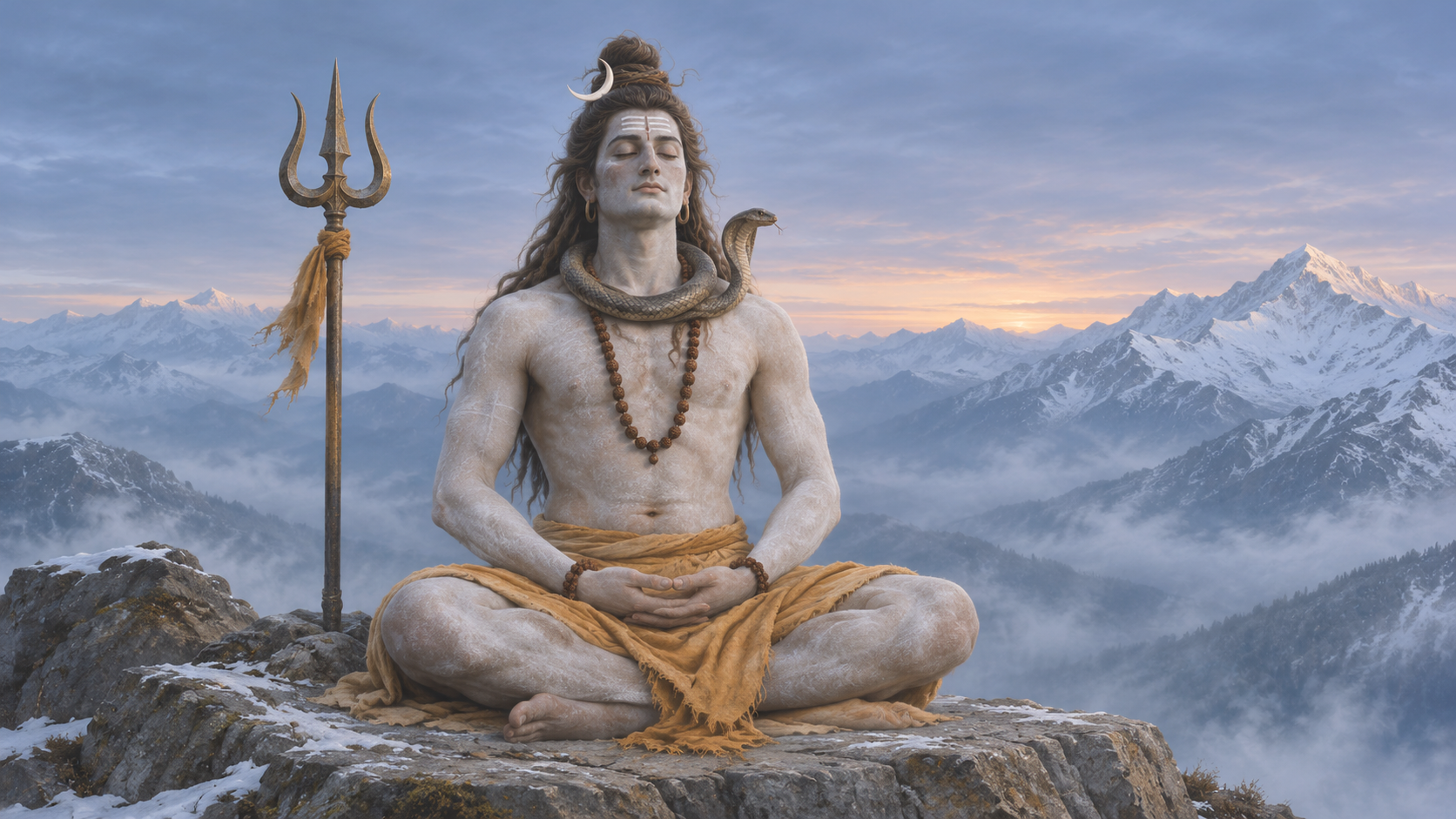
If you have looked at Shiva’s bare, ash-covered form and wondered whether it signifies poverty, provocation, or rejection of ordinary life, begin with a different question: what could the Absolute possibly need in order to become complete?
The image is not asking you merely to admire an unusual deity. It challenges you to notice how much of your own identity depends on appearance, approval, possession, and rank. Read carefully, Shiva’s form becomes a practical lesson in living among these things without mistaking them for what you ultimately are.
The bare form strips away borrowed identity

Clothing does more than protect the body. It can announce profession, wealth, community, authority, taste, or respectability. Society reads the garment and then decides how to read the person inside it.
Shiva’s bareness interrupts that habit. In this philosophical reading, he is purity without stain, the primordial source that cannot be improved by a social costume. No uniform grants him authority. No ornament makes him sacred. No approved appearance supplies an identity that he otherwise lacks.
That is why the image can make viewers uncomfortable. We are accustomed to covering the body, but we are even more accustomed to covering the person with labels: successful, respectable, learned, orthodox, modern, influential, prosperous. Shiva stands before those labels without depending on any of them.
This does not make the image a command to abandon clothing, manners, family life, or social responsibilities. Sacred iconography is not automatically a literal dress code. The sharper point is that conventions have a proper worldly use but no power to manufacture spiritual purity.
You can test this meaning in your own response. When Shiva’s uncovered form seems disturbing, ask what you feel must be added before a person appears worthy. A title? Wealth? Polished speech? Institutional approval? The answer often reveals the social costume through which you have learned to measure human value.
Ash reveals the destination of every acquired distinction
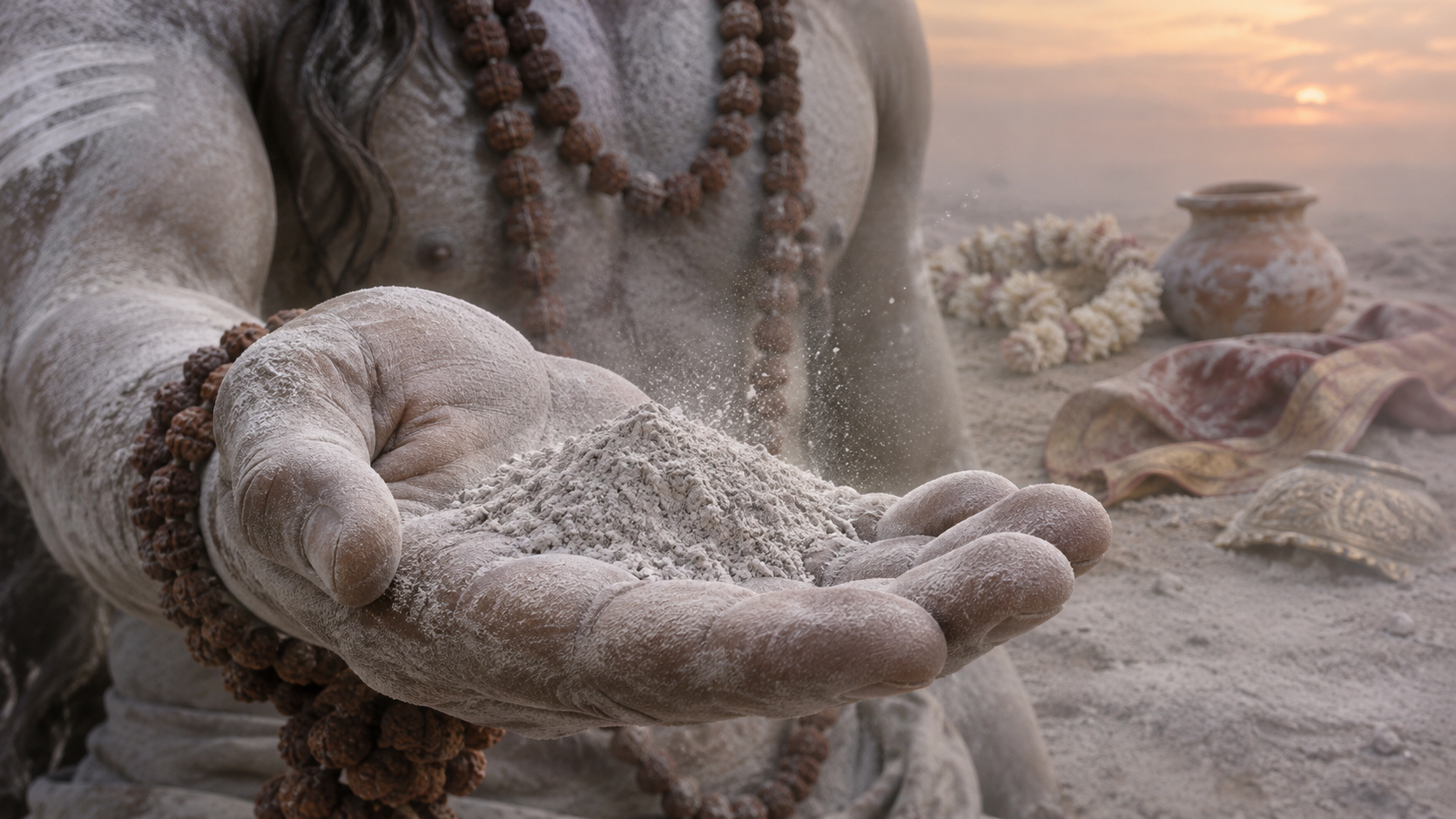
The ash makes the symbolism more precise. Bareness removes what society adds; ash shows what eventually happens to the forms society prizes.
Ash is what remains after an object’s distinguishing form has been consumed. The expensive object and the ordinary object may look radically different while intact, but neither can carry its former display into ash. Shiva is presented as the reality that reduces manifested existence to ash and absorbs it back into itself.
The ash covering his form therefore should not be read as a replacement garment. It does not restore status after clothing has removed it. It announces that the bodies, possessions, reputations, and arrangements from which status is assembled do not endure as permanent identities.
This is not a doctrine of despair. Impermanence makes worldly things temporary, not worthless. Your body still deserves care. Your work still carries consequences. Your relationships still place duties before you. Shiva’s ash corrects a different error: treating a temporary form as though it were the final measure of reality.
When you contemplate the ash, name one thing you are afraid to lose because it has become fused with your identity. Do not pretend that losing it would be painless. Simply distinguish the practical loss from the deeper claim that you would become nothing without it. The ash is meant to expose that confusion.
The visible Shiva points beyond every visible form
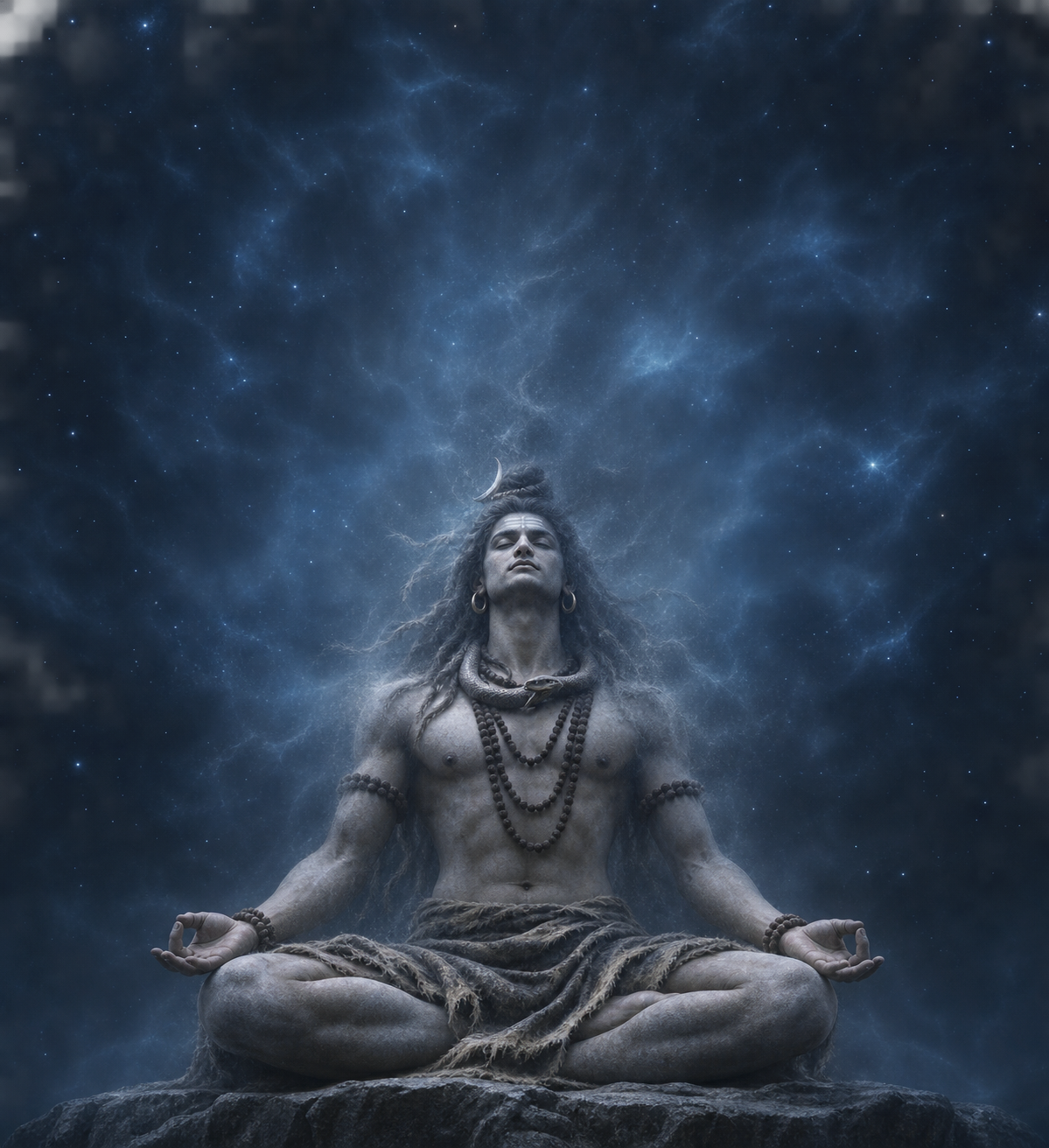
Shiva’s image carries an intentional tension: he is formless and yet able to take form. If you ignore either side, the symbolism becomes distorted.
If you see only the visible figure, you may reduce Shiva to a personality whose unusual appearance needs to be explained by ordinary social standards. If you speak only of the formless Absolute, you may overlook why a visible image matters. The form gives the mind something definite to approach; its bareness and ash prevent the mind from treating that appearance as the limit of Shiva.
The distinction also prevents a common mistake: the symbolism does not declare form itself evil. Shiva can take form. The problem is not embodiment, clothing, beauty, or social order. The problem begins when a form claims ultimacy, when appearance becomes essence, or when a role becomes the whole self.
This gives you a useful way to approach murti and sacred image. First attend to what is visibly present. Then ask what the visible feature denies. The bare body denies dependence on social covering. The ash denies the permanence of acquired form. The embodied Shiva denies that the formless must remain inaccessible. The image works through form while steadily directing you beyond attachment to form.
Turn the symbolism into a disciplined contemplation
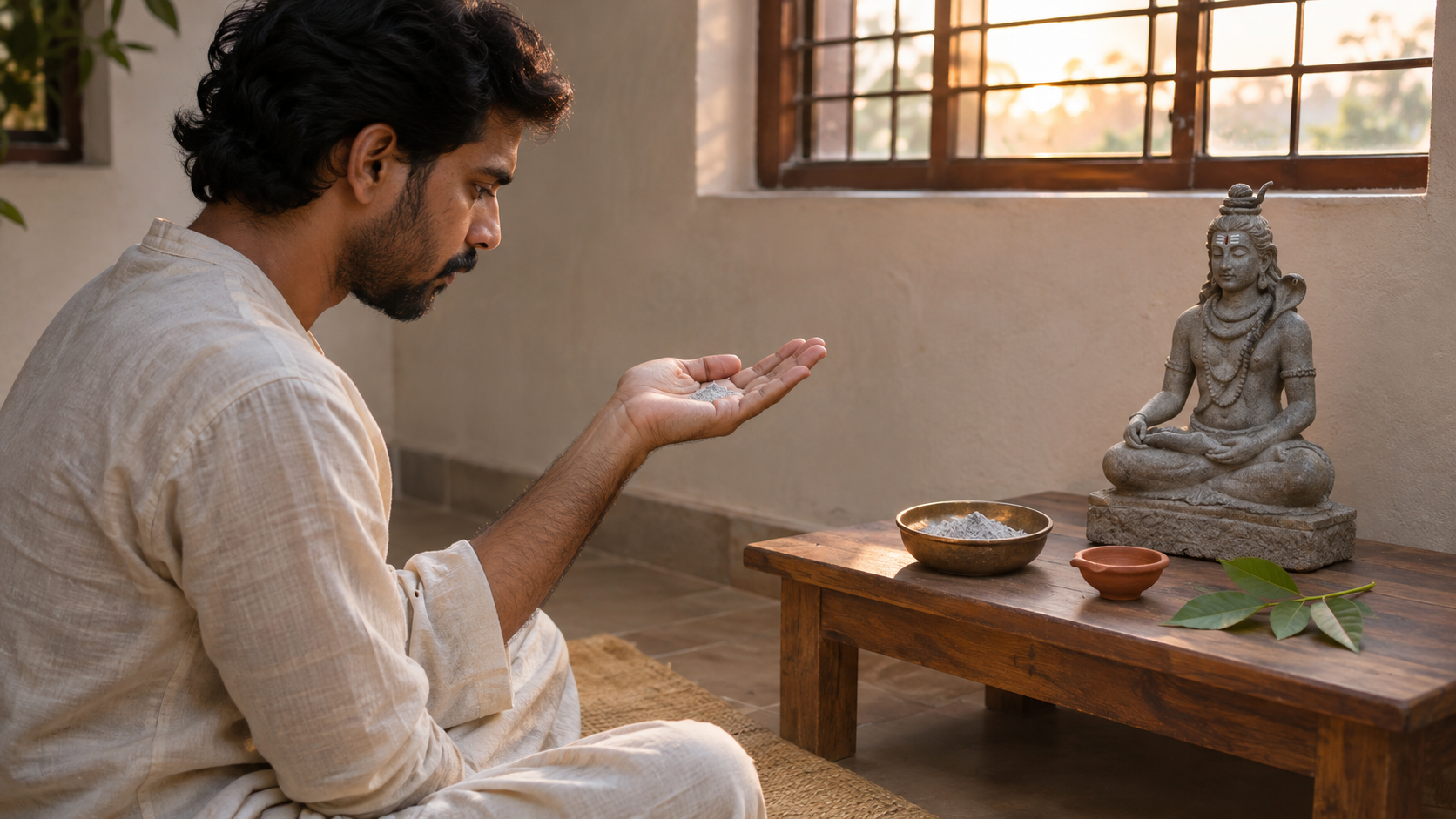
You do not need to manufacture a dramatic renunciation to put this teaching into practice. Use the image when status anxiety, fear of loss, or concern about appearances begins to govern a decision.
- Name the costume. Identify the role, possession, reputation, or sign of approval you currently feel compelled to protect.
- Separate function from identity. State what that thing practically enables you to do, and then ask whether it can define your fundamental worth. A professional role may carry real duties without becoming your whole being.
- Bring in the ash. Consider the same thing after its form, prestige, and usefulness have passed. Notice what fear appears when you stop imagining it as permanent.
- Return to the duty in front of you. Keep the responsibility, relationship, or work that genuinely matters, but loosen the demand that it prove who you are.
This contemplation is especially useful before a decision distorted by display: spending merely to look successful, remaining silent merely to look acceptable, defending a title instead of fulfilling its responsibility, or judging another person by the signs of status they lack. Shiva’s form asks you to decide from dharma rather than costume.
Renunciation here begins as clarity. You may continue wearing the uniform, holding the office, caring for property, and participating in society. What changes is the direction of dependence. These things become instruments you use, not identities you require in order to feel real.
Key takeaways for reading Shiva’s image
- Bare does not mean spiritually deficient. Shiva lacks no garment because no external marker can add purity or completeness to the Absolute.
- Ash is not decorative clothing. It shows the end of manifested distinctions and confronts the belief that possession, appearance, or rank can endure as an ultimate identity.
- The image is not a command to neglect ordinary duties. It teaches you to perform them without confusing their social forms with your deepest reality.
- Form and formlessness belong together. Shiva’s visible form makes contemplation possible while its symbolism directs attention beyond every finite appearance.
- Your reaction is part of the teaching. Discomfort with the image can reveal which conventions you have mistaken for measures of purity, dignity, or human worth.
The next time you stand before Shiva, choose one identity you are working hard to display or defend. See it first as a garment and then as ash. After that, return to your responsibility and carry it well, but do not ask it to tell you what the Absolute alone can answer.
References

Leave a Reply
You must be logged in to post a comment.